


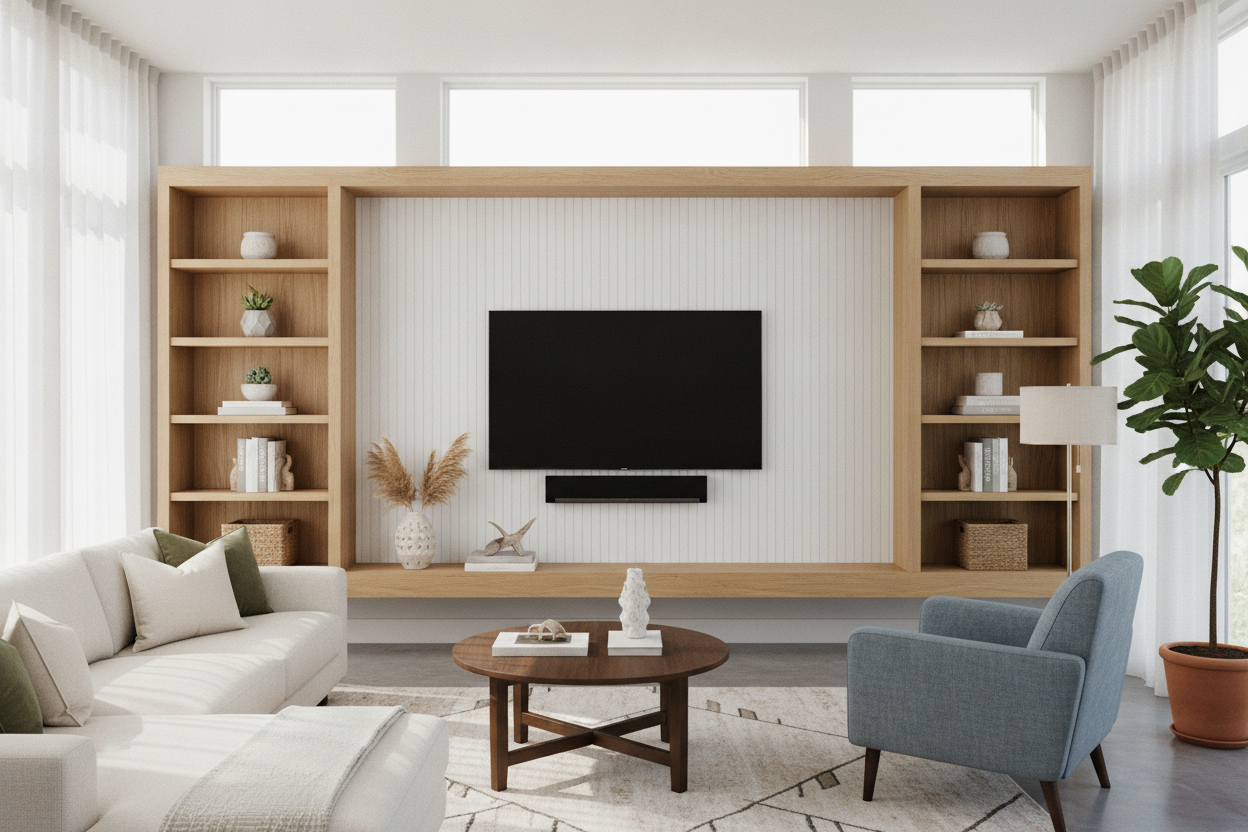
I was sitting on my velvet sofa, looking at my gallery wall, and then my eyes hit the floor. My 65-inch OLED was perched on a wobbly, $40 metal rack that looked like it belonged in a garage. Finding actual furniture for tv unit setups is surprisingly hard because most brands treat your media center as a tech accessory rather than a piece of decor.
Your TV is usually the focal point of the room, whether you like it or not. If the thing holding it up looks like it came from a college clearance bin, the whole room feels unfinished. I spent years thinking I just needed a 'stand,' but what I actually needed was a piece of furniture that could anchor the wall and hide the chaos.
Quick Takeaways
- The 12-Inch Rule: Your console should be at least 12 inches wider than the TV screen to avoid looking top-heavy.
- Hide the Spaghetti: Closed cabinetry is essential for hiding the mess of routers, wires, and gaming consoles.
- Material Matters: Look for kiln-dried hardwoods or high-quality veneers over cheap particleboard to prevent sagging.
- Ventilation: Ensure any closed cabinets have cord cutouts or slatted doors to keep electronics from overheating.
The Moment I Realized My Media Setup Was Ruining My Living Room
I remember having friends over for dinner and feeling a weird sense of embarrassment when the conversation moved to the living room. It took me a while to pinpoint why the space felt so 'off' despite the expensive rug and curated art. The culprit was a thin, black laminate shelf that was literally bowing under the weight of the TV. It looked like a temporary solution in a home I had lived in for five years.
I had fallen into the trap of buying a tech stand instead of real decor. When your furniture tv unit looks like a temporary solution, the whole room feels temporary. I realized that my simple TV unit just looks like cheap dorm furniture, and it was dragging down every other design choice I made. It wasn't just about holding the TV; it was about grounding the entire wall and providing a visual weight that balanced out the massive black rectangle of the screen.
What Makes a Console Look Like Real Furniture (Not a Tech Accessory)
The difference between a 'stand' and a 'piece' usually comes down to visual weight and storage. Cheap stands are often skeletal—all legs and open glass. Real furniture has substance. I look for pieces with closed storage, fluted detailing, or substantial hardware that matches the rest of the room's vibe. If it weighs less than 50 pounds, it is probably going to wobble every time you walk past it.
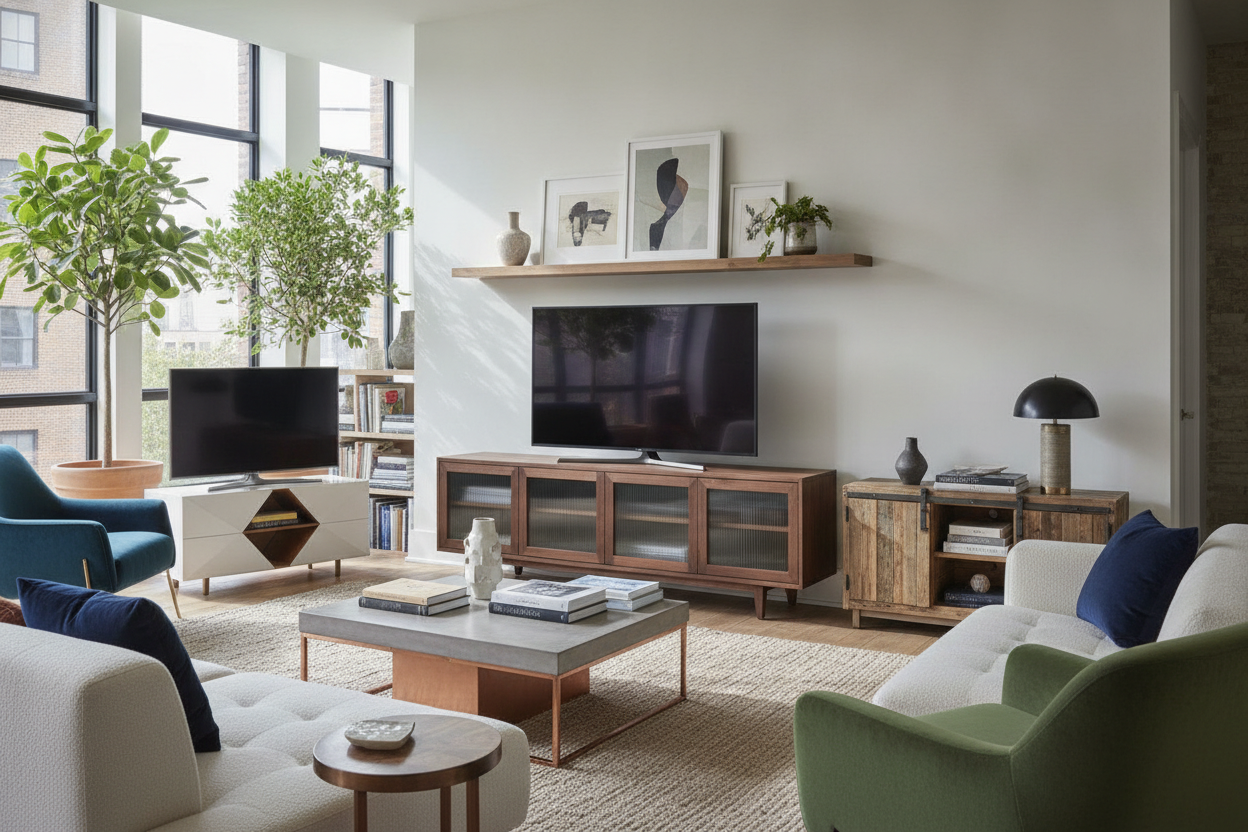
A modern TV stand with cabinets and drawers does more than just hold the screen; it hides the visual clutter of tech. When you can't see the tangle of HDMI cables and power strips, the TV feels integrated into the room rather than just plopped on top of it. I prefer furniture with integrated cable management—those pre-drilled holes in the back are a godsend—and doors that use soft-close hinges. It feels premium because it is.
Material weight is the biggest giveaway. Real kiln-dried oak or walnut has a grain that particleboard can't mimic. Even a high-grade veneer on a heavy MDF core is better than the flimsy honeycomb paper stuff you find at big-box stores. You want something that can handle 75+ pounds without the shelves curving into a 'U' shape over time. Architecture matters too; fluted door fronts or brass pull-handles turn a box into a credenza.
My 3 Golden Rules for Buying Furniture for TV Unit Displays
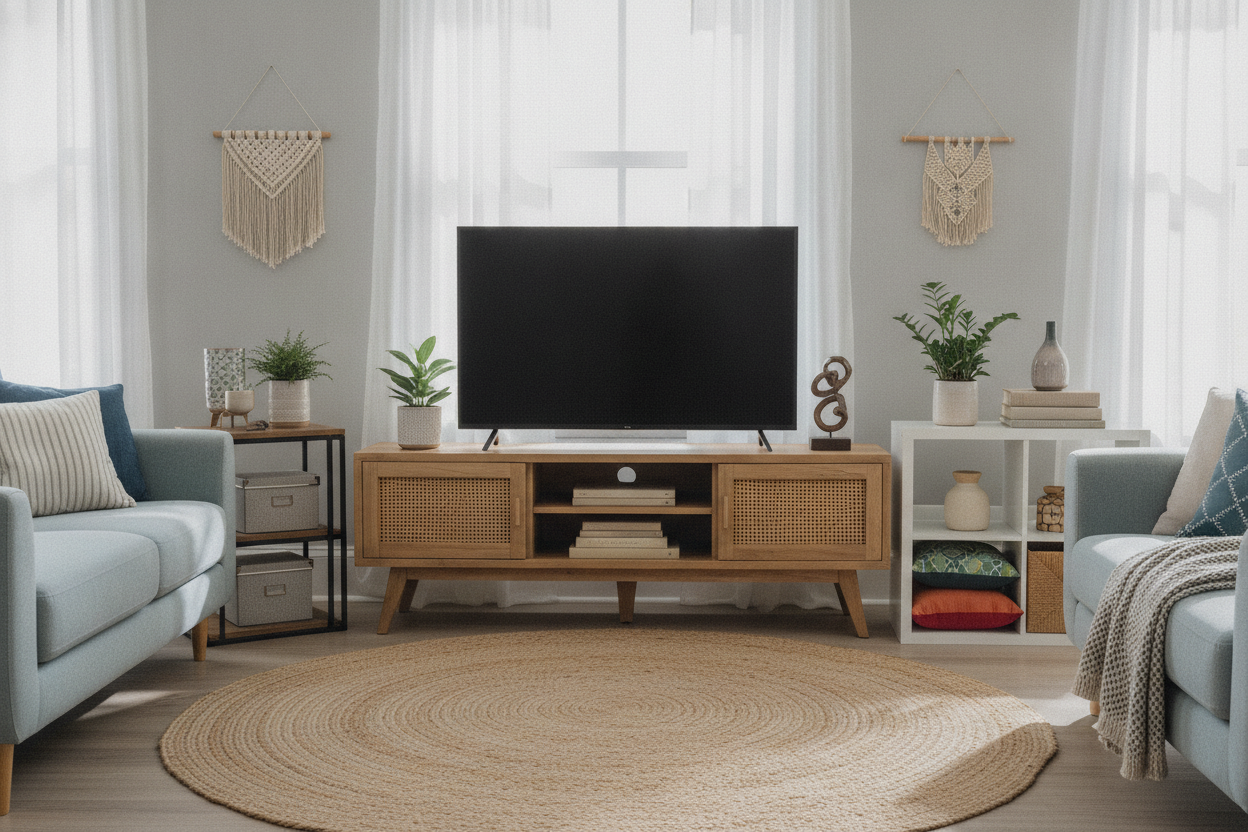
Rule one: Scale is everything. I see so many people put a 75-inch TV on a 60-inch stand. It looks like a bodybuilder standing on a toothpick. Your console should be at least 20% wider than the TV. This creates a balanced silhouette and leaves room for a lamp or a small plant to soften the hard edges of the screen. A 70-inch unit for a 55-inch TV is my personal sweet spot.
Rule two: Think about the future. If you are a renter or someone who likes to swap rooms every year, an adjustable TV stand for living room use is a smart move. These pieces can expand or contract to fit different wall lengths, which is a lifesaver when you realize your new apartment has a much smaller fireplace nook than your last one. It gives you longevity without requiring a custom build.
Rule three: Don't rush the process. It's better to stare at a blank wall for a month than to buy a placeholder you'll hate in six weeks. It took me a long time to finally buy TV unit furniture that I actually loved, but the wait was worth it. I spent months measuring my wall, checking wood samples, and reading reviews about weight capacities. When the right piece arrived, the room finally felt finished.
Ready to Upgrade? Where to Start Your Search
If you're still using that particleboard shelf you bought in 2018, this is your sign to let it go. You don't need a massive built-in to make your living room look sophisticated. You just need a piece that is wide enough, heavy enough, and intentional enough to hold its own against your tech. Stop looking for 'stands' and start looking for credenzas and media consoles that actually use real wood and smart storage.
Ditch the wobbly stuff and invest in something that doesn't vibrate when the bass hits. Browse a curated collection of TV stands to see what a difference real materials and thoughtful design can make. Your living room deserves a foundation, not just a shelf. Once you have a piece that actually looks like furniture, you'll wonder why you ever settled for a tech rack.
Frequently Asked Questions
How high should a TV unit be?
The center of your TV should be at eye level when you are seated. For most people, that means a console height of 18 to 24 inches. If you have a massive 85-inch screen, go for a lower profile unit to avoid neck strain.
Can I use a sideboard as a TV stand?
Yes, but check the height. Sideboards are often 30-36 inches tall, which might be too high for a large TV. Also, ensure it has holes in the back for cables, or be prepared to get out the power drill.
How do I hide cables if the unit has an open back?
Use cable management boxes or adhesive clips to run wires down the back of the legs. But honestly? If you're buying new, just get a unit with a finished back and pre-drilled holes. It saves hours of frustration and looks much cleaner.

Laisser un commentaire
Ce site est protégé par hCaptcha, et la Politique de confidentialité et les Conditions de service de hCaptcha s’appliquent.