


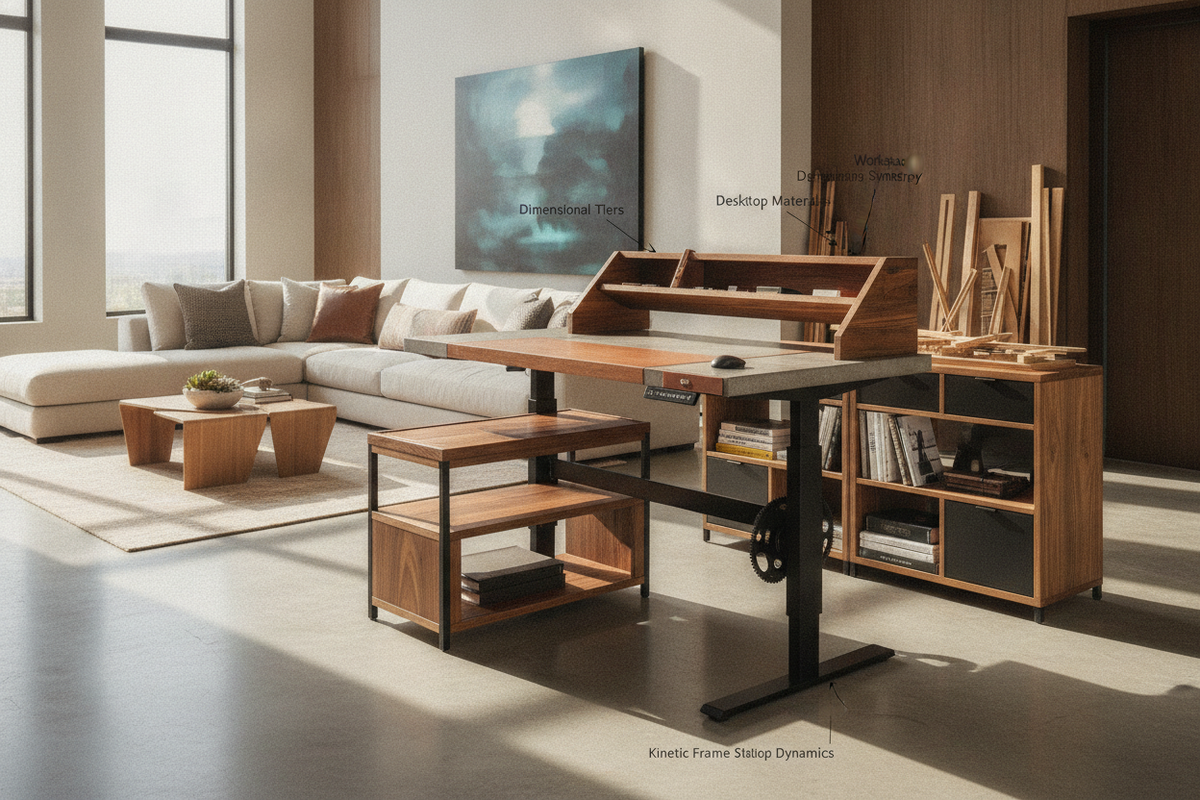
Introduction: Navigating Retail Sit-Stand Workstations
Choosing a dynamic workstation involves balancing ergonomic comfort, interior aesthetics, and structural durability. When evaluating options such as a home depot standing desk or comparable adjustable platforms sourced from major home retail outlets, buyers must look beyond basic dimensions. A successful setup depends on understanding how lifting mechanics interact with floor layouts, desktop materials, and surrounding organizational units. For those comparing conventional flat-pack desks with dynamic furniture, consulting a comprehensive retail desk buying guide helps establish baseline expectations for hardware quality and modular flexibility.
A well-planned sit-stand environment accounts for both stationary and in-motion requirements. Because an adjustable desk continuously alters its height profile, planning vertical clearance, wall spacing, and perimeter storage requires a holistic approach to home office architecture.
Spatial Footprint Tiers and Dynamic Elevation Clearances
Selecting a standing desk begins with analyzing available floor area alongside the dynamic three-dimensional envelope the desk occupies when elevated. Unlike static furniture, a standing desk home depot shoppers consider must accommodate vertical travel without colliding with window sills, hanging wall shelving, or power outlets.
Compact Workstations for Nooks and Hybrid Spaces
Compact workstations serve dedicated alcoves, small guest rooms, or multi-use living areas. These frames feature smaller surface footprints suited for laptop-centric workflows or single-screen arrangements. In constrained spaces, selecting a desk with low-profile floor feet ensures smooth integration without obstructing foot traffic or chair movement.
Mid-Size to Extended Formats for Multi-Monitor Rigs
Wider desktop profiles accommodate multi-monitor displays, desktop studio hardware, and expansive writing areas. For power users managing multiple peripheral screens and desktop accessories, an extended platform such as a 71-inch adjustable standing desk provides generous surface area without requiring auxiliary tables. When placing wide frames, ensure adequate lateral clearance to allow effortless height adjustments without rubbing against neighboring walls or side cabinetry.
Kinetic Frame Mechanics: Electric vs. Manual Adjustment Systems
The core of any home depot adjustable desk lies in its kinetic lift mechanism. Home office planners typically choose between motorized lifting columns and manual crank mechanisms based on adjustment frequency and workflow preference.
- Motorized Lift Columns: Electric frames utilize internal drive spindles housed inside telescoping legs. Desks equipped with multi-stage columns offer smooth travel across a broad vertical spectrum, accommodating varied user postures. Investing in an electric adjustable standing desk with memory presets allows users to transition between preferred sitting and standing heights with a single touch.
- Manual Crank Systems: Hand-cranked frames offer dependable mechanical height adjustments independent of power outlets. While manual adjustment requires physical effort, it provides functional elevation control in areas where power access is limited.
- Structural Crossbars and Leg Geometry: Dual-leg inverted or standard telescoping columns rely on wide steel base feet and reinforced under-desk crossbeams to minimize lateral sway when elevated to upper tiers.
Desktop Substrates and Surface Resilience
Desktop durability depends heavily on substrate construction and edge banding quality. A stand up desk home depot alternative must withstand daily wear, monitor clamp pressure, and ambient humidity fluctuations.
Engineered core substrates with high-pressure laminate or melamine overlays resist surface scratches and spills while offering diverse visual finishes, ranging from crisp modern neutrals to rich woodgrain patterns. Solid wood and thick veneer surfaces provide tactile warmth and natural texture but require careful maintenance against dry climates and direct sunlight. To discover harmonious pairings of desktop finishes with office decor, review our standing desk setup styling guide for balanced spatial aesthetics.
Dynamic Cable Management and Vertical Slack Planning
Dynamic workstations introduce unique cable routing challenges. Because the desktop travels up and down, fixed-length cables can become strained or unplugged during elevation cycles if not properly configured.
- Articulated Cable Spines: Flexible cable chains or fabric sleeves group monitor leads, peripheral connections, and main power feeds together, flexing naturally as the desk rises and lowers.
- Under-Desk Power Distribution: Mounting a heavy-duty surge protector directly to the underside of the desktop ensures that peripheral power cords move synchronously with the work surface, requiring only a single main cord to extend downward to the wall receptacle.
- Slack Calibration: Ensure ample cord slack at maximum elevated height before securing cable clips along the frame rails.
Perimeter Storage Integration: Maintaining Mobility Without Clutter
One structural challenge inherent to a home depot sit stand desk is the lack of integrated under-desk cabinetry. Traditional fixed pedestals can interfere with the vertical travel of an adjustable desk frame, creating clearance conflicts.
To maintain clean floor space and preserve full vertical mobility, decouple your active work surface from your stationary storage. Pair your desk with independent mobile drawer units that slide smoothly beside or beneath the frame at sitting height. For archival documents, design books, and display accessories, pair the workstation with modular wall storage from a versatile modular adjustable shelving collection. This creates a dedicated organizational boundary around your dynamic desk without impeding its kinetic movement.
Assembly Verification and Structural Calibration Protocol
Proper assembly is critical for ensuring smooth kinetic motion and long-term frame stability. Follow a systematic assembly routine when setting up an adjustable desk home depot model:
- Level Foundation Setup: Assemble the frame on a soft surface to prevent scratching. Verify that all crossbeam fasteners are hand-tightened before completing final torque turns once the desk is upright.
- Foot Leveler Adjustment: Use the adjustable glide feet beneath the base brackets to compensate for uneven flooring, preventing wobbling at elevated heights.
- Initial Motor Calibration: For electric frames, perform the manufacturer's recommended reset sequence—typically holding the down button until the frame bottoms out and beeps—to synchronize dual-motor drive systems.
- Periodic Fastener Inspection: In my own studio workspace, I make it a habit to periodically re-tighten column-to-desktop mounting screws, as regular dynamic movement can gradually loosen structural hardware over extended periods.
Conclusion: Building a Balanced, Dynamic Home Workspace
Selecting the right height-adjustable desk requires careful consideration of frame engineering, spatial footprints, surface resilience, and perimeter organization. By pairing a sturdy lifting frame with functional cable planning and decoupled modular storage, you can build a streamlined, highly functional home office that supports productive workflow transitions throughout the working day.

Laisser un commentaire
Ce site est protégé par hCaptcha, et la Politique de confidentialité et les Conditions de service de hCaptcha s’appliquent.