


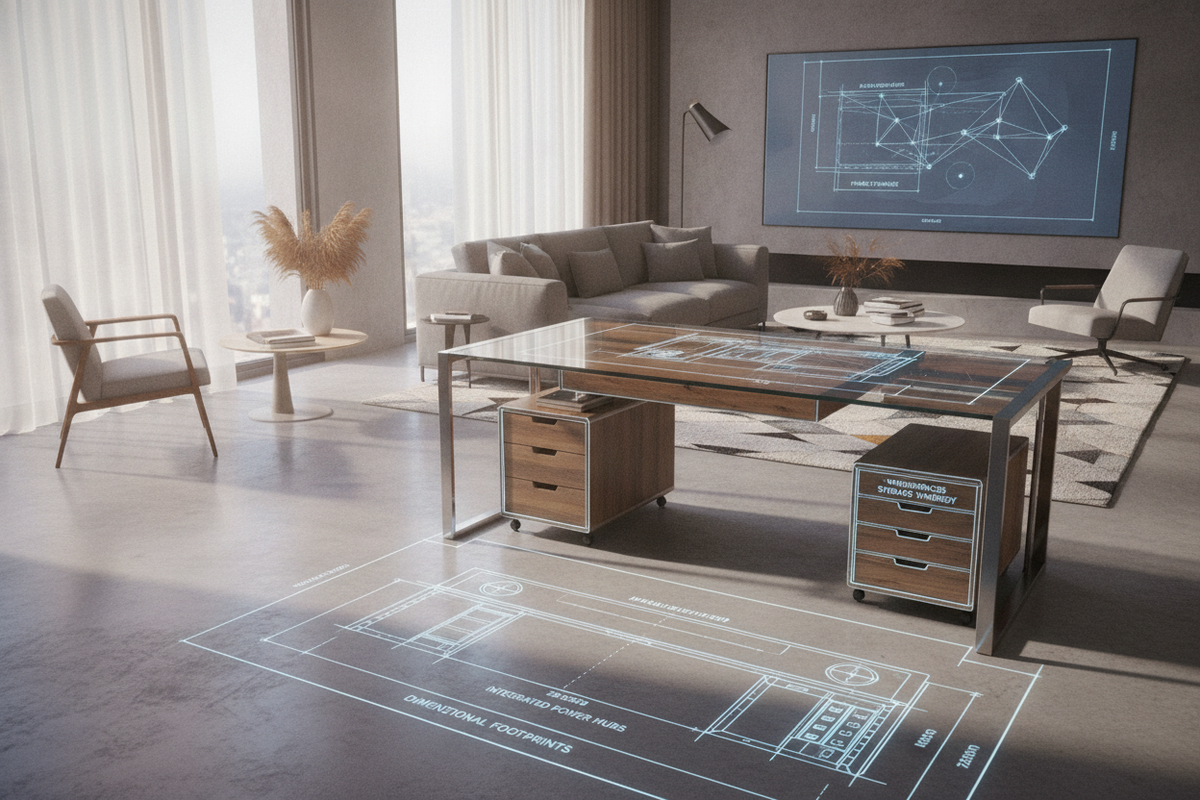
Understanding High-Tech Desks: Core Mechanics and Integrated Features
Modern high-tech desks serve as the central command hub of contemporary professional spaces. Unlike traditional static furniture, a hi tech desk incorporates electrical routing, kinetic lifting hardware, and digital interfaces directly into its structural architecture. These surfaces bridge the gap between heavy computer equipment and comfortable physical posture, offering automated height transitions, embedded wireless pads, and intuitive touch presets.
When configuring a high-tech office desk, the primary objective is creating a cohesive environment where hardware, wiring, and storage operate seamlessly. Incorporating curated workspace gadgets alongside integrated desktop power ports allows users to minimize visual clutter while keeping critical devices charged and within reach.
Dimensional Tiers and Footprint Planning for High-Tech Workstations
Selecting the right size requires balancing available floor area against hardware volume. A desk surface must comfortably accommodate displays, input peripherals, and task lighting while maintaining adequate clearance for natural circulation paths throughout the room.
Compact Tech Desks for Urban and Hybrid Nooks
Compact high-tech desks are tailored for dedicated multi-use corners, guest rooms, or smaller city apartments. These frames prioritize a streamlined vertical profile and reduced tabletop depth. Even with a smaller footprint, an efficient layout can easily support an ultra-wide monitor arm or laptop docking setup without overcrowding the primary typing zone.
Standard and Executive High-Tech Office Desks
Standard and executive formats provide expansive surface depth designed for complex multi-screen arrays, studio audio monitors, and desktop computer towers. The broader chassis offers increased structural stability, giving ample room for full-sized desktop pads, document trays, and integrated pop-up power modules without impeding keyboard and mouse tracking space.
Corner and L-Shaped High-Tech Desks
An L-shaped hi tech office desk provides multi-zone utility by creating distinct zones for computing, writing, and peripheral hardware. Utilizing corner geometry allows users to maximize room perimeters. Pairing this layout with a dedicated corner desk with large storage creates an organized boundary that supports deep focus while maintaining accessible side shelving.
Frame Architecture and Kinetic Stability Under Load
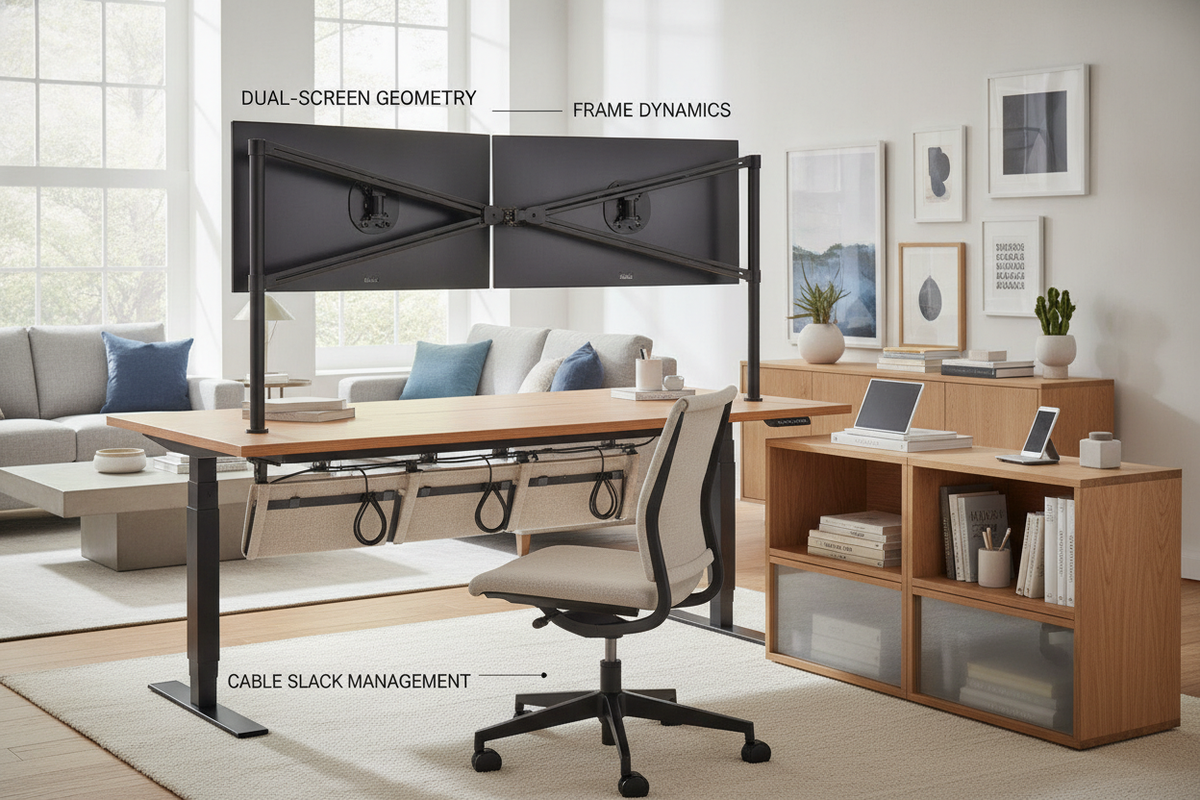
The foundation of any motorized desk is its structural frame. High-grade steel leg columns, reinforced crossbeams, and precision lifting mechanisms ensure smooth vertical travel between sitting and standing postures. Dual-stage and triple-stage telescoping columns offer different height adjustment ranges to accommodate various user heights.
Kinetic stability depends on substantial footings and secure under-mount brackets that resist lateral sway, especially when raised to standing height. Anti-collision sensors integrated into modern motor controllers help protect surrounding cabinets, window sills, and under-desk drawers by halting movement whenever unexpected resistance is detected.
Surface Materials, Touch Controls, and Embedded Connectivity
Worksurface materials influence both tactile comfort and everyday durability. High-density composite boards with scratch-resistant matte laminates resist fingerprints and reduce glare from overhead lighting. For a contemporary aesthetic, tempered glass desktops featuring touch-sensitive digital control panels offer seamless LED readouts and memory presets.
Those interested in designing a high-tech home office that feels luxurious often pair rich timber or smooth stone-textured laminates with flush-mounted wireless charging coils. Integrating connectivity hubs into the tabletop surface eliminates the need for bulky desktop power strips and exposed transformer bricks.
Power Distribution, Cable Slack Architecture, and Thermal Flow
Effective cable management is essential for any adjustable hi tech desk. Because the surface moves continuously throughout the day, wiring harnesses must maintain sufficient slack without catching on furniture legs or hardware brackets. Articulated vertical cable spines and high-capacity under-desk raceways neatly channel power cords, video lines, and data connections directly from wall outlets to the desktop hub.
When styling modern office tech, thermal management should also be planned carefully. Enclosed desktop PC towers mounted beneath moving frames require continuous airflow, making open-bracket cradles or ventilated under-desk mounts ideal for preventing heat buildup around critical electronics.
Storage Synergy: Blending High-Tech Surfaces with Functional Cabinets
Because kinetic high-tech desks focus primarily on open movement and clean profiles, they typically feature minimal integrated drawer space. Maintaining an organized, distraction-free environment requires pairing the central workstation with auxiliary storage units situated around the room perimeter.
Complementing a height-adjustable surface with an office storage cabinet with desk setup or a matching credenza allows you to keep archival files, printers, paper supplies, and backup hardware enclosed behind cabinet doors. Mobile pedestals on casters can slide neatly beneath the desk during seated sessions and roll aside when extra legroom is needed.
Assembly Mechanics, Leveling, and Setup Considerations
Proper assembly ensures long-term frame balance and quiet motor performance. During initial setup, all mechanical frame fasteners should be evenly tightened to prevent uneven strain on internal drive shafts. Adjustable leveling glides beneath the base feet correct for uneven flooring, preventing wobbling at taller heights.
Following physical assembly, executing a standard motor controller reset synchronizes the internal height sensors across both legs. Periodic checks of structural bolts, cable clips, and power connectors keep the entire workstation operating smoothly over years of daily repositioning.
Choosing the Right Hi-Tech Desk for Your Workflow
Selecting the ideal high-tech office desk involves evaluating daily screen counts, peripheral power requirements, physical room dimensions, and the proximity of supportive storage. By harmonizing sturdy frame dynamics, intuitive power distribution, and dedicated perimeter cabinetry, you can build a clean, ergonomic workstation tailored for modern productivity.

Laisser un commentaire
Ce site est protégé par hCaptcha, et la Politique de confidentialité et les Conditions de service de hCaptcha s’appliquent.