


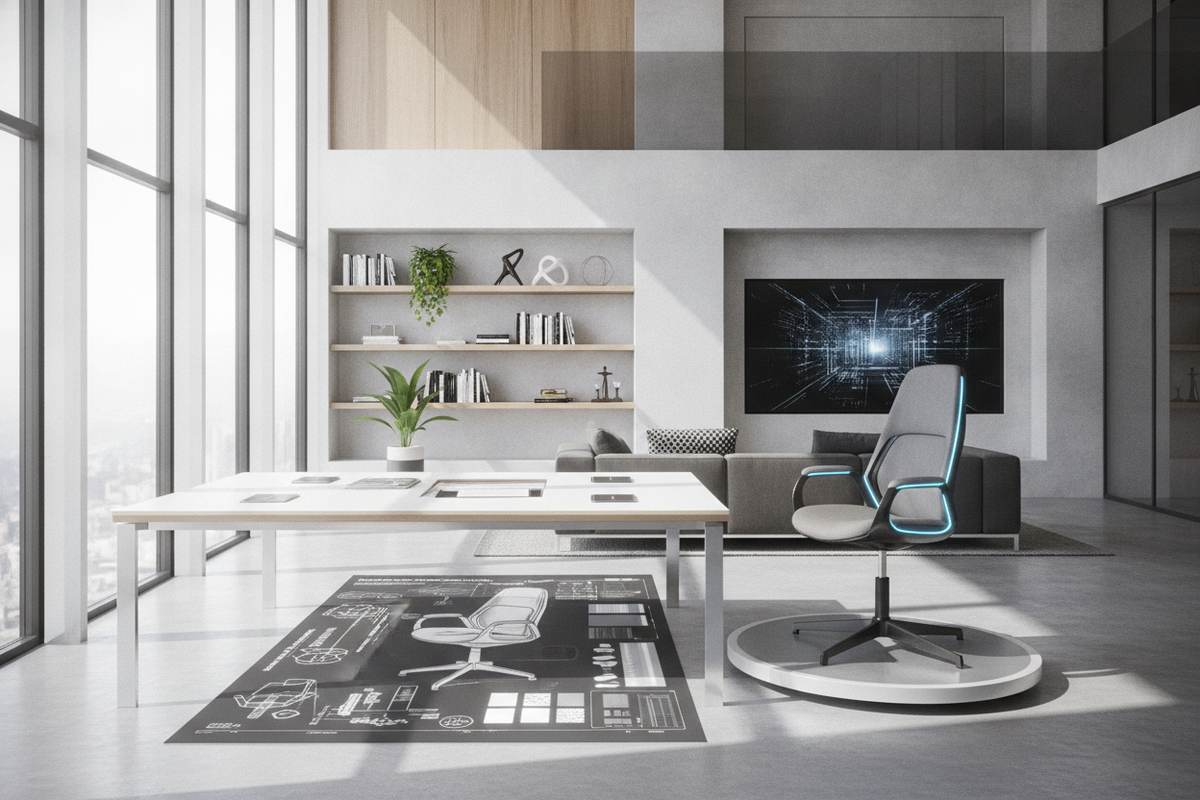
Deconstructing the High Tech Desk Chair: Mechanical Architecture and Adaptive Kinetic Systems
Modern executive workspaces demand seating solutions that go far beyond basic static cushioning. A well-designed high tech desk chair serves as an active kinetic interface between the user, the workstation surface, and the digital tools powering daily productivity. Rather than forcing the body into rigid postures, modern engineering focuses on self-adjusting balance points, progressive tension assemblies, and dynamic pivot axes that respond intuitively to subtle micro-movements.
Central to this mechanical architecture is the multi-axis synchro-tilt mechanism. In traditional seating, reclining often lifts the front seat edge, altering leg alignment relative to the floor. In contrast, an advanced hi tech office chair articulates the backrest and seat pan at distinct ratios, allowing seamless movement while keeping feet grounded and sightlines stable across multi-screen arrays. For professionals coordinating multi-monitor rigs and active peripherals outlined in our tech high office guide, this mechanical fluidity helps maintain focal balance across expansive desktop horizons.
Equally critical is responsive lumbar suspension. Contemporary chassis designs employ floating lumbar fins, independent leaf-spring spines, or multi-zone flexible polymers that shift resistance based on spinal curvature. Rather than relying on manual knobs that require constant recalibration, these responsive suspension arrays automatically flex to support upright tasking, reclined conceptualizing, or forward-leaning keyboard entry.
Dimensional Footprint and Spatial Clearances: Sizing Tiers for Dynamic Seating
Integrating advanced ergonomic seating into an executive layout requires careful planning around spatial clearance envelopes. A high-performance chair features expansive multi-directional armrests, wide star-bases for stability, and extended recline arcs that demand generous perimeter space.
- Compact Kinetic Tier: Tailored for secondary study alcoves and streamlined workstations. Features lower back profiles, integrated minimalist armatures, and a tighter wheel-base diameter to ensure smooth transitions within confined floor plans.
- Standard Executive Tier: The versatile standard for dedicated executive suites. Balances full mid-to-high back support with multi-axis arm adjustment, requiring standard knee-well width beneath desks to glide freely without catching frame edges.
- Expansive Architectural Tier: High-back configurations equipped with dynamic headrests, broad thoracic wings, and wide-stance five-point bases. Ideal for central open-plan suites where generous recline arcs do not crowd credenzas or storage walls.
When selecting your workstation footprint, pairing an expansive seating base with an adaptable corner unit, such as a dedicated office desk product, ensures that the rotational sweep of your chair never collides with modesty panels or return shelving during rapid lateral transitions.
Material Engineering: Breathable Elastomeric Mesh vs. Dual-Density Structural Foam
The structural composition of a hi tech office chair defines both its thermal characteristics and physical longevity. Material choices dictate how effectively the chair balances weight distribution, flexes with torsional body shifts, and complements surrounding architectural surfaces.
Elastomeric tension mesh provides continuous passive airflow, venting heat continuously across long work sessions. High-grade polymer weave structures maintain resilient suspension tension over years of active use without sagging. The translucent visual weight of mesh also keeps modern offices feeling airy and open, a principle central to our high tech office guide.
Dual-density structural foam, by comparison, delivers structured contouring with a grounded, substantial aesthetic. By pairing a firm structural core at the base with softer surface cushioning, dual-density seats distribute contact pressure evenly without bottoming out. Wrapped in breathable textiles or soft leatherette overlays, foam-based seating provides acoustic dampening and a classic executive silhouette suitable for formal architectural environments.
Workspace Integration: Aligning High-Tech Seating with Desks and Perimeter Storage
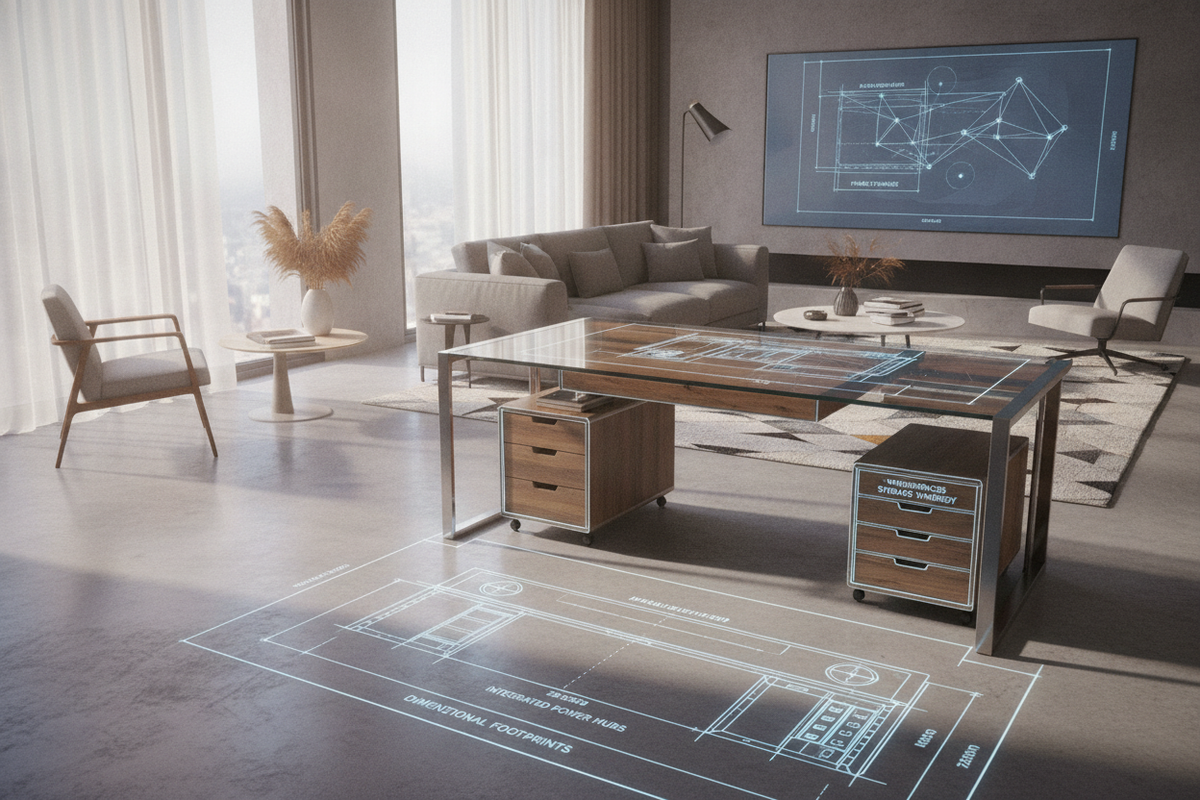
An advanced ergonomic chair should function within a unified spatial ecosystem. Pairing high-articulation seating with modular desks and perimeter storage ensures an intuitive, uncluttered workflow throughout the executive room.
Maintaining adequate clearance between the chair backrest in full recline and adjacent perimeter cabinetry preserves clear pathways throughout the room. Integrating a multi-functional unit, such as a comprehensive office desk product, creates dedicated zones for high-density physical file organization and office supplies, keeping the active swivel perimeter completely clear of obstructions.
Consider these primary spatial integration guidelines:
- Armrest and Desktop Height Alignment: Ensure armrest adjustments allow level alignment with desk edges to support neutral wrist positioning during heavy input tasks.
- Lateral Swivel Clearance: Maintain open floor space across the main desk span so the star-base can navigate between typing zones and writing areas without catching drawer handles.
- Rear Recline Margin: Position freestanding desks with sufficient space between the executive seating position and background bookcases or accent credenzas.
Decision Matrix: Selecting the Ideal Hi-Tech Office Chair for Your Workflow
Choosing the ideal dynamic chair configuration involves matching mechanical capability to daily workflow demands, spatial envelopes, and overall interior styling goals. Review our comprehensive office tech high guide for deeper inspiration on balancing high-performance hardware with refined decor.
- Focus and Precision Tasking: Prioritize forward-tilt capabilities, synchronized tension controls, and multi-directional 4D armrests that lock firmly into typing and drafting angles.
- Collaborative and Hybrid Workflow: Select models featuring self-weighing kinetic counterbalance mechanisms and flexible upper backrests that allow torso twisting during discussions.
- Executive Strategy and Media Review: Look for deep recline lock positions, articulating headrest assemblies, and substantial dual-density seat cores paired with matching storage furniture.
By evaluating mechanical kinematics, dimensional clearances, and material durability as a cohesive whole, you can curate a workspace that feels visually balanced, highly organized, and effortlessly supportive throughout demanding workdays.

Laisser un commentaire
Ce site est protégé par hCaptcha, et la Politique de confidentialité et les Conditions de service de hCaptcha s’appliquent.