


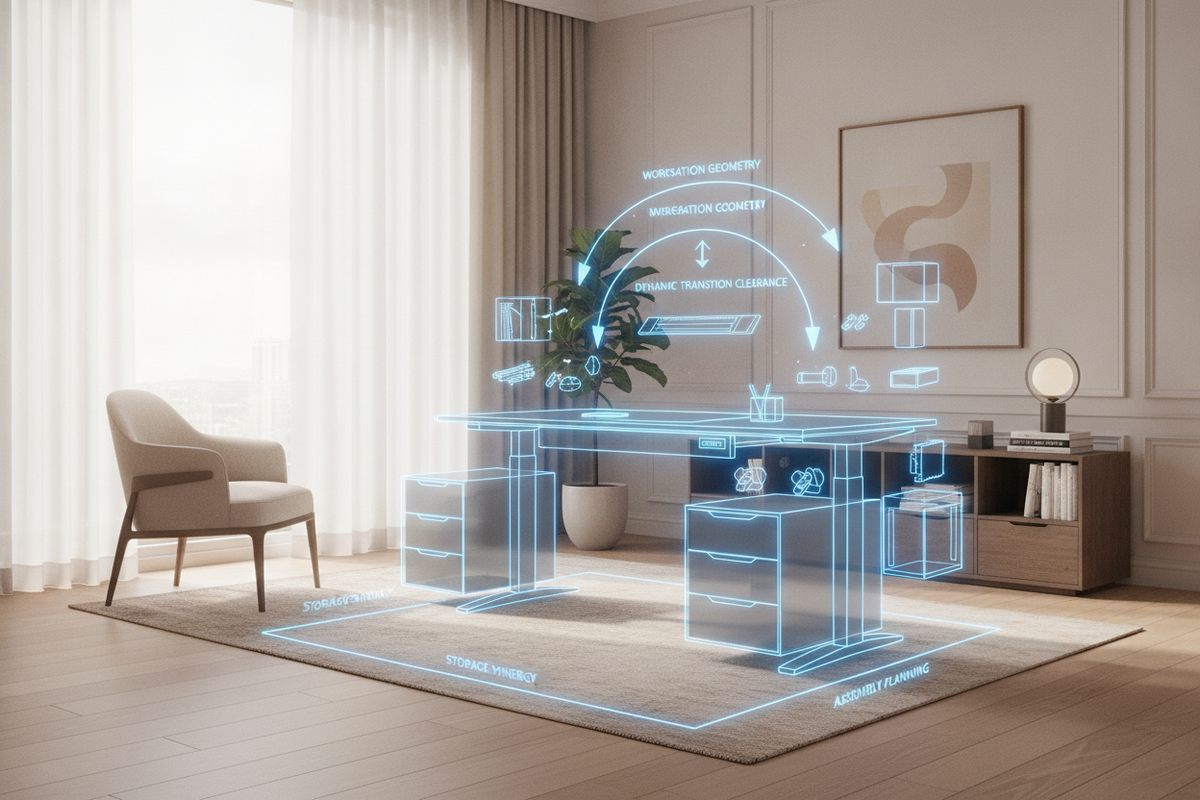
Architectural Geometry and Surface Planning for the Eureka I1 Standing Desk
Designing an efficient workstation begins with mapping physical room dimensions against daily task ergonomics. The eureka i1 standing desk offers a streamlined, purposeful footprint designed to harmonize compact home offices with functional surface utility. When laying out a sit-stand station, surface planning should prioritize natural reach envelopes. The primary zone encompasses the immediate arc reachable with elbows bent comfortably at your side, while the secondary zone holds reference items, task lamps, and secondary input controls that require only light arm extension.
For computer setups involving a primary laptop connected to an external display, managing surface depth is critical to visual comfort. Positioning monitor arms along the rear edge opens up central real estate for desktop blotters, keyboards, and analog drafting pads. In dedicated study alcoves or dual-purpose guest spaces, selecting a dedicated adjustable height standing product helps align your primary work plane with surrounding window sills, architectural paneling, and adjacent credenzas. When planning a versatile eureka ergonomic electric standing desk configuration, arranging hardware so cables and accessories stay anchored within designated reach zones prevents unnecessary physical strain during height shifts.
Evaluating Motorized Desks vs Desktop Converters: Spatial Dynamics
Workspace planners often evaluate whether a full motorized standing desk or an add-on converter unit best suits their spatial limitations. Retrofit designs such as the eureka 31.5 electric sit stand converter, eureka ergonomic standing desk converter, or compact eureka desk converter integrate dynamic height adjustments directly onto an existing stationary table or heritage credenza. These units elevate a localized upper tier holding monitors and keyboards while the primary desktop structure remains stationary beneath.
While adding a eureka electric standing sit stand converter or mechanical eureka standing desk converter provides flexible height adjustment without discarding current furniture, it creates a distinct multi-tiered visual profile. In contrast, a full electric desk elevates the entire continuous surface, offering an expansive, uniform plane for larger paperwork, desktop organizers, and multiple input devices. When assessing your room's spatial balance before choosing between an add-on riser and a dedicated desk, exploring an editorial standing desk converter guide helps evaluate base footprint stability, visual weight, and tabletop surface distribution.
Vertical Clearance and Dynamic Elevation Geometry
Motorized workstations transform stationary floor layouts into kinetic, three-dimensional spatial zones. Because the desk surface moves vertically throughout the day, clearances must be calculated across both the lowest seated position and the highest standing posture. Wall-mounted shelving, framed art, wall sconces, and window trim must all sit safely outside the upward travel path of displays and desktop accessories.
For wider multi-monitor environments or expansive workstations similar to a eureka ergonomic 65 inch electric height adjustable standing desk, planning vertical geometry also involves rear wall clearance and dynamic cable routing. Desktops must maintain a slight gap from drywall surfaces to avoid friction scuffs during motorized travel. Introducing an expansive height adjustable standing product into an executive office requires generous slack in display leads, surge protectors, and power cords. Bundling cables into flexible vertical spines ensures wires extend and contract cleanly without binding against structural crossbeams or stretching electrical connections.
Step-by-Step Assembly Workflow and Structural Alignment
A methodical assembly sequence ensures stable frame alignment, smooth motorized performance, and lasting structural integrity for your eureka i1 standing desk. Proper staging prevents surface blemishes and simplifies hardware installation from start to finish.
- Unboxing and Floor Staging: Clear a wide perimeter on your office floor. Lay down a protective moving blanket or corrugated packing panels to cushion tabletop finishes and painted steel legs against scratches during inverted frame construction.
- Subframe and Crossbar Alignment: Position the lifting columns and attach the telescoping support beams. Keep connecting fasteners hand-tight during initial placement to allow gentle shifting while matching mounting brackets to pre-threaded desktop anchors.
- Transmission Rod and Motor Synchronization: Fit the central drive shaft or motor couplings squarely into their corresponding receiver splines without forcing components, ensuring both lifting legs receive synchronized vertical drive.
- Diagonal Fastener Torquing: Once all frame components are positioned, tighten all underside bolts in a balanced crisscross pattern. This distributes structural load evenly across the steel chassis and prevents mechanical binding during vertical motion.
- Base Leveling and Glide Calibration: Flip the completed workstation upright with a partner. Adjust the threaded leveling feet under each base foot until the frame sits completely stable on hard floors or carpets before connecting electrical power.
Room Archetypes and Integrated Storage Synergy
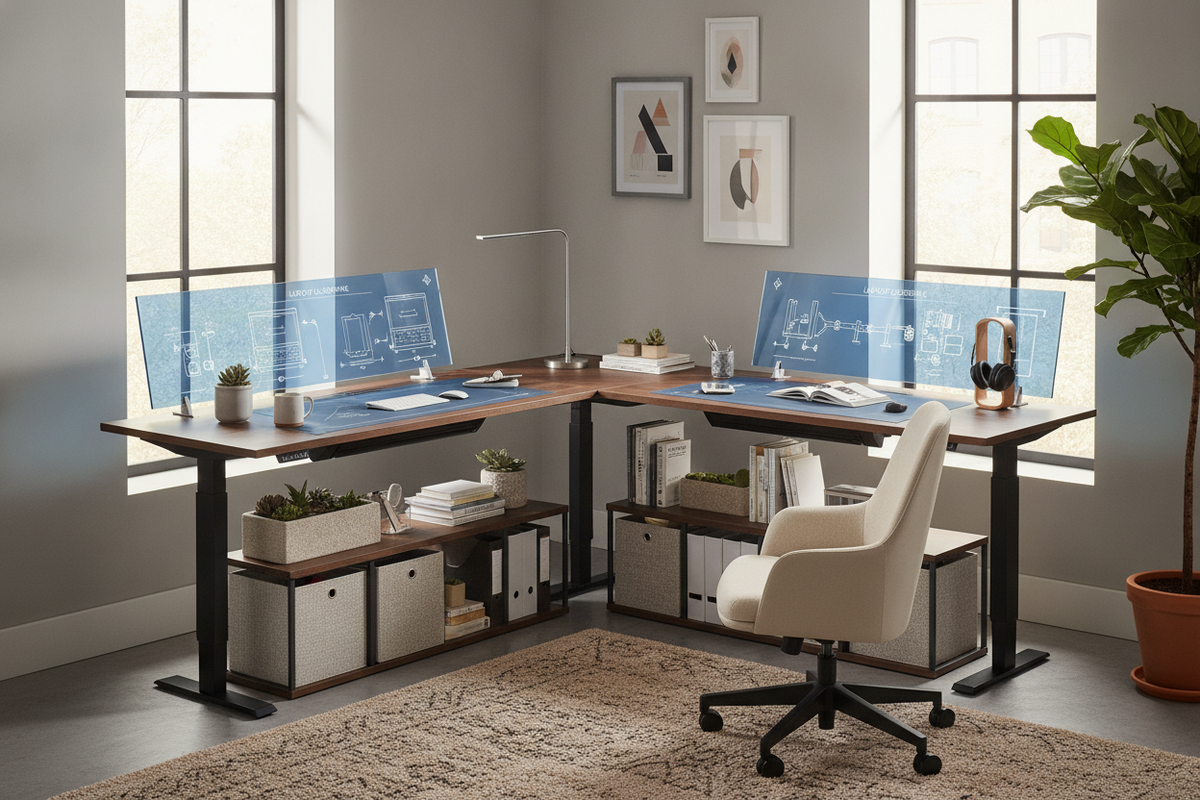
Because sit-stand desks elevate independently from under-desk structures, coordinating your workstation with freestanding perimeter storage maintains organization without restricting vertical movement. Mobile file pedestals, low lateral credenzas, and modular wall units keep everyday supplies accessible while keeping the area beneath the desk clear for comfortable legroom.
Arranging a low-profile storage credenza perpendicular to the desk creates an efficient L-shaped workflow, providing dedicated surface space for heavy printers, scanners, or reference catalogs. Along adjacent walls, incorporating an adjustable collection allows you to tailor shelf heights to binders, storage bins, and decorative accents. This modular approach preserves an open aesthetic, balancing active sit-stand productivity with harmonious home office interior design.

Laisser un commentaire
Ce site est protégé par hCaptcha, et la Politique de confidentialité et les Conditions de service de hCaptcha s’appliquent.