



Modern dynamic work environments prioritize fluid movement, spatial balance, and structural reliability. Transitioning between seated and standing postures throughout the working day has become a core element of home office and corporate planning. An ergotron desk stand offers a dedicated mechanical framework designed to convert static office furniture into an active sit-stand setup without requiring the complete removal of existing furniture.
Understanding how a desktop sit-stand workstation interacts with primary furniture surfaces, load distribution, and surrounding interior organization is essential. Selecting the right configuration involves balancing mechanical lift paths, ergonomic keyboard drops, screen elevations, and perimeter storage integration.
The Sit-Stand Transformation: Principles of the Ergotron Desk Stand
Static desks often lock users into fixed postures that can lead to physical fatigue and reduced daily dynamism. An ergotron sit-stand conversion unit solves this spatial challenge by resting directly atop an existing tabletop, creating an adjustable secondary deck. By employing counterbalanced mechanical tension or pneumatic lift assists, an ergotron workfit sit stand workstation allows users to elevate screens, keyboards, and accessories smoothly.
This retrofitting strategy preserves traditional executive desks, built-in architectural cabinetry, or heirloom wooden surfaces while introducing modern postural flexibility. Instead of undertaking a full structural overhaul, workspace planners can implement an ergonomic elevation tier that operates entirely within the footprint of the host surface.
Surface Footprint and Vertical Lift Geometry
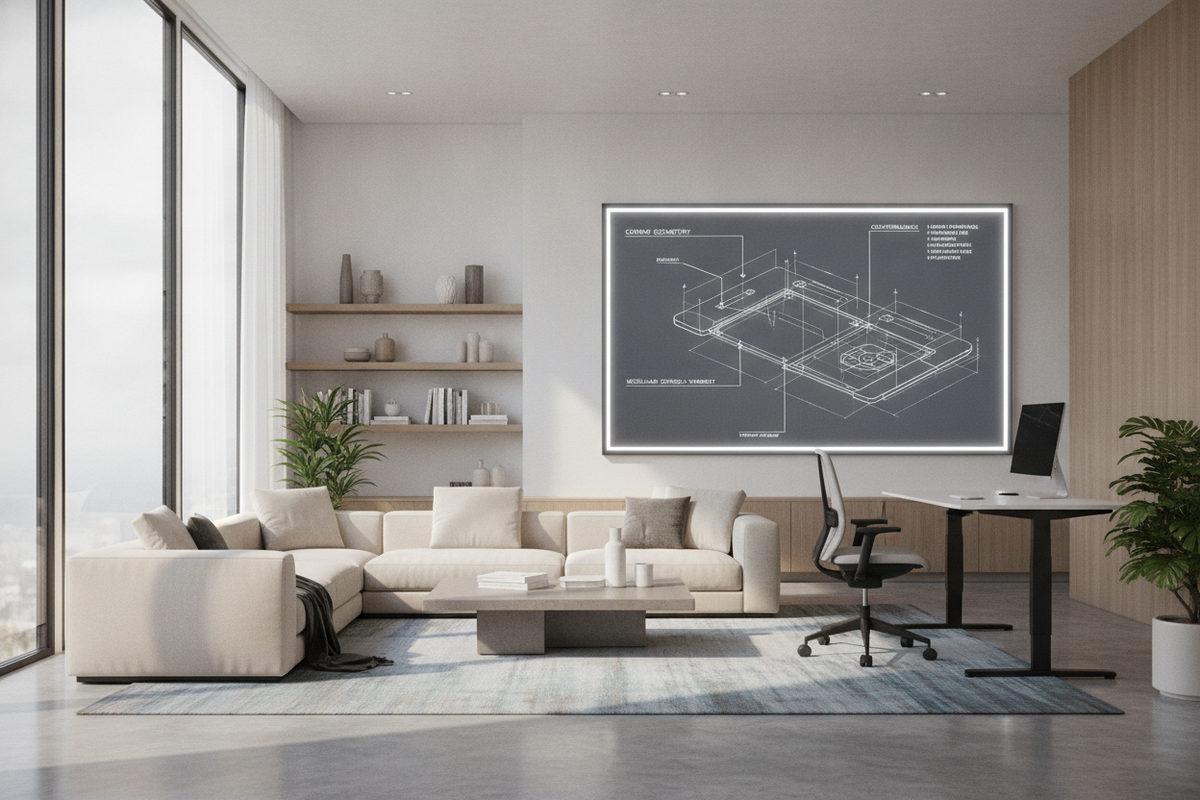
Integrating an ergotron desk riser requires careful evaluation of surface dimensions, reach zones, and vertical travel envelopes. Tabletop risers are engineered with distinct mechanical kinematics that influence how space is consumed during height adjustments.
Straight-Up Vertical Clearance vs Scissor Arc
Mechanical risers typically use either a continuous vertical lift column or an outward-arcing scissor linkage. A straight vertical lift mechanism raises the equipment directly upward within the base footprint. This motion path prevents the workstation from swinging forward into the user's primary walkway or colliding with partition panels and rear walls.
Conversely, outward-arcing mechanisms shift slightly toward the user during elevation. While this brings displays closer for focused viewing, it alters the user's standing distance and requires additional clearance behind the chair. When surface depth is limited, reviewing alternative screen elevation strategies helps determine whether a desktop riser, dynamic monitor arm, or external support best preserves usable desktop territory.
Tiered Platform Mechanics and Reach Envelopes
An effective ergotron sit stand desk configuration utilizes a two-tier architectural profile. The upper platform elevates primary screens and desktop organizers to natural eye level, while a recessed lower platform positions keyboards and input mice below the primary plane. This tiered separation supports neutral wrist alignment when typing and prevents excessive neck tilting during extended screen sessions across diverse ergotron workstations.
Structural Desk Compatibility and Load Balancing
Before placing an ergotron standing workstation onto a primary desk, evaluating the structural integrity of the underlying furniture is critical. Tabletop risers concentrate the combined mass of the riser mechanism, displays, mounting brackets, and peripheral accessories onto specific base contact points.
- Base Surface Substrate: Solid hardwood, dense medium-density fiberboard, and structurally reinforced wood composite surfaces distribute heavy localized pressure evenly. Honeycomb cardboard-core surfaces or thin unsupported spans may bow under concentrated center loads.
- Frame Stability: Sturdy four-leg foundations or rigid steel trestle bases prevent wobbling when the workstation is fully elevated to its maximum vertical stroke.
- Counterbalance Tensioning: Proper counterbalance tuning balances the combined weight of attached monitors and input accessories against internal tension springs. When calibrated correctly, learning how to lower ergotron standing desk platforms and raise them smoothly requires only light manual guidance.
An ergotron adjustable desk converter functions best when the counterbalanced tension closely mirrors the payload, eliminating sudden drops or resistance during upward transitions.
Full Sit-Stand Desks vs Desktop Risers: A Strategic Comparison
Workspace planners often evaluate whether to install a tabletop riser on an existing desk or replace the entire workstation with a motorized full-frame surface.
- Surface Retainment: A tabletop converter allows you to keep existing furniture, including desks with integrated modesty panels, executive pedestal drawers, or specialized historical finishes.
- Usable Workspace Area: A tabletop riser occupies a defined central footprint, leaving perimeter surface area static. Conversely, complete height-adjustable standing desk solutions raise the entire continuous desktop surface together, lifting note pads, task lighting, and auxiliary equipment in unison.
- Multi-Display Integration: While an ergotron standing desk dual monitor bracket securely positions dual screens on a compact platform, expansive multi-monitor setups with heavy audio equipment often benefit from the broader, unencumbered lifting capacity of a full adjustable desk frame.
- Installation Complexity: Desktop risers require minimal mechanical assembly and no architectural alterations, providing an immediate upgrade path for leased corporate offices or multi-use home suites.
Room Archetypes, Finish Aesthetics, and Cable Routing
Integrating an ergonomic workstation into a cohesive interior design scheme requires aligning mechanical components with room finishes and lighting. Whether configured within an open-concept corporate floor, a compact bedroom alcove, or a dedicated private library, visual harmony keeps the workspace inviting.
Modern workfit by ergotron units and contemporary ergotron table designs frequently feature clean matte black or crisp white finishes. Crisp white risers coordinate seamlessly with light oak, Scandinavian birch, or painted millwork, minimizing visual weight in compact spaces. Matte black frameworks pair naturally with industrial walnut, charcoal accents, and textured metal elements.
Dynamic vertical motion requires proactive cable management. Because the distance between desktop displays and floor outlets expands as the riser ascends, cables must be routed with sufficient slack. Spiral cable wraps, under-desk raceways, and articulated spine channels protect power cords and video conduits from tension, pinching, or accidental disconnection across daily adjustment cycles.
Perimeter Storage Synergy and Clutter Control
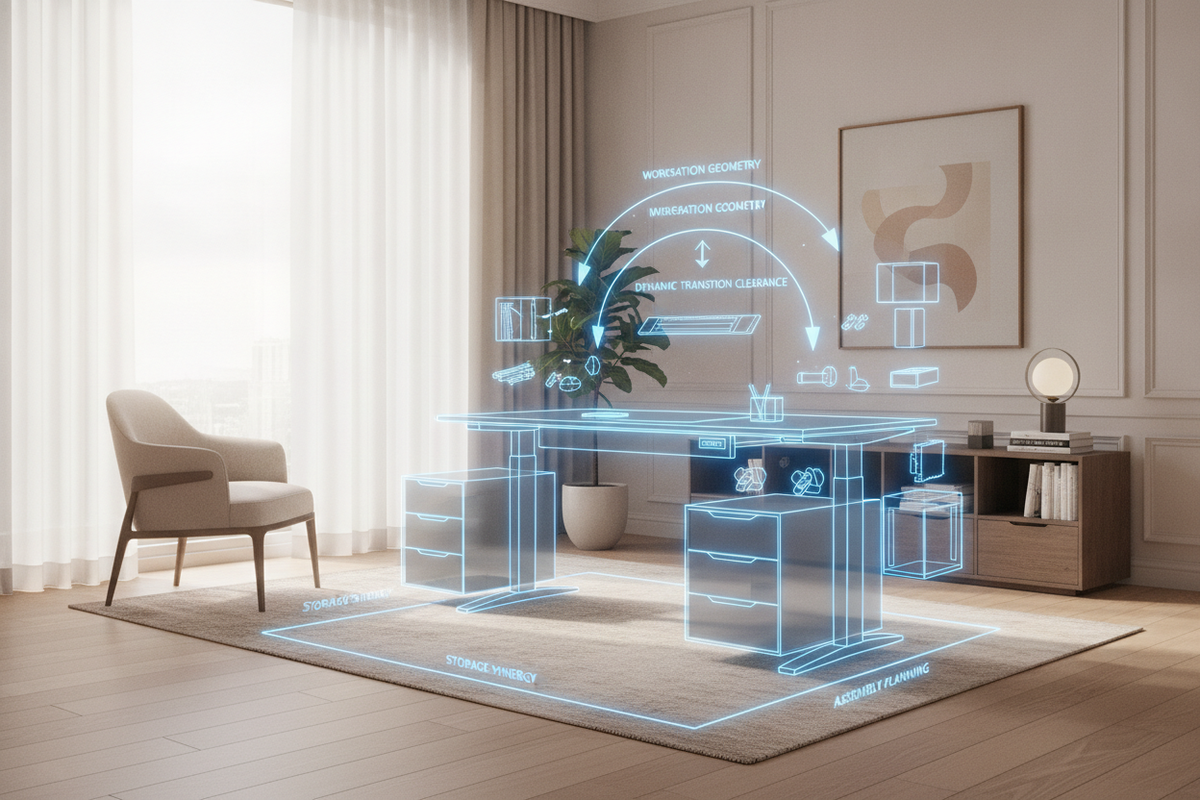
Because an ergotron standing converter occupies a defined central footprint on the main surface, surrounding storage elements are critical for maintaining an organized work zone. Clutter on the primary desktop can obstruct mechanical arms, pinch keyboard trays, or block smooth vertical movement.
Pairing a sit-stand riser with perimeter credenzas, low-profile lateral filing units, and adjustable shelf storage collections shifts reference binders, secondary electronics, and stationery away from dynamic movement pathways. Wall-mounted shelving and freestanding modular cabinetry keep essential supplies within arm's reach while preserving the clear horizontal envelope necessary for an ergotron workfit dual workstation to operate unhindered.
Selection, Installation, and Daily Maintenance Checklist
Executing a seamless sit-stand upgrade requires systematic verification across spatial, structural, and operational dimensions:
- Measure Base Clearances: Verify that the primary desk depth and width accommodate the riser base footprint while leaving adequate room for perimeter accessories.
- Calculate Total Payload: Sum the mass of monitors, mounts, keyboard, mouse, and desktop accessories to ensure the configuration aligns with the counterbalance tension range.
- Calibrate Dynamic Tension: Adjust the mechanical tension bolts until the platform floats effortlessly, remaining stable at intermediate heights without creeping upward or downward.
- Check Kinetic Wire Slack: Elevate the platform to its highest position and verify that all power, monitor, and peripheral cables remain relaxed and free from mechanical pinch points.
- Inspect and Clean Movement Tracks: Periodically clear dust and debris from mechanical tracks and pivot joints to preserve quiet, friction-free movement.
Thoughtful spatial planning, careful structural assessment, and strategic perimeter storage coordination allow an ergonomic sit-stand converter to blend smoothly into any professional work environment.

Laisser un commentaire
Ce site est protégé par hCaptcha, et la Politique de confidentialité et les Conditions de service de hCaptcha s’appliquent.