


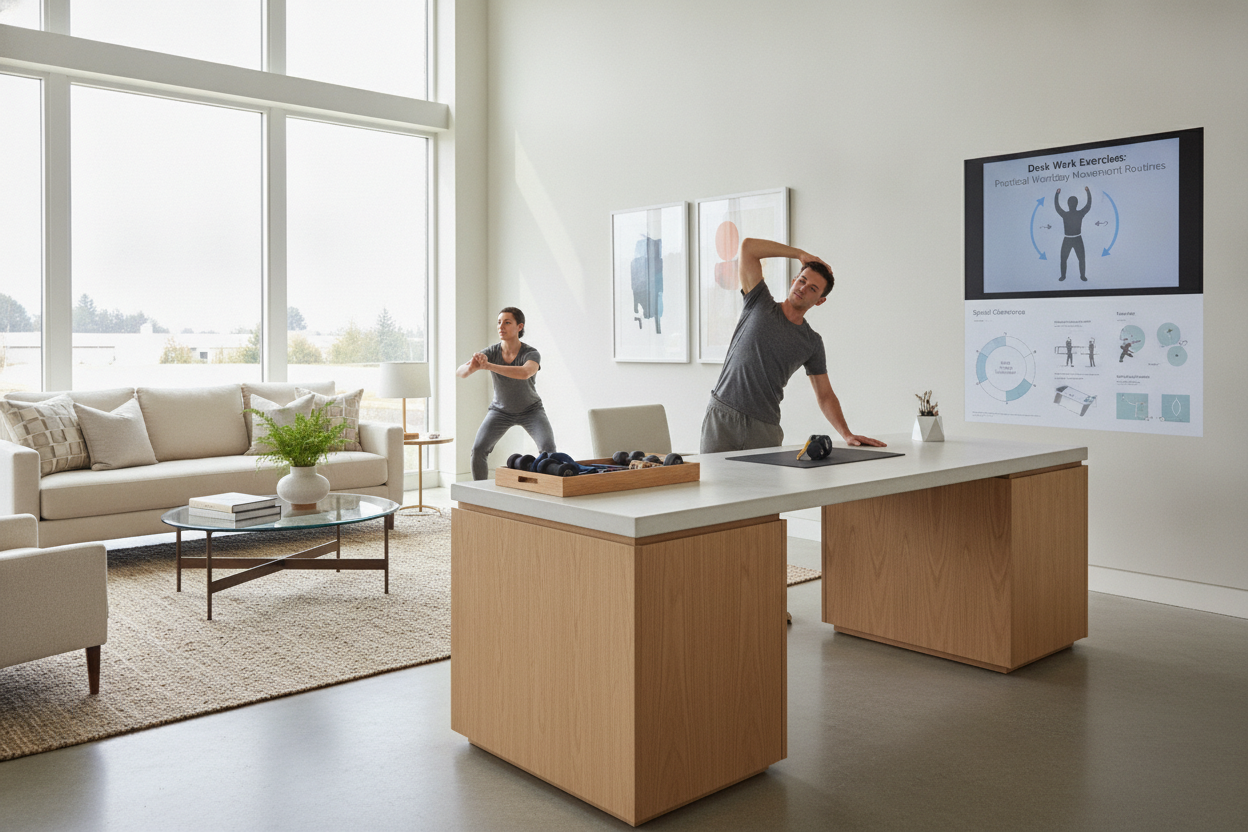
The Role of Movement in Sedentary Workstations
Spending extended hours focused on digital monitors often leaves professionals in prolonged, static positions. While dedicated task chairs and aligned monitor arms provide foundational support, staying immobile for hours at a time can contribute to physical stiffness, sluggish circulation, and postural fatigue. Integrating regular desk work exercises into your daily routine offers a practical way to break up continuous sitting without interrupting complex professional tasks.
Subtle physical activation during the workday does not require specialized gym gear or intense physical exertion. By introducing deliberate joint mobility, gentle muscular engagements, and low-impact desk aerobics, you can promote comfort and physical responsiveness throughout long working blocks. Combining structured movement with a well-arranged workspace ensures that daily activity feels natural, discrete, and productive.
Workstation Clearance: Planning Space for Desk Movement Routines
Effective movement at a computer station relies heavily on spatial planning and structural clearance. Before attempting seated or standing routines, evaluate your immediate perimeter to ensure adequate room for limb extension and dynamic shifts. A cluttered under-desk area restricts foot positioning and limits knee movement, turning simple mobility exercises into awkward maneuvers.
Key structural considerations for an active workstation include:
- Unobstructed Leg-Well Depth: Ensure the space beneath your primary surface is free of storage boxes, excess wiring, or misplaced CPU towers. Exploring dedicated writing computer desk options with wide, open leg openings provides the necessary clearance for full leg extensions and knee lifts.
- Perimeter Chair Clearance: Maintain open floor space behind and beside your office chair to allow seamless transitions from seated tasks to standing stretches.
- Surface Border Margin: Keep the front edge of your primary desktop clear of delicate glassware or loose paperwork so your hands and forearms have stable points of contact for seated upper-body stretches.
Upper-Body Postural and Mobility Exercises at Your Desk
Upper-body tension commonly accumulates around the neck, shoulders, and upper back during concentrated computer work. Performing low-profile upper-body exercises while reviewing documents, reading emails, or listening to conference calls helps counteract forward-slumping tendencies.
Consider integrating these simple upper-body routines:
- Seated Scapular Retractions: Sit upright with your feet flat on the floor. Draw your shoulder blades gently back and downward, holding the engagement briefly before releasing. This movement opens the chest and engages the upper back musculature.
- Seated Torso Rotations: Place your right hand across to your left knee while keeping your hips square in the chair. Gently rotate your torso toward the left, pausing to breathe before switching sides to support spinal rotation.
- Wrist and Forearm Extensions: Extend one arm forward with the palm facing out and fingers pointed upward. Use the opposite hand to apply gentle pressure back toward the body, relieving tension built up from continuous keyboard and mouse usage. When planning desktop ergonomics, consulting a guide to desktop computer workstations helps coordinate monitor heights and keyboard levels for better posture between stretches.
- Neck Tilts and Half-Rolls: Lower your right ear toward your right shoulder until a gentle stretch is felt along the left side of the neck. Hold momentarily, return to center, and repeat on the opposite side to ease cervical stiffness.
Lower-Body and Low-Impact Desk Aerobic Movements
The lower body often remains completely dormant during standard office work. Activating the legs, hips, and calves encourages healthy blood flow and activates major muscle groups right from your desk chair.
Effective seated and desk-adjacent lower-body exercises include:
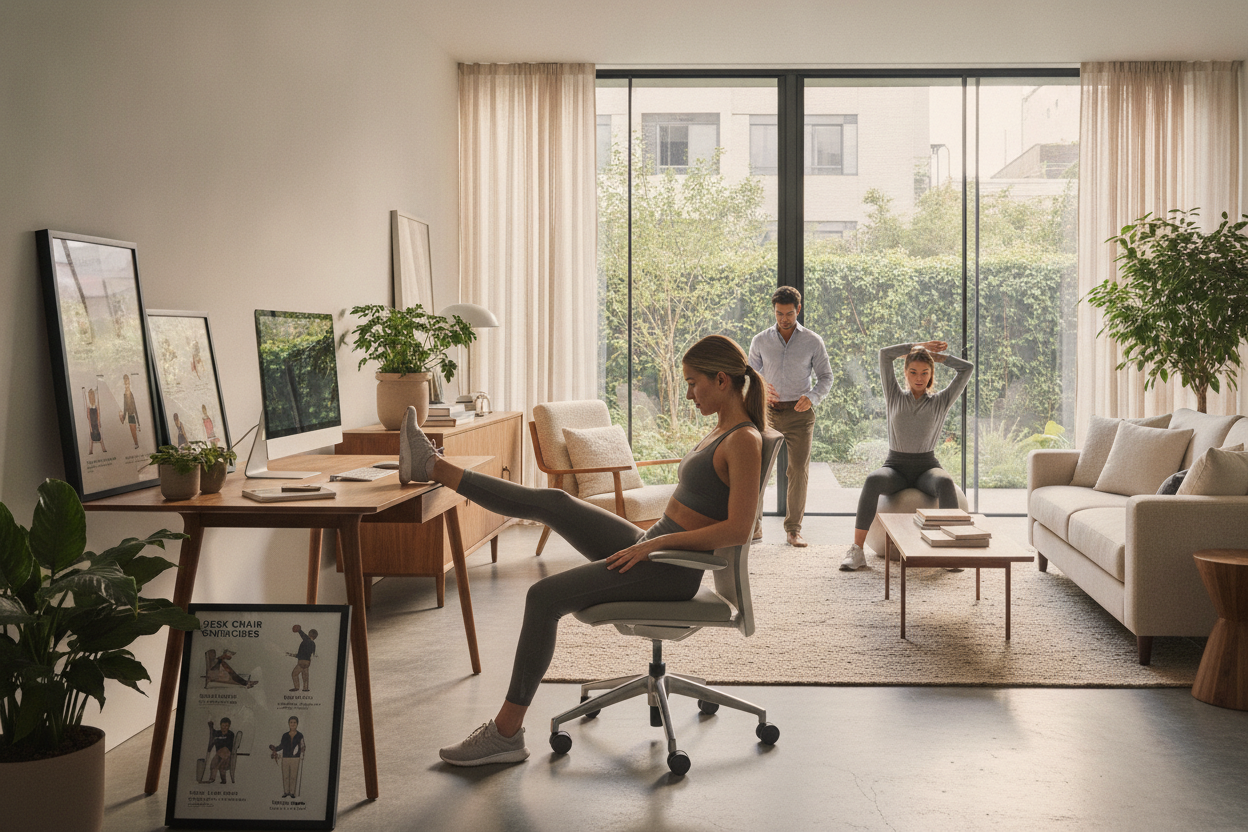
- Seated Leg Extensions: While seated upright, extend one leg straight out in front of you until it is parallel to the floor. Hold the quadricep engagement for a few seconds before lowering the foot under control, alternating legs across a set.
- Calf and Shin Flexes: Keep your toes planted and lift your heels as high as possible to contract the calves. Follow this immediately by lowering your heels and lifting your toes toward your shins to engage the anterior lower leg.
- Isometric Glute Squeezes: Squeeze your gluteal muscles firmly while seated, hold for five to ten seconds, and release. This subtle movement can be performed during virtual meetings without any visible disruption.
- Desk-Supported Chair Squats: Stand directly in front of your chair, lightly resting your fingertips on a sturdy work surface like a spacious corner computer desk with storage for balance. Lower your hips toward the seat without fully sitting down, then press through the heels to return to a standing position.
Furniture Stability and Storage Zoning for Active Workdays
Engaging in desk-supported movements requires a reliable, stable workstation foundation. Flimsy tables or lightweight utility surfaces can shift or wobble when you lean against the desk edge for balance or perform dynamic stretches. Selecting furniture with solid joinery, durable leg structures, and level feet protects monitors, desktop accessories, and connected devices from tipping or vibrating.
Storage organization also plays a central role in maintaining an active-friendly workstation. By using closed drawer pedestals, lateral credenzas, or compact enclosed computer desk layouts, you can keep work supplies contained. Clear floor zones and tidy desktops reduce accidental collisions and give you full confidence to move freely throughout the day.
Structuring Daily Movement Habits Without Breaking Workflow
Consistency is key to gaining the full benefits of workday physical activity. Attempting rigid, prolonged workout routines in the middle of a high-pressure workday is rarely sustainable. Instead, pair micro-movement intervals with existing task transitions to build effortless habits.
Consider establishing movement cues tied to your daily schedule:
- Email Review Intervals: Perform seated calf raises or ankle circles while clearing your morning inbox.
- Call-Based Posture Resets: Use audio-only calls to stand, stretch your chest, or complete a set of desk-supported squats.
- Task-Switching Mobility Pauses: Spend thirty seconds stretching wrists and rotating your shoulders between completing one project milestone and opening another.
By treating movement as an organic component of your workstation rather than a disruptive interruption, you create an ergonomic environment that supports focus, flexibility, and physical comfort throughout every working hour.

Laisser un commentaire
Ce site est protégé par hCaptcha, et la Politique de confidentialité et les Conditions de service de hCaptcha s’appliquent.