


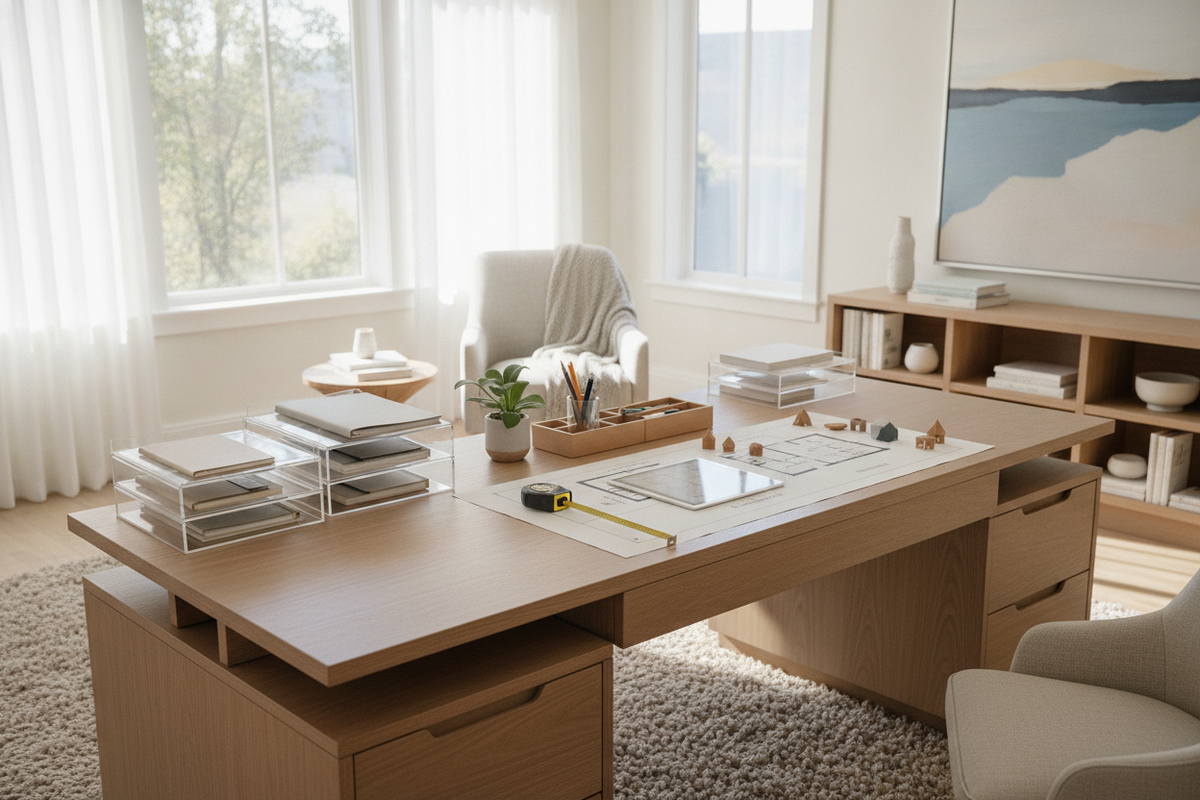
A well-planned workstation serves as the operational anchor of any productive home office or study. Selecting a dedicated desk with organization transforms daily workflow by eliminating visual clutter, streamlining task transitions, and ensuring essential tools remain easily accessible. Rather than treating storage as an afterthought with scattered tabletop organizers, evaluating furniture built with integrated storage architecture creates a cohesive, durable, and balanced working environment.
Integrated Workstation Storage Architectures
Integrated storage designs vary widely in how they allocate volume relative to the primary work surface. Selecting an effective organization desk begins with understanding the core structural configurations available:
- Vertical Hutch Systems: Tiered overhead cabinetry and open shelving capture unused vertical wall area. This typology suits rooms with compact footprints where upward storage preserves valuable floor area while providing dedicated cubbies for books, binders, and peripheral hardware. Pairing these setups with practical desk accessories and sorting tools creates structured compartmentalization inside open compartments.
- Pedestal Drawer Units: Single or double pedestals flank the seating area to supply stacked utility drawers and hanging file cabinets. This architecture anchors the furniture securely while keeping heavy paperwork, stationery, and hardware accessories below sightlines.
- Under-Desktop Apron Drawers: Slim, shallow horizontal drawers span directly beneath the central worktop. These compartments house writing implements, tablets, and slim laptops without infringing substantially upon knee clearance.
- Modular Credenza and Return Configurations: An L-shaped or corner workstation pairs a primary table with a secondary low-profile credenza. This layout provides an expansive secondary surface dedicated to printers, charging hubs, and deep storage cabinets.
Dimensional Footprints and Spatial Planning
A successful installation requires balancing desk proportions against room flow and ergonomic seating envelopes. When evaluating an organization desk for your layout, spatial planning considerations ensure comfortable long-term use and efficient work desk organisation.
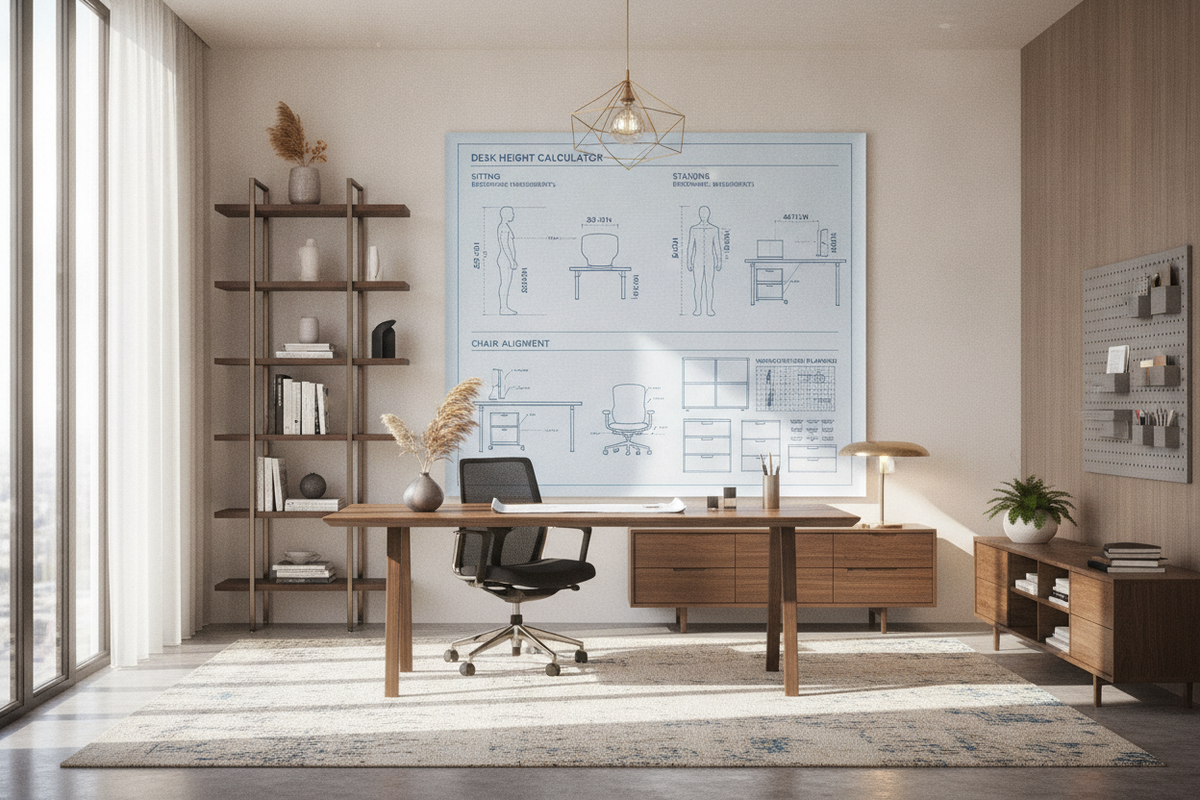
First, examine the central knee-well cavity. Storage pedestals must leave adequate lateral width and vertical clearance beneath the central work surface to accommodate natural leg movement, swivel chair armrests, and footrests. Crowding the knee-well with bulky interior cabinetry forces awkward posture and restricts movement throughout the day. Reviewing an ergonomic desk selection guide for telecommuters can help contextualize ideal seating clearances against specific workstation dimensions.
Second, account for drawer travel and door clearances. Desks with deep file drawers or hinged cabinet doors demand clear clearance zones directly in front of the furniture. Ensure perimeter walkways remain accessible even when storage drawers are fully extended during active filing tasks.
Desktop Surface Zoning and Functional Reach Protocols
Even a spacious table quickly becomes cluttered without disciplined surface zoning. Structured table organization relies on mapping your worktop into distinct ergonomic concentric reach zones:
- Primary Reach Zone: The immediate semi-circle directly in front of the user, reachable with natural forearm movement while elbows remain close to the torso. This area is reserved exclusively for active input devices, such as the keyboard, mouse, and current working documents.
- Secondary Reach Zone: Accessible by extending the arms without leaning the torso forward. This perimeter holds items referenced multiple times per day, including monitor risers, desktop task lamps, beverage coasters, and compact pen trays.
- Tertiary Reach Zone: Outer corners and upper hutch shelves reachable by leaning or standing. These spaces accommodate desktop printers, archive boxes, reference books, and decorative accents.
Adopting a mindful workstation organization framework ensures that items transition smoothly between these zones, returning to dedicated drawers as tasks conclude rather than lingering on open surfaces.
Material Durability, Load Distribution, and Structural Assembly
A high-capacity desk with organization carries substantial weight across its frame, from computer displays and books to loaded file banks. Structural stability depends heavily on core material composition and joinery techniques:
- Core Substrates: Dense engineered wood panels, high-grade medium-density fiberboard, and solid hardwood framing each provide reliable rigidity. High-pressure laminates and melamine finishes offer enhanced resistance to moisture rings, micro-scratches, and daily wear compared to untreated veneers.
- Hardware and Drawer Glides: Full-extension ball-bearing drawer slides allow complete access to the rear corners of storage banks without sagging. Soft-close hinges and sturdy metal cam-lock fasteners help preserve joint alignment over years of repeated opening and closing.
- Load Balancing: Distribute heavy reference manuals, paper reams, and tech equipment across lower pedestal tiers rather than concentrating weight in upper hutch shelves to preserve furniture equilibrium and overall stability.
Workflow Profiles: Matching Storage Typologies to Use Cases
Different daily routines demand specialized storage solutions to keep workflows agile and orderly:
Remote Professional
Telecommuters benefit from desks featuring integrated cord management channels, power grommets, and locking utility drawers to secure professional documents and hide peripheral cabling. Pairing a streamlined silhouette with luxury desk organization styling strategies creates a professional, video-ready background free of cord tangles.
Creative and Design Studio
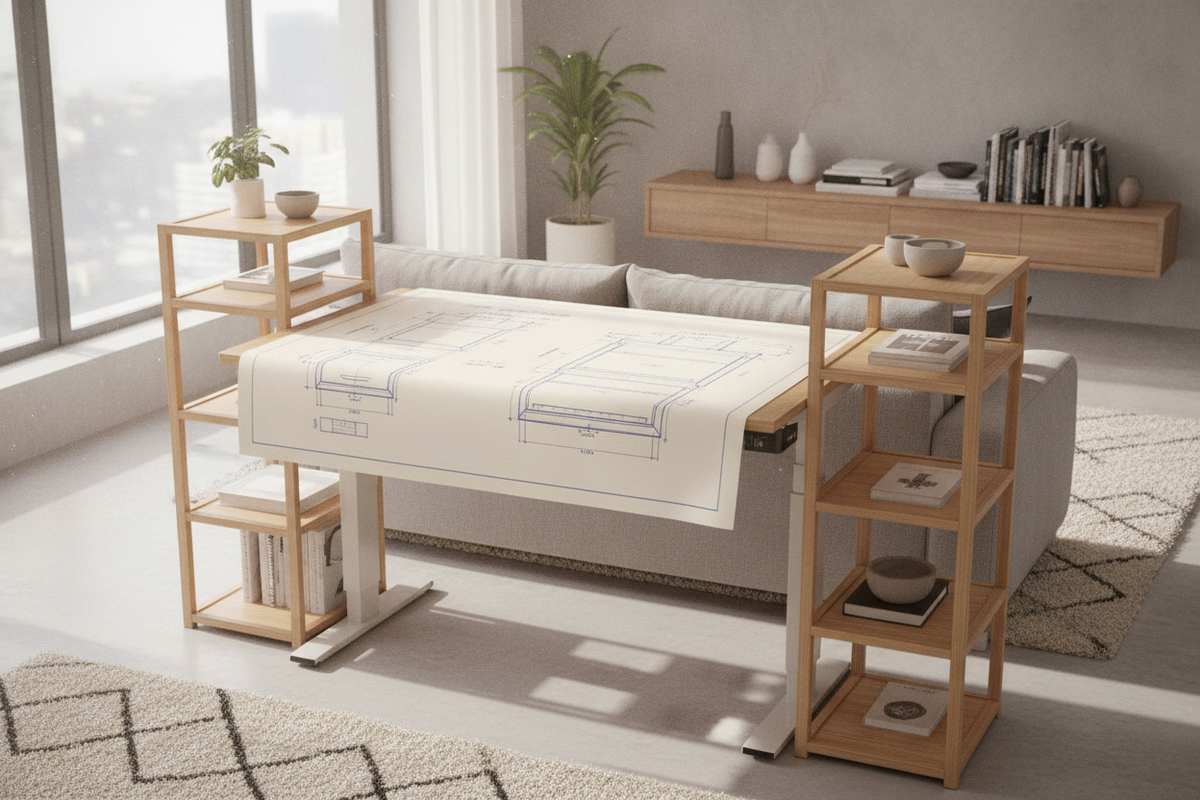
Illustrators, architects, and crafters require expansive horizontal surfaces paired with wide, shallow plan drawers or lateral shelving suitable for oversized paper stock, drawing tablets, and material swatch samples.
Academic and Student Workstation
Study desks prioritize vertical hutch shelving, corkboard backing panels, and open cubbies that provide quick visual identification of textbooks, notebooks, and study accessories.
By harmonizing structural storage capacity with disciplined surface management, an integrated desk creates a sustainable foundation for productivity, focus, and organized daily living.

Laisser un commentaire
Ce site est protégé par hCaptcha, et la Politique de confidentialité et les Conditions de service de hCaptcha s’appliquent.