


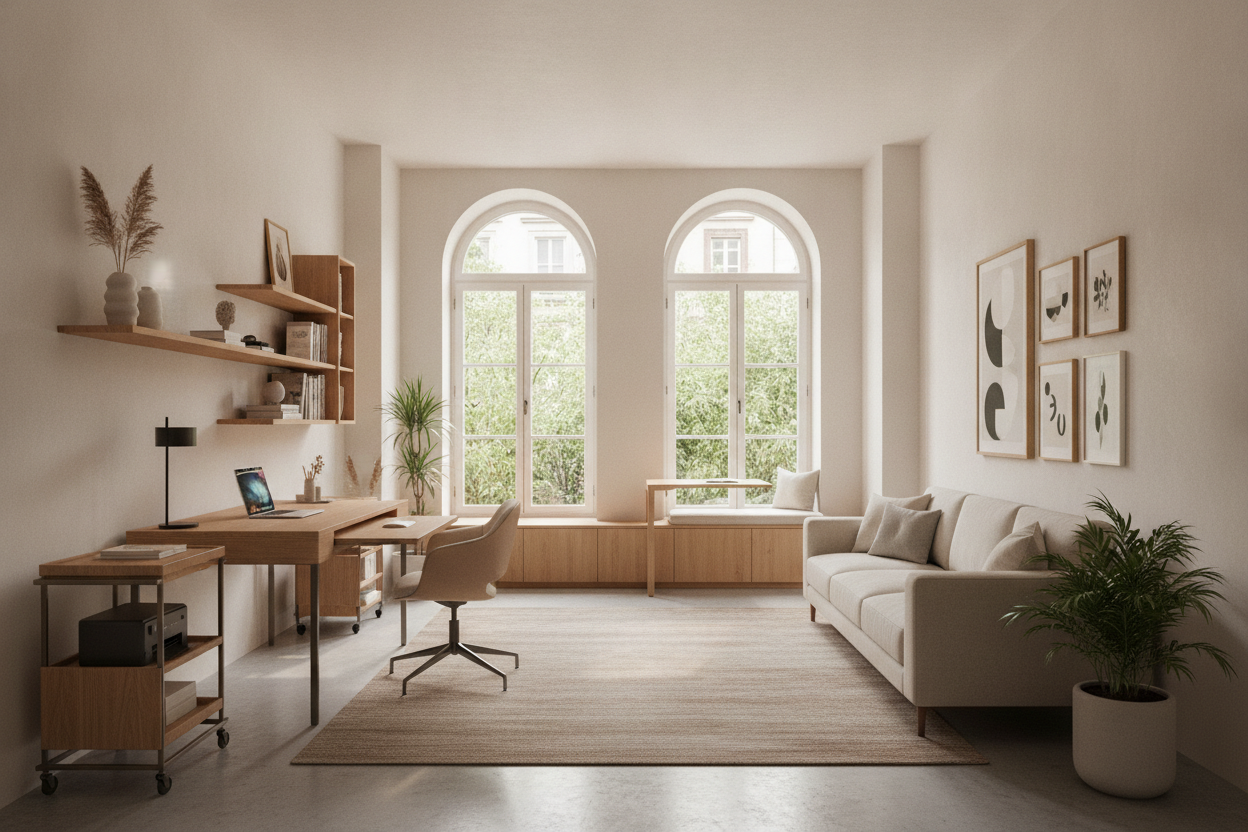
A cluttered, undersized desk is more than just an aesthetic annoyance; it is a direct obstacle to productivity. When your laptop, notebook, coffee mug, and various peripherals are all fighting for the same square foot of real estate, focus becomes difficult to maintain. The frustration of working on a cramped surface often leads many to believe they need to replace their furniture entirely. However, before you commit to a major purchase, it is worth exploring how to extend desk space without buying a new desk through smart additions and layout shifts.
By looking at your workspace through the lenses of verticality, modularity, and room fit, you can effectively expand your surface area. Whether you are working from a tiny apartment or a dedicated home office, these strategies will help you reclaim your workspace and improve your daily workflow. In my experience, a simple monitor riser can make a compact desk feel significantly deeper by creating a dedicated 'garage' for the keyboard when it is not in use.
1. Utilize Vertical Space with Monitor Stands and Risers
One of the most effective ways to maximize small desk space is to stop thinking horizontally and start thinking vertically. A monitor stand or riser lifts your screen to eye level, which is better for your posture, but its primary benefit for space-saving is the area it clears underneath. This secondary level acts as a storage nook for your keyboard, mouse, or stationery when they are not needed.
When choosing a riser, consider the depth of your desk. A riser that is too wide might dominate the surface, while one that is too shallow won't provide enough stability for your monitor. Material choice also matters: wooden risers often provide a warmer, furniture-like feel, while metal risers offer a sleek, industrial look and often include built-in mesh drawers for extra organization. Ensure the height of the riser allows your keyboard to slide underneath comfortably to clear the front of the desk for analog tasks.
2. Install Clamp-On Desk Extensions
If you are wondering how to extend a small desk without permanent modifications, clamp-on extensions are a game-changer. These platforms attach to the edge of your existing desk using a C-clamp mechanism, requiring no drilling or specialized tools. They can be placed on the side to widen the desk or on the front to add depth.
These extensions are particularly useful for creating a dedicated writing area or a spot to rest your elbows while typing. Before purchasing, check the thickness of your desktop. Most clamps are designed for standard surfaces, but if your desk has a particularly thick frame or a beveled edge, you will need to ensure the clamp's range is compatible. These are excellent for temporary setups where you might need extra space for a specific project but want to return to a smaller footprint later.
3. Add a Pull-Out Keyboard Tray
To learn how to make a small desk bigger, you must look for ways to remove bulky items from the main surface. A pull-out keyboard tray is one of the most classic solutions. By mounting the keyboard and mouse on a sliding tray underneath the desk, you free up the entire top surface for other tasks, such as sketching or reviewing documents.
This addition also offers significant ergonomic benefits. It allows you to position your input devices at a height that keeps your shoulders relaxed and your wrists neutral. Most tray kits are designed for under-desk mounting, though you should verify that your desk’s underside is flat and free of support bars that might obstruct the installation. Check the width of the tray to ensure it can accommodate both your keyboard and your mouse pad for a seamless experience.
4. Use a Rolling File Cabinet or Side Cart
If your desk too small to hold your printer, files, and tech accessories, consider moving those items to a mobile cart or a rolling file cabinet. By placing a cart flush with the edge of your desk, you effectively create a modular extension. This is a brilliant way to how to increase desk space while keeping your most-used items within arm's reach.
The key to making this work is room fit. Ideally, the height of the cart should match the height of your desk to create a seamless transition. This allows you to slide your mouse or papers across the gap without a jarring height difference. When the workday is over, these carts can often be tucked under the desk or into a corner to save floor space, making them ideal for multi-functional rooms.
5. Mount Floating Shelves Above the Desk
Walls are often the most underutilized resource in a small office. Moving non-essential items like books, speakers, and decor to floating shelves can instantly de-clutter your primary workspace. This is a core component of curating a small space desk setup that feels high end because it allows you to display items without sacrificing utility.
When installing shelves, measure the height of your monitor and any desk lamps to ensure the shelves don't interfere with your setup. Using materials that match your desk—such as oak, walnut, or white lacquer—creates a cohesive look that makes the entire office area feel larger and more intentional. This also helps in keeping the desk surface reserved strictly for active work items.
6. Employ Desk Organizers and Pegboards
Pegboards offer a modular, customizable way to how to expand desk space by moving small tools and accessories onto a vertical grid. Instead of letting pens, headphones, and charging cables sprawl across your desk, you can hang them on hooks or place them in small baskets attached to the board.
Metal grid boards are popular for a modern, minimalist look, while traditional wooden pegboards offer a classic aesthetic. This approach keeps your surface clear for actual work while ensuring that everything you need is visible and accessible. It is a highly efficient way to maximize every inch of a compact workstation, especially when you have a high volume of small office supplies.
7. Attach a Side Table or L-Shaped Extension
Sometimes the best way to how to make desk bigger is to pair it with a second piece of furniture. A small side table or a dedicated L-shaped extension can turn a standard straight desk into a sprawling workstation. This is one of the desk ideas for small apartments how to make it work when you have a corner that isn't being fully utilized.
When combining two pieces of furniture, pay attention to the leg design. You want to ensure that you can move your chair freely between the two surfaces without bumping into legs or supports. Matching the finish of the two pieces will help the setup look like a single, unified unit rather than a haphazard collection of furniture. This configuration is perfect for those who need to separate their computer work from their paperwork.
8. Swap to a Monitor Arm or Wall Mount
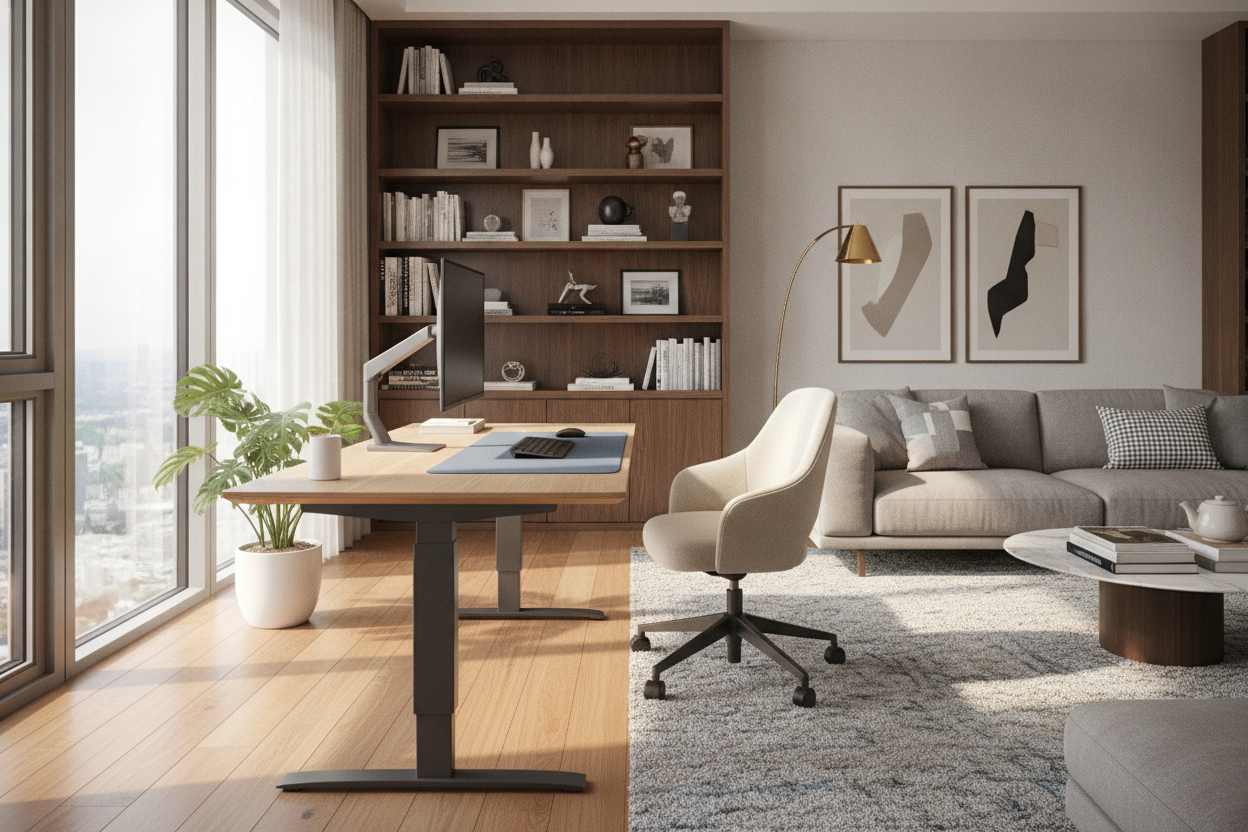
The base of a standard monitor can take up a surprising amount of room. By switching to a monitor arm that clamps to the back of the desk, you reclaim that footprint. This allows you to float your screen above the desk, leaving the area directly underneath completely open for storage or movement.
Monitor arms are especially useful for dual-monitor setups in tight spaces. However, before installing one, check the material of your desk. Solid wood or heavy-duty plywood can easily support the concentrated weight of a clamp-on arm, but thinner particleboard desks may require a reinforcement plate to prevent the clamp from damaging the surface. This change also allows for greater flexibility in screen positioning throughout the day.
9. Optimize Cable Management
Visual clutter can make a desk feel much smaller than it actually is. Tangled cords not only look messy but also physically occupy space and make it difficult to move items around. Using under-desk cable trays, zip ties, and adhesive clips can transform a chaotic wire nest into a streamlined system.
By routing cables along the legs of the desk and hiding power strips underneath, you free up both surface area and footroom. A clean, wire-free desk surface feels more expansive and allows you to focus on the task at hand rather than the mess at your feet. This is a low-cost solution that yields high visual and functional returns.
10. Leverage Under-Desk Storage Solutions
The space beneath your desk is often neglected. You can add adhesive drawers to the underside of the desktop to hold small items like sticky notes, pens, and USB drives. These drawers stay hidden when not in use, keeping your surface pristine.
Another option is to use a footrest that includes built-in storage. While these are smaller additions, they contribute to the overall goal of keeping the desk surface clear. Just be careful to balance your storage needs with your legroom; you don't want to extend your storage so much that you can no longer sit comfortably or tuck your chair in at the end of the day.
11. Re-evaluate Room Fit and Layout
Sometimes the feeling of a cramped desk is caused by the room layout rather than the desk itself. designing small mastering the space saving desk ikea layout involves positioning your furniture to maximize light and flow. Placing a desk near a window can make the workspace feel more open, while tucking it into a dedicated nook can provide a sense of boundaries.
Consider how your desk interacts with the rest of the room. If it is pushed against a wall in a way that blocks traffic, you might feel more restricted. Experimenting with different angles or moving the desk to a more open area can change your perception of the space and make even a small desk feel more functional. Modular furniture layouts allow you to adapt the space as your needs evolve.
Conclusion: Transform Your Workspace
Extending your desk space doesn't always require a trip to the furniture store for a replacement. By implementing vertical storage, utilizing clamp-on extensions, and optimizing your room layout, you can create a highly efficient and spacious workstation. Always remember to measure your desk's dimensions and material thickness before investing in add-ons to ensure a perfect fit.
If you find that these modifications still aren't enough to meet your professional needs, it may be time to explore a dedicated small space solution designed specifically for compact living. With the right combination of organization and smart furniture additions, you can turn even the smallest desk into a powerhouse of productivity.

Laisser un commentaire
Ce site est protégé par hCaptcha, et la Politique de confidentialité et les Conditions de service de hCaptcha s’appliquent.