


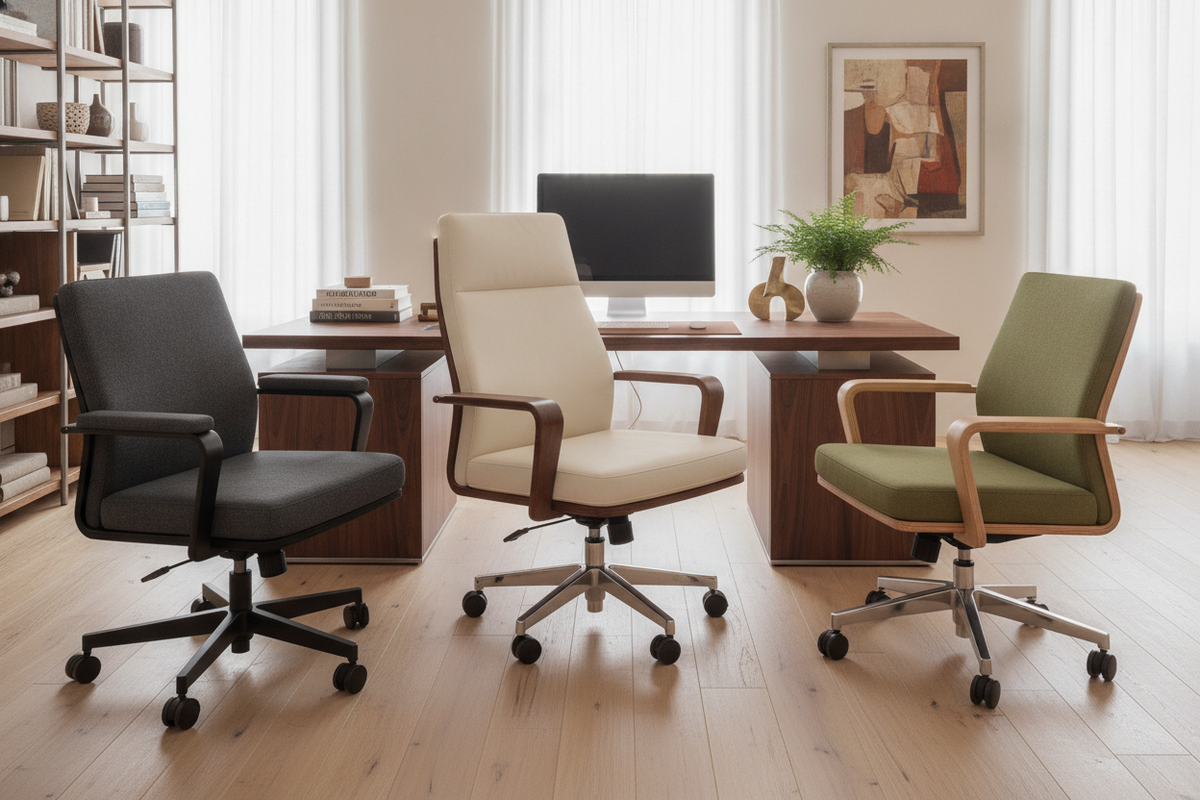
Heavy-Duty Seating Engineering: Core Archetypes for Larger Frames
Selecting desk chairs for large person workstations requires looking beyond conventional office seating templates. Standard task chairs are frequently built around compact proportions and lightweight mechanical assemblies, which can lead to rapid wear, constrained movement, and inadequate support over extended working sessions. When curating a big person office chair, the primary focus shifts toward reinforced structural engineering, expansive platform dimensions, and heavy-gauge mechanical foundations.
Three primary archetypes dominate this seating category:
- Reinforced Ergonomic Task Chairs: Engineered with wide-stance frames, multi-adjustable components, and tensioned backing, these models prioritize posture adaptability and active airflow for daily task work.
- Broad-Profile Executive High-Back Chairs: Featuring thick internal framing, multi-layered padding, and integrated headrest support, this office chair for large person setups delivers enveloping support and high visual presence.
- Wide-Frame Mesh Seating: Utilizing reinforced perimeter frames and resilient composite weave materials, these chairs maintain continuous breathability without sagging across a broader surface area.
Understanding these distinct forms helps identify the optimal balance of tactile comfort, airflow, and posture control for your daily workflow.
Dimensional Categories: Seat Width, Depth, and Chassis Geometry
Proper seating mechanics depend heavily on dimensional harmony between the user, the chair chassis, and the surrounding workstation. A standard seat pan often restricts leg positioning or pinches against the outer thighs, making seat width and usable depth critical criteria when evaluating a desk chair for large person layouts.
When reviewing dimensional specifications, consider the following structural zones:
- Usable Seat Width: Look for generous seat pan widths that provide ample clearance between armrest brackets, preventing side compression against the hips.
- Effective Seat Depth: A deep seat platform supports the full length of the upper legs while leaving a comfortable gap behind the knees to encourage unhindered circulation.
- Chassis and Cylinder Travel: A heavy-duty gas cylinder paired with a broad five-star wheelbase provides stable elevation adjustments without wobbling during height transitions.
- Wheelbase Diameter: An oversized caster base diameter expands the center of gravity, preventing tipping when shifting weight or reclining.
Pairing a generously proportioned chair with an appropriately scaled workstation is equally important. Integrating your seating with a spacious computer desk collection ensures ample knee-well opening width and legroom depth, eliminating cramped leg positioning during long projects.
Structural Material Builds: Frames, Foams, and Heavy-Duty Mechanisms
The durability of office chairs for heavy people is determined by underlying materials and joint engineering. While conventional chairs often rely on molded plastic sub-frames and standard polyurethane foam, heavy-duty designs incorporate structural metals and high-resilience cushioning.
Key material elements to evaluate include:
- Chassis and Base Metals: Welded heavy-gauge steel plates, reinforced mechanism boxes, and cast aluminum five-star bases provide a rigid foundation resistant to torsional flexing.
- High-Density Cold-Cured Foam: High-resilience, cold-cured molded foam retains its structural contour and supportive firmness far longer than standard cut foam, preventing bottoming out.
- Heavy-Duty Tilt Mechanisms: Multi-function mechanisms with reinforced locking levers and heavy-tension torsion springs allow controlled recline motion without mechanical slack.
- Reinforced Casters: Broad dual-wheel casters made from dense polyurethane or nylon distribute weight evenly across flooring, protecting surfaces while facilitating smooth glides.
These robust internal components ensure a sturdy office chair for heavy person environments remains firm, balanced, and responsive over seasons of daily use.
Ergonomic Alignment and Lumbar Stability for Extended Seating
Ergonomic support must accommodate broader silhouettes without forcing the body into rigid or restrictive postures. An effective ergonomic chair for heavy person spaces prioritizes adaptable support structures that move in sync with the user.
Consider these critical alignment features:
- Width-Adjustable and Multi-Directional Armrests: Armrests that adjust outward create generous hip clearance, while height and angle adjustments maintain relaxed shoulders and forearm support.
- Reinforced Lumbar Support: Integrated or height-adjustable lumbar contours with broad contact zones stabilize the lower spine without creating localized pressure hotspots.
- Recline Tension Control: A robust, finely adjustable tilt tension knob allows users to calibrate backrest resistance to match their body weight for smooth reclining.
- High-Back Contouring: A high-back profile offers continuous support along the thoracic spine and neck, distributing upper body weight evenly across the entire backrest.
To complement an ergonomic seating posture, arranging accessories and document stands within immediate arm reach avoids awkward torso twisting. Referencing a desk high office guide provides practical layout strategies for keeping essential tools organized and accessible without cluttering open desk space.
Spatial Clearances and Desk Integration: Legroom, Knee Wells, and Storage
A broad-stance chair requires careful spatial planning to ensure effortless mobility around the workstation. Because wide-profile chairs feature expanded wheelbases and wider arm spans, desktop architecture must accommodate their physical footprint.
When planning your office layout, evaluate the interaction between your chair and desk configuration:
- Knee-Well Width Clearance: Ensure the open space between desk pedestals, drawer units, or side panels exceeds the outer width of the chair armrests and base.
- Under-Desk Height: Verify that armrests can slide smoothly under the desktop surface when the chair is tucked in, preserving open walkways in smaller rooms.
- Rotational Radius: Allow sufficient floor clearance around the perimeter of the desk so the chair can swivel 360 degrees without striking adjacent credenzas or walls.
For workstations that require both expansive seating clearance and high-capacity organization, selecting an office computer desk product featuring dedicated corner legroom and integrated side shelving creates an open central zone for chair movement. Conversely, if you are adapting compact or concealed workstation designs, consulting a computer desk office guide helps benchmark the interior width needed to house a wider chair frame comfortably when closed.
Assembly Verification and Structural Maintenance Checkpoints
Proper assembly and routine maintenance preserve the structural integrity and smooth operation of heavy-duty office seating over time. Taking systematic care during initial setup and scheduling periodic inspections prevents hardware loosening.
Follow these essential maintenance protocols:
- Hardware Alignment during Assembly: Thread all bolts loosely into chassis points before tightening them evenly in an alternating pattern to avoid cross-threading and uneven frame tension.
- Periodic Fastener Inspections: Re-tighten base bolts, armrest brackets, and mechanism fasteners every few months to eliminate mechanical play and frame squeaks.
- Caster and Cylinder Cleaning: Periodically remove accumulated dust, lint, and debris from caster axles and wipe down the hydraulic cylinder piston to maintain smooth height adjustments.
- Upholstery Care: Clean fabric, mesh, or leather upholstery according to material guidelines to preserve surface elasticity and prevent premature wear along high-contact seams.
By pairing resilient engineering, generous dimensional proportions, and mindful workstation integration, you create a supportive, enduring office environment tailored to your exact physical and functional needs.



Laisser un commentaire
Ce site est protégé par hCaptcha, et la Politique de confidentialité et les Conditions de service de hCaptcha s’appliquent.