


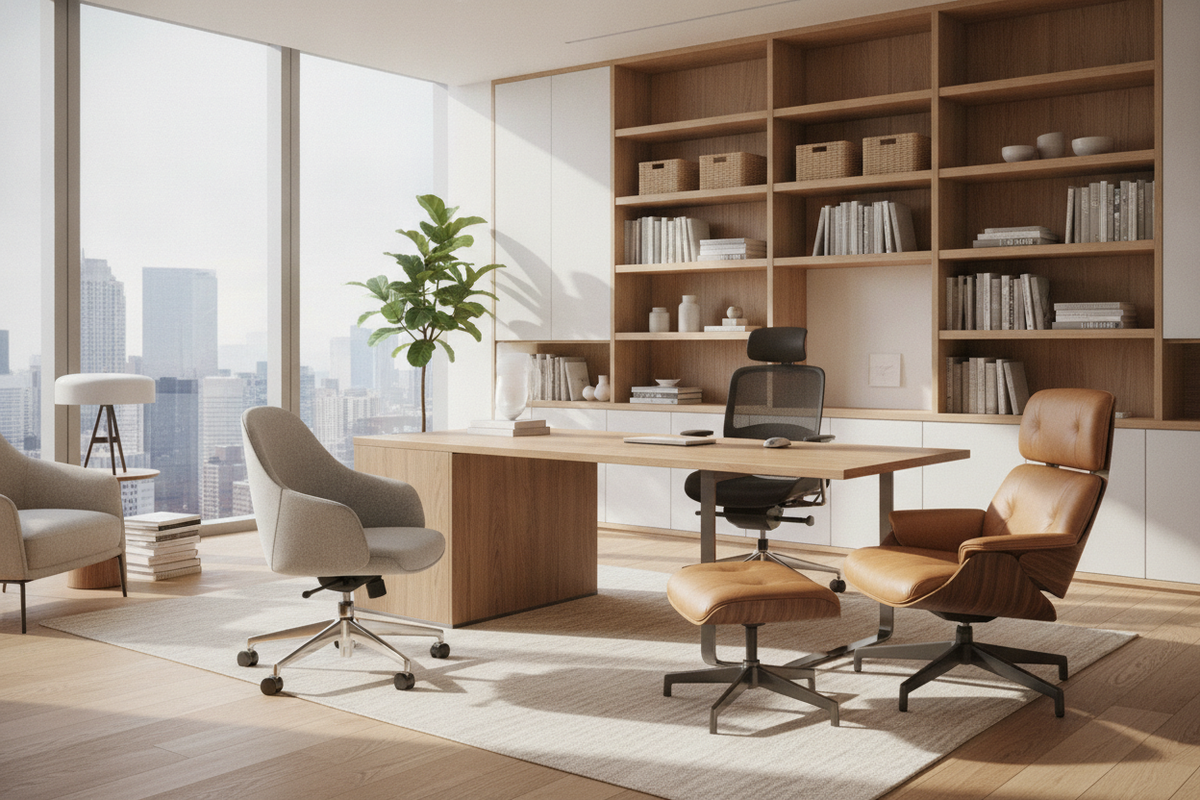
Selecting the right seating for a residential workspace requires balancing physical comfort, room proportions, and architectural styling. Unlike commercial corporate floors designed around uniform furniture modules, residential environments must accommodate dual-purpose spaces, varied flooring surfaces, and coordinated cabinetry. Evaluating desk chairs for home office environments involves understanding how chair silhouettes interact with daily work routines, desk clearances, and nearby storage units.
Whether configuring a dedicated executive library, a compact bedroom study nook, or a shared family workstation, the chair acts as the mechanical center of the daily routine. Selecting a chair that fits your physical posture while respecting the spatial boundaries of the room prevents visual clutter and physical restriction, fostering a focused and comfortable work setting.
Home Office Seating Archetypes: Matching Work Habits to Chair Geometry
Residential desk seating generally falls into distinct structural archetypes, each tailored to different operational needs, daily durations, and visual weights within an interior:
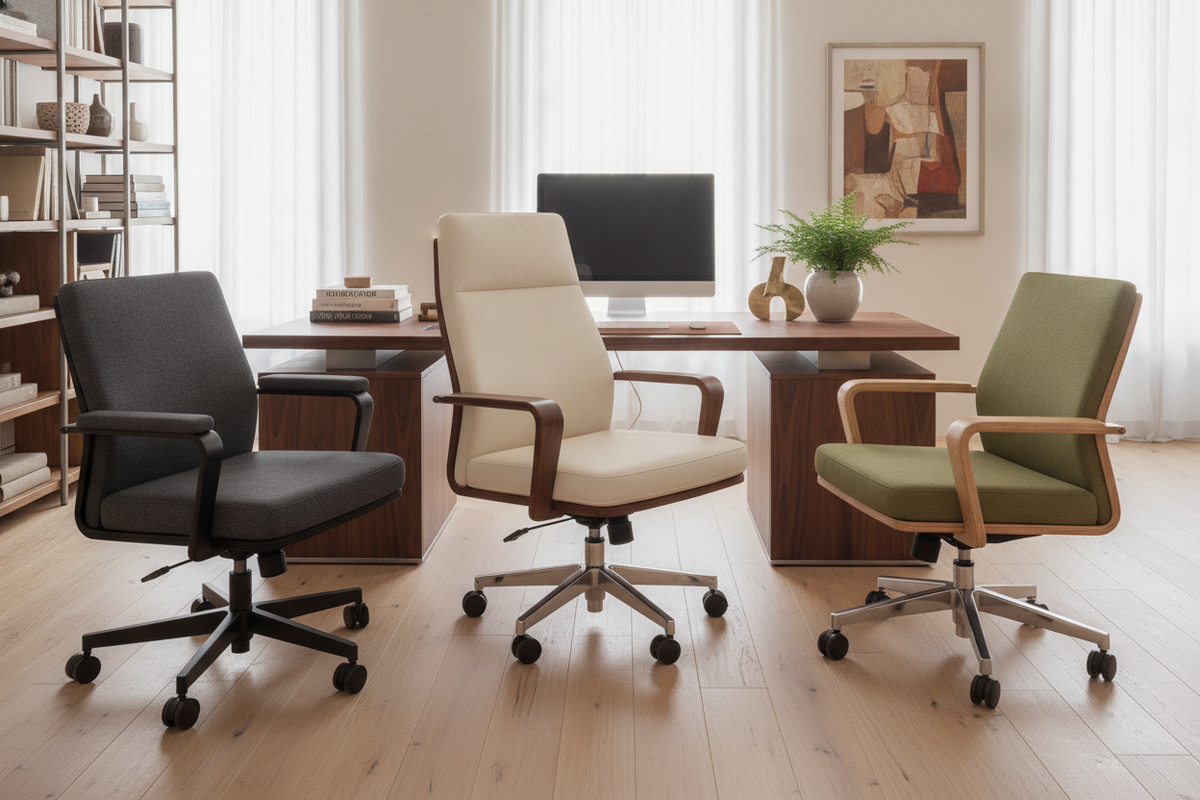
- High-Back Executive Seating: Offers full-length spinal and neck contact, making it well-suited for extended focus blocks and intense desk work. Because of its pronounced vertical profile and generous cushioning, it serves as an authoritative anchor in dedicated home studies and executive suites.
- Mid-Back Task Chairs: Focuses support around the lumbar and thoracic zones. This silhouette provides an adaptable balance of ergonomic support and visual lightness, making it an excellent fit for open-concept living rooms, secondary bedrooms, or shared study areas where preserving line of sight is important.
- Low-Profile and Slim Office Chair Models: Features compact frames with streamlined cushioning or minimal arms, allowing seamless tucking beneath compact tabletops when not in use. These designs work exceptionally well in multi-functional spaces where the chair must disappear neatly under the desk at the end of the workday.
When curating a polished interior, principles from styling an office desk and chair set can help you integrate your chosen chair archetype alongside complementary casegoods, ambient lighting fixtures, and decorative elements without overwhelming the room.
Spatial Clearance and Dimensional Categories for Home Workstations
A primary cause of daily friction in home working layouts is mismatching chair geometry with desk clearances. Before selecting chairs for home desk use, measure your workstation dimensions across three essential zones to ensure seamless daily movement:
- Apron and Knee Well Height: Ensure the top of the chair armrests can glide cleanly underneath the desk surface, keyboard trays, or drawer aprons. Fixed armrests that collide with tabletop edges prevent users from pulling in close to their work surface, compromising spinal posture and crowding the walkway behind the desk.
- Under-Desk Knee Well Width: The five-star base footprint of an office chair must rotate and shift freely without bumping against interior modesty panels, side drawers, or integrated computer towers. Ensuring sufficient side-to-side clearance prevents accidental scrapes against adjoining cabinetry.
- Perimeter Pushback Zone: Allow ample open flooring behind the work surface so you can push back smoothly from the desk, stand up, and re-enter without hitting walls, credenzas, bookcases, or window treatments. A clear perimeter also prevents casters from snagging on baseboards or nearby accent furniture.
Material Construction and Maintenance in Residential Environments
The upholstery and structural materials of office chairs for home use influence everyday comfort, airflow, tactile warmth, and long-term upkeep within residential spaces:
- Breathable Mesh: Promotes consistent air circulation across the backrest, reducing heat retention during prolonged typing and research sessions. High-tension mesh retains responsive flexibility while maintaining a lightweight visual footprint that blends effortlessly into minimalist interiors.
- Woven Fabric Upholstery: Offers a warm, tactile feel that blends effortlessly with soft residential decor, drapery, and upholstered lounge pieces. High-density foam cushions wrapped in tight weaves resist surface friction, dampen room acoustics, and pair well with diverse residential textile palettes.
- Leather and Supple Synthetic Finishes: Provide classic executive appeal, structured support, and simple wipe-clean maintenance. These materials deliver firm cushioning and tailored contours that elevate traditional and transitional office suites while resisting spills and dust.
Harmonizing Desk Chairs with Workstation Storage and Multi-Functional Desks
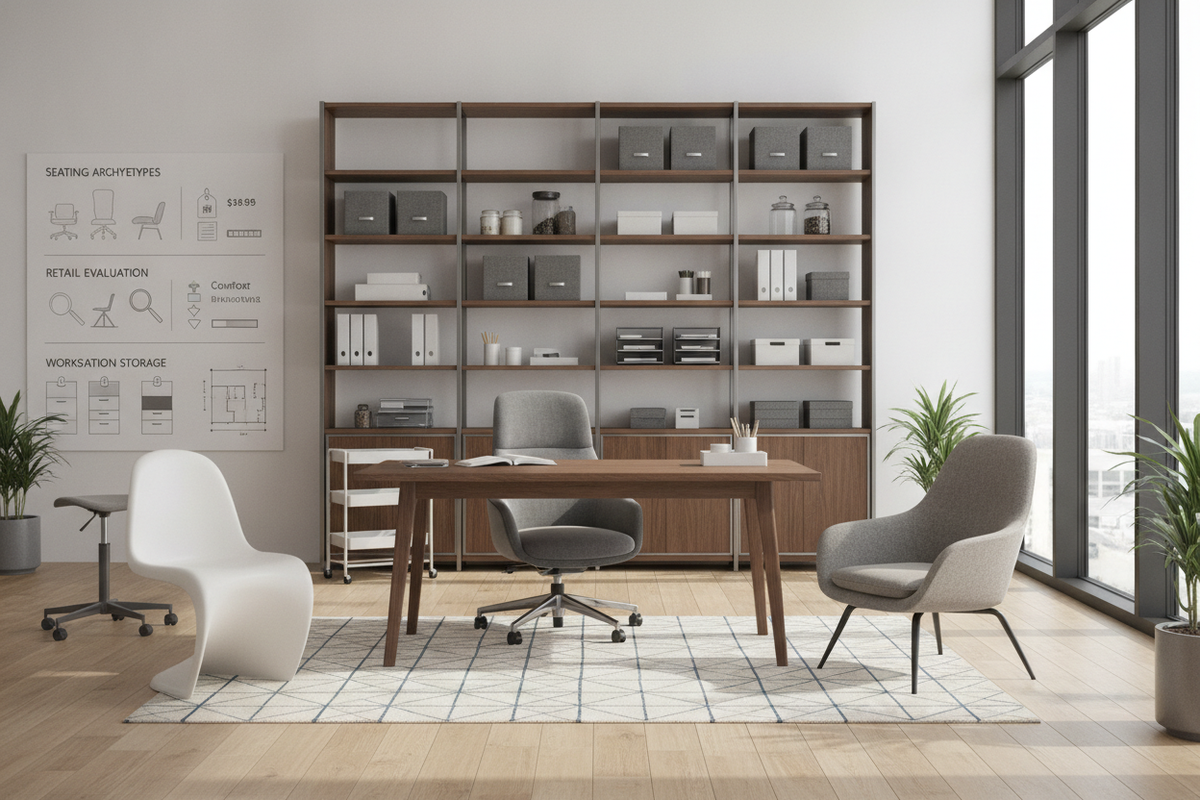
Modern home offices frequently combine seating with comprehensive storage systems to keep desktop surfaces clear of clutter and maintain an organized environment. For hybrid setups, pairing an agile home working chair with an integrated storage cabinet with desk creates a unified workstation where paperwork, files, and electronics remain neatly organized behind closed doors, allowing the chair to glide freely without running into misplaced storage containers.
In compact rooms or multi-use guest bedrooms, spatial efficiency is paramount. Utilizing a corner desk with large storage enables you to place an office desk chair within an optimized perimeter, maximizing accessible floor area while maintaining dedicated filing and shelving within comfortable arm's reach. This layout ensures you can rotate between computer tasks and physical filing without straining or leaving your seat.
Assembly, Hardware Integrity, and Everyday Care Practices
To preserve smooth mechanical operation, ensure ongoing structural stability, and protect residential flooring over years of daily use, implement regular care and hardware checks:
- Caster Selection: Match caster composition to your specific floor surface. Soft polyurethane or rubberized casters glide smoothly across hardwood, engineered planks, laminate, or tile without marring the finish, whereas firmer nylon wheels perform best over low-pile area rugs and office carpet tiles.
- Fastener Maintenance: The dynamic motion of swivel bases, tilt mechanisms, and height adjustments can gradually loosen assembly bolts over time. Periodically inspect and re-tighten armrest brackets, base mounting plates, and backrest fixings to preserve overall frame rigidity and eliminate unwanted wobbles.
- Pneumatic Cylinder Care: Keep the central lift cylinder clean of accumulated household dust, pet hair, and floor debris. Wiping down the piston shaft ensures fluid height transitions and responsive seat adjustments whenever you modify your seating height.
- Upholstery Care: Vacuum fabric and mesh surfaces periodically with a soft brush attachment to remove loose dust, and wipe smooth synthetic or leather finishes with a damp microfiber cloth to preserve material suppleness.

Laisser un commentaire
Ce site est protégé par hCaptcha, et la Politique de confidentialité et les Conditions de service de hCaptcha s’appliquent.