


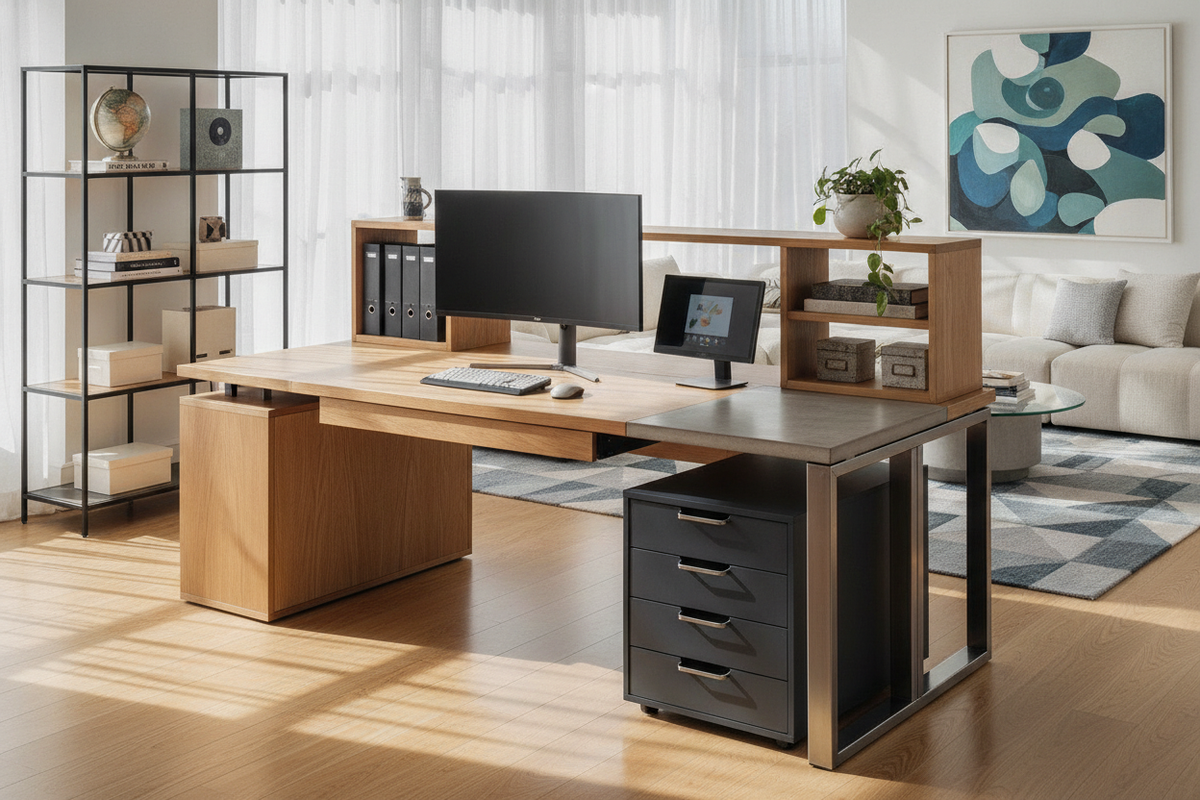
Finding an effective desk at walmart or evaluating mass-retail workspace options requires a systematic approach to layout, construction, and daily functionality. While retail aisles and online catalogs feature countless configurations—from lightweight study tables to expansive corner workstations—the right choice depends on your physical room footprint, work routine, and equipment requirements. Approaching your workspace purchase with a clear blueprint prevents common pitfalls such as cramped legroom, surface sagging, or inadequate cable routing.
Workstation Archetypes: Selecting the Right Desk Format
Mass-market furniture catalogs, including the broad selection of walmart desks, group home office tables into several primary structural archetypes. Identifying which format aligns with your primary workflow is the initial step in curating a productive work area.
- Minimalist Writing Desks: Characterized by clean lines, four open legs, and shallow profile depths, these tables suit laptop users, journaling, or casual reading tasks. Their light visual footprint makes them suitable for multipurpose spaces, bedrooms, or studio apartments.
- Dedicated Computer Credenzas: Designed specifically for desktop hardware, these desks often incorporate lower CPU bays, keyboard trays, and cable pass-through channels to keep electronic setups organized. If you are browsing computer desks at walmart, this format provides structured zones for peripherals.
- Corner and L-Shaped Desks: These maximize underutilized room corners, delivering extended surface area for dual monitors, paperwork, and creative supplies without intruding into central room walkways. Exploring an office computer desk product in an L-shaped format can dramatically expand multi-tasking capacity.
- Compact Study Tables: Often selected for student bedrooms or temporary setups, a dedicated study table walmart style table provides essential writing clearance and basic shelving while maintaining a small footprint.
When planning a comprehensive home office redesign, pairing your desk with matching elements from an office study collection ensures visual continuity and coordinated utility throughout the room.
Dimensional Planning and Spatial Sizing Tiers
A frequent error when choosing an office desk at walmart is failing to balance surface area against surrounding room circulation. Ergonomic comfort and daily efficiency require adequate knee clearance and unrestricted movement around the workstation perimeter.
Workstations generally fall into three distinct sizing tiers:
- Compact Nook Profiles (Sub-40-Inch Widths): Ideal for micro-offices or alcoves. These focus on vertical efficiency and are best suited for single-device computing or occasional paperwork.
- Standard Single-Pedestal Desks (40 to 55-Inch Widths): The versatile standard for a standard walmart computer desk. This size comfortably supports an external monitor, laptop dock, task lamp, and basic desktop organizers while leaving adequate knee-well clearance underneath.
- Executive and Dual-Wing Desks (Over 55-Inch Widths): Engineered for power users, these surfaces accommodate multi-display arrays, desktop audio interfaces, and separate zones for physical writing. An expansive office computer desk product offers generous lateral room for both screen-based and analog productivity tasks.
Always verify clearance between the front edge of the desk and adjacent walls or doorways. Maintaining generous walkway space ensures that task chairs can roll back smoothly without impacting other furniture or creating structural pinch points.
Material Builds: Engineered Substrates, Veneers, and Metal Frames
Understanding how flat-pack furniture is fabricated enables you to gauge long-term stability and resilience against daily wear. When evaluating retail models such as a standard walmart work desk, focus on three primary component materials:
- Engineered Wood Cores: Medium-density fiberboard (MDF) and particleboard form the core of most mass-retail desk panels. Dense fiber cores offer uniform flatness and structural predictability, whereas lower-density core materials require robust reinforcement beneath broad desktop spans.
- Melamine and Laminate Surfaces: Protective resin coatings and thermal laminates shield engineered substrates from moisture, pen pressure, and surface scuffs. A durable laminate top resists standard wear, making it well-suited for high-traffic student or home office environments.
- Powder-Coated Steel Framing: Many modern computer tables combine engineered wood tops with metal leg assemblies. Steel tube substructures provide substantial torsional rigidity, reducing lateral wobble during typing while maintaining an airy, modern aesthetic.
For additional perspective on balancing cost-effective finishes with elevated interior design, reviewing an office computer desk guide can help you identify finishes and hardware details that enhance overall room aesthetics.
Storage Integration: Integrated Hutches vs. Modular Office Organization
Desktop clutter directly impairs focus and reduces usable workspace. Deciding between a desk with integrated storage and an open-frame table paired with standalone storage depends largely on your room dimensions and organizing preferences.
Integrated Storage Options
Desks featuring built-in pedestals, drawers, and overhead hutches provide immediate, enclosed containment for office essentials. Overhead storage captures vertical wall real estate without consuming floor space, which is especially valuable in compact apartments. For settings where keeping work items concealed outside office hours is essential, exploring a specialized computer desk office guide can reveal clever cabinet-style solutions that blend into general living areas.
Modular and Mobile Organization
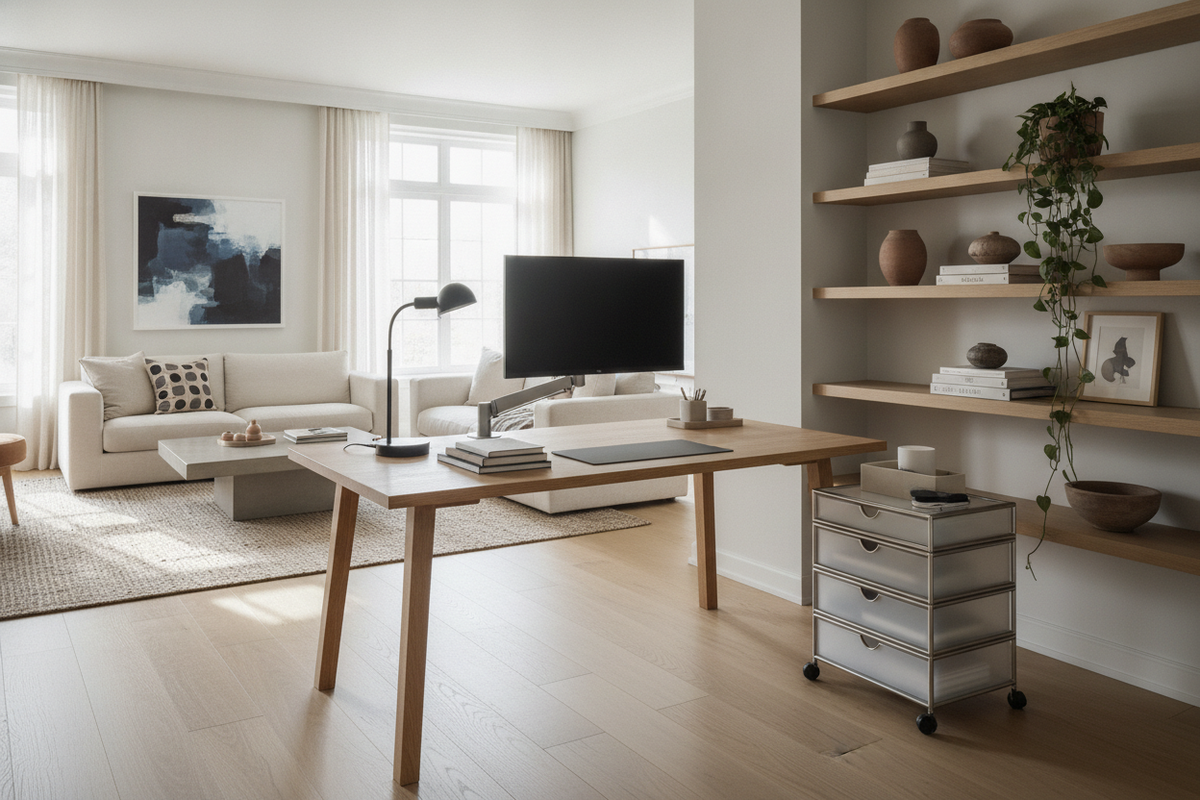
Conversely, pairing an open leg desk with mobile rolling carts or lateral file credenzas provides lasting flexibility. If your workspace requirements change, modular components can be rearranged without replacing the primary work surface. This separation also leaves the lower knee area open, maximizing comfort for taller users.
Assembly Logistics, Boxed Transit, and Structural Longevity
Because ready-to-assemble furniture arrives flat-packed, careful assembly directly impacts the ultimate stability and lifespan of your desk. Whether purchasing a desk online or transporting it from a retail floor, keep these best practices in mind:
- Transit and Handling: Flat-pack desk boxes are often heavy and dense. Transporting cartons flat prevents interior panel flexing, and enlisting assistance during transit protects structural edges and delicate corner corners.
- Hardware Fastening: Retail furniture relies heavily on cam-lock and pin fasteners or direct metal machine screws. Aligning cam fasteners correctly before tightening ensures snug joints. Avoid over-torquing screws into engineered substrates to prevent stripping the pilot holes.
- Base Leveling: Uneven flooring can introduce frame twist, leading to drawer misalignment or monitor wobble. Desks equipped with adjustable leveling feet allow you to stabilize the surface regardless of floor variations.
- Periodic Maintenance: Checking hardware fasteners after several months of active use and gently re-snugging joint connections helps preserve frame rigidity over years of reliable service.
By weighing your spatial constraints, workflow habits, material builds, and storage configurations, you can confidently select a practical, durable workstation that supports your daily productivity.

Laisser un commentaire
Ce site est protégé par hCaptcha, et la Politique de confidentialité et les Conditions de service de hCaptcha s’appliquent.