


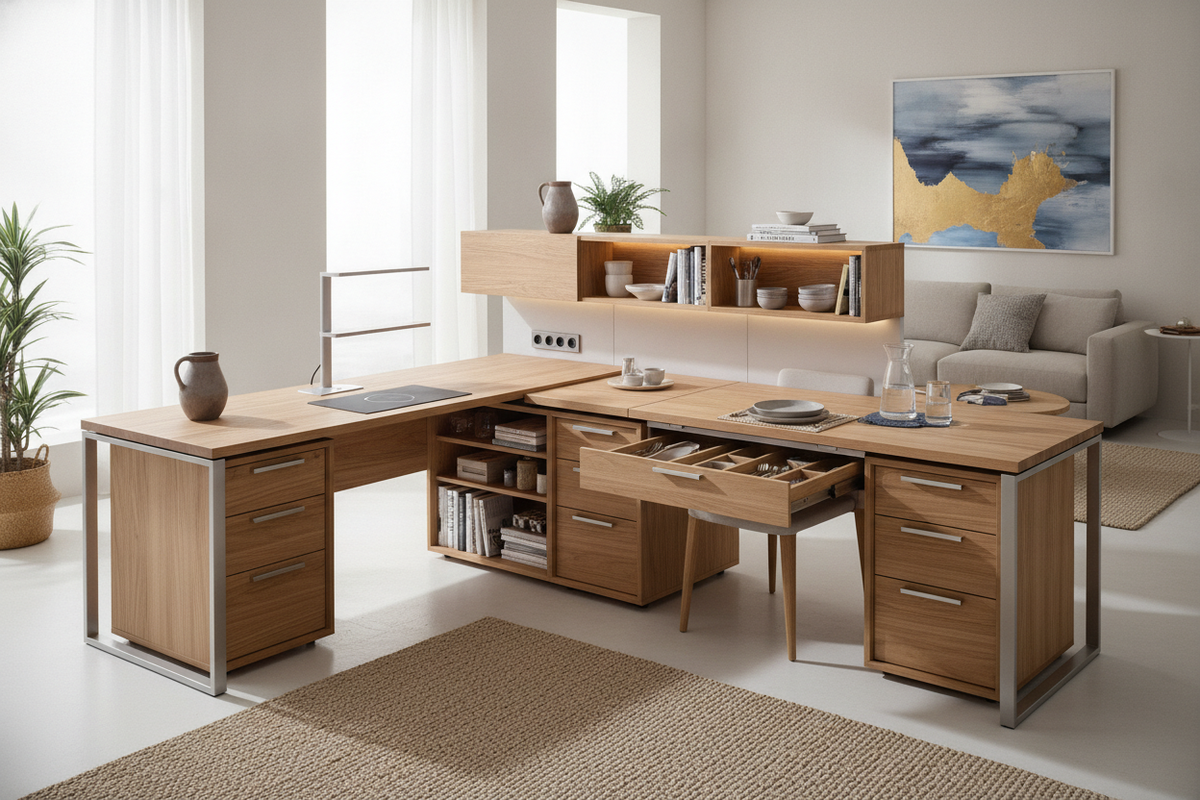
Introduction: The Rise of Dual-Purpose Dining and Workstation Architecture
Urban density and flexible work routines have reshaped how living zones are planned. In compact apartments, lofts, and multi-use dwellings, furniture must increasingly fulfill multiple roles without compromising aesthetics or utility. A desk and kitchen table combo addresses this challenge by providing a stable working station during the day and a welcoming dining surface in the evening.
Successfully uniting work and meal activities requires careful consideration of comfort, clearance, and visual balance. When exploring furniture designed to bridge work and dining, exploring a curated dining tables collection provides essential perspective on scale and proportion. The goal is to avoid an environment that feels like an uninviting cubicle or an impractical dining nook, establishing a harmonious space suitable for both focused focus and relaxed hospitality.
Structural Archetypes of the Desk Dining Table Hybrid
Hybrid tables rely on distinct structural formats depending on room dimensions, daily habits, and required surface area. Selecting the appropriate structural archetype depends on how frequently the layout needs to transform.
- Drop-Leaf and Fold-Down Formats: Hinged panels fold flush against the frame or wall when not in use. These designs allow a compact desk profile to expand outward into a full-sized eating surface when guests arrive.
- Telescoping and Extension Tables: Utilizing sliding internal runners or butterfly panels, these tables maintain a narrow footprint during daily working hours and lengthen seamlessly for group dining.
- Fixed-Surface Multi-Use Tables: Broad, minimalist tables designed with clean lines and integrated utility slots serve both tasks continuously without moving parts, relying on smart cable management and auxiliary storage rather than mechanical changes.
- Lift-Top and Swivel Mechanisms: Specialized hardware elevates or rotates an auxiliary tabletop tier, shifting the surface from standard dining height to an elevated task position.
For tight floor plans, consulting a dining small kitchen guide helps contextualize how folding leaves and compact profiles preserve circulation space while supporting multi-activity routines.
Dimensional Categories and Spatial Clearance Geometry
Ergonomics for extended laptop use often diverge from the posture encouraged during shared dining. Standard dining surfaces accommodate wide arm movements and shared dishes, while workstations prioritize forearm support and screen alignment. Balancing these requirements requires careful evaluation of surface depth, height, and under-table clearance.
A versatile hybrid surface requires sufficient depth to place a monitor or laptop at an appropriate viewing distance while still leaving room for a keyboard. When transitioning to dinner, that same depth should comfortably host place settings and center serveware. Leg placement is equally critical: trestle bases or corner-set legs maximize open knee room and allow dining chairs or ergonomic desk seating to slide beneath the apron without obstruction.
Those weighing elevated counter heights versus standard seating can review a kitchen dining tables guide to match stool height and postural dynamics with daily working preferences.
Storage Architecture and Day-to-Night Transition Protocols
The primary friction point of a shared desk and dining table is visual and physical clutter. Storing laptops, notebooks, chargers, and writing tools before serving a meal prevents the space from feeling chaotic. A structured transition routine keeps the dual-purpose environment enjoyable and functional.
- Concealed Undershelf Bins: Shallow drawers or recessed cubbies built beneath the top tier keep office supplies within reach but tucked out of direct sightlines.
- Peripheral Sideboards and Storage Units: Incorporating supplementary sideboards and credenzas from a kitchen dining collection ensures work items disappear completely before meal service.
- Integrated Cable Troughs: Channeling power bricks, charging cables, and power strips along the underside of the tabletop prevents tangled cords from dominating dinner conversations.
- Mobile Storage Caddies: Wheeled utility carts can hold monitors, reference books, and files, rolling into a closet or side corner when the evening begins.
Material Selection: Balancing Workplace Abrasion with Dining Resilience
A dual-purpose table encounters distinct types of surface wear throughout the day. Morning tasks involve laptop heat, mouse friction, and pen pressure, while evening meals introduce hot cookware, moisture, food oils, and acidic spills. Material selection should balance tactile warmth with surface resistance.
High-pressure laminates and engineered melamine offer robust resistance against water rings, scratches, and everyday spills, making them practical for high-traffic multi-use zones. Solid hardwoods finished with resilient matte sealants provide a warm, organic appearance that ages gracefully, though they benefit from prompt spill cleanups and protective coasters. Underneath, powder-coated steel frames or reinforced solid wood trestles provide the stability required to eliminate table wobble during fast typing or animated dining.
In spaces requiring dedicated workstation storage nearby, pairing a hybrid table with a dedicated office desk product or multi-compartment cabinet creates a cohesive layout that separates file management from the dining zone.
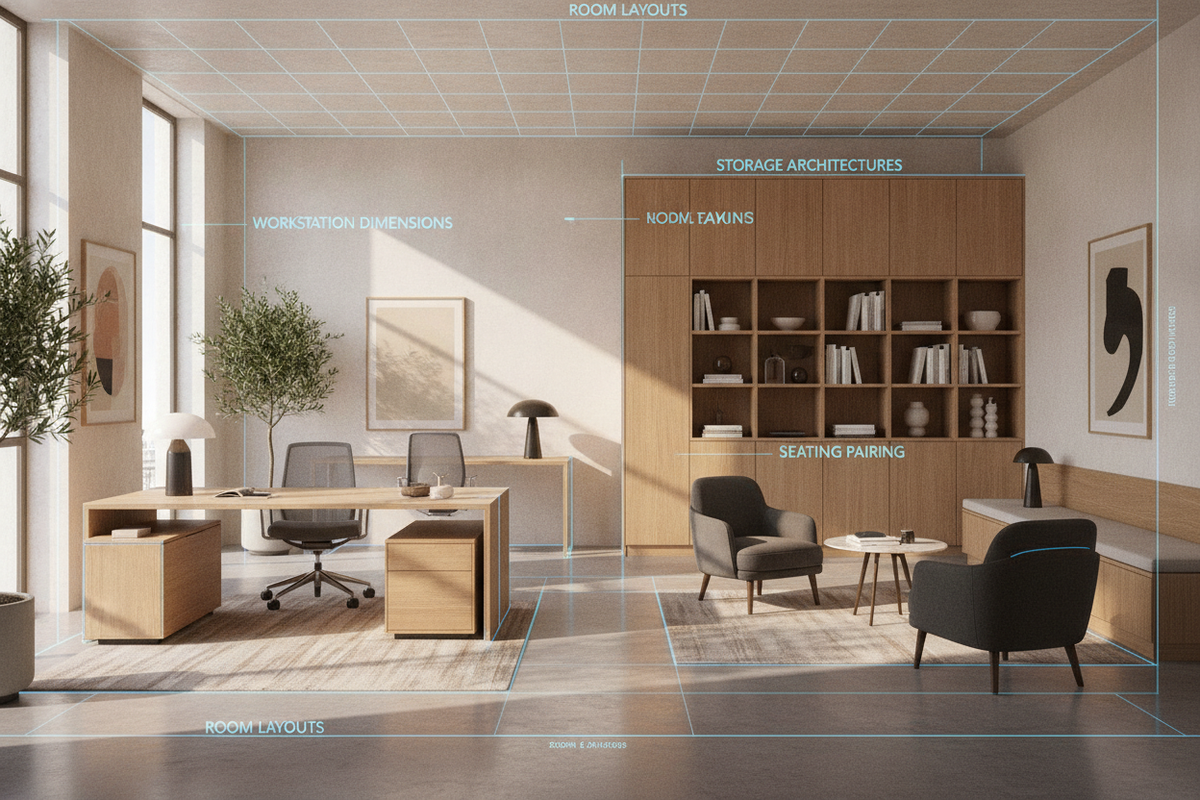
Room Layout Frameworks and Multi-Zone Planning
Where a hybrid table sits in a room dictates its visual impact and daily usability. In open-concept spaces and studio apartments, strategic placement creates intuitive boundaries between culinary tasks, focused computer work, and relaxation.
- Central Island Placement: Positioning the table in the center of the main room establishes it as an anchor point, serving as a prep island, a daytime desk, and an evening dinner hub.
- Window-Adjacent Alignment: Placing the short edge of the table perpendicular to a natural light source provides side illumination for screen tasks without creating direct glare on monitors.
- Wall-Anchored Nook Planning: In narrow floor plans, securing one end of the table against a wall or banquette seating optimizes room circulation while preserving an intimate dining and working atmosphere.
Buying and Assembly Checklist for Convertible Dining Workstations
Before purchasing or assembling a desk and kitchen table combo, evaluating structural details ensures long-term satisfaction. Check the sturdiness of all moving parts, including drop-leaf supports, extension slides, and hinge mechanisms. Ensure the hardware locks securely into place without wobbling when weight is applied.
Consider chair compatibility carefully. Select seating that provides supportive cushioning for several hours of daytime work while maintaining the aesthetic qualities of an inviting dining chair. By pairing intentional dimensions, durable materials, and dedicated clutter-concealment strategies, a hybrid table offers an adaptable, elegant foundation for modern living.

Laisser un commentaire
Ce site est protégé par hCaptcha, et la Politique de confidentialité et les Conditions de service de hCaptcha s’appliquent.