


The Ergonomic and Functional Advantages of a Deep L-Shaped Desk
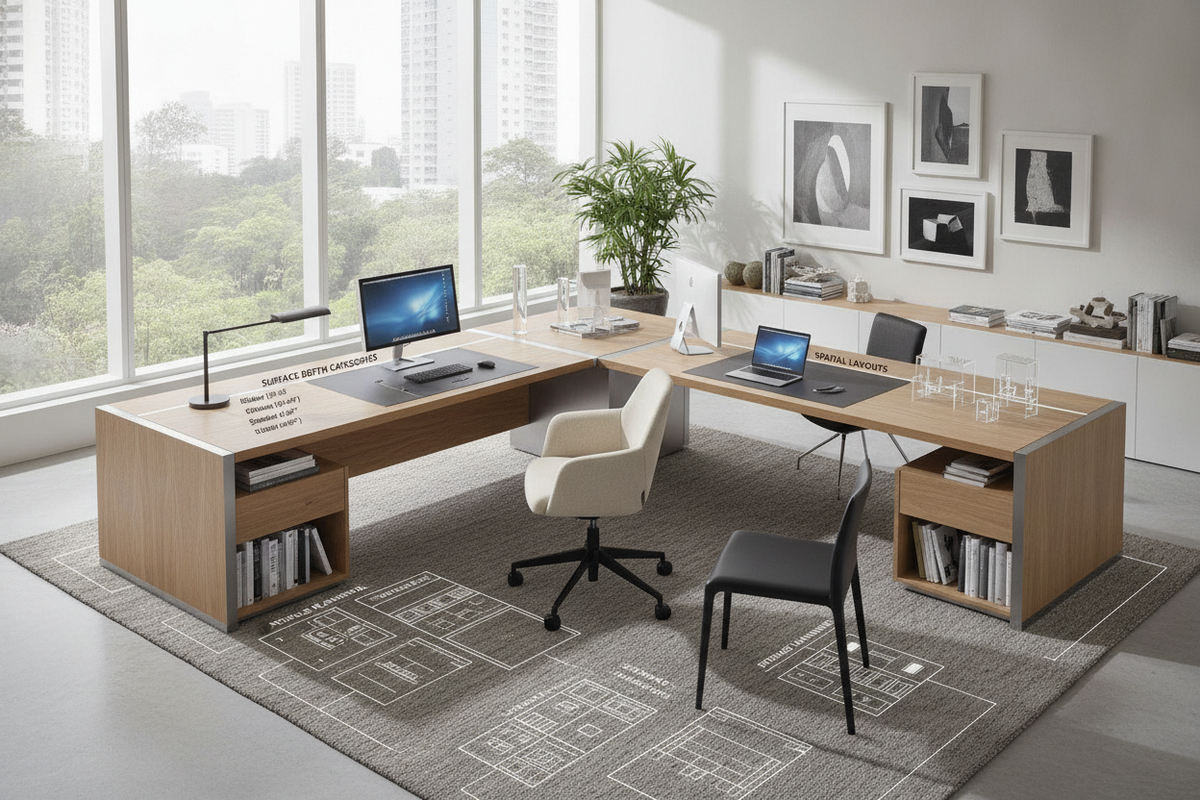
Modern workstations frequently support multiple monitors, high-performance computing equipment, document spread, and peripheral accessories. Standard shallow desks can quickly become congested, pushing displays uncomfortably close to seating positions and leaving minimal forearm support. Choosing a deep l shaped desk resolves these spatial bottlenecks by expanding the usable plane in two directions, allowing equipment and primary tasks to occupy distinct zones.
An l-shaped desk deep format establishes comfortable viewing distances for large ultrawide monitors and multi-screen arrays. The extended surface allows displays to sit further back while leaving ample room for keyboards, wrist rests, and desktop task materials. Furthermore, the return wing introduces a secondary zone for writing, analog drafting, or device charging, keeping the primary workstation clear of clutter.
Depth Architecture: Classifying Worktop Profiles and Wing Proportions
When selecting an L-shaped workstation, understanding surface depth architecture is essential. Depth variations determine how smoothly a chair navigates the interior corner and how naturally gear can be organized across both wings.
Uniform Deep Surfaces vs. Asymmetrical Return Wings
Workstation configurations typically fall into two structural formats:
- Uniform Deep Profiles: Both the primary desk and the return wing offer substantial front-to-back depth. This setup suits users who run dual primary tasks, such as dedicated computer engineering on one wing and sketching or hardware tinkering on the other.
- Asymmetrical Wings: The primary side features an expansive depth for large screens and peripheral hardware, while the secondary side provides a slimmer profile suited for paper filing, reference books, or compact peripherals without consuming excess floor area.
Corner Diagonal Geometry and Knee Clearance
The interior intersection of an L-shaped desk dictates lower-body mobility. Sharp, ninety-degree inner corners work well for modular component alignment but can restrict legroom if a monitor is mounted directly in the corner. Conversely, beveled or curved diagonal corners open up the interior angle, allowing smooth swivel transitions between the two working planes without knee obstruction.
Spatial Planning and Room Flow Optimization
Integrating a substantial furniture piece requires balanced spatial planning. Careful placement ensures smooth circulation, easy access to electrical outlets, and harmonious natural light distribution.
Reviewing proven l-shaped desk layout strategies helps in mapping out room dimensions and preventing awkward visual dead zones in residential workspaces.
Corner Nesting vs. Open Peninsula Positioning
Placing an L-shaped desk into an existing room typically involves one of two floor arrangements:
- Corner Nesting: Positioning both wings flush against adjoining walls maximizes open central floor area. This setup keeps cable runs hidden and suits smaller home offices or dedicated study alcoves.
- Peninsula Layout: Anchoring one wing against a perimeter wall while extending the deeper wing outward into the room creates an executive peninsula. This structure naturally partitions an open-concept living area or multi-use room while providing a clear sightline toward room entrances.
Clearance Zones and Walkway Tolerances
Deep desks consume more floor footprint than linear writing tables. Planning adequate clearance behind the main seating area allows executive and task chairs to recline and roll without colliding with walls, shelving units, or doorways. Maintaining clear passage paths around the desk edges preserves a calm and accessible room environment.
Storage Integration and Under-Desk Organization
The increased surface area of a deep desk corresponds to a larger structural envelope underneath. Thoughtful storage arrangements take advantage of this volume while protecting legroom and seated posture.
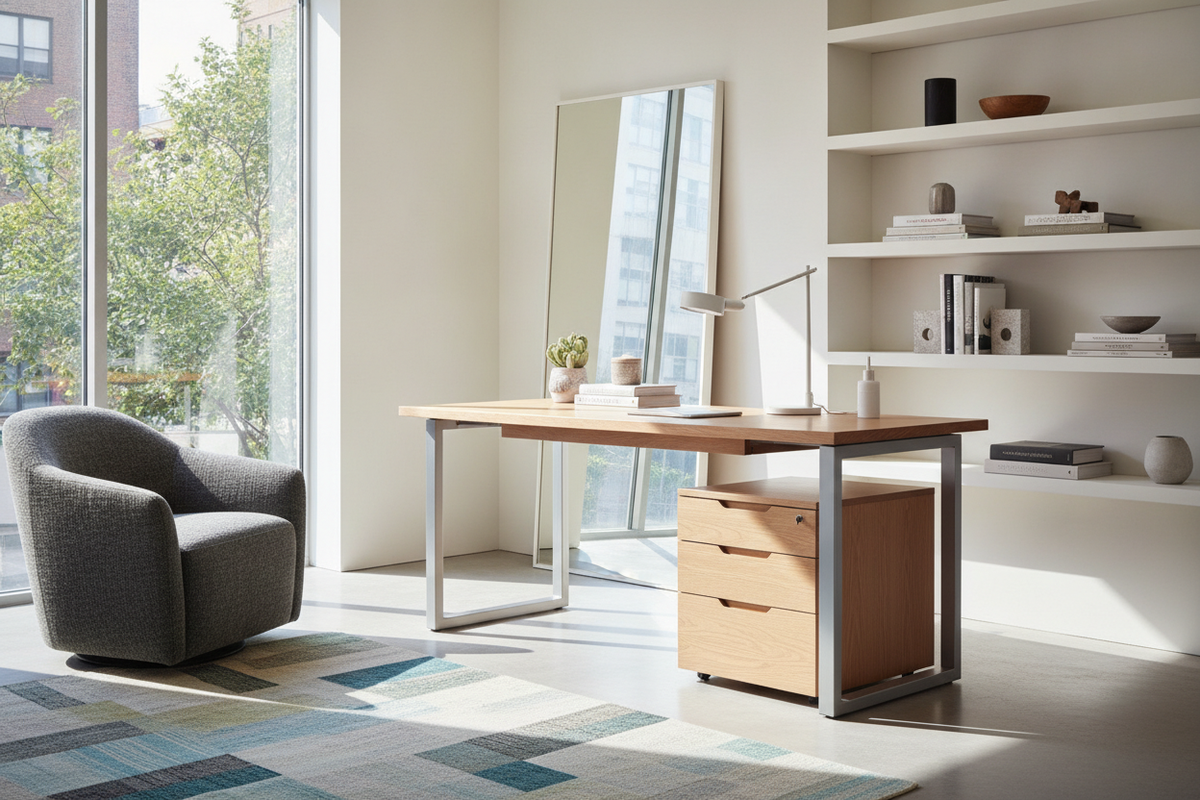
For rooms requiring built-in file management, opting for an l-shaped corner desk with storage keeps essential documents and accessories within arm's reach while maintaining clean desktop lines.
Drawer Modules, Credenza Returns, and Open Shelving
Under-desk storage components should be placed intentionally relative to the primary seating position:
- Pedestal Drawers: Positioning drawer towers at the outer ends of return wings preserves open knee wells along the main workspace.
- Lower Open Shelves: Lower credenza shelving along the secondary wing provides easily accessible storage for computer towers, paper trays, and reference books.
- Overhead Hutches: Vertical extensions anchored to the back of the return wing leverage wall height without encroaching on desktop work areas.
Cable Routing Trajectories in Deep Corner Hubs
Deep desktops create generous interior areas behind monitors that can conceal cable clutter. Integrated desktop grommets, under-desk cable trays, and magnetic cord organizers keep power cords, display cables, and charging leads structured and off the floor.
Material Construction, Frame Rigidity, and Assembly Considerations
A broad workstation demands rigid support to prevent desktop sag and ensure long-term stability under heavy equipment loads.
Selecting a cohesive finish, such as a white l-shaped corner desk, helps visually lighten a large surface footprint, allowing the furniture to blend seamlessly into contemporary home decor.
Surface Finishes: Laminate, Veneer, and Solid Compositions
Desktop materials influence both aesthetic character and day-to-day durability:
- High-Pressure Laminate: Highly resistant to daily surface wear, coffee rings, and accidental scratches, making it well suited for intensive daily work.
- Wood Veneer: Delivers the organic grain texture and warmth of natural timber with balanced core stability.
- Engineered Wood Substrates: Provide dependable dimensional stability across wide spans, helping prevent warp over seasonal temperature shifts.
Subframe Stability and Weight Distribution
Structural stability relies on strong under-frame engineering. Heavy-gauge steel frames, reinforced corner gussets, and sturdy modesty panels prevent wobble across extended wings. Adjustable leveling feet help compensate for subtle floor variations, ensuring the dual surfaces meet flush at the corner seam.
Workstation Use Cases: Tailoring Your Deep L-Desk Setup
A deep L-shaped layout can be tailored to suit diverse productivity styles and specialized gear configurations.
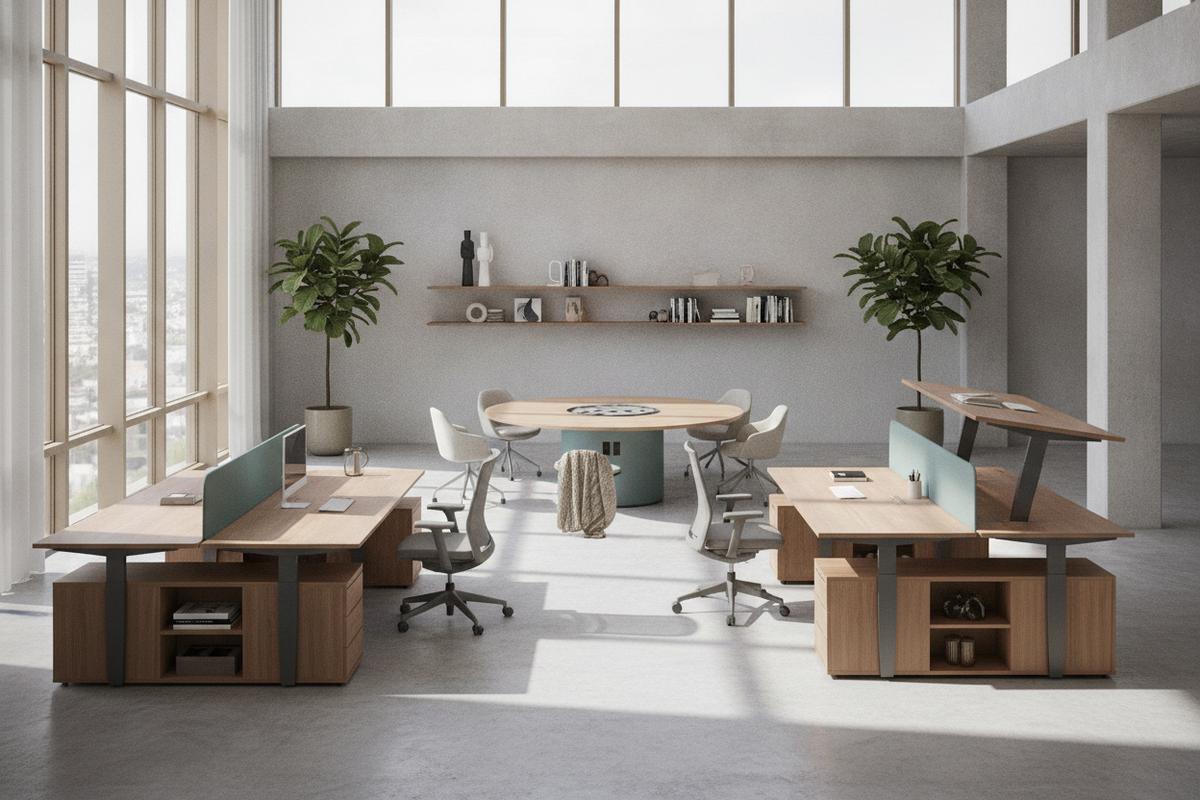
Professionals who alternate between seated work and active physical tasks can benefit from an l-shaped drawer lift computer desk, which blends integrated drawer storage with adjustable surface versatility.
- Multi-Screen and Hardware Intensive: Deep primary wings easily accommodate multiple monitors on heavy desk arms alongside studio speakers, audio interfaces, or desktop towers.
- Creative and Technical Drafting: The dual-surface format separates digital computing hardware on one side from physical sketchbooks, drafting tablets, or blueprints on the other.
- Shared Administrative Hub: The expansive surface allows two distinct zones for computing and paper handling, creating an efficient command center for household management or small business operations.

Laisser un commentaire
Ce site est protégé par hCaptcha, et la Politique de confidentialité et les Conditions de service de hCaptcha s’appliquent.