


The Rise of Console Tables Desks in Multi-Functional Spaces
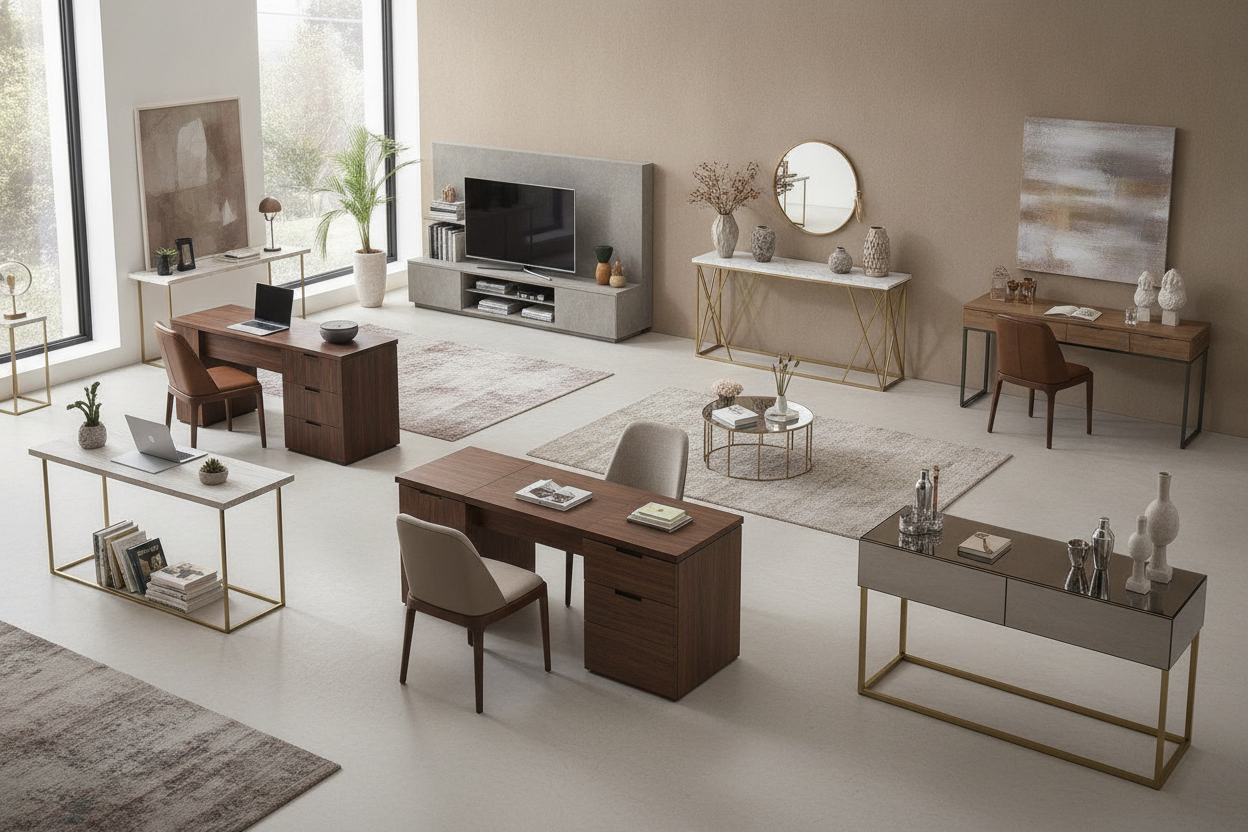
Modern homes and apartments frequently require rooms to serve multiple roles throughout the day. Living rooms, wide hallways, and entryways now host remote work routines alongside daily relaxation and entertaining. This evolution has driven the popularity of console tables desks, which offer a streamlined footprint capable of transforming from an elegant accent piece into a productive workspace.
Balancing Living Room Aesthetics with Workday Utility
Unlike bulky executive workstations, a dual-purpose console table maintains the visual harmony of a living area. Its slender profile allows it to sit naturally against an accent wall or rest neatly behind a sofa without disrupting conversational layouts. When the workday concludes, laptops, notepads, and accessories can be stowed away, returning the surface to a decorative display for lamps, framed art, or ceramic vessels. For additional insights on selecting slender profiles, read our narrow console drawers guide.
Key Footprint Advantages over Dedicated Computer Desks
Dedicated computer desks often require substantial square footage and can visually overpower smaller shared rooms. In contrast, console desks are engineered with shallower proportions that preserve walking pathways while still providing ample horizontal surface for modern laptops and tablets. This lean architectural footprint makes them an ideal solution for urban dwellings and open-concept layouts.
Essential Dimensions and Ergonomic Clearances for Console Workstations
Adapting a console table into an everyday desk requires careful attention to ergonomic geometry to ensure comfort during extended tasks.
Surface Depth: Finding the Sweet Spot Between Display and Typing
Standard decorative consoles often feature very narrow depths that work well for displaying photos but leave little room for typing. An effective hybrid console desk provides enough depth to support a keyboard, mouse, and open laptop without forcing awkward wrist angles. Choosing a unit with moderate depth ensures a comfortable focal distance from portable screens while keeping the overall furniture profile trim.
Vertical Knee Clearance and Under-Table Obstructions
Comfortable seated posture requires unobstructed space beneath the tabletop. When evaluating console designs, look for models that avoid low-hanging crossbars, thick aprons, or bottom stretchers directly in the leg zone. Generous vertical knee clearance allows you to pull your chair close to the edge, supporting neutral spine alignment throughout typing sessions.
Horizontal Span and Chair Width Compatibility
The distance between the table legs must comfortably accommodate your chosen task chair or stool. Measuring the width of your seating—including armrests if present—ensures that the chair can slide completely beneath the tabletop when not in use, keeping walkways clear in tight living zones.
7 Console Table Styles That Double Seamlessly as Desks
Different floor plans require tailored structural approaches. Here are seven distinct design styles that seamlessly bridge the gap between console decor and workday performance.
1. The Narrow Console Table Desk for Tight Hallways and Entryways
A dedicated narrow console table desk provides a compact work nook in transitional spaces like long hallways or landings. Its shallow depth keeps circulation routes open while offering a dedicated station for quick tasks, sorting mail, or managing daily schedules.
2. The Console Table with Pull Out Desk Extension
For spaces where depth is strictly limited during non-working hours, a console table with pull out desk offers an expandable secondary tier. The primary console holds lighting and decor against the wall, while a smooth gliding lower shelf extends outward to create extra surface area for a full keyboard and mouse setup. Explore practical deployment tips in our pull out desk guide.
3. The Sofa Table Desk with Drawers for Behind-the-Couch Workzones
Placing a sofa table desk with drawers directly behind a floating sofa creates a functional room-within-a-room. Integrated shallow drawers keep charging cords, pens, and planners hidden from view when viewing the living area from behind, maintaining a polished interior aesthetic.
4. The Desk Console Combination with Flip-Top Concealment
A desk console combination equipped with a hinged top panel allows for instant visual transformation. When closed, the piece serves as a flat display credenza; when opened, the interior reveals organized cubbies, stationery slots, and an angled reading or writing surface.
5. The Desk with Console Storage and Modular Open Shelving
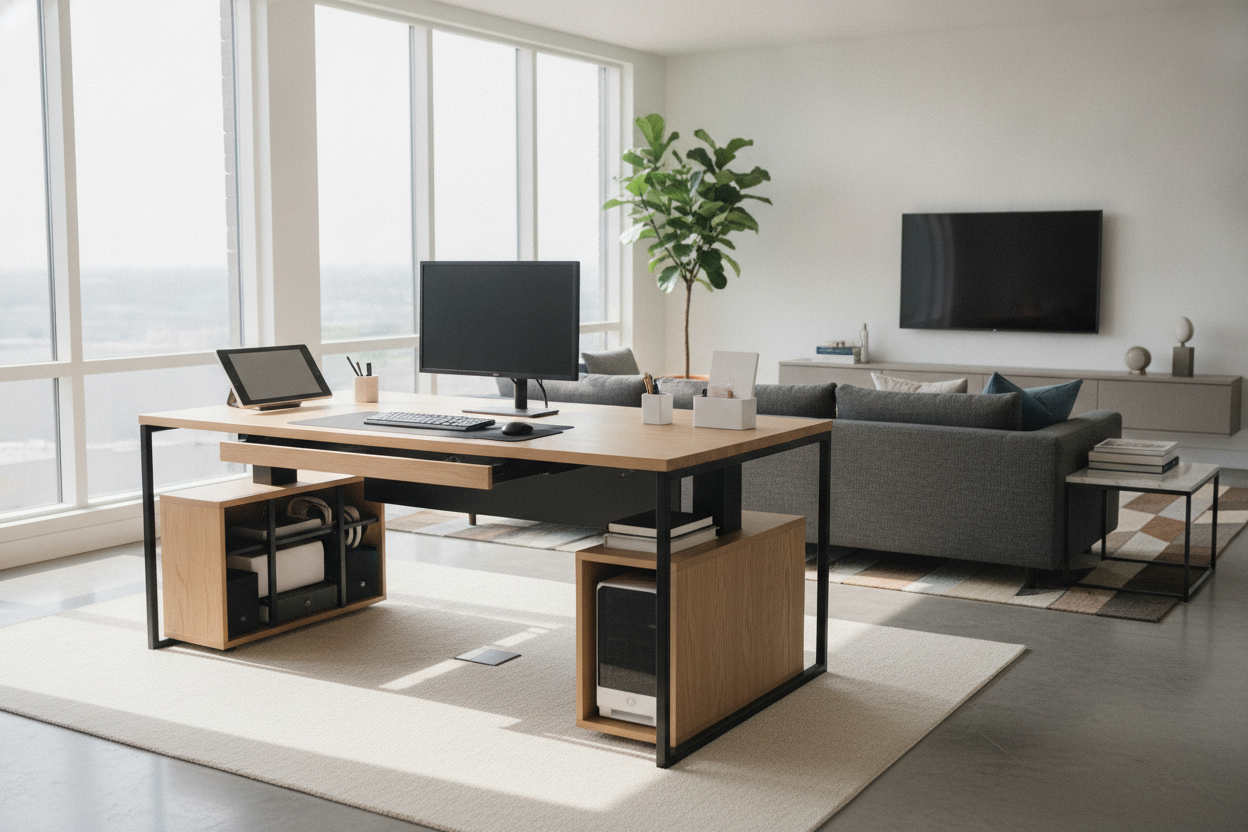
A multi-tiered desk with console storage incorporates open side shelving or under-mount ledges. This allows reference books, tech accessories, and decorative baskets to sit within arm's reach without cluttering the main typing surface.
6. The Minimalist Metal-Framed Console Desk for Open Sightlines
Featuring slender steel or iron frames with wood or composite tops, minimalist console desks create an airy aesthetic. The open framework allows light to pass through, making compact rooms feel larger while providing a sturdy, wobble-free surface for daily computer work.
7. The Deep-Tiered Sideboard-Style Console for Mixed Storage and Laptop Work
For users needing comprehensive organization alongside a casual workstation, a substantial sideboard-style unit combines enclosed cabinetry with top surface utility. Choosing a versatile piece like a drawers storage console product delivers deep cabinet capacity beneath a wide, stable top suitable for daytime productivity and evening display.
Storage and Cable Management: Maintaining a Clutter-Free Dual Purpose
Because console desks often sit in prominent living spaces, controlling work clutter is essential for maintaining a relaxing home atmosphere.
Drawer Organization for Office Supplies and Decorative Display
Shallow built-in drawers are ideal for keeping small office tools out of sight. Use modular drawer dividers to organize writing instruments, adapters, and notebooks so the desktop remains clean and ready for decorative accents at the end of the day.
Cable Routing Strategies to Prevent Visual Clutter in Open Living Areas
Exposed power bricks and trailing cables detract from living room decor. Adhesive cable clips fixed along the backside of table legs, paired with slim under-desk cable raceways, allow cords to route discreetly down to wall outlets without hanging into view.
Pairing Auxiliary Storage Solutions for Extended Workdays
If your workflow requires binders, peripheral electronics, or substantial paperwork, supplement your console with nearby modular units from our storage collection. For ultra-compact corners, pairing your desk area with a slim piece such as a narrow storage drawers product provides vertical storage without consuming valuable legroom.
Material Selection, Frame Stability, and Assembly Considerations
Choosing durable materials and stable frame structures ensures your hybrid console remains functional and steady over years of daily use.
Solid Wood, Engineered Composite, and Metal Hybrid Frames
Hybrid designs combining engineered composite panels with powder-coated metal legs offer excellent rigidity and resistance to warping. Solid timber finishes add warm, organic character to traditional and mid-century modern living rooms.
Wall Anchoring and Anti-Tip Stability for Slender Profiles
Due to their tall and shallow proportions, console tables desks benefit significantly from wall anchoring hardware. Securing the rear frame to a wall stud prevents tipping during vigorous typing and provides extra stability when pulling out deep drawers.
Selecting Seating that Tucks Away Flawlessly
To preserve open floor space, choose a compact accent chair, armless dining chair, or upholstered backless stool that slides completely under the console frame when the workday ends. Low-profile seating ensures sightlines across the room remain open.
Styling the Transition: From Morning Workstation to Evening Credenza
The true advantage of a console desk lies in its visual adaptability between active work hours and restful evenings.
Zoning Desktop Decor Around Laptop Footprints
Position decorative items such as ceramic trays, small indoor plants, or framed prints toward the outer thirds of the table. This leaves the central zone unobstructed for quick laptop setup in the morning without requiring you to move decorative accents back and forth.
Lighting and Task Lamp Options for Dual-Use Consoles
Select a stylish table lamp with a warm shade or an adjustable architectural sconce mounted on the wall above. This provides directional light for focused reading and computer tasks by day, transitioning to soft ambient illumination for your living room at night.

Laisser un commentaire
Ce site est protégé par hCaptcha, et la Politique de confidentialité et les Conditions de service de hCaptcha s’appliquent.