


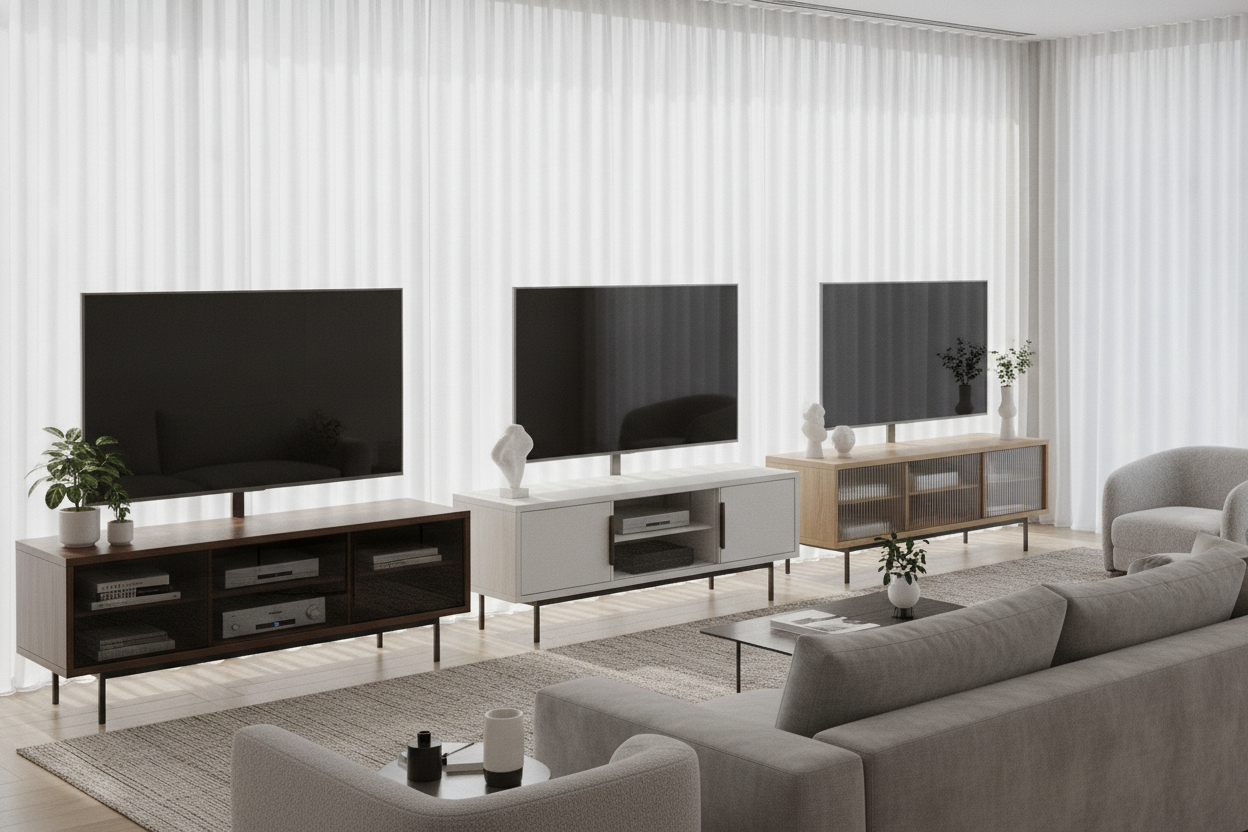
I spent three weeks staring at a solid oak media console that felt like a visual anchor in the worst way possible. It was a heavy, dark box that made my 12-by-14 living room feel like a dungeon. The moment I swapped it for a unit with glass for tv unit doors, the room finally started to breathe. The floor line continued visually under the unit, and the whole space felt three feet wider.
- Clear glass is for the hyper-organized; it turns your tech into a museum display.
- Smoked glass is the ultimate vibe for mid-century or moody modern setups.
- Fluted or ribbed glass is the 'cheat code' for hiding messy wires and ugly routers.
- Always look for tempered glass—safety isn't an area where you want to save twenty bucks.
The Great Door Debate: Why We Are Rethinking Solid Wood
For a long time, the trend was to hide everything behind heavy, solid wood doors. We wanted our living rooms to look like libraries, not Best Buy showrooms. But solid wood consoles can feel incredibly bulky in smaller apartments. They act like a wall instead of a piece of furniture.
Introducing glass elements changes the architecture of the room. It adds a layer of reflection and depth that wood just can't mimic. Before you commit to a specific door style, I highly recommend you browse different tv stands to see how various frame materials—like powder-coated steel or walnut—interact with transparent fronts. It’s about creating a sense of openness rather than just buying another storage box.
Clear Glass: The 'Display Case' Approach
Clear glass is a bold choice. It says, 'I have my life together and my cable management is impeccable.' If you have a collection of vintage cameras, rare art books, or a high-end turntable, a media console with glass doors acts as a curated showcase.
The downside? It is unforgiving. If you have a tangled nest of HDMI cables and a dusty Nintendo Switch from 2017, clear glass will broadcast that mess to everyone on your sofa. I once tried clear glass in a house with two cats; the nose prints and paw marks at the bottom of the doors became my new full-time job. Use this only if you’re prepared to be a bit of a neat freak.
Smoked and Tinted: Channelling Moody 70s Energy
Smoked glass—usually in a grey or bronze tint—is having a massive resurgence. It feels expensive and slightly mysterious. It’s the perfect middle ground because it provides enough transparency to let your remote's IR signal through, but it’s dark enough to hide the 'tech-y' look of your black plastic boxes.
In my experience, smoked tv unit glass looks best when paired with internal LED lighting. When the lights are off, the unit looks like a sleek, dark monolith. When you turn the internal cabinet lights on, your items glow softly through the tint. It’s pure 1970s bachelor pad energy, but updated for a modern aesthetic.
A Quick Warning About the 'Green Edge'
If you’re buying a cheaper unit, you might notice a thick green tint on the edges of the glass. This is standard 'soda-lime' glass which has a high iron content. It can make a high-end white or light grey unit look cheap and muddy. If you want that crystal-clear, high-end look, search for 'low-iron' glass. It’s more expensive but eliminates that swampy green hue entirely.
Fluted and Ribbed: The Ultimate Compromise
If you aren't a minimalist and your cable management is a disaster, fluted glass is your best friend. This textured glass features vertical ridges that blur whatever is behind it into abstract shapes and colors. You get the light-reflecting benefits of glass without the stress of showing off your messy router.
I’ve seen people have huge success hiding messy consoles behind tv unit glass doors that have a heavy ribbed texture. It keeps the piece feeling light and airy while completely masking the clutter. Plus, the vertical lines of the ribbing add a sophisticated, architectural detail that breaks up the flat surfaces of your other furniture.
Sliding vs. Hinged: How Does It Actually Open?
The hardware matters as much as the glass. Hinged doors are classic, but they require 'swing space.' In a tight living room, opening a 20-inch glass door might mean hitting your coffee table or having to shuffle your feet back every time you want to grab a controller.
For narrow apartments, a credenza with sliding glass doors is the superior move. The doors stay within the footprint of the unit, and the sliding tracks usually have a more modern, streamlined look. Just make sure the tracks are high-quality; there is nothing worse than a glass door that rattles or gets stuck every time you try to slide it open.
FAQ
Does glass block my remote control signal?
Usually, no. Standard IR remotes work fine through clear and smoked glass. However, very thick fluted glass or heavily frosted glass can sometimes scatter the signal, requiring you to hold the remote at a specific angle.
Is tempered glass really necessary?
Yes. Non-tempered glass breaks into dangerous shards. Since TV units are often at 'kick height' or 'pet tail height,' you want tempered glass that shatters into small, blunt pebbles if an accident happens.
How do I keep the glass from looking dusty?
Use a 50/50 mix of water and white vinegar with a microfiber cloth. Avoid paper towels; they leave behind tiny lint fibers that are incredibly visible once the sun hits the glass.

Laisser un commentaire
Ce site est protégé par hCaptcha, et la Politique de confidentialité et les Conditions de service de hCaptcha s’appliquent.