
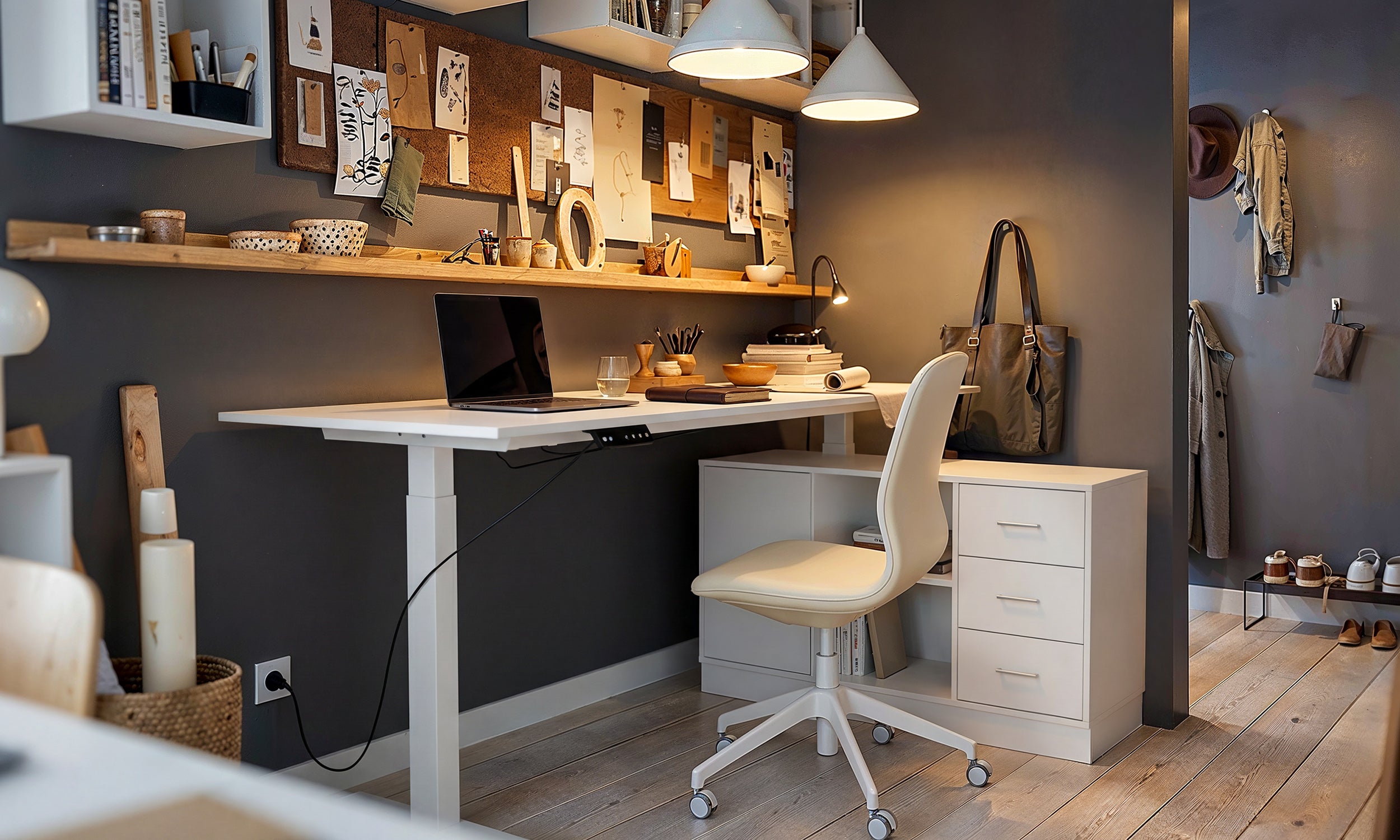


Diagnosing Seated Clearance Geometry and Height Mismatches
Experiencing a chair too low for desk clearance disrupts daily comfort and alters upper-body alignment. When a workstation feels misaligned, seated individuals often notice their forearms angling upward toward the desktop rather than resting parallel to the work surface. If you feel your chair too short for desk tasks, the discrepancy typically stems from mismatched furniture profiles, deep front desk aprons, or an office chair too short to match non-standard desktop heights.
Before pursuing complex hardware modifications, it is helpful to verify whether the issue is a simple setting oversight or a mechanical limitation. A chair may feel uncomfortably short because the internal gas spring has compressed under regular use, or because the desk surface features shallow integrated storage that limits knee clearance. Identifying whether your chair too low condition is static or dynamic helps determine whether an on-board adjustment, hardware replacement, or workstation rearrangement is required when you notice that my office chair is too low for everyday work.
On-Board Mechanical Adjustments: Operating Levers and Gas Cylinder Diagnostics
Understanding how to raise office chair with lever mechanisms is the first diagnostic step. Most modern task chairs use a pneumatic gas spring controlled by a paddle lever located beneath the seat pan. To operate this mechanism correctly, you must unweight the seat by standing up slightly while lifting the paddle upward. The compressed gas within the cylinder expands, lifting the seat upward toward its maximum extension. Releasing the lever locks the cylinder at the desired height.
If you are exploring how to make my office chair higher and find that operating the lever produces no upward movement, the cylinder may already be at its maximum travel limit. Alternatively, a worn gas lift cylinder might slowly sink when weight is applied. When learning how to raise a desk chair, testing whether the cylinder holds pressure under load confirms whether the existing pneumatic spring is functional or needs replacement.
Hardware Elevation Pathways: Casters, Stem Extenders, and Lift Kits
When built-in pneumatic travel is maxed out, hardware upgrades offer robust physical elevation. Upgrading standard nylon wheels to large-diameter rollerblade casters provides an immediate, stable lift while improving roll smoothness across hard flooring. For additional lift, installing specialized office chair caster extenders or stem inserts lengthens the connection between the wheel assembly and the five-star base.
- High-Travel Gas Cylinders: Replacing the original cylinder with a longer stroke unit provides extensive vertical range while preserving smooth swivel and tilt functionality.
- Shaft Collars and Lift Kits: Clamping a structural collar around an extended cylinder rod locks the chair at an elevated position, preventing sinking.
- Caster Upgrades: Fitting taller caster sets offers a stable physical boost across both task seating and gaming setups.
Gamers facing low desk clearances frequently ask how to make gaming chair taller without losing balance. Applying a specialized gaming chair height extension kit or a taller pneumatic cylinder maintains the seat's wide tilt range while raising the armrests above desk obstruction. Whether researching how to make your office chair taller or seeking methods for how to make your chair taller, choosing components that match your chair base diameter ensures lasting stability and prevents tipping.
Soft-Layer and Ergonomic Interventions: Seat Toppers and Foot Support Systems
For seating where mechanical disassembly is difficult or undesirable, soft-layer adaptations provide an accessible solution for how to make your chair higher. Adding a high-density molded foam seat cushion or firm wedge pad elevates the seated hip level relative to the desktop. High-resilience cushions maintain their supportive shape throughout the workday, raising your torso into a more natural alignment with keyboard and mouse trays.
Whenever a chair is raised significantly, you may find yourself too short for office chair base stability if your feet no longer rest flat on the floor. Elevating the seat pan often leaves legs dangling, which can create pressure points behind the thighs. Pairing elevated seating with an angled, height-adjustable under-desk footrest restores solid lower-limb support, stabilizing posture across extended working sessions.
Workstation Synergy: Coordinating Raised Seating with Desks and Perimeter Storage
Elevating a chair changes how the user interacts with the entire office footprint. When seating rises, verify that legroom remains clear beneath the desk surface. Fixed-drawer units and low front rails can restrict thigh clearance. Pairing your seating with versatile pieces like an office desk product ensures sufficient lateral knee room and keeps essential items within easy reach.
If standard fixed desktops remain awkward despite chair modifications, adaptable solutions such as a desk height product offer flexible surface heights for varied tasks. Maintaining balanced visual proportions across the room is equally essential; consulting a desk make office guide or exploring an office desk chair guide helps integrate elevated task chairs seamlessly with contemporary cabinets and perimeter furniture. For expansive layouts, modular elements from an extension collection can expand surface area and maintain organized workflows.
Decision Framework: Choosing the Right Height Elevation Strategy for Your Setup
Selecting the optimal method to raise your seating depends on your furniture type, budget, and mechanical comfort level. The framework below outlines common elevation methods and their practical trade-offs:
- Caster Replacement: Best for minor elevation gains; requires no tools and preserves swivel mechanics.
- Pneumatic Cylinder Replacement: Best for substantial vertical adjustments; requires removing the base and seat plate.
- Cushion and Wedge Layers: Best for quick, non-invasive elevation; requires adding a supportive footrest.
- Shaft Clamps: Best for addressing sinking cylinders on older chairs; locks seat at a fixed elevation.
By assessing whether your setup requires a minor wheel swap, a high-travel pneumatic cylinder, or complementary under-desk foot support, you can eliminate desk clearance mismatches and establish a comfortable, well-aligned workspace.


Laisser un commentaire
Ce site est protégé par hCaptcha, et la Politique de confidentialité et les Conditions de service de hCaptcha s’appliquent.