


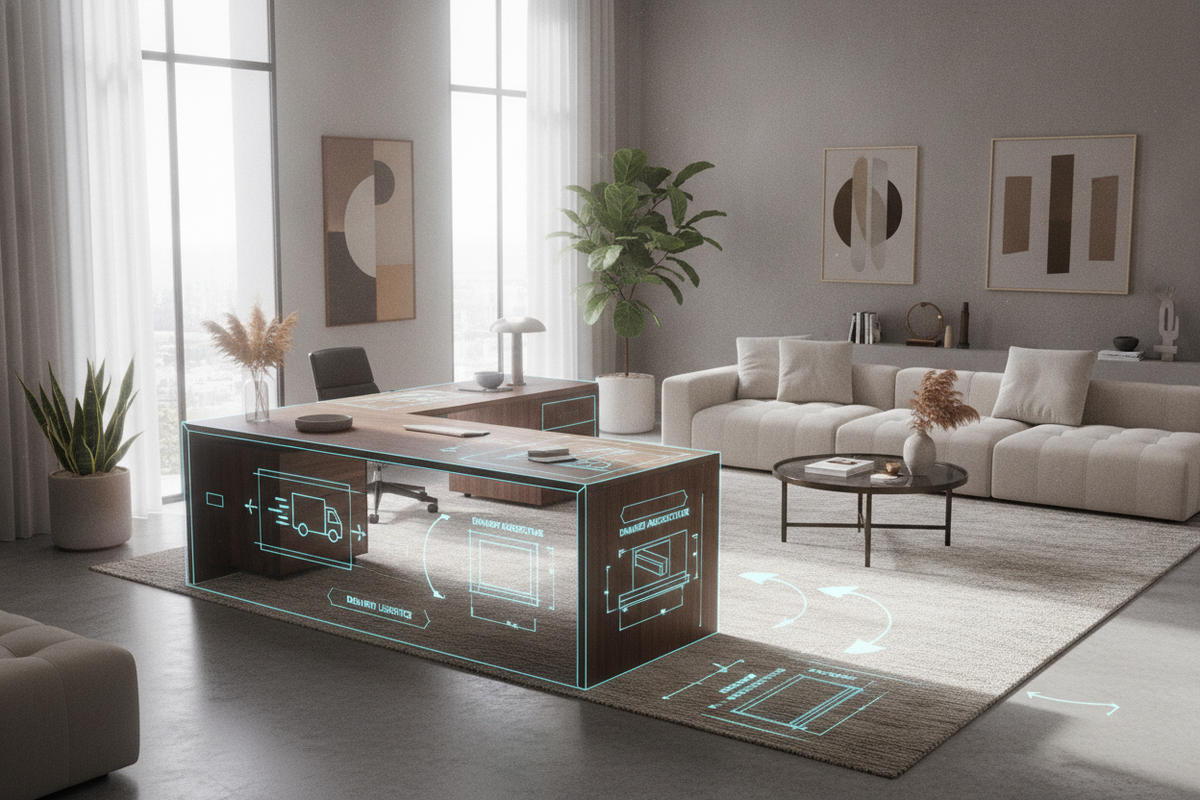
The Architectural Advantage of an Assembled L-Shaped Desk
Modern workspaces demand both functional surface area and enduring structural stability. An assembled L-shaped desk provides a cohesive architectural anchor for a dedicated study, corporate office, or multi-monitor workstation. Unlike flat-pack furniture that relies on extensive on-site fastener assembly, a fully assembled L-shaped desk arrives with factory-aligned joinery, pre-set drawer tracks, and integrated framing. This eliminates hours of mechanical assembly while mitigating common structural issues such as misaligned seams, uneven desk surfaces, and loose hardware connections over extended use.
By selecting a pre-built or modularly unified corner workstation, professionals can immediately configure secondary task wings, primary display zones, and integrated storage units. The inherent rigidity of pre-constructed corner profiles offers dependable load distribution across both the main worktop and the perpendicular return wing, creating a dependable platform for heavy hardware setups, document archives, and administrative workflows.
Dimensional Tiers and Spatial Footprint Frameworks
Integrating an assembled L-shaped desk into a room requires a clear understanding of spatial footprint tiers and boundary clearances. Corner furniture occupies horizontal surface along two perpendicular axes, which influences perimeter wall clearance, window placement, and natural lighting angles.
- Compact Corner Returns: Tailored for compact secondary bedrooms, multi-purpose alcoves, or transitional home nooks. These configurations prioritize essential leg clearance and narrow return depths while preserving circulation space around nearby doors. Homeowners seeking smaller secondary desks alongside an executive workstation often evaluate a compact writing desk with drawer storage to support auxiliary tasks without overwhelming room proportions.
- Mid-Scale Balanced Workstations: Designed for dedicated home offices and corner nooks requiring dual-screen capabilities and side utility drawers. A balanced piece such as a 55-inch L-shaped corner desk in white delivers ample primary desk space while maintaining an accessible return wing for printers, tablets, or stationery organizers.
- Expansive Executive Peninsulas: Suited for spacious executive suites and open commercial layouts. These units feature extended return wings, deep main desktop surfaces, and built-in full-height pedestals that command the center or primary perimeter of the room.
When mapping out your chosen dimensional tier, ensure adequate floor clearance behind the primary seating zone to allow an ergonomic office chair to glide freely without striking baseboards, radiator covers, or adjacent storage cabinets.
Transit Logistics: Navigating Doorways, Hallways, and Turn Radii
One of the most critical logistical stages of selecting a fully assembled L-shaped desk is transit pathway verification. Because pre-built desks feature fixed or large modular components, measuring the path from the delivery threshold to the final room placement is vital to prevent delivery complications.
- Entryway and Doorframe Clearances: Measure the interior width and height of every doorway along the entry route. Take into account door handles, door stops, and hinges that narrow the usable opening.
- Stairwell Landings and Vertical Headroom: In multi-level homes, tight switchback stairs and low overhead soffits present physical obstacles. The diagonal depth and overall height of the desk return must clear ceiling angles and handrails.
- Hallway Turn Radii: Narrow hallways with ninety-degree turns require sufficient pivot clearance. Ensuring that the longest desk span can tilt or stand vertically during transit ensures seamless passage around blind corners.
Carefully evaluating your home layout before delivery guarantees that your assembled workstation moves effortlessly into its designated space without scuffing baseboards or damaging door trim.
Structural Joinery: Pre-Built Rigidity Versus Flat-Pack Assemblies
The primary structural difference between factory-assembled desks and knock-down furniture centers on joint construction and load-bearing tolerance. Flat-pack desks typically rely on plastic cam-locks, wooden dowels, and superficial surface screws that can loosen when subjected to dynamic movement or lateral forces. Understanding the wider benefits of fully assembled cabinetry and furniture highlights how industrial joinery methods elevate overall longevity and structural performance across residential interiors.
Factory-assembled desks leverage industrial mechanical fasteners, reinforced corner blocking, and precision-aligned steel hardware. This structural unity ensures that drawer glide tracks remain perfectly parallel over time, preventing drawer binding or sagging. Furthermore, pre-assembled corner returns resist racking forces when heavy monitor arms, desktop towers, or desktop organizers are concentrated along the outer desktop edges.
Storage Architecture: Pedestals, Utility Drawers, and Cable Routing
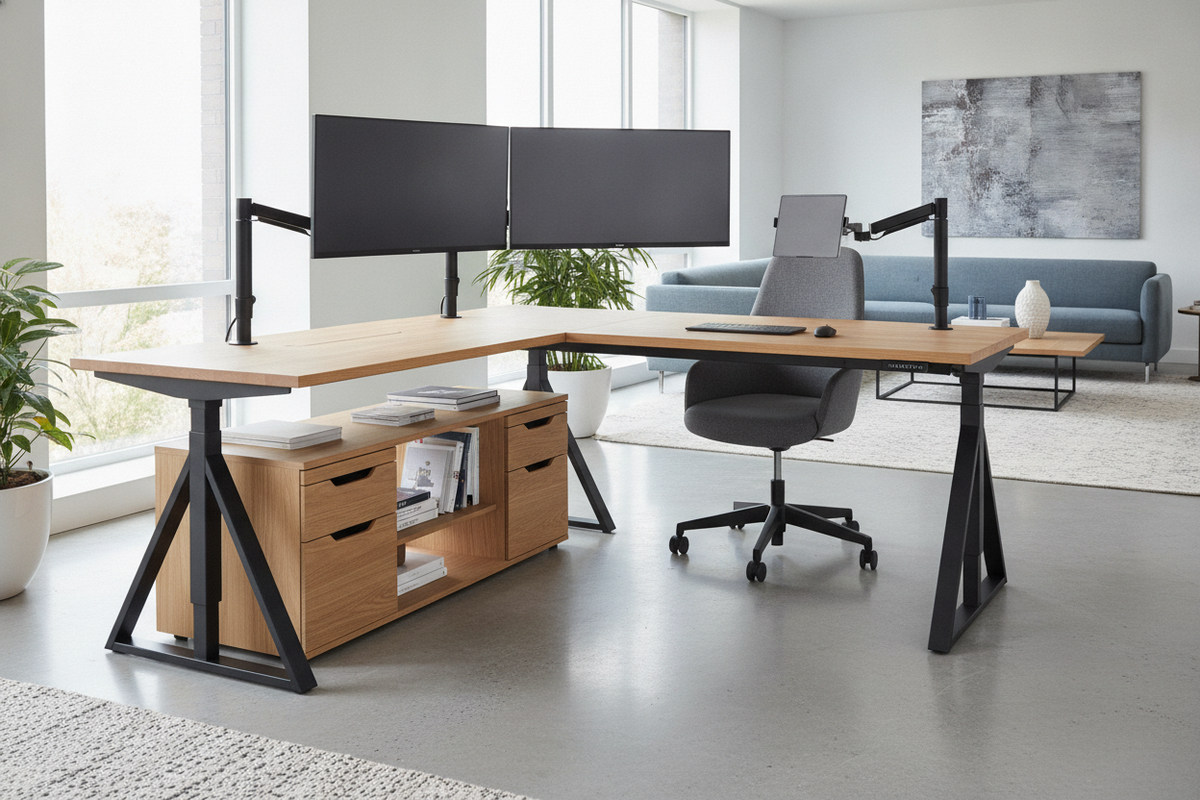
An effective workstation configuration balances open surface real estate with organized enclosed storage. An L-shaped corner desk with integrated storage combines functional desktop utility with dedicated file drawers, pencil trays, and concealed utility cubbies.
Pedestal Organization and Document Filing
Integrated storage pedestals serve as structural supports while compartmentalizing office essentials. Deep bottom drawers equipped with hanging file rails accommodate standard and legal paperwork, keeping confidential records secure and dust-free. Upper utility drawers house daily stationery, charging cables, and personal items, leaving the main desk surface uncluttered for active work tasks.
Wire Management and Cord Channels
Clean visual lines require thoughtful cable management. Pre-built L-shaped desks often feature integrated cable grommets, modesty panel wire channels, and internal pass-through routing holes. Directing monitor cables, power bricks, and charging hubs beneath the corner junction maintains a clean aesthetic while preventing tangled cords around the leg well.
Room Flow Dynamics and Multi-Zone Ergonomics
Positioning an assembled L-shaped desk within an interior layout establishes distinct work zones and dictates room circulation. Homeowners can explore comprehensive strategies for mastering the L-shaped desk office layout for better flow to maximize natural light and ensure unhindered room transit.
Corner Anchoring
Placing both wings flush against intersecting walls creates a secure corner anchor that maximizes central floor area. This setup works exceptionally well in multi-use rooms, guest bedrooms, and creative studios where open walking pathways must remain unobstructed.
Floating Peninsula Orientation
In larger rooms, placing the primary desk run facing inward toward the entry door with the return wing extending along a side wall creates an authoritative executive command position. This orientation allows clear sightlines across the room while establishing a distinct barrier between public entry space and private computer screens.
Multi-Zone Division
The orthogonal geometry of an L-shaped desk naturally separates primary digital workflows from secondary analog tasks. Reserve the wider desktop surface for primary displays, keyboards, and central tasks, while dedicating the perpendicular return wing to administrative review, physical writing, sketching, or peripheral equipment.
Decision Matrix: Selecting the Ideal Configuration for Your Floor Plan
Before finalizing an assembled or fully assembled L-shaped desk for your workspace, review this essential decision matrix to confirm alignment with your floor plan and daily workflow:
- Return Wing Orientation: Determine whether a left-hand or right-hand return best matches your dominant working hand, window exposure, and power outlet locations.
- Legroom Clearance: Verify that structural crossbars and drawer pedestals do not obstruct knee movement or impede chair swivel radius.
- Surface Finish and Durability: Select scratch-resistant, water-repellent laminates or sealed wood veneers that harmonize with existing bookcases, credenzas, and flooring.
- Delivery Access Verification: Confirm that doorway openings, stairwell turns, and transit corridors exceed the minimum uncrated dimensions of the desk assembly.
By approaching your workspace setup through this architectural blueprint, an assembled L-shaped desk becomes a durable, ergonomic foundation that enhances daily productivity and elevates interior organization.

Laisser un commentaire
Ce site est protégé par hCaptcha, et la Politique de confidentialité et les Conditions de service de hCaptcha s’appliquent.