


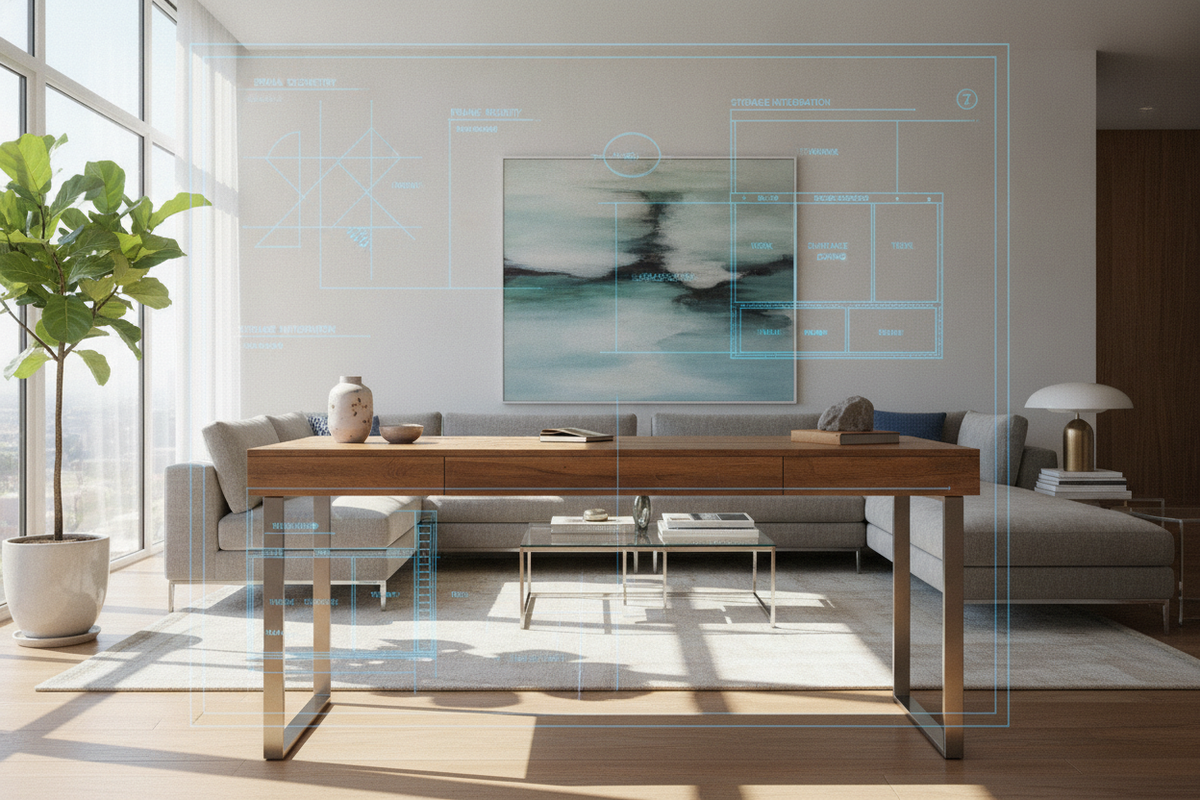
The 72 x 30 Dimension Profile: Why the Executive Scale Matters
Choosing a large workstation represents a significant architectural decision for any dedicated workspace. A desk 72 x 30 footprint provides an expansive visual presence and functional canvas, bridging the gap between standard compact writing desks and commanding commercial executive furniture. At six feet wide and two and a half feet deep, this scale affords distinct spatial advantages for multi-tasking professionals who refuse to compromise between digital hardware arrays and physical project materials.
Understanding the dimensional balance of this profile is essential before committing room real estate. The generous width offers ample horizontal sweep, while the balanced depth preserves accessible reaching zones. This combination creates a stable foundation for complex daily workflows, whether configured as a traditional fixed timber table or an electric height-adjustable workstation.
Surface Zoning Architecture: Maximizing the 72-Inch Span
An expansive desk surface can quickly devolve into disorganized clutter without intentional layout zones. Treating the desktop as an organized grid helps separate primary input tasks from reference materials and peripheral hardware. Organizing your surface into distinct operational territories prevents visual chaos and streamlines day-to-day transitions:
- Primary Focus Zone: Centered along the front edge, this area holds your active keyboard, mouse, and immediate notebook space for direct posture alignment.
- Secondary Digital Zone: Positioned across the mid-to-rear center span, accommodating dual monitors, wide ultrawide screens, or articulating display arms without encroaching on hand movement.
- Tertiary Utility Flanks: The outer left and right perimeter areas provide dedicated resting space for audio equipment, desktop charging docks, secondary laptops, or desk lamps.
For aesthetic harmony across such a wide expanse, reviewing a specialized standing desk guide offers practical concepts for balancing desk pads, monitor risers, and decorative elements across broad surfaces.
Optical Focal Depth: The Functional Value of a 30-Inch Worktop
While desk width gets significant attention, the 30-inch depth is often the true ergonomic differentiator. Narrower surfaces frequently force large modern monitors too close to the user, creating visual fatigue and restricting arm placement. A 30-inch deep worktop provides comfortable focal distance, allowing large monitors or heavy clamp mounts to sit sufficiently back while preserving room for full-sized desktop blotters and forearm support.
This depth also allows users to mount monitor arms behind the primary task area without pushing displays past the rear edge of the table. If room constraints make a full six-foot width challenging while deep surface area remains essential, exploring a slightly more compact wide standing desk product can provide comparable optical depth within a moderately narrower footprint.
Structural Rigidity and Frame Mechanics for 72-Inch Desks
Spanning six feet creates distinct physical demands on under-desk support systems. Without proper engineering, long tabletops can experience center deflection over time or exhibit distracting side-to-side wobble under active typing. Structural stability across a wide span relies on several core architectural features:
- Crossbeam Under-Structure: Sturdy steel or reinforced hardwood crossbars running horizontally beneath the tabletop distribute downward weight evenly across the entire frame.
- Substantial Leg Columns: Wide-gauge steel legs or robust wooden trestles offer the necessary mass to anchor the desk against lateral sway.
- Reinforced Top Construction: Dense composite cores, solid hardwoods, or reinforced laminate panels resist bowing even when supporting multiple heavy monitors and accessories.
When selecting an expansive height-adjustable workstation that provides broad lateral coverage, exploring a wide standing desk product ensures structural integrity alongside smooth motorized height transitions.
Fixed Frame vs. 72 x 30 Standing Desk Dynamics
Deciding between a stationary frame and a 72" x 30" standing desk requires evaluating how movement affects stability. A stationary desk benefits from fixed joinery and wide leg stances that remain completely solid at all times. In contrast, a 72 x 30 standing desk introduces vertical telescoping columns that must maintain balance across a six-foot top, particularly at standing heights.
Dual-motor lifting columns, synchronized control boxes, and robust base feet are critical for maintaining horizontal equilibrium on large sit-stand desks. When elevated, a standing desk 72 x 30 carries a higher center of gravity, making rigid column tolerances and balanced hardware placement key factors in preventing shake during typing or conferencing.
Room Flow and Placement Clearances for Large Desks
Integrating a 72-inch workstation requires deliberate floor planning to preserve comfortable movement throughout the room. Because of its commanding presence, positioning should account for walkways, natural light, and door swings:
- Perimeter Pathways: Maintain clear walking corridors around the desk perimeter so the room feels open rather than obstructed.
- Chair Travel Clearance: Allow generous space behind the desk to ensure task chairs can roll back freely without hitting walls, shelving, or baseboards.
- Window Orientation: Position the desktop perpendicular to primary windows to avoid direct screen glare while keeping natural sightlines open.
- Freestanding vs. Perimeter Placement: Placing the desk facing outward into the room creates an authoritative executive feel, whereas perimeter wall placement maximizes central floor space.
When planning spatial layouts in standard residential or home office rooms, consulting a comprehensive layout standing desk guide provides clear spatial strategies for harmonizing large furniture footprints with natural room circulation.
Integrated Storage Strategies for 72 x 30 Workstations
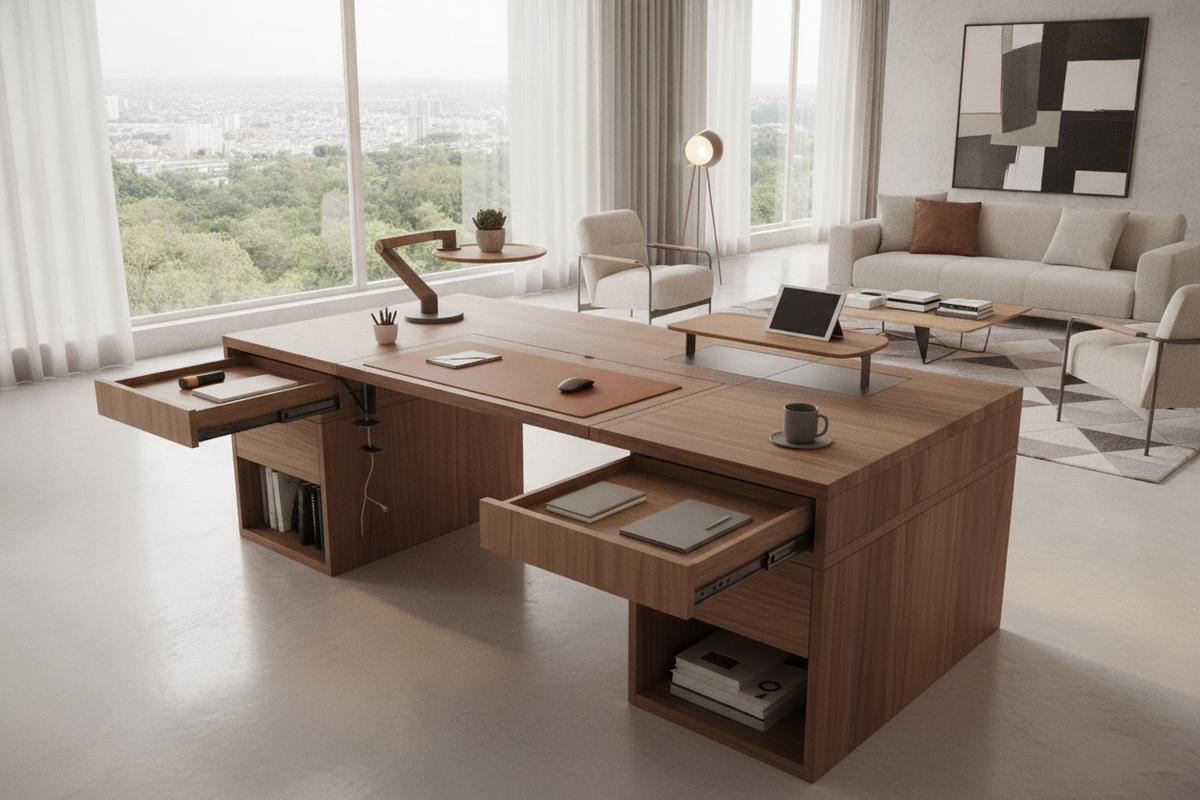
The expansive open space beneath a six-foot desktop offers tremendous potential for clean, functional storage integration. Because the primary work surface handles extensive equipment, under-desk and adjacent cabinetry keep daily essentials within arm's reach without cluttering the top.
- Mobile Rolling Pedestals: Compact drawer units tucked neatly beneath one side of the frame provide secure filing and office supply storage while leaving ample central legroom.
- Low-Profile Credenzas: Positioning a low credenza or sideboard behind or adjacent to the workstation creates a secondary surface for printers, scanners, and decorative lighting.
- Under-Desk Cable Trays: Wide horizontal wire management raceways hidden beneath the rear edge conceal power strips, power bricks, and excess cords.
Workflow Scenarios: Choosing the Right Configuration
A desk 72 x 30 excels across diverse professional environments, adapting to distinct physical and technical requirements:
- Software Developers & Data Analysts: Triple-screen or ultrawide setups fit comfortably alongside vertical coding monitors without crowding note-taking space.
- Creative Directors & Digital Artists: Large graphics tablets, color-accurate reference displays, and physical sketchbooks share the tabletop without constant shifting.
- Executive Managers: A clean presentation surface provides plenty of space for conference hardware, structured document review, and polished desktop accessories.
For smaller home offices where room dimensions make a full six-foot footprint tight, comparing expansive layouts with a mid-scale standing desk product helps remote workers balance physical desktop capacity against overall room proportions.

Laisser un commentaire
Ce site est protégé par hCaptcha, et la Politique de confidentialité et les Conditions de service de hCaptcha s’appliquent.