


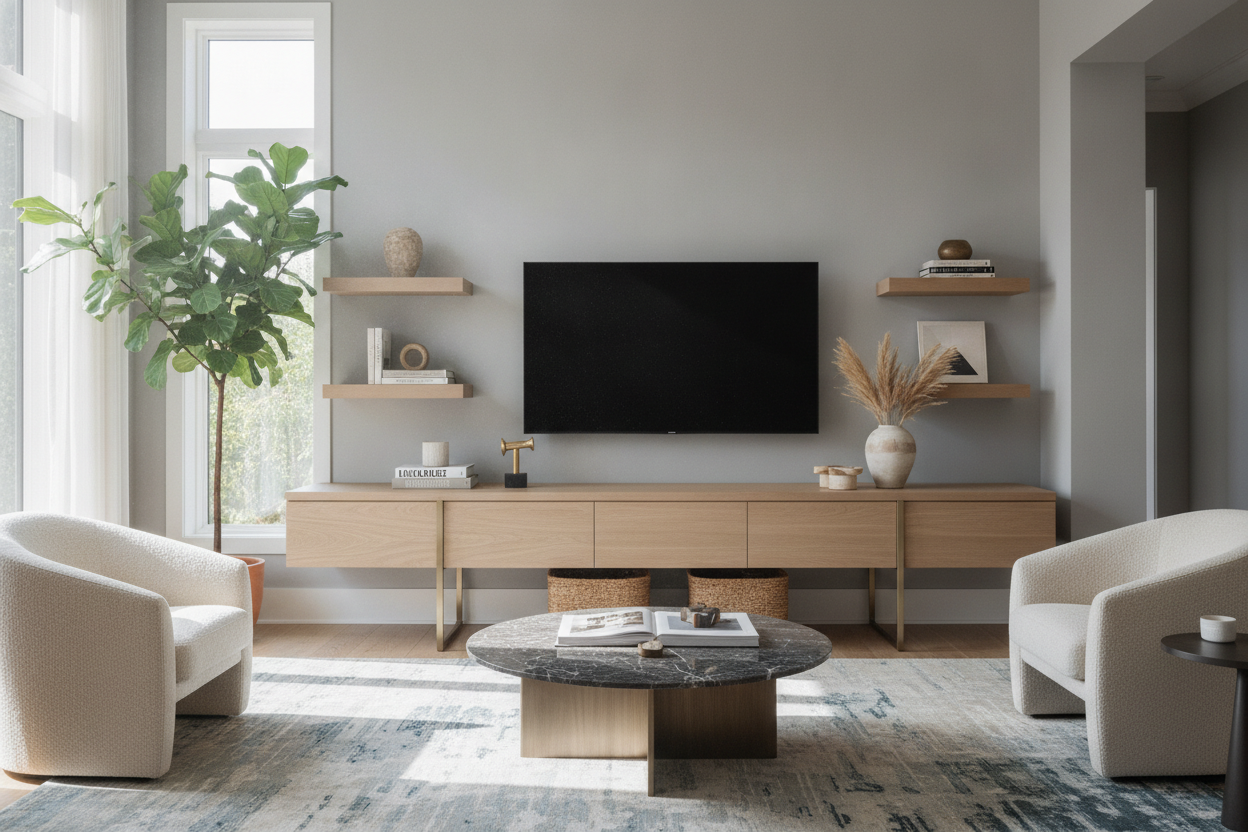
I remember the first time I hauled a massive screen into my apartment. I felt like a tech god until I sat it on my old dresser and realized it looked like an elephant balancing on a barstool. Choosing a tv stand for 64 inch tv isn't just about weight capacity; it's about not making your living room look like a temporary staging area for a Best Buy clearance sale.
Most people make the mistake of matching the width of the TV to the width of the stand. It’s a visual nightmare. You want your home to feel grounded, not like a stiff breeze could send your $800 investment crashing onto the hardwood. Here is the reality: if your furniture doesn't breathe, your room feels cramped.
- Aim for a console that is at least 12 inches wider than the TV itself.
- A 64-inch TV is actually about 56 inches wide—don't buy a 56-inch stand.
- Low and wide is almost always better than tall and narrow.
- Cable management is the difference between 'adult home' and 'frat house.'
The 'Tipping Hazard' Effect of Narrow Furniture
There is a specific kind of visual anxiety that comes from a screen overhang. When the edges of your TV line up perfectly with the edges of your 64 inch tv console, it creates a top-heavy silhouette that makes the whole room feel unstable. I learned this the hard way in my last place when I swapped my bulky console for a narrower unit to save floor space. It was a huge mistake.
The room felt smaller, not larger. Because the TV dominated the footprint of the furniture, it looked like it was swallowing the wall. You want the furniture to 'cradle' the tech, giving your eyes a place to land that isn't just glowing pixels. If the stand is too small, the TV looks like a giant black void floating in space, and every time someone walks past it, you'll subconsciously brace for a crash.
How Wide Should Your 64 Inch TV Console Actually Be?
Let's do some quick math because the industry naming conventions are meant to confuse us. A 64-inch TV is measured diagonally. In the real world, that screen is usually about 56 to 57 inches wide. If you buy a 60-inch stand, you’re leaving less than two inches of breathing room on either side. That is a design 'tightrope' you don't want to walk.
I always recommend the 'Golden Buffer'—at least 6 inches of extra console on each side. For a 64-inch screen, you should be looking at 68 to 72-inch units. Instead of trying to make a dining sideboard work, look at dedicated TV stands designed for these proportions. They sit lower to the ground, which keeps your neck from straining and keeps the center of gravity where it belongs. I’ve seen too many 1.5 lb/ft³ foam sofas ruined because people have to crane their necks at weird angles to see a TV sitting on a tall, narrow chest.
Stop Floating Everything in the Middle of the Wall
Once you have the width right, the next hurdle is the 'shrine' effect. We tend to center the TV perfectly on the stand, then center the stand perfectly on the wall. It’s boring. It makes the TV the only thing anyone looks at. I like to break the symmetry to make the room feel lived-in.
Try scooting the TV slightly to one side and placing a tall-ish plant or a ceramic lamp on the other. This 'anchors' the setup and integrates the screen into the room's decor. If you have a massive 64-inch screen, you need something with visual weight on the console to balance it out. A stack of oversized art books or a sculptural vase works wonders to stop the screen from looking like a black hole sucking up all the attention in the room.
When the Best Solution Is Hiding the Screen Entirely
Let's be honest: TVs are ugly when they're off. They are giant plastic rectangles that ruin your carefully curated color palette. If you’re like me and hate that your living room revolves around a piece of glass, it might be time to look at concealment. I’ve seen some incredible setups where the TV stays tucked away until movie night.
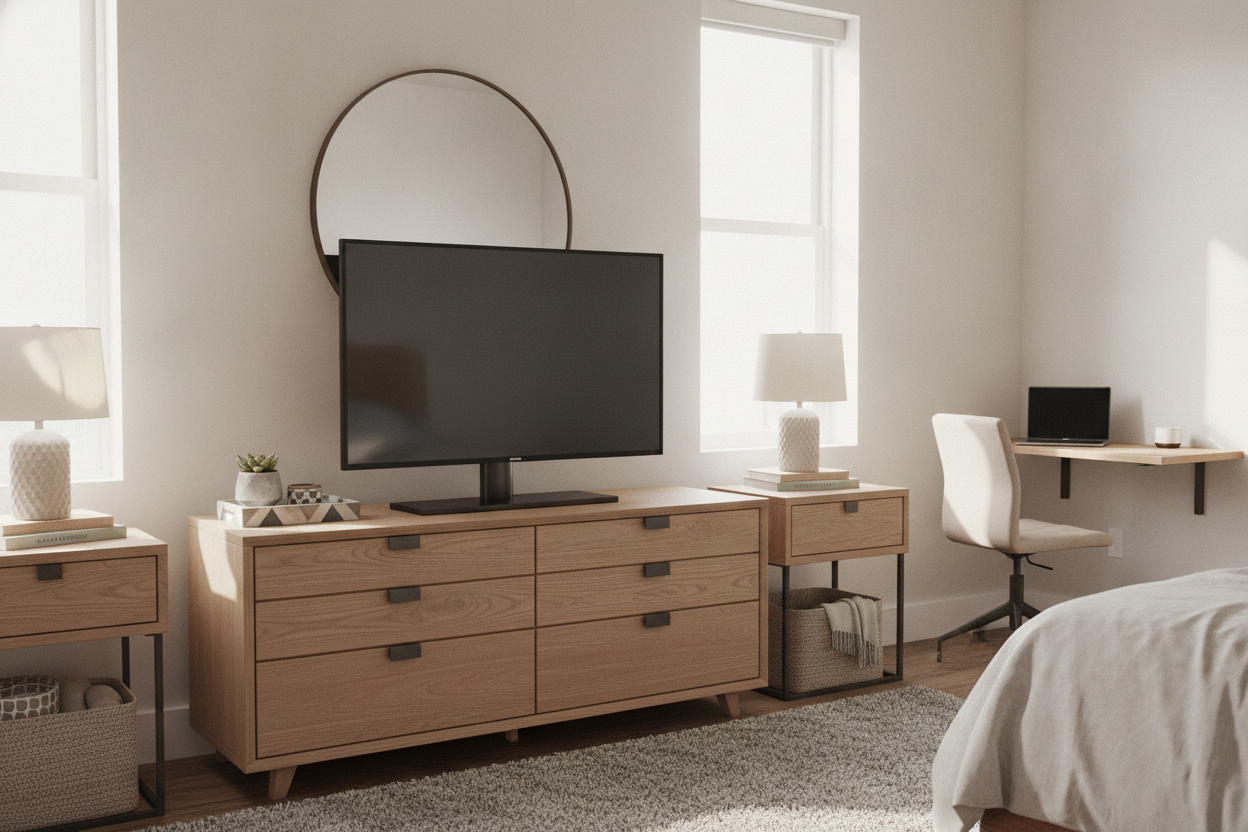
A motorized hidden TV mechanism is the ultimate move for people who value their interior aesthetic over their Netflix habit. It allows you to have a beautiful, clean cabinet top for most of the day, with the screen appearing only when needed. It’s the best way to keep your 64-inch beast from bullying the rest of your furniture and gives you back that precious wall space for art or shelving.
How high should my TV stand be?
For a 64-inch screen, look for a stand between 18 and 24 inches tall. You want your eyes to be level with the bottom third of the screen when you're sitting on your sofa. If you have to look up, it's too high and your neck will hate you by the second episode.
Can I use a stand that is the same width as the TV?
Technically yes, if the legs fit, but it will look terrible. It creates a 'T' shape that feels unstable and cheap. Always aim for at least 4-6 inches of overhang on the furniture side to give the setup some visual 'weight.'
What material is best for a heavy 64-inch TV?
Avoid cheap particle board that's less than an inch thick—it will bow over time. Look for kiln-dried hardwood or high-grade MDF with a thick veneer. If the middle of the stand starts to sag, your doors and drawers won't close properly, and the whole thing will look like a thrift store reject within a year.

Laisser un commentaire
Ce site est protégé par hCaptcha, et la Politique de confidentialité et les Conditions de service de hCaptcha s’appliquent.