


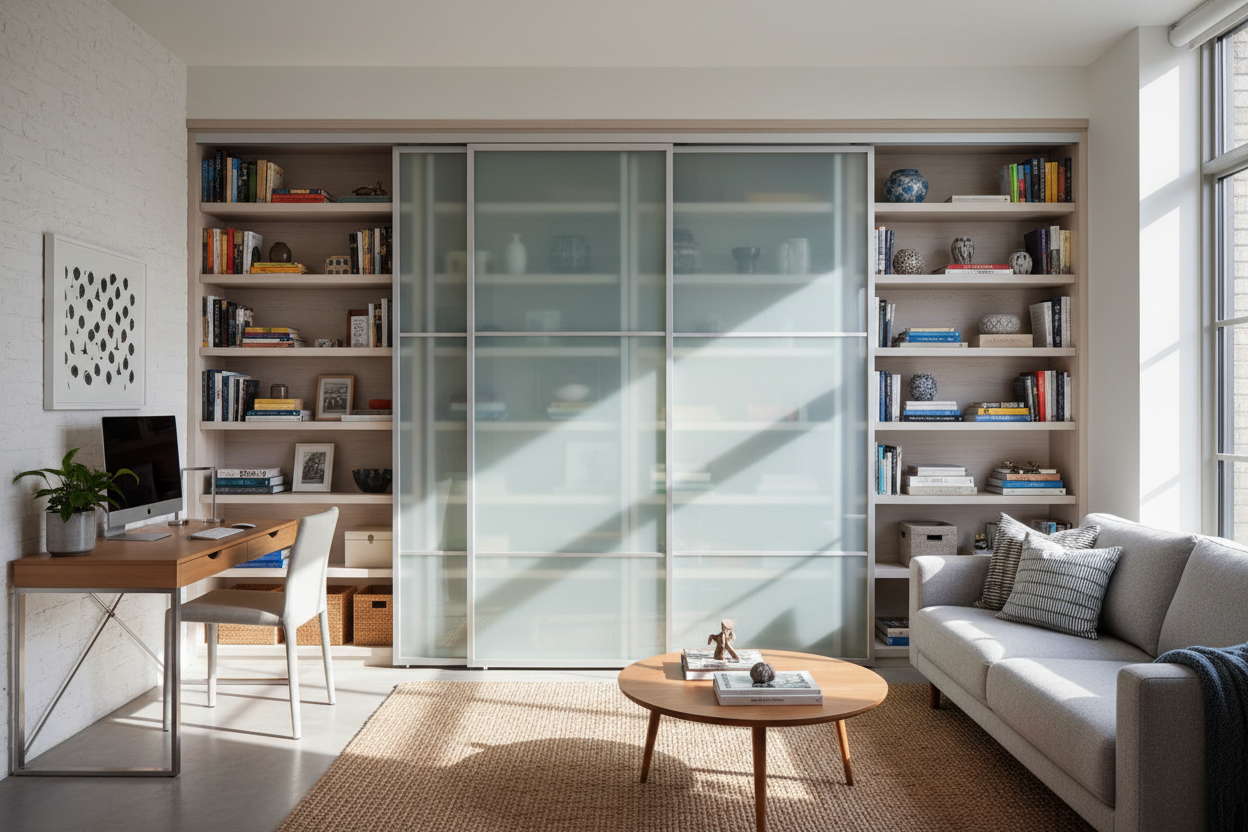
J'ai vécu un jour dans un studio si étroit que je devais me faufiler de côté pour atteindre mon bureau. Chaque fois que j'avais besoin d'un livre de référence de mon armoire traditionnelle, je devais rouler ma chaise de bureau dans la cuisine juste pour dégager l'ouverture de la porte. C'était un exercice quotidien de frustration qui se terminait par quelques tibias meurtris et beaucoup de jurons.
Si vous jouez actuellement à une partie de Tetris à fort enjeu avec vos meubles, arrêtez de regarder les unités ouvertes standard. Vous avez besoin de bibliothèques avec portes coulissantes. Elles offrent l'aspect net et rangé d'une armoire sans nécessiter un seul pouce d'espace au sol pour les ouvrir.
Les points clés à retenir
- Les portes coulissantes éliminent les problèmes de « rayon de balayage » dans les couloirs étroits et les petits bureaux.
- Elles offrent une protection contre la poussière que les étagères ouvertes n'ont pas.
- Une bibliothèque à portes coulissantes peut dissimuler le désordre visuel (comme des classeurs en désordre) tout en exposant des objets de décoration.
- Les rails métalliques sont non négociables ; évitez les glissières en plastique bon marché qui déraillent.
La géométrie délicate des pièces étroites et des portes battantes
Les portes d'armoires standard s'ouvrent généralement de 30 à 45 centimètres. Dans une pièce qui ne fait que 2,7 mètres de large, perdre 45 centimètres de passage juste pour attraper une agrafeuse est un crime de conception. La plupart des gens essaient de résoudre ce problème en optant pour des étagères ouvertes profondes, mais ils réalisent ensuite qu'ils doivent dépoussiérer chaque tranche de livre une fois par semaine. C'est une situation perdant-perdant.
Lorsque vous achetez une bibliothèque avec des portes coulissantes en verre, les chiffres jouent enfin en votre faveur. Vous pouvez placer une chaise ou une table d'appoint à quelques centimètres de l'unité car la porte reste dans son propre espace. Fini le déplacement de meubles juste pour accéder à votre propre rangement.
Pourquoi je suis passé à une bibliothèque à portes coulissantes
J'ai finalement abandonné mon cauchemar de portes battantes et j'ai acheté une bibliothèque à portes coulissantes avec une silhouette mid-century. La révélation n'a pas seulement concerné l'espace, mais aussi la tranquillité d'esprit. J'ai un chat qui pense que chaque étagère ouverte est une salle de sport personnelle. Les portes coulissantes sont la seule chose qui se dresse entre mes céramiques vintage et un voyage très coûteux chez le vétérinaire.
Le système de rail d'une bibliothèque-armoire à portes coulissantes semble également plus intentionnel. Une porte coulissante bien faite a un poids et un "clac" qui donnent une impression de bien plus haut de gamme qu'une charnière fragile. Assurez-vous simplement que l'unité est de niveau ; si vos sols sont inclinés (bonjour, chers habitants de vieilles maisons), ces portes s'ouvriront d'elles-mêmes comme dans un manoir hanté.
La règle de style « moitié-moitié » pour les étagères à portes coulissantes
La beauté des étagères à portes coulissantes est que vous n'avez pas besoin d'être minimaliste. J'utilise la règle du « moitié-moitié » : faites glisser la porte d'un côté pour cacher le « travail » – les affreux dossiers fiscaux, les câbles HDMI emmêlés et les projets de tricot à moitié terminés. Le côté ouvert est l'endroit où vous mettez les jolies choses, comme vos livres de chevet préférés et cette bougie chère que vous avez peur d'allumer.
Pour les zones très fréquentées ou les salles de jeux, j'ai même vu une bibliothèque à portes coulissantes avec tableau blanc magnétique. C'est une façon ingénieuse de cacher le chaos des jouets à l'intérieur tout en offrant aux enfants une surface verticale pour jouer. Cela transforme un meuble de rangement en un véritable centre d'activités.
Verre ou bois massif : quel système de rail est le meilleur ?
Le choix entre une bibliothèque à portes coulissantes en verre et une version en bois massif dépend entièrement de votre ego. Voulez-vous que les gens voient votre collection soignée de poésie du XIXe siècle ? Optez pour la bibliothèque avec portes coulissantes en verre. Elle ajoute une touche de sophistication et donne l'impression que la pièce est plus grande car votre regard peut parcourir toute l'unité.
Cependant, si votre « collection » est principalement composée de livres de poche dépareillés et de papier d'imprimante, optez pour le bois massif. Si vous voulez le meilleur des deux mondes, une bibliothèque vitrine avec portes en verre comporte souvent du verre en haut pour les objets à « montrer » et des tiroirs ou des portes pleines en bas pour les objets à « cacher ». C'est le mulet des meubles – affaires en bas, fête en haut.
3 choses à vérifier avant d'acheter un système coulissant
Tout d'abord, vérifiez le matériau des rails. Si les portes sont lourdes mais que le rail est en plastique fin, il se déformera en moins d'un an. Recherchez des rails en aluminium ou en acier. Deuxièmement, vérifiez la limite de poids. Le verre est lourd, et si le cadre n'est pas en bois dur séché au four ou en panneau de meuble haute densité, l'ensemble pourrait s'affaisser, ce qui ferait coller les portes.
Enfin, privilégiez le rangement avec étagères réglables. Les portes coulissantes ont souvent un diviseur vertical central pour soutenir le rail, ce qui peut limiter votre espace horizontal. Vous voudrez pouvoir déplacer ces étagères de haut en bas pour accueillir de grands livres d'art ou des vases surdimensionnés qui ne rentreraient pas dans un casier standard à hauteur fixe.
FAQ
Les portes coulissantes se bloquent-elles facilement ?
Seulement si vous achetez des articles bon marché. Recherchez des roulements à billes. Si une porte devient collante, un peu de spray au silicone ou même un frottement de papier ciré le long du rail suffit généralement à la réparer en quelques secondes.
Les portes coulissantes en verre sont-elles sûres pour les maisons avec des enfants ?
Recherchez toujours du verre trempé. Il est beaucoup plus solide que le verre standard et, s'il se brise, il se fragmente en petits morceaux plutôt qu'en dangereux éclats. La plupart des bibliothèques modernes avec portes coulissantes en verre utilisent du verre trempé en standard.
Comment nettoyer les rails ?
C'est le seul inconvénient. La poussière et les poils d'animaux adorent les rails. Utilisez un suceur plat d'aspirateur une fois par mois, ou un coton-tige humide pour les coins étroits. Cela prend deux minutes mais permet au coulissement de rester fluide comme du beurre.

Laisser un commentaire
Ce site est protégé par hCaptcha, et la Politique de confidentialité et les Conditions de service de hCaptcha s’appliquent.