


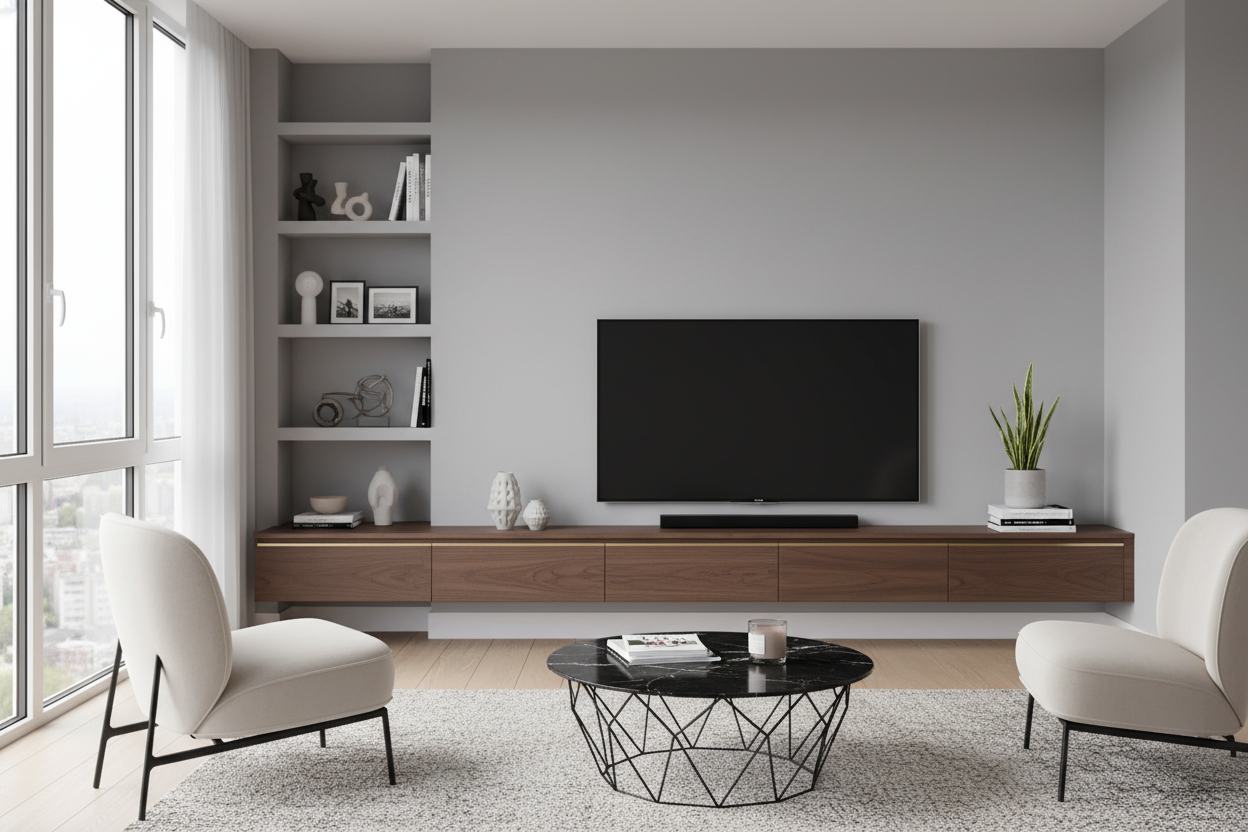
I spent three years wondering why I had a nagging headache every time I finished a Netflix binge. I blamed the blue light, my cheap glasses, and even my caffeine intake before I finally realized the truth: I was staring at my TV like I was in the front row of a movie theater. My screen was perched on a standard-height sideboard, forcing my chin up at an angle that would make a chiropractor weep.
The fix wasn't a new prescription or a fancy ergonomic chair. It was swapping my bulky, waist-high console for a short entertainment center. Bringing that screen down changed the entire vibe of my living room, making it feel less like a showroom and more like a place where I could actually relax without a heating pad on my neck.
- Seated eye level is the 'sweet spot' for screen placement to prevent chronic neck strain.
- Low-profile furniture creates a vertical void that makes standard 8-foot ceilings feel much taller.
- A wider, shorter base provides better visual stability for modern 65-inch+ screens.
- Cable management is harder with less vertical space, so high-quality cord organizers are non-negotiable.
The 'TV Too High' Epidemic Sweeping Our Living Rooms
We’ve all seen it: the 'TV over the fireplace' look that dominates Instagram. It looks sleek in a photo, but in practice, it’s ergonomic suicide. Most people mount their screens far too high, or they buy small entertainment centers that are built like dining buffets. If you’re sitting on a sofa with a 18-inch seat height, your eyes should naturally hit the center of the screen without you tilting your head back even a fraction of an inch.
When you use a media center small enough to sit just 12 to 18 inches off the ground, the room feels grounded. Massive modern TVs are heavy, both physically and visually. Placing a 75-inch beast on a 30-inch tall cabinet makes the entire wall feel top-heavy and cramped. It’s the interior design equivalent of wearing a giant hat in a small car.
How a Short Entertainment Center Hacks Your Spatial Perception
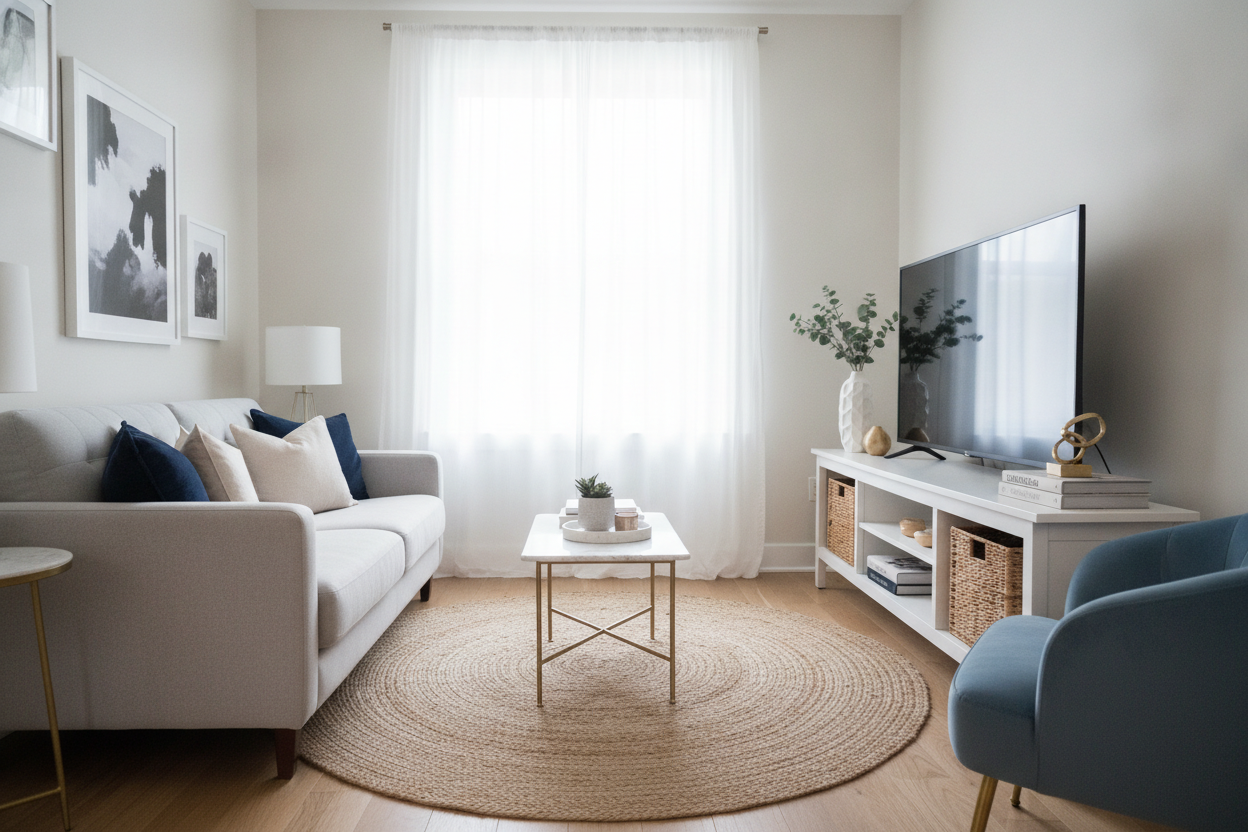
There is a specific kind of magic that happens when you lower your furniture. By opting for short entertainment centers, you’re leaving a massive amount of 'negative space' on the wall above the TV. This trick makes the ceiling feel like it’s floating higher than it actually is. In a tiny apartment, a small entertainment unit that sits low to the floor keeps the sightlines open, preventing the room from feeling like a storage locker.
I’ve found that a mini entertainment center works best when it’s long and lean. Even if the unit itself is small, keeping it low to the ground allows it to disappear into the architecture. It stops being a 'piece of furniture' and starts feeling like a built-in ledge. This is especially true for a small entertainment shelf setup where the focus is on the screen, not the wood holding it up.
Finding the Right Proportions for Your Screen
The biggest mistake I see? A TV that is wider than its console. It looks like a gymnast balancing on a tightrope. Your small entertainment cabinets should be at least 6 to 10 inches wider than the TV on both sides. If you’re going short, you have to go wide to maintain the balance. A low, wide stance feels expensive and intentional; a short, narrow stance just looks like you’re using a coffee table as a TV stand.
But Where Does All My Stuff Go?
The honest downside of a small entertainment center with shelves that only stands 14 inches high is the lack of storage. You aren't fitting a vertical stack of board games or a massive receiver in there. You have to be ruthless. I had to switch to a slim mesh router and tuck my gaming console into a ventilated cabinet to keep the top surface clean.
For a small entertainment system, cable management is your best friend. Since there’s less 'body' to the furniture to hide wires, I use adhesive clips along the back edge of the frame. If you don't, you’ll end up with a 'spaghetti monster' of black wires visible against your baseboards, which completely kills the minimalist aesthetic you're trying to achieve with low-profile furniture.
Alternative Layouts for Really Stubborn Floor Plans
Sometimes a standard wall-centered layout just isn't happening. If you're in a studio where your bed, office, and 'theater' are all the same room, you have to get creative. I've seen people successfully integrate a desk entertainment center where the low media bench transitions directly into a workspace at the same height. It keeps the horizontal lines consistent across the whole wall.
If you have pets, you can even flank your low console with functional pieces that don't add height. For example, placing a small dog crate with barn doors next to your media unit gives your pup a home without breaking that low-profile visual line. It’s about keeping the 'bulk' of the room below the 30-inch mark to maximize the feeling of air and light.
My Personal Lesson: The Dust Factor
I bought a gorgeous, ultra-low walnut console last year. It sits exactly 10 inches off the floor. It looks like a million bucks, but here is the reality: it is a vacuum's worst nightmare. I can't get a standard upright vacuum under it, and my Roomba gets stuck once a week. If you go low, make sure you either choose a 'to the floor' plinth base or ensure there’s at least 5 inches of clearance for a mop. I ended up having to buy a specialized flat-head microfiber duster just to reach the back wall. Was it worth it for the lack of neck pain? Absolutely. But don't say I didn't warn you about the dust bunnies.
Frequently Asked Questions
How low is too low for a TV stand?
Unless you’re sitting on floor cushions, anything below 10 inches starts to feel like the TV is just sitting on the floor. Aim for 12 to 22 inches for the perfect seated viewing angle.
Can a soundbar fit on a short entertainment center?
Yes, but measure the depth. Some low consoles are quite shallow. Make sure you have at least 4-5 inches of space in front of the TV stand legs so the soundbar doesn't overhang the edge.
Are low media units safe for homes with toddlers?
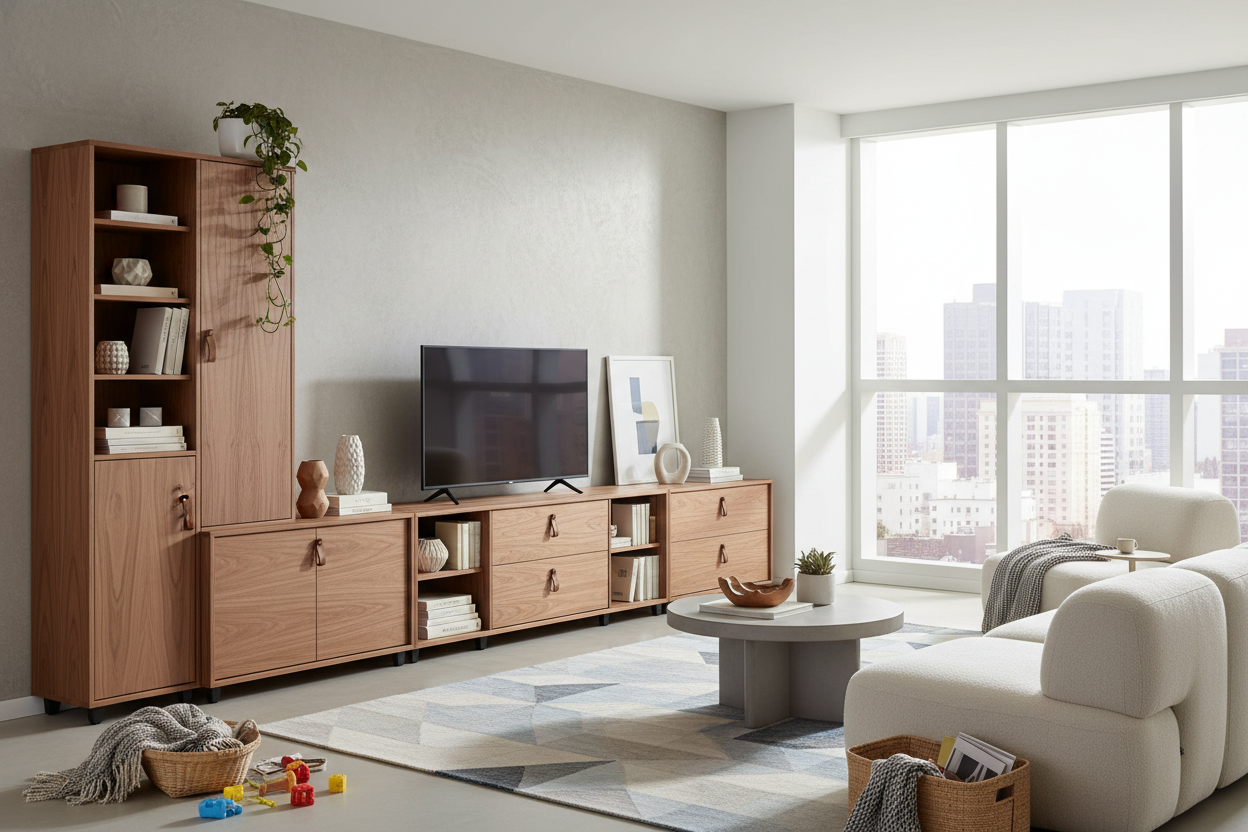
They are actually safer in terms of tip-overs because the center of gravity is so low, but the screen is much more accessible to sticky fingers. You must wall-anchor the TV regardless of the console height.

Laisser un commentaire
Ce site est protégé par hCaptcha, et la Politique de confidentialité et les Conditions de service de hCaptcha s’appliquent.