


I moved into a 1920s bungalow last spring thinking the original crown molding and brick fireplace were 'character.' Two days later, I realized 'character' is just code for 'there is nowhere to put a television.' Every single wall in my living room is interrupted by a window, a door, or a massive cast-iron radiator that screams if you touch it.
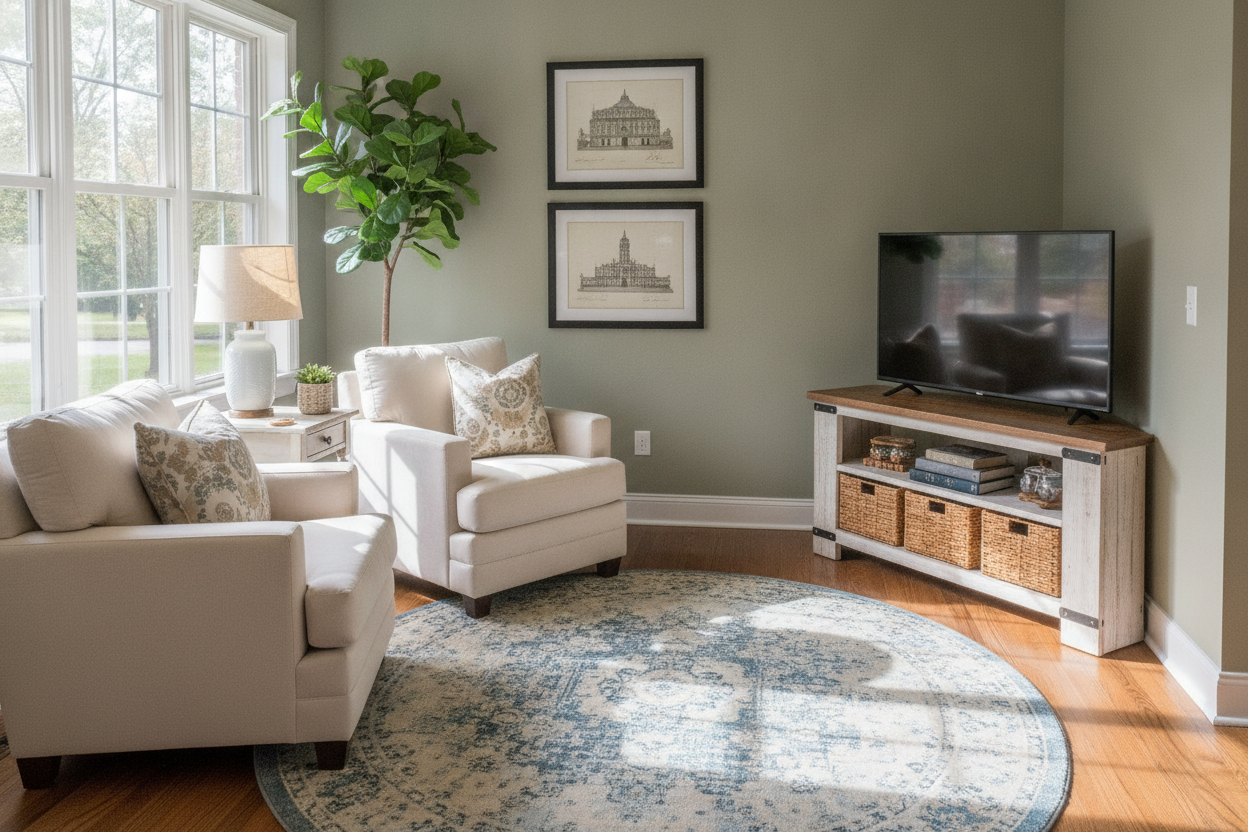
I spent three nights sitting on a packing box, staring at my 55-inch screen on the floor, trying to figure out the math. If I put it in front of the window, I’d lose the light. If I blocked the radiator, I’d probably melt the plastic. I finally had to admit defeat and look for a caddy corner tv stand.
- Standard consoles leave a 'dust triangle' when angled in a corner.
- Measure the depth of the corner, not just the width of the TV.
- Look for slatted doors to keep the cable box hidden but functional.
- Diagonal layouts actually make small rooms feel wider.
The 'Zero Usable Walls' Dilemma
Old houses were designed for conversation and warmth, not for streaming 4K prestige dramas. In my place, the 'main' wall is dominated by a fireplace. The second wall is 80% window. The third wall has the front door and the stairs. The fourth wall? That’s where the radiator lives.
It’s a layout nightmare. When you have zero flat wall space, you start doing weird things. I tried centering the TV on a narrow pier between two windows, but it looked like a tech-heavy monument that blocked my view of the street. It was claustrophobic and clunky.
Caddy, Catty, or Kitty? Embracing the Diagonal
Depending on where you grew up, you’re searching for a catty corner tv stand or maybe even a kitty corner tv stand. My grandmother called it 'cater-cornered,' which sounds like something out of a Victorian novel. Regardless of the dialect, angling your furniture is a legitimate design move.
I initially tried to avoid it. I spent hours trying to browse standard flat-wall TV stands, thinking I could just 'float' a rectangular piece in the corner. I thought corner units were for finished basements in 1994. I was wrong. A dedicated angled piece actually respects the architecture of the room instead of fighting it.
Why Floating a Straight Credenza Failed Miserably
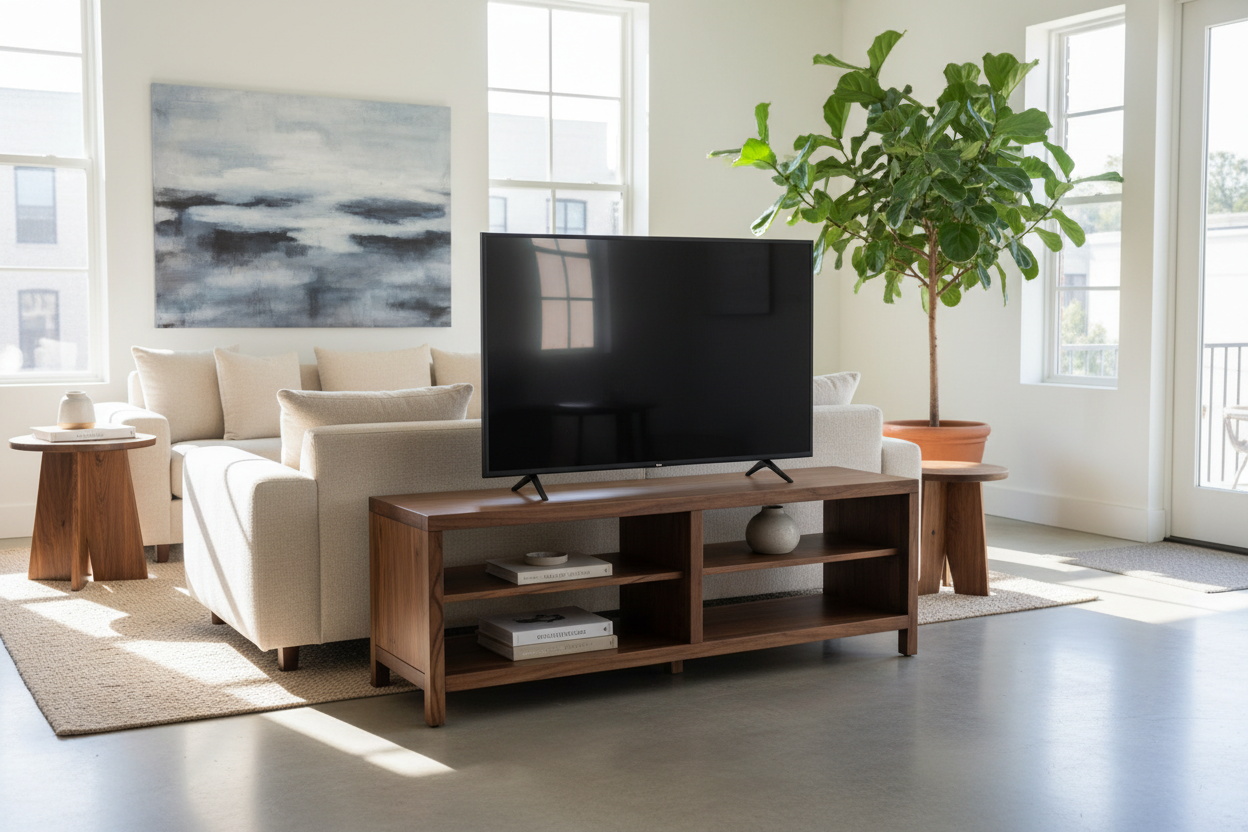
If you take a standard 60-inch rectangular credenza and shove it into a 90-degree corner, you create a dead zone behind it. It’s a literal black hole for cat toys, dust bunnies, and tangled HDMI cables. Plus, the sharp edges of the stand stick out into the walking path, just waiting to bruise a shin.
It eats up way more floor space than you think. You end up with these awkward gaps on the sides that make the whole setup look temporary and unplanned.
Finding an Angled Piece That Doesn't Scream '1995'
The trick is finding something that looks like furniture, not a 'media solution.' Avoid the cheap black glass and silver poles. I looked for warm walnuts or oaks that matched my floors. You want something with a clipped-corner back so it sits flush against the baseboards.
Storage is the big one. I hate seeing router lights blinking at night. I eventually went with media units with slatted doors. It’s the smartest way to keep your gear ventilated while still being able to use a remote through the wood. If you're really committed to the historic vibe, you might even consider styling an antique corner piece, though you’ll have to get creative with a drill for cable management.
The Traffic Flow Reveal
Once I tucked the TV into that dead corner next to the fireplace, the room finally exhaled. I could actually center my rug and pull the sofa away from the wall. The fireplace became a secondary focal point rather than a competitor for the screen’s attention.
It’s the oldest trick in the book for fixing truly awkward living room layouts. By using the diagonal, I reclaimed about fifteen square feet of floor space that was previously just... empty air. I don't trip over the power strip anymore, and the room feels twice as big.
FAQ
Will a corner stand fit a 65-inch TV?
Usually, no. Most corner units are capped at 50 or 55 inches because the wider the TV, the further out from the corner the stand has to sit. Check the 'max TV size' specs carefully before buying.
Do corner TV stands look dated?
Only if you buy the ones with the open glass shelves. If you get a solid wood piece with clean lines or mid-century tapered legs, it looks like a custom architectural choice.
How do I hide cables in a corner?
Corner stands are actually better for this. Since the unit is tucked back, you can use a simple cable raceway or even just a cord box hidden in that small triangular gap behind the unit.

Laisser un commentaire
Ce site est protégé par hCaptcha, et la Politique de confidentialité et les Conditions de service de hCaptcha s’appliquent.