


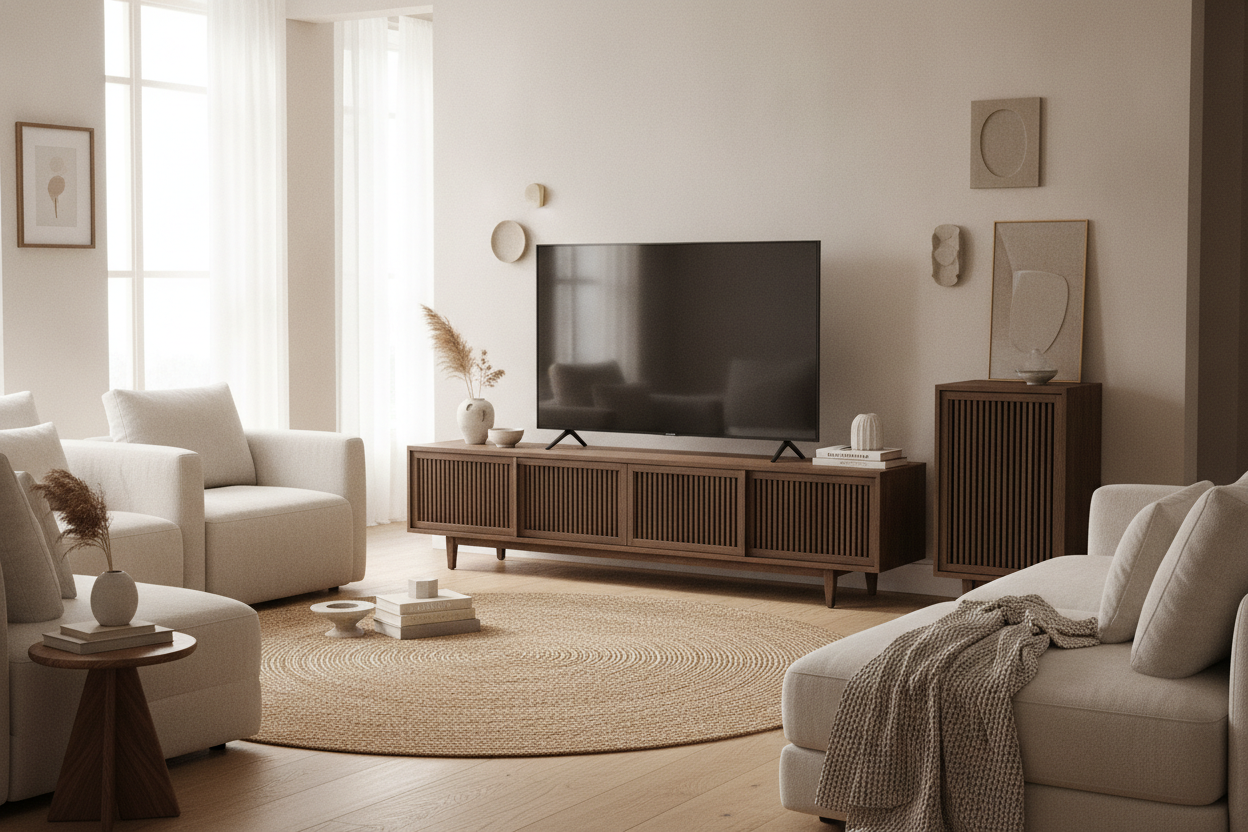
I once spent three months hunting for the 'perfect' walnut credenza. It was a vintage find, solid wood, and looked stunning under my 65-inch TV. Then I closed the doors on my running Xbox and Apple TV. Forty minutes later, my Wi-Fi dropped, and the top of the cabinet was warm enough to keep a pizza fresh. I had accidentally built a tech oven.
That was the day I realized my aesthetics were killing my electronics. If you’re hiding a router, a gaming console, or even just a cable box, a ventilated media cabinet isn't a luxury—it is a necessity. It is the difference between your gear lasting five years or frying itself in six months because it couldn't catch a breeze.
- Solid wood is an insulator; it traps heat like a thermos.
- Passive airflow requires more than just one tiny cable hole.
- Slatted doors allow IR signals to pass through so remotes actually work.
- Dust is the silent killer of electronics—elevation is key for airflow and cleaning.
The Great Router Hiding Dilemma
We all want that clean, 'nothing to see here' look. I tried shoving a mesh router, a PlayStation, and a Sonos Amp into a solid-front cabinet. Within an hour, the fans on the PS5 sounded like a jet engine taking off. The heat had nowhere to go, so it just cycled back into the intake vents, getting hotter and hotter until the system just shut down.
Beyond the hardware damage, there is the signal issue. Wood is dense. When you surround a router with an inch of kiln-dried oak, your 5GHz signal takes a massive hit. I was getting 'buffering' circles in the bedroom just because I wanted my living room to look like a Pinterest board. It was a classic case of form over function that ended up costing me money in the long run.
Why You Can't Just Drill Holes in the Back
I know what you're thinking. 'I'll just buy the cheap cabinet and take a hole saw to the back panel.' I've been there. I bought a 2-inch drill bit and turned the back of a $300 unit into Swiss cheese. It didn't work. Why? Because hot air rises, and air needs a logical path to move, not just a random exit.
A true media console with ventilation is designed with thermal convection in mind. It usually features a series of slots in the bottom and the top of the back panel, or even better, perforated shelves. A single jagged hole in the middle of a flimsy MDF backboard doesn't create a draft; it just creates a messy look and weakens the structure. If you are putting a heavy TV on top, you do not want to compromise that back panel support.
Slats, Mesh, or Glass: What Actually Works?
When shopping for a vented media console, you have three main choices for the front. Slatted or 'louvred' doors are my personal favorite. They look like high-end mid-century furniture but act like a giant vent. They also let sound through, so you can hide a center-channel speaker inside without it sounding muffled.
Mesh is great for a more industrial or modern look, but it can look a bit 'techy' if the mesh is too wide. If you want something sleeker, look for a black cabinet with glass doors. High-quality media glass is often tinted to hide the messy wires and blinking lights while still being IR-friendly. Just make sure the cabinet has generous cutouts in the back and shelving that doesn't sit flush against the doors, allowing air to circulate around the components.
Don't Forget the Robot Vacuum Rule
Here is a practical tip most people miss: check the ground clearance. If your tv stand with ventilation sits directly on the floor, it becomes a dust magnet. Static electricity from your electronics pulls in every bit of pet hair and dander, which then gets sucked into your console's fans. It is a recipe for a hardware failure.
I always tell people to get a TV cabinet on legs. You want at least 4 to 5 inches of clearance. This allows your robot vacuum to actually get under there and clear out the 'dust bunnies of death' before they clog up your router. Plus, it makes the whole room feel larger when you can see the floor extending under the furniture.
My Favorite Pieces That Don't Look Like Tech Storage
The best ventilated media console is the one that doesn't look like a server rack. I've moved away from the bulky, one-size-fits-all units. Nowadays, I'm looking for modularity. You want something that can grow with your setup, especially if you decide to add a turntable or a larger receiver later.
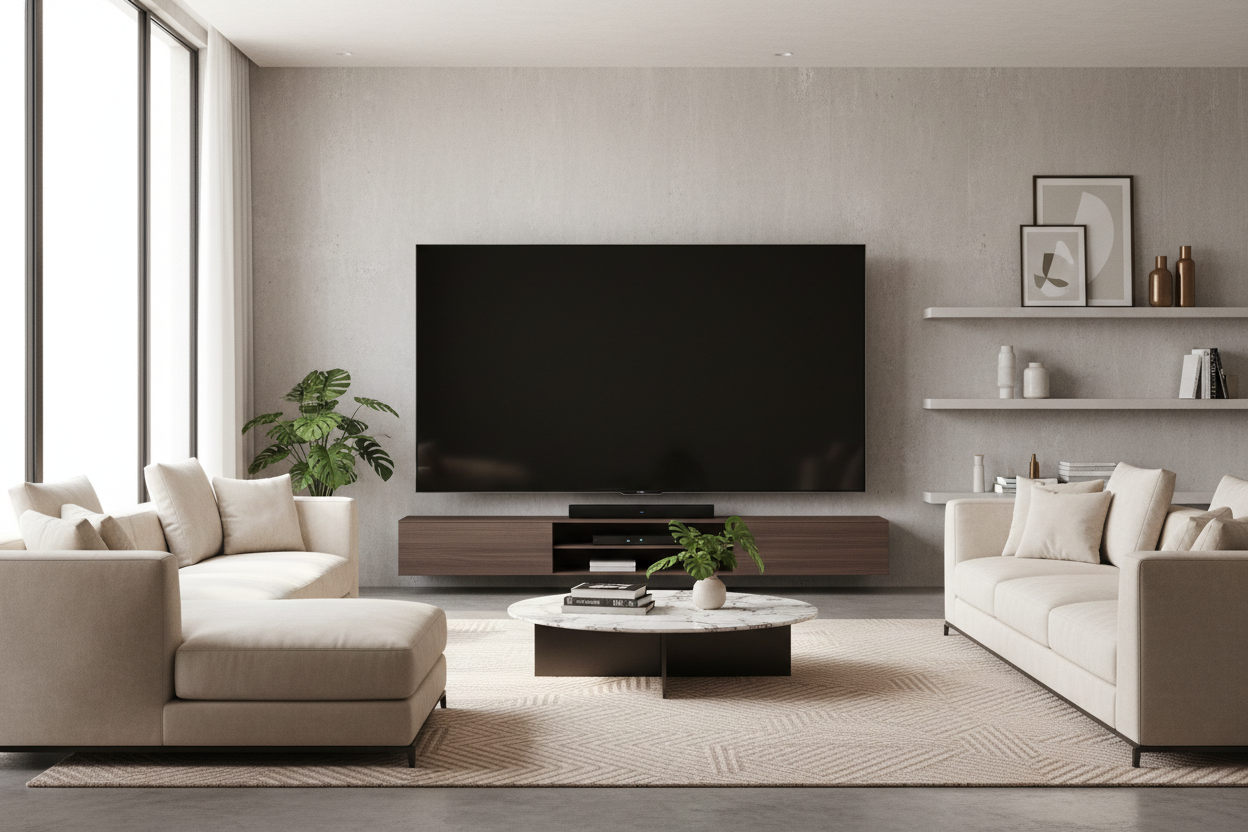
A modern TV console cabinet with adjustable lengths is a lifesaver for weirdly shaped living rooms. Look for units that combine hidden ventilated sections with open shelving or drawers for things that don't need to breathe, like extra controllers or coasters. It keeps the 'tech' part of your life organized without making your home look like a showroom.
Does my router really need ventilation?
Yes. Modern Wi-Fi 6 and 6E routers run significantly hotter than older models. If they overheat, they throttle your speeds or drop the connection entirely to prevent the chips from melting.
Can I put a soundbar inside a ventilated cabinet?
Only if the doors are slatted or mesh. If the doors are glass or solid wood, the sound will be trapped and muffled. Slatted doors are the gold standard for hiding audio equipment while maintaining sound quality.
How much space should I leave around my PS5 or Xbox?
Aim for at least 2-3 inches of clearance on all sides, even inside a ventilated cabinet. Air needs room to move around the unit before it can be pushed out of the exhaust vents.


Laisser un commentaire
Ce site est protégé par hCaptcha, et la Politique de confidentialité et les Conditions de service de hCaptcha s’appliquent.