


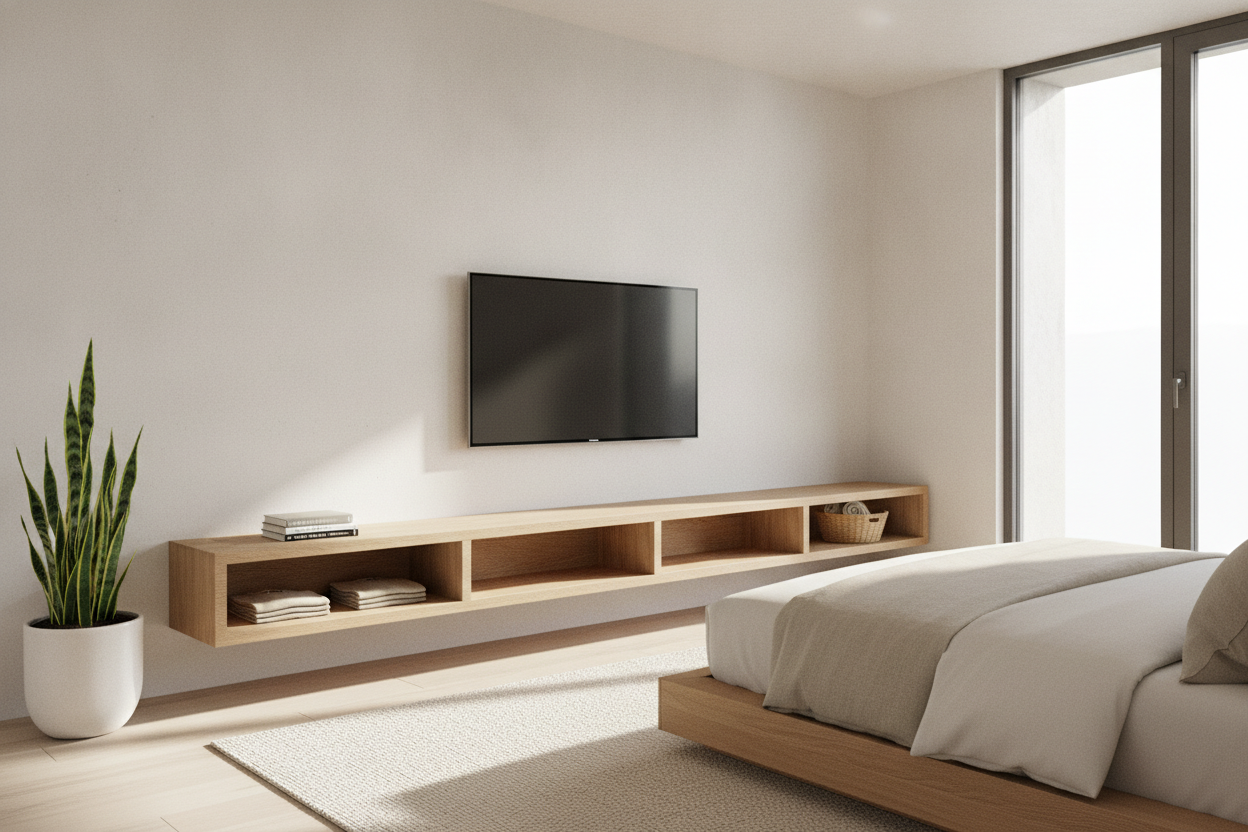
I spent three years staring up at a 42-inch screen perched on top of a dresser that was nearly five feet tall. By the time the credits rolled on a movie, my neck felt like it had been in a minor fender bender. It is the default move for most of us—we plop the screen where there is already a flat surface, usually a clothing dresser, and call it a day.
But your bedroom should not feel like a sports bar where you have to crane your neck to see the score. Last month, I finally tore that setup down and replaced it with a sleek, minimalist shelf for tv. The difference in my sleep quality and my room’s vibe was instant. If you are still using your sock storage as a media center, we need to talk.
Quick Takeaways
- Standard dressers are 10-15 inches too high for comfortable viewing from a bed.
- A dedicated wall shelf for tv reduces visual 'weight' in small rooms.
- Floating setups hide cable clutter better than furniture-top placements.
- Minimal depth is the secret to keeping a bedroom feeling like a sanctuary, not a showroom.
The Problem With the 'TV on the Dresser' Default
The math on dressers just doesn't work for screens. Most bedroom dressers sit between 35 and 50 inches high. When you add the height of the TV itself, the center of the screen ends up hovering somewhere near your ceiling. Unless you’re sleeping on a literal pile of mattresses like a fairytale princess, you are looking up at an angle that causes genuine muscle strain.
Beyond the physical pain, there is the 'clutter creep.' A dresser is a landing pad for jewelry, loose change, and half-empty water glasses. When you stick a TV in the middle of that, you create a chaotic focal point. You are trying to relax, but your eyes are darting between the movie and that pile of mail you haven't opened yet.
Using a dedicated entertainment wall shelf separates your 'living' functions from your 'storage' functions. It cleans up the lines of the room and stops your electronics from competing with your wardrobe. Plus, hanging tv shelves allow you to reclaim that dresser top for things that actually make you happy—like a nice lamp or a plant that you’ll hopefully remember to water.
The Exact Math for a Bedroom TV Ledge Shelf
When you move to a tv wall shelf for bedroom use, you have to get the height right on the first try. You don't want a wall full of 'oops' holes. The sweet spot for a bedroom screen is usually much lower than you think. Lie down in your bed, prop your head up on your usual pillows, and look naturally toward the wall. That straight line of sight is where the top third of your screen should live.
For most standard bed heights, this means mounting your shelf to put tv on about 24 to 30 inches from the floor. It feels low when you are standing up, but it’s perfect once you’re under the covers. This lower placement also helps the room feel larger because it keeps the wall's upper half open. In fact, a tv shelf floating on the wall actually saves space by keeping the floor clear, making the 'footprint' of your entertainment setup virtually zero.
3 Ways to Style Your Setup Without Looking Dorm-Like
The biggest fear people have with tv shelves for wall mounting is that it will look like a temporary college setup. It doesn't have to. The key is intentionality. Don't just slap a piece of plywood up there and call it a day. Look for a modern wall shelves design for tv that incorporates thick wood tones or matte metal finishes to give the ledge some architectural weight.
First, cable management is non-negotiable. If I see a black cord dangling down a white wall, the 'zen' is gone. Use a cord raceway painted the same color as your wall, or better yet, run the wires behind the drywall if you're handy. Second, balance the screen. A TV is a giant black rectangle; it needs friends. Surround it with asymmetrical art or a few adjustable shelf storage options to hold books and ceramics. This makes the TV part of a gallery wall rather than a lonely tech island.
Third, think about texture. A tv ledge shelf in a natural oak or a reclaimed wood adds warmth to the room. It breaks up the coldness of the glass screen. By mixing materials, you make the setup look like a deliberate design choice rather than a budget-friendly hack.
Keep the Depth Minimal
One mistake I see constantly is people buying shelves that are way too deep. You aren't supporting a CRT monitor from 1998. Modern screens are thin. A shelf that sticks out 16 inches into a bedroom walkway is a bruised hip waiting to happen. Look for entertainment wall shelves that are between 8 and 10 inches deep. This is just enough room for the TV base and a slim soundbar, but shallow enough that it doesn't crowd your walking space. It keeps the profile 'lean' and prevents the wall from feeling top-heavy.
When You Actually Need a Full Console
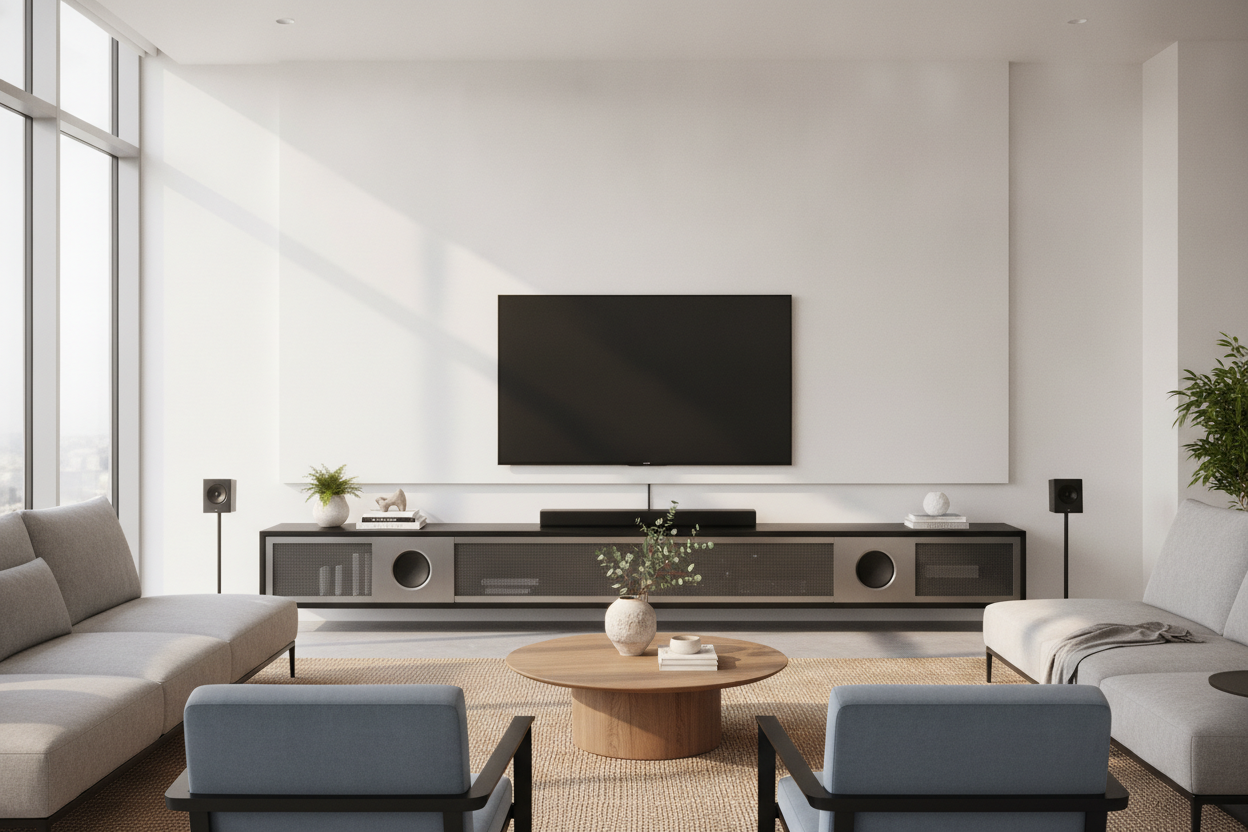
I am a minimalist in the bedroom, but the living room is a different beast. If you have three gaming consoles, a bulky receiver, and a collection of physical media, a simple wall shelf is going to fail you. In those high-traffic areas, you’re better off with a larger TV stand with adjustable center shelf. Those pieces are built to handle the heat dissipation of electronics and the weight of serious gear. Keep the light, floating ledges for the bedroom where the goal is 'unwind,' not 'command center.'
My Personal Lesson Learned
I’ll be honest: my first attempt at this was a disaster. I bought a cheap particle board shelf from a big-box store and used the flimsy plastic anchors that came in the box. Two weeks later, I woke up to a terrifying 'crack' at 3 AM. The shelf was sagging, and the anchors were pulling out of the drywall. If you are mounting anything heavier than a picture frame, buy real toggle bolts or find a stud. I now use heavy-duty steel brackets for my tv ledge shelf, and I can sleep without worrying about a 50-inch screen landing on my toes.
FAQ
Can any shelf hold a TV?
Not even close. You need to check the weight rating of both the shelf and the brackets. Most decorative 'picture ledges' are rated for 10-15 lbs, while a 50-inch TV can weigh 25-35 lbs. Always aim for a shelf rated for at least double your TV's weight.
How do I hide the wires on a floating shelf?
The cleanest way is a recessed cable management kit that hides wires inside the wall. If you are renting, use a paintable cable channel. It’s a plastic strip that sticks to the wall and hides the 'spaghetti' of cords.
Is a floating shelf safe for a TV?
Yes, provided it is mounted into wall studs or using heavy-duty toggle bolts. Avoid using standard plastic expansion anchors, as they can't handle the constant 'pull' of a heavy shelf over time.

Laisser un commentaire
Ce site est protégé par hCaptcha, et la Politique de confidentialité et les Conditions de service de hCaptcha s’appliquent.