


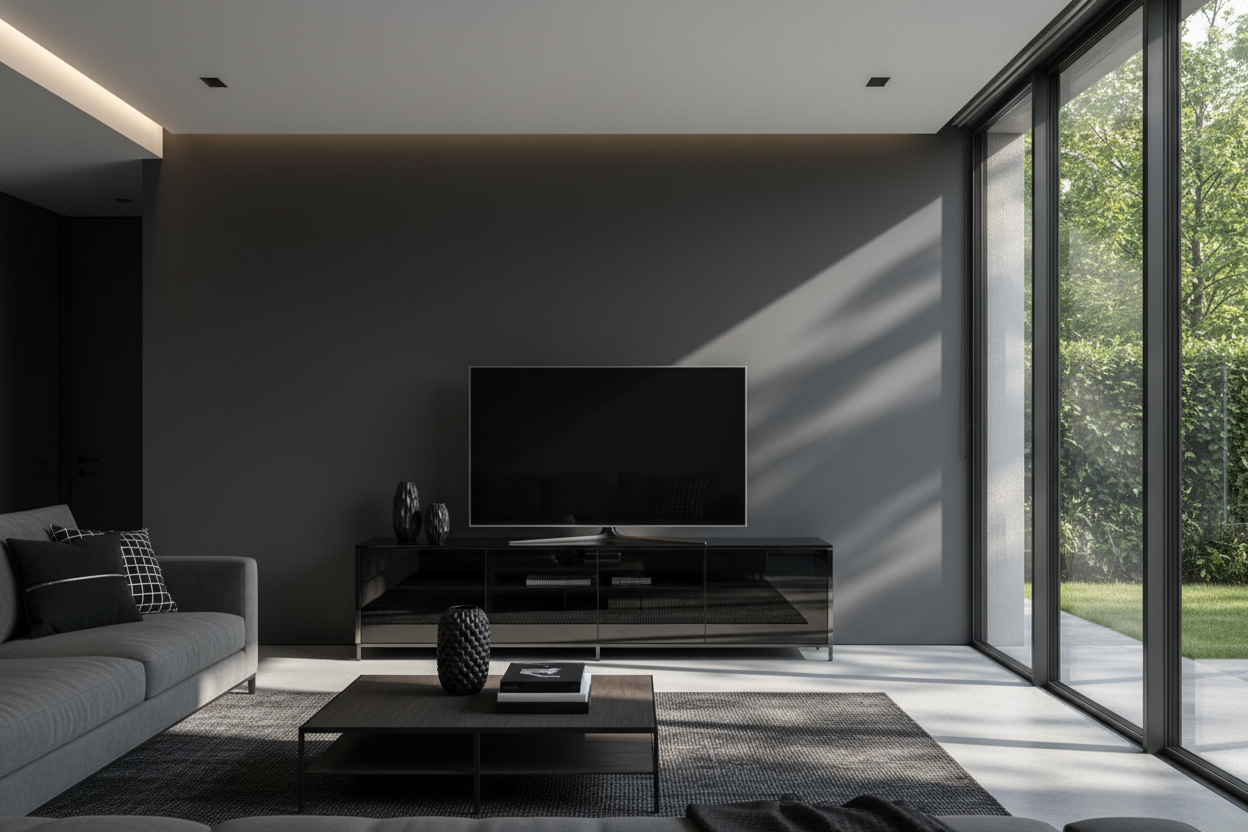
I spent three weeks staring at forty-seven browser tabs of media consoles. My living room had a problem: a gorgeous 50-inch 4K screen that looked like a giant, dark void sitting on top of a light oak dresser. It was a total eyesore. Every time I walked into the room, my eyes went straight to the tech, ignoring my vintage rug and the gallery wall I spent hours leveling.
I finally pulled the trigger on a black tv stand 50 inch model, and the difference was immediate. It wasn't just about the storage; it was about fixing a massive design mistake I didn't even realize I was making. If your TV feels like it's 'floating' in the room, you probably have a contrast problem.
Quick Takeaways
- Black stands camouflage the TV bezel, making the screen 'disappear' when off.
- A 50-inch stand provides the perfect 3-inch overhang for 50-inch TVs.
- Matte finishes are superior to gloss for hiding fingerprints and glare.
- Styling with brass and greenery prevents the furniture from looking too heavy.
The 'Floating Black Rectangle' Problem
Most people treat their TV stand like a separate piece of furniture. They pick a wood tone that matches their floor or a white unit to keep things 'airy.' The problem? A television is a giant black rectangle. When you put that dark mass on a light-colored base, you create a high-contrast focal point that screams 'I am a piece of plastic technology.'
It makes the room feel disjointed. Instead of your furniture feeling like a cohesive unit, the TV looks like it’s just hovering there. I realized that by trying to keep the room bright, I was actually making the heaviest object in the room stand out for all the wrong reasons. A dark base grounds the setup and provides a visual foundation that actually makes the room feel more anchored and expensive.
Enter the 'Screen Fade' Trick
The 'Screen Fade' is a trick I learned from high-end interior designers who hate TVs. The goal is to make the screen's bezel blend into the furniture so the eye doesn't stop at the edge of the plastic. When you use a stylish black tv stand entertainment center, the boundary between the tech and the decor blurs.
When the TV is off, the whole setup reads as one intentional, dark architectural element. It’s basically color-drenching for your tech area. Finding a black tv stand for 50 inch tv setups allowed me to hide the messy black cables and the dark shadows behind the unit, too. Everything just recedes into the background, letting my actual decor take the spotlight.
How to Style Dark Furniture So It Doesn't Look Gloomy
I’ll be honest: a big black box can look a bit like a coffin if you don’t style it right. To avoid the 'black hole' effect, you need texture. I swapped out the standard silver hardware for brushed brass knobs. It adds a flicker of warmth that breaks up the dark surface.
I also keep a trailing Pothos on one end. The vibrant green against the black finish looks incredible—it’s that high-contrast look that feels organic rather than industrial. These styling rules scale up, too; whether you have a mid-sized setup now or eventually buy a black TV stand for 70 inch screens, you need those organic elements like linen-bound books or ceramic vases to soften the edges.
The Golden Ratio for Sizing Your Base
Here is the math most people get wrong. A '50-inch TV' is measured diagonally. The actual width of the screen is usually around 44 inches. If you buy a 44-inch stand, the TV will sit flush with the edges, which looks cramped and unstable. It’s the furniture equivalent of wearing a shirt that’s one size too small.
When you browse TV stands, look for a unit that is exactly 50 inches wide. This gives you roughly 3 inches of breathing room on either side of a 50-inch screen. That small gap is the 'Golden Ratio' of media styling. It provides enough space for a small speaker or a decorative object without making the stand look cluttered or the TV look oversized.
Personal Experience: The Dust Factor
I have to be real with you—black furniture shows dust. I bought a high-gloss black unit once and regretted it within forty-eight hours. Every fingerprint and speck of cat hair looked like a crime scene under the living room lights. I eventually swapped it for a matte, slightly textured black finish. It’s much more forgiving and looks way more sophisticated than the shiny stuff. Keep a microfiber cloth in the top drawer; it takes ten seconds to wipe down once a week.
Frequently Asked Questions
Does a black TV stand make a small room look smaller?
Actually, no. Because the black stand blends with the TV, it reduces visual clutter. One dark, cohesive unit often feels smaller than a light stand with a stark black TV sitting on top of it.
What material is best for a black finish?
Avoid the super-cheap paper laminates that peel at the corners. Look for painted wood or high-quality veneers. If the price seems too good to be true, it's likely particle board that will bow under the weight of the TV within a year.
Should I get a stand with legs or a solid base?
If you want the 'Screen Fade' trick to work best, go with a solid base or very short legs. It helps the unit feel like a permanent part of the wall rather than a piece of furniture just passing through.

Laisser un commentaire
Ce site est protégé par hCaptcha, et la Politique de confidentialité et les Conditions de service de hCaptcha s’appliquent.