


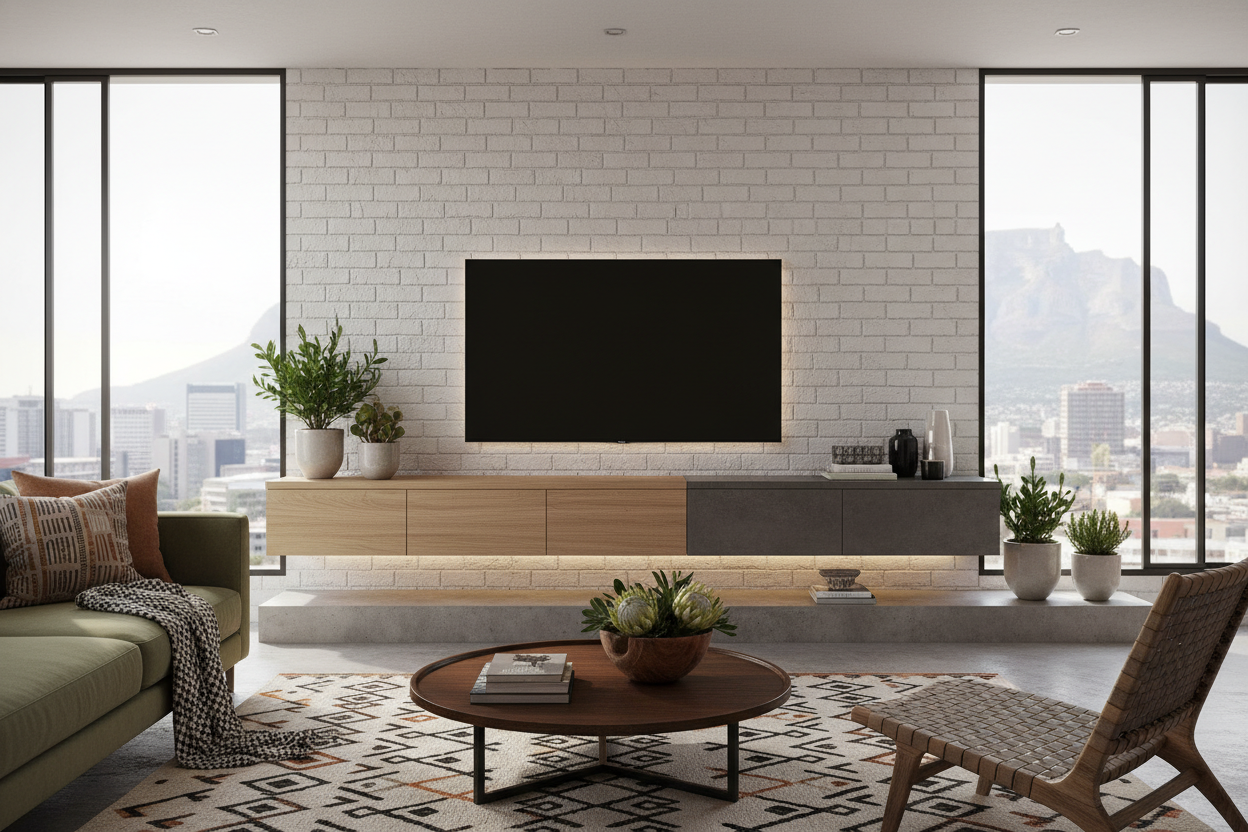
I spent three weeks staring at a blank wall in my Johannesburg apartment because I could not find a single piece of media furniture that did not look like it was stolen from a suburban bank manager's office in 1994. Every time I searched for entertainment units South Africa, I was met with a wall of heavy, dark wood that would have swallowed my living room whole. I did not want a 'shrine' to my television; I wanted a place to put my router and hide my cables without sacrificing ten square feet of precious floor space.
Quick Takeaways
- Floating units are the only way to go for apartments under 80sqm.
- Avoid 'solid wood' labels that do not specify the species; it is often just heavy MDF with a sticker.
- Cable management ports are non-negotiable unless you enjoy looking at a 'spaghetti' of wires.
- Measure the depth of your receiver or PS5 before buying; modern units are getting shallower.
The Sea of Heavy, Dark Wood Furniture
If you have spent any time walking through the big-box furniture showrooms in Midrand or the design districts of Cape Town, you know the vibe. It is a sea of mahogany, cherry, and 'dark oak' units that weigh more than a small car. These pieces are designed for houses with massive open-plan lounges and three-meter ceilings. In a standard Gauteng apartment, they are visual anchors in the worst way possible. They make the room feel cramped, dark, and dated.
I remember visiting a showroom in Sandton where the salesperson tried to convince me that a 2.4-meter-wide solid oak console was 'timeless.' It was nearly 60cm deep. In my living room, that would have left exactly two feet of walking space between the TV and the coffee table. The local market seems obsessed with this idea of 'stature,' but for those of us living in modern developments, stature is just another word for 'clutter.' We need pieces that breathe, not pieces that dominate.
The problem is not just the size; it is the visual weight. When a piece of furniture sits flush on the floor with no legs and a dark finish, it stops the eye. It makes the floor space disappear. I wanted something that felt like it was part of the architecture, something that would not make me feel claustrophobic every time I sat down to watch a movie. Finding that balance between storage and minimalism in the South African market feels like a full-time job.
Why I Finally Chose a Floating Setup
The turning point for my living room was realizing that the floor is the most valuable real estate in a small apartment. If you can see the floor extending all the way to the wall, the room feels larger. This led me down a rabbit hole searching for a floating tv stand gauteng. I needed something that could hold a 65-inch screen without looking like a bulky chest of drawers hanging off the masonry. I eventually settled on a floating TV stand wall mounted media console, and the difference was immediate.
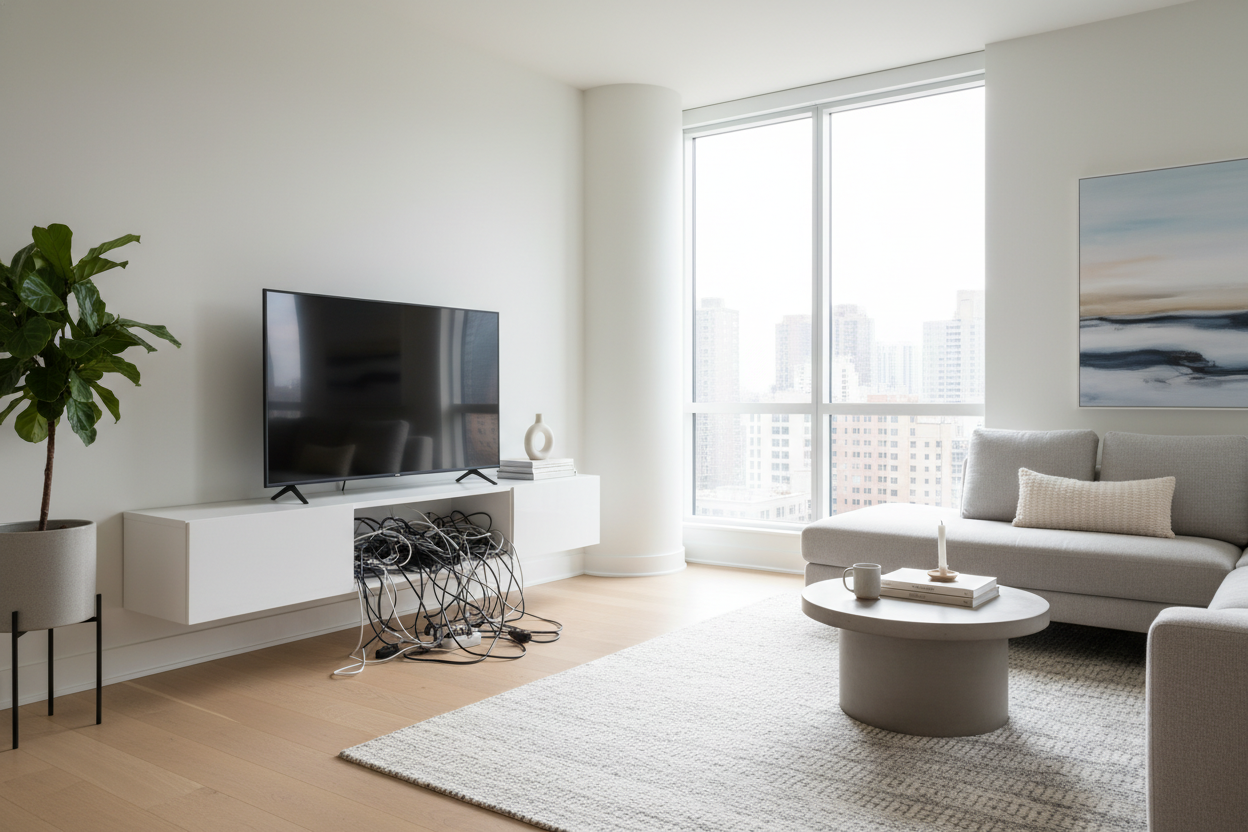
Mounting the unit about 20cm off the floor changed everything. Suddenly, my robot vacuum could actually reach the corners, and the room felt like it had doubled in size. There is a psychological trick to it—when you can see the floorboards underneath your furniture, your brain registers the space as 'open.' I also noticed that it forced me to be more intentional with my cable management. You cannot just shove a tangled mess of HDMI cables behind a floating unit; you have to route them through the wall or use a tidy conduit.
I did make one mistake during the install, though. I underestimated how heavy my old AV receiver was. If you are going the floating route, you need to ensure you are drilling into solid brick or using heavy-duty wall anchors. Do not trust the cheap plastic plugs that come in the box. I spent an extra R200 on high-quality expansion bolts at the hardware store, and it was the best insurance policy I ever bought. My unit has not budged a millimeter in two years.
Navigating the Local Market for Sleek Designs
Johannesburg is a city of hustle, and my furniture search felt like a second job. I spent my Saturdays driving between Kramerville and various warehouses in the South, looking for floating tv units johannesburg that did not look like they were made of cardboard. I eventually realized that the trick to making a small apartment feel high-end is not just about the shape; it is about how the piece handles light. I found that a floating high gloss TV stand did more for my room than any piece of expensive art ever could.
High gloss gets a bad rap for being 'too much,' but in a dark room or an apartment with limited natural light, it is a lifesaver. The reflective surface acts like a mirror, bouncing light back into the room and making the unit feel less like a solid object. I paired mine with some subtle LED strip lighting underneath, which creates a soft glow on the floor at night. It sounds a bit 'Fast and Furious,' but it actually creates a very sophisticated, high-end hotel vibe if you keep the color temperature warm.
The search in Johannesburg is getting easier as more independent designers move away from the 'heavy wood' aesthetic. However, you still have to be careful about the quality of the finish. I saw several units where the gloss was wavy or had 'orange peel' texture, which is a dead giveaway of a cheap paint job. You want a finish that is smooth as glass. If you are looking at a unit in a warehouse, bring a flashlight and look at the reflection; if it is distorted, walk away. You deserve better than a lumpy console.
What If You Rent and Can't Drill Into Walls?
My cousin lives in a loft in Pretoria where the landlord has a strict 'no holes in the wall' policy. We spent a whole weekend looking at plasma tv stands for sale in pretoria, trying to find something that was not a giant block of wood. Most 'plasma stands' you find in local classifieds are relics from 2005—thick, heavy, and designed for those old 50kg TVs. We finally found some freestanding options that mimicked the floating look by using recessed bases or thin metal legs.
If you are in a similar spot, you should browse sleek TV stands that prioritize a slim profile over bulk. Look for units that are at least 1.8 meters wide but no more than 40cm deep. This gives you that 'long and low' look that defines modern interiors without requiring a drill. The key is to find a unit with legs that are at least 15cm high. This gives you that same 'visual floor space' benefit that a floating unit offers, but without the permanent commitment to the wall.
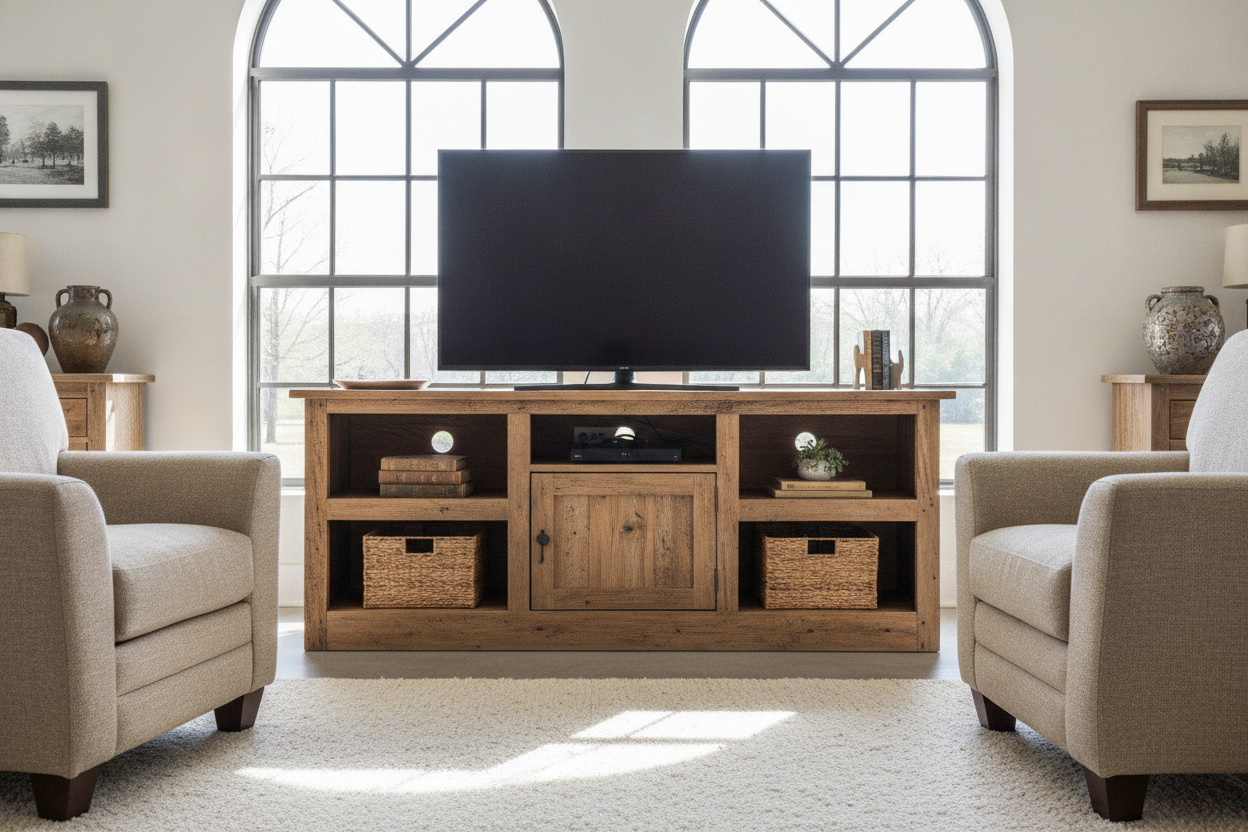
We also found that many Pretoria-based shops are still using the term 'plasma stand' even for modern LED TV furniture. Do not let the terminology throw you off. Just focus on the dimensions. Avoid anything with those built-in glass towers on the sides; they are impossible to keep clean and they instantly date your home. A simple, low-slung credenza with clean lines will always look better than a 'complete entertainment center' that tries to do too much.
The Hardware Mistake That Ruins a Good Console
The hardware is where most local manufacturers try to save a few Rand, and it shows. You will see a beautiful charcoal unit ruined by handles that feel like they came out of a Christmas cracker. I am particularly wary of anything claiming to be 'luxe' or 'glam' with metallic accents. I once bought a unit because I thought the gold legs for TV stand units looked great in the professional photos, but in person, they were a weird, sickly yellow color that looked like spray-painted plastic.
If the hardware looks too shiny in the pictures, it is probably going to look cheap in your home. Go for matte black, brushed nickel, or—even better—push-to-open doors with no handles at all. It keeps the lines clean and prevents the unit from dating itself in six months. I actually ended up replacing the legs on my first freestanding unit with some custom steel ones I found at a local fabricator. It cost me an extra R500, but it turned a 'budget' piece of furniture into something that looked like it cost five times the price.
Pay attention to the hinges too. If the doors do not have soft-close mechanisms, you are going to hear a loud 'thud' every time you grab a remote. It is a small detail, but it is the difference between a piece of furniture you love and one that just feels like a utility. In the South African market, you often have to be the one to check these details, because the marketing photos definitely will not tell you if the drawers are on 'smooth-glide' tracks or just grinding against the wood.
FAQ
Can I install a floating TV unit myself?
If you have a masonry wall and a decent hammer drill, yes. If you are dealing with drywall, you absolutely must use a stud finder or heavy-duty toggle bolts. Do not risk your 65-inch OLED on a hope and a prayer.
How high should a TV stand be?
The center of your TV should be at eye level when you are sitting on your sofa. Usually, this means the top of your stand should be between 45cm and 60cm from the floor. Do not be the person with a TV mounted near the ceiling.
Are high gloss units hard to maintain?
They show fingerprints and dust more than wood, but they are easier to wipe down. A quick spray of glass cleaner and a microfiber cloth once a week keeps them looking brand new. Just keep the kids' sticky fingers away.

Laisser un commentaire
Ce site est protégé par hCaptcha, et la Politique de confidentialité et les Conditions de service de hCaptcha s’appliquent.