


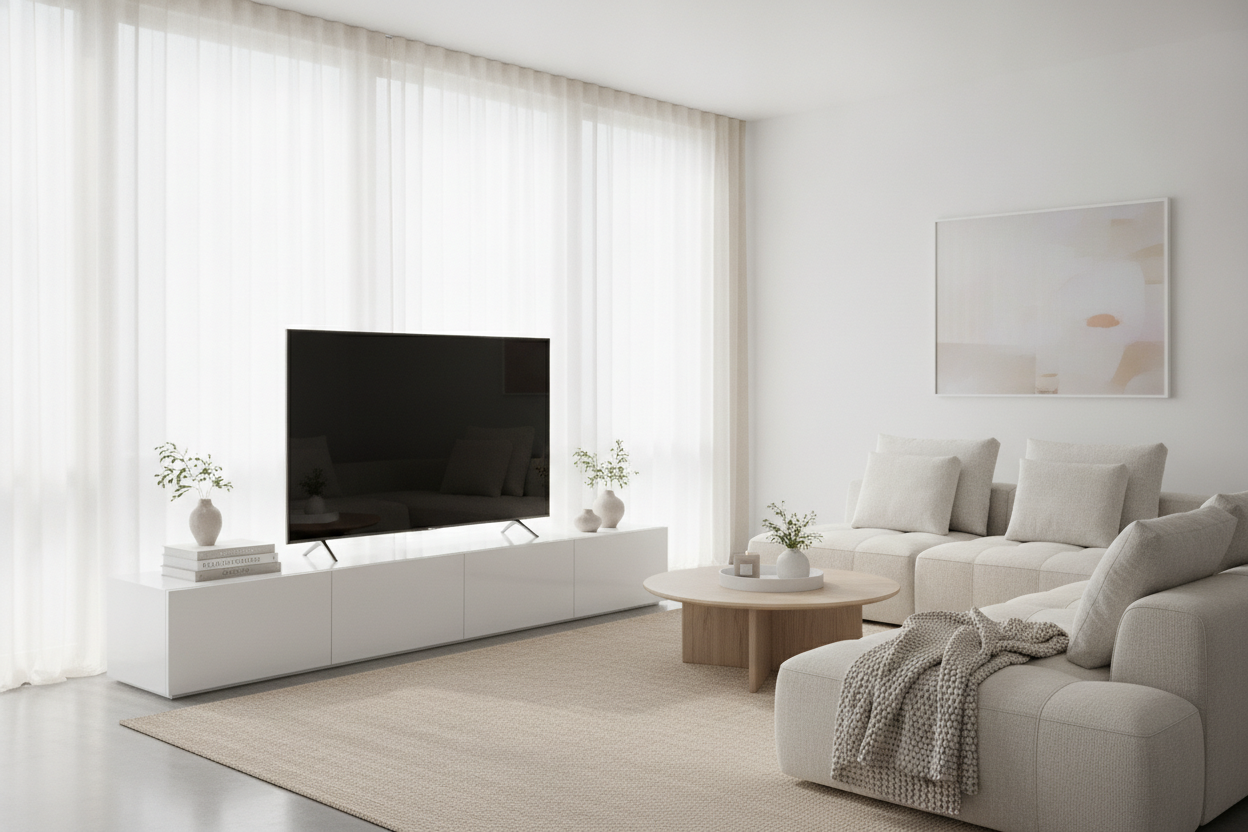
I spent three years staring at a dark, walnut-veneered monstrosity that took up half my living room wall. It was supposed to be 'storage,' but in reality, it was just a giant magnet for dust and things I didn't want to deal with. Every time I sat down to watch a movie, my eyes would wander to the messy stacks of mail and tangled chargers shoved into the open cubbies. It wasn't relaxing; it was a chore.
Switching to a white minimalist tv stand was less about interior design and more about a mental reset. My living room finally stopped feeling like a cluttered tech graveyard and started feeling like a place where I could actually breathe. If you're tired of your entertainment center looking like a heavy, dark anchor in your room, it's time to reconsider the 'storage' myth.
Quick Takeaways
- Visual weight matters more than physical size; white finishes blend into walls and 'disappear.'
- Modern minimalist stands require a 'less is more' approach to your actual gadgets.
- Hidden drawers are superior to open shelving for hiding the ugly reality of routers and remotes.
- Cable management is the difference between a high-end look and a college dorm setup.
The Problem With 'Storage-Heavy' Media Consoles
We've been lied to by big-box furniture stores. They tell us we need six cabinets, four open cubbies, and a hutch to house our entertainment gear. My old unit was a 72-inch beast that weighed about 150 pounds and held everything from dead AA batteries to a DVD player I haven't plugged in since 2014. It was a dark dumping ground.
The problem with massive storage is that you will inevitably fill it with junk. Because the unit was so physically heavy and dark, it made my 12x15 living room feel like a cramped cave. It dominated the wall, making the TV look like an afterthought rather than a part of the room. I realized I didn't need more storage; I needed a ruthless edit of my belongings.
The 'Visual Cleanse' Effect of Going Minimal
When I finally swapped the beast for a low-profile minimal white tv stand, the room instantly felt five feet wider. White furniture has this incredible ability to reflect light and recede into the background, especially if you have light-colored walls. It takes away that 'heavy' visual weight that dark wood or black metal creates.
But a word of warning: 'minimalist' shouldn't mean 'flimsy.' I've made the mistake of buying cheap, $80 particle board units that sagged the moment I put a soundbar on them. You want something with a high-quality lacquer or a solid matte finish to avoid preventing the cheap dorm room look. A well-made white stand looks like an intentional architectural choice, not a temporary solution.
But Where Does All the Tech Actually Go?
The biggest fear everyone has about going minimal is the 'where do I put the router?' panic. I get it. You can't just have a tangle of black plastic sitting on a pristine white surface. The key is to choose a unit that looks slim but offers smart, concealed storage. I opted for an adjustable minimalist entertainment center because it has deep drawers that hide the router and the Nintendo Switch while keeping the top surface completely clear.
You have to be ruthless. If you haven't touched that physical media or that old gaming console in a year, it doesn't belong under your TV. Put it in a closet or sell it. A minimal stand forces you to own only what you actually use, which is the ultimate decluttering hack.
Cord Management is Non-Negotiable Now
With a low-profile stand, there is nowhere to hide your shame. You can't just shove a nest of cables into a dark abyss anymore. You have to actually manage them. I spent $15 on a pack of Velcro ties and a cable sleeve, and it changed my life. Run everything down the back of the stand legs or through the designated grommets. If I see one dangling black HDMI cord against a white wall, the 'visual cleanse' is ruined. Take the twenty minutes to zip-tie your life together.
Making Stark White Feel Warm and Lived-In
I know the critique: white minimalist furniture can feel 'cold' or 'sterile.' It can—if you don't style it. I love using a white stand for breaking up a wood-heavy living room. If you have oak floors and a leather sofa, a white console provides a much-needed break from all those warm, heavy tones.
I style mine with a single textured ceramic vase and a trailing Pothos plant. The green leaves against the white surface look incredible. The goal is to make it look like a curated shelf, not a tech station. Keep the decor asymmetrical and give the objects room to breathe. If you cover the whole thing in knick-knacks, you've defeated the purpose of going minimal.
Ready to Finally Ditch the Bulk?
If you're still hauling that giant wooden box from apartment to apartment, this is your sign to let it go. You don't need a fortress to hold a flat-screen TV. A sleek, low-slung unit will make your ceilings look higher and your sanity feel more intact. When you're ready to make the jump, you can browse sleek TV stands that actually respect your floor space. Trust me, you won't miss the 'storage' once you see how much better your room looks without it.
FAQ
Is a white TV stand hard to keep clean?
Honestly, it's easier than black. Black glass or wood shows every single speck of dust and every fingerprint. White is much more forgiving with dust, though you'll want to wipe up any coffee rings or spills immediately with a damp microfiber cloth.
Will a white stand look okay with a black TV?
Yes, it creates a high-contrast, 'Panda' look that feels very modern. The black screen becomes a focal point, like a piece of framed art, rather than just another dark object in a dark corner.
What size stand should I get for a 65-inch TV?
Rule of thumb: your stand should be at least 6 to 10 inches wider than your TV on both sides. For a 65-inch TV (which is about 57 inches wide), look for a stand that is at least 70 inches long. Anything shorter looks top-heavy and unstable.


Laisser un commentaire
Ce site est protégé par hCaptcha, et la Politique de confidentialité et les Conditions de service de hCaptcha s’appliquent.