


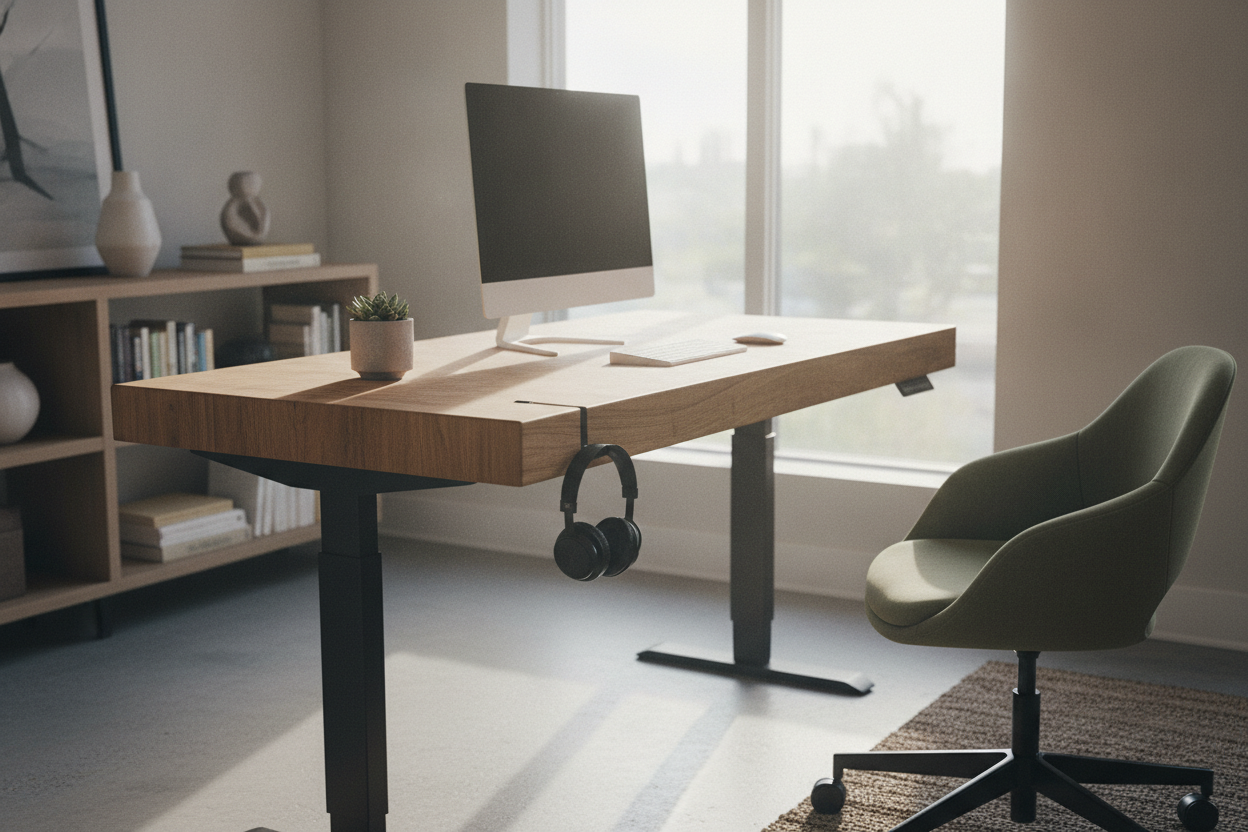
I spent three weeks staring at a $900 slab of walnut on motorized legs, convinced it would make me the kind of person who drinks green juice and never loses their car keys. It looked perfect on Instagram. In reality? My tall desk with storage-less setup became a graveyard for half-empty coffee mugs, tangled charging cables, and three different notebooks I couldn't find a home for.
The problem with minimalist standing desks is that they assume you work in a vacuum. Unless your job involves literally nothing but a 13-inch laptop, you have stuff. And if that stuff doesn't have a dedicated cubby or shelf, it ends up exactly where you are trying to work. I learned the hard way that verticality without organization is just a high-altitude mess.
- Storage prevents 'desk creep' where items migrate into your mouse space.
- Vertical shelving utilizes the air space above your desk that usually goes to waste.
- Integrated cubbies hide ugly peripherals like external hard drives and docks.
- A designated spot for everything means less time hunting for a pen during a Zoom call.
The Dirty Secret of the Minimalist Standing Table
We have all seen the photos: a white desk, one monitor, and a single succulent. It is a lie. After three days of real work, that sleek surface is buried under mail, receipts, and those weird dongles you need for your MacBook. Minimalist standing tables are great for aesthetics but terrible for productivity because they offer zero 'landing zones.'
When you are standing, you are more mobile, which ironically means you drop things more often. Without a drawer or a shelf, your desk surface becomes a catch-all. I found that my 60-inch wide 'minimalist' desk actually had less usable space than a 40-inch desk with a hutch because I was constantly pushing clutter from the left side to the right side just to find room for my keyboard.
Why You Actually Need a Tall Desk With Storage
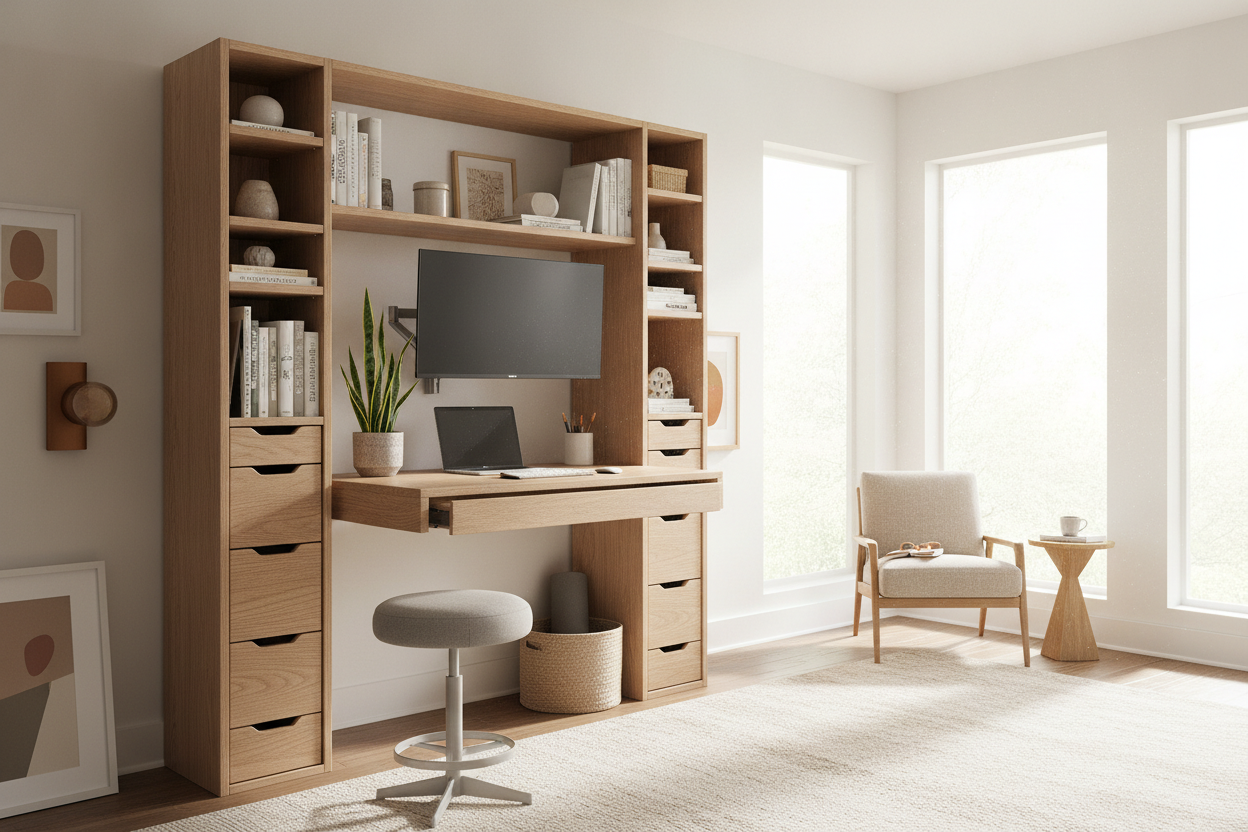
The magic happens when you stop thinking about your desk as a flat plane and start thinking about it as a 3D workstation. A tall desk with integrated storage—like shelves or pegboards—keeps your essential tools within arm's reach without swallowing your usable surface area. You want your reference books and hard drives at eye level, not buried in a pile next to your elbow.
If you are tired of the DIY shelf-hacking, looking for an electric height adjustable desk with dual storage is the move. It combines the health benefits of standing with the sanity-saving reality of having a place to put your stapler. Keeping your gear vertical means your desktop stays clear for actual work, which, let’s be honest, is the whole point of having a desk in the first place.
Drawers vs. Shelves: What Works Best Up High?
Not all storage is created equal when you are working at standing height. I have found that traditional deep drawers can be a nightmare; if they are positioned too low, you are constantly bending over, which defeats the purpose of standing. If they are too high, you are hitting your knees every time you shift your weight.
Open shelving and cubbies are usually the superior choice for elevated workstations. They allow for quick 'grab and go' access. Think of it like a modernized writing computer desk—it gives you that fixed surface for your essentials while keeping the footprint small. I prefer a mix: one slim drawer for pens and sticky notes, and open shelving for everything else. It keeps the visual weight of the desk light while still being functional.
Don't Forget About Your Seat (Because You Will Get Tired)
Here is the truth: no one stands for eight hours straight. Not even the most hardcore ergonomics enthusiasts. Eventually, your calves will scream, and you will want to sit. When you have a tall desk, a standard office chair won't cut it—you need a drafting stool or a high-perch seat.
Because these stools often have a wider base or a foot ring, they can take up a surprising amount of floor real estate. If you are really tight on space, pairing it with a desk chair with storage can help hide the stuff you only need once a week. It is all about maximizing every square inch of your office footprint so you aren't tripping over your own furniture when you switch from sitting to standing.
My Personal Setup Fail
I once tried to 'fix' a basic standing desk by stacking three plastic bin organizers on top of it. It was a disaster. Not only did it look like a dorm room, but the weight was unevenly distributed. Every time I typed, the whole desk wobbled like a Jenga tower. I eventually gave up and bought a desk with a built-in steel frame and integrated shelving. The difference in stability alone was worth the extra $200. Don't hack it—just buy the storage you actually need.
FAQ
Does a desk with storage wobble more?
Actually, desks with integrated shelving or hutch units are often more stable because the extra weight and structural bracing lower the center of gravity and reduce that annoying 'monitor shake' when you type.
Can I add storage to my existing standing desk?
You can add under-desk drawers or clip-on trays, but be careful with weight limits. Most electric motors are rated for 150-250 lbs, and a heavy wood organizer plus your monitors can push that limit quickly.
Are tall desks harder to assemble?
They usually have a few more bolts and a bit more 'puzzle work' than a basic four-leg table, but if you can handle an IKEA dresser, you can handle a desk with a hutch. Just make sure you have a second person to help lift the top.

Laisser un commentaire
Ce site est protégé par hCaptcha, et la Politique de confidentialité et les Conditions de service de hCaptcha s’appliquent.