


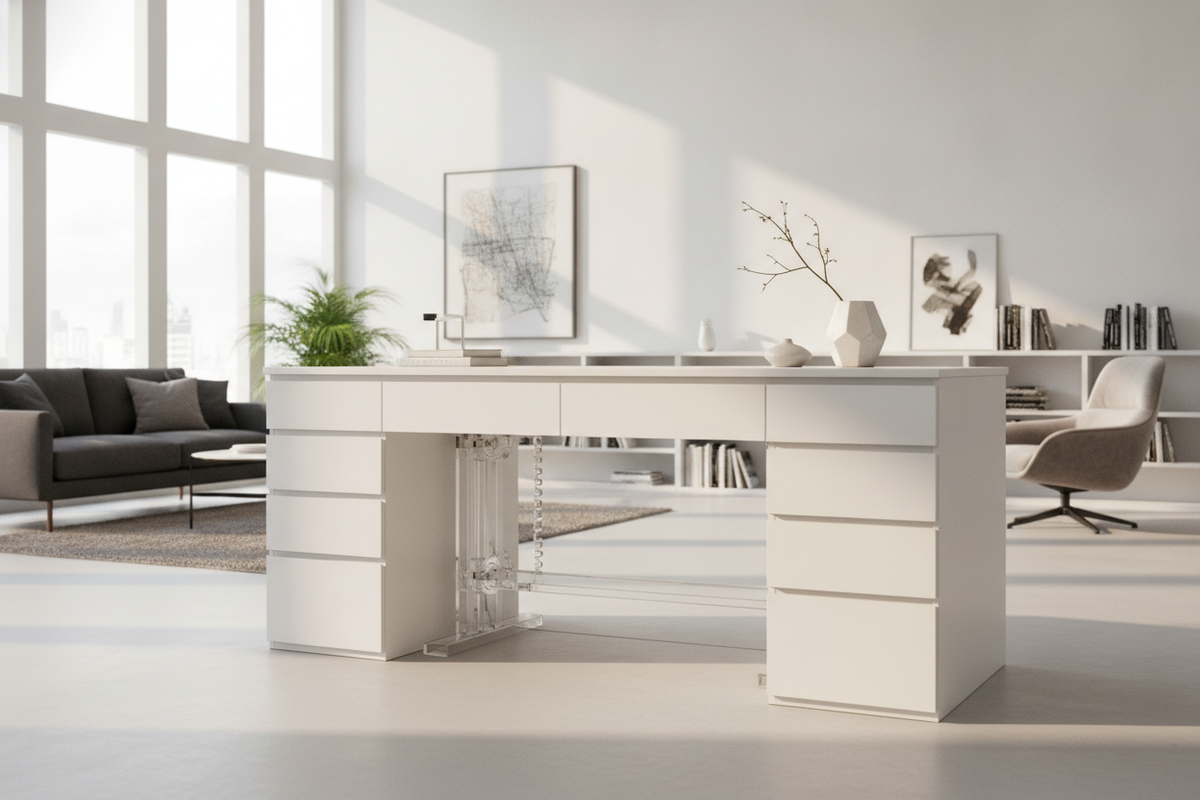
The Sit-Stand Storage Paradox: Integrating Drawers into Kinetic Frames
Pairing active height adjustment with integrated cabinetry introduces a fundamental mechanical challenge: spatial clearance beneath the main work surface. Standard static desks rely on continuous side panels or fixed four-leg perimeters that easily anchor deep drawer stacks. In contrast, height-adjustable frames require clearance for horizontal crossbars, central transmission rods, and motorized lifting columns. Selecting a white standing desk with drawers requires an understanding of how under-desktop storage affects both frame motion and user ergonomics.
Integrated storage generally follows one of three structural configurations:
- Slim Center-Pencil Enclosures: Shallow, wide slide-out compartments mounted directly beneath the primary desktop. These maintain high under-desk clearance while organizing writing utensils, slim tablets, and low-profile notebooks.
- Asymmetrical Suspended Modules: Single-side hanging drawer boxes positioned outside the primary leg travel zone. This format offers increased vertical depth for charging bricks and peripherals without obstructing knee space.
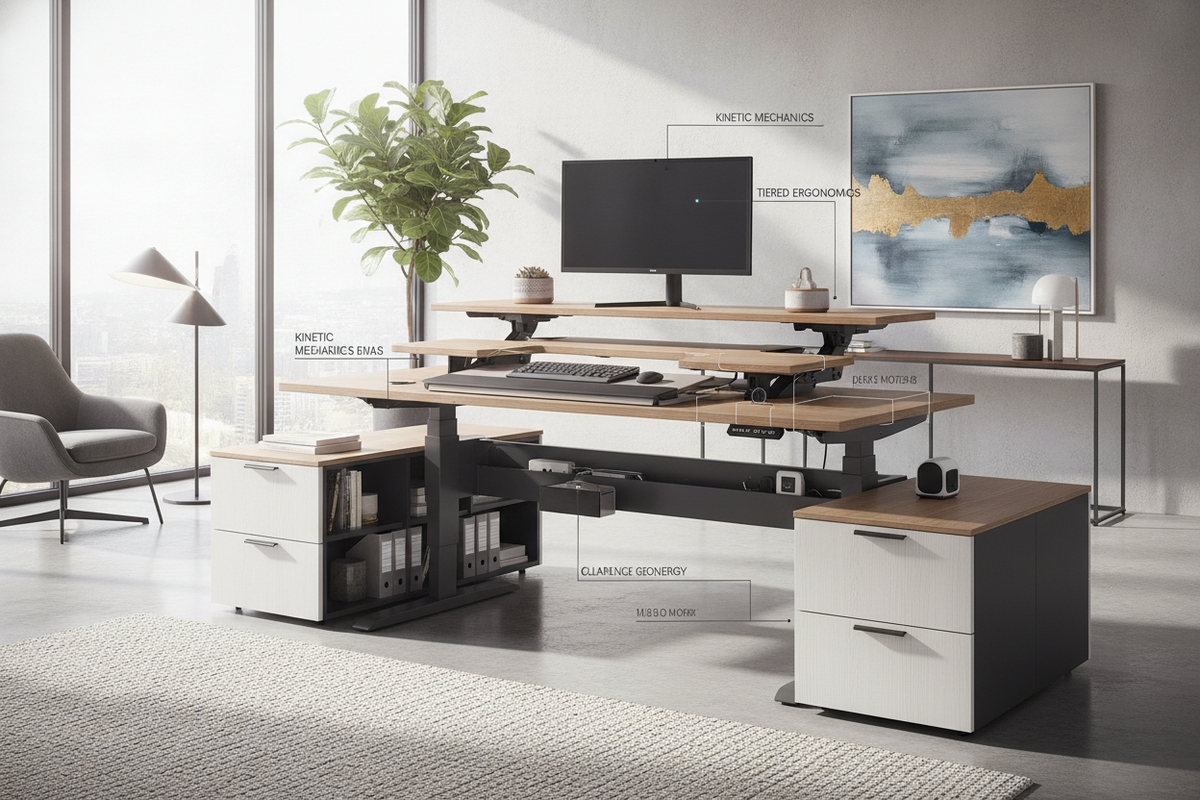
- Integrated Dual-Tier Sub-Frames: Desktops built with a continuous secondary lower level housing flush-front drawers across the full width or partitioned zones.
When evaluating these options, seated thigh clearance remains a vital consideration. Adding vertical drawer depth directly under the surface reduces the available distance between the desktop underside and your lap. Balancing drawer thickness with your preferred seated height ensures smooth transitions between sitting and standing postures without physical interference.
White Surface Materiality: Finish Durability, Glare Management, and Edge Wear
A crisp white finish visually expands a home office, bouncing ambient light into tight corners and establishing an organized, minimalist aesthetic. However, a standing workspace undergoes frequent physical contact along its leading edges, making material selection a core design priority. Insights from our white desk guide highlight how finish texture directly influences daily maintenance and visual longevity.
Different white desktop treatments offer distinct tactile and optical properties:
- Matte and Satin Laminates: Highly effective at diffusing overhead illumination and task lighting, matte white surfaces minimize screen glare and soften the visual contrast between the desktop and digital monitors.
- Textured Powder-Coated Surfaces: Applied over engineered or metal substrates, subtle micro-textures help mask everyday micro-scratches and resist persistent smudges from repeated palm contact.
- High-Gloss and Smooth Lacquers: While delivering a striking modern profile, gloss surfaces reflect pinpoint light sources more noticeably and benefit from frequent microfiber dusting along perimeter bevels.
Drawer face bevels and pull areas experience concentrated handling. Opting for clean integrated routed pulls or beveled finger channels eliminates protruding hardware, maintaining streamlined kinetic motion and protecting the finish from accidental friction against office chair armrests.
Dimensional Archetypes & Room Fit Framework
Room proportions and perimeter clearances dictate the appropriate desk footprint. Matching storage volume to room dimensions preserves an open flow while preventing spatial congestion during height transitions.
Consider three primary workspace archetypes when planning your layout:
- Compact Alcoves & Micro-Offices: In tight studio layouts or multi-purpose guest rooms, selecting a slim-depth white adjustable desk with drawers preserves essential hallway clearance. Shallow center drawers keep desktop clutter contained without intruding into circulation paths.
- Standard Dedicated Workspaces: Rooms supporting dual-monitor setups thrive with balanced spans, such as an adjustable standing desk product, paired with suspended side storage. This arrangement accommodates larger display arms alongside active organizers for daily paperwork.
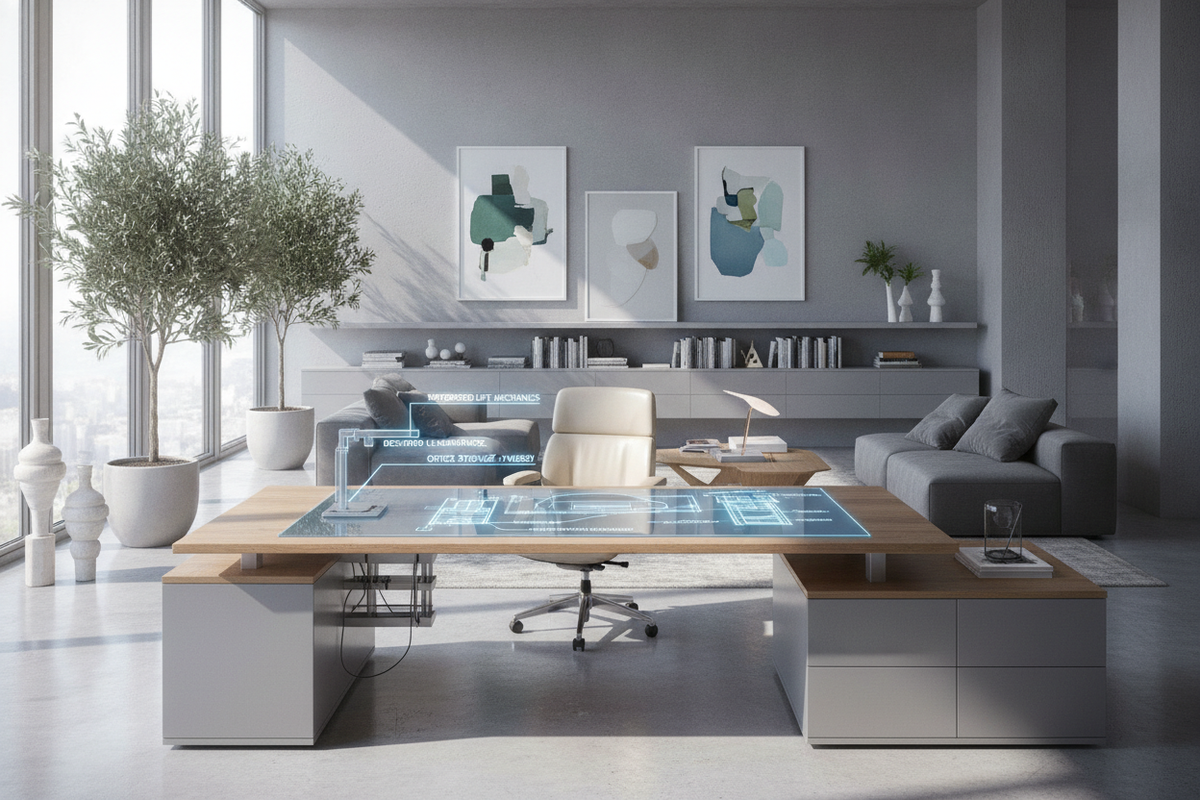
- Executive Suites & Open Studios: Expansive multi-zone offices benefit from a substantial standing desk white with drawers that anchors the central floor plan. Deeper surfaces allow dedicated zones for primary computer input, secondary writing pads, and fully integrated peripheral docks.
In smaller environments, pairing your primary work surface with specialized auxiliary pieces helps distribute storage demands. Incorporating secondary units explored in our white drawers guide allows you to keep the primary moving desktop light and agile while maintaining ample archival storage nearby.
Payload Distribution and Dynamic Kinetic Balance
Height-adjustable frames operate smoothly when dynamic weight is distributed evenly across the primary lifting columns. Integrating drawers means moving weight is introduced to the structural envelope, requiring thoughtful load planning.
Stationary electronics—such as display monitors, monitor mounting arms, and desktop computers—create a fixed downward force. When contents like heavy power banks, external drives, or stacked documents are placed into an asymmetrical side drawer, the center of gravity shifts toward that side. To support balanced motion, place heavier storage items toward the rear edge of drawer boxes or counterbalance them with desk accessory placement on the opposing side.
Furthermore, smooth-gliding drawer slides equipped with soft-close dampening prevent internal contents from shifting or generating subtle rattles when the desk transitions between seated and standing elevations.
Cable Geometry and Concealed Power Integration
Cable management requires deliberate routing when drawers occupy the under-desk zone. Fixed under-mount raceways must sit clear of moving drawer slides to prevent power cords from catching during opening and closing cycles.
Effective cable paths for desks with integrated storage include:
- Rear-Set Horizontal Raceways: Position wire trays behind the full-extension depth of the drawer boxes, allowing display cables and desk control wiring to route unimpeded along the central spine.
- Flexible Articulated Cable Spines: Vertical umbilical spines direct power feeds from the floor to the moving desktop frame, keeping slack organized and clear of drawer mechanisms throughout the entire lifting range.
- Internal Drawer Charging Pass-Throughs: Notched rear drawer panels allow charging cables to enter shallow trays, creating a secure, hidden docking bay for mobile devices and accessories while keeping the main white desktop uncluttered.
Workspace Ecosystem: Coordinated White Storage and Room Synergy
Achieving a cohesive home office environment extends beyond the standing desk itself. A bright white workspace reflects ambient daylight, elevating mood and making small floor plans feel open and airy.
To maintain visual harmony, align the tone and hardware finish of your desk with surrounding perimeter furniture. Pair a minimalist white desk with low-profile white mobile pedestals, open bookcases, or wall-mounted shelving. By dividing storage into active desktop drawers for daily essentials and perimeter cabinetry for long-term project files, you preserve a clutter-free, functional work surface that elevates both focus and productivity.

Laisser un commentaire
Ce site est protégé par hCaptcha, et la Politique de confidentialité et les Conditions de service de hCaptcha s’appliquent.