


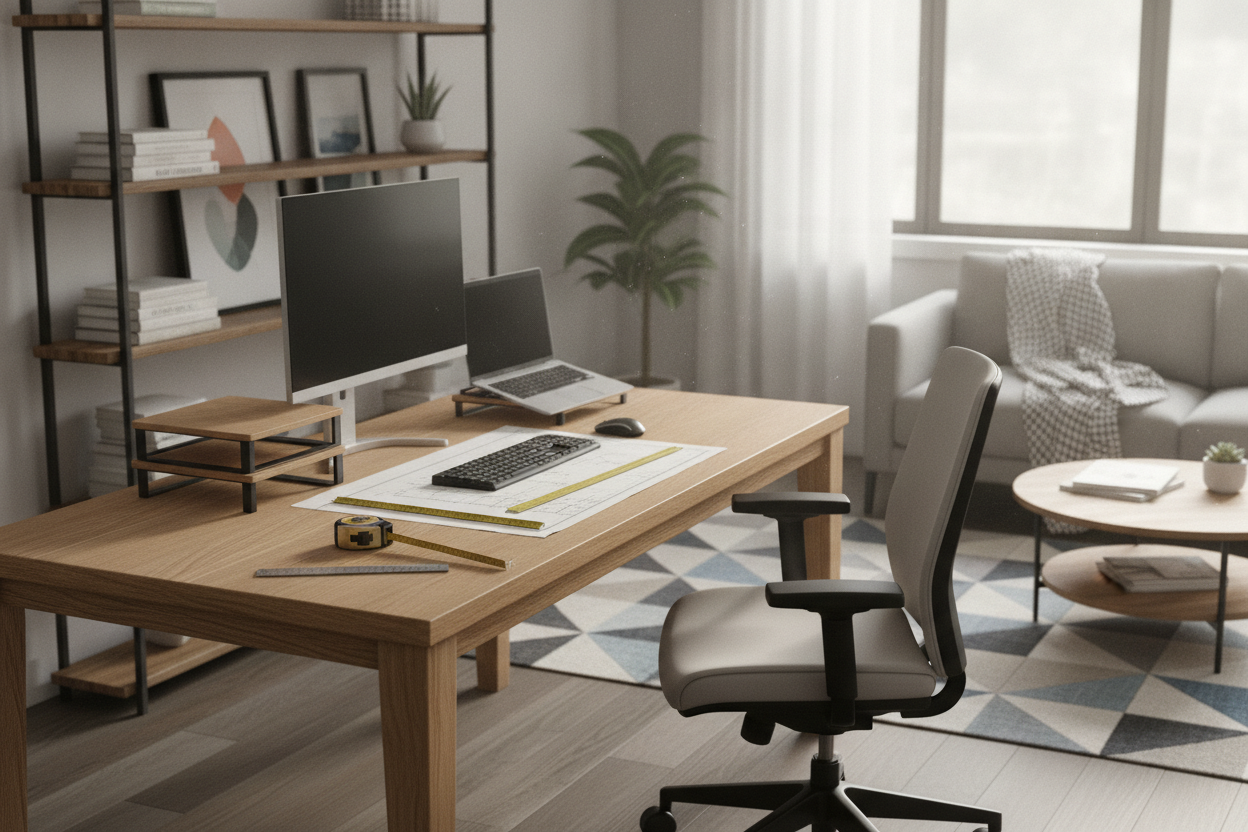
I spent three months working from a 1950s laminate dining table I found on the curb. It looked cool in a 'mid-century chaos' kind of way, but my lower back felt like it had been through a car wash by 3 PM every day. We’ve all been there—hunching over a coffee table or trying to balance a laptop on a stack of books. But eventually, you realize that a real office desk desk isn't a luxury; it is a basic requirement for survival if you work from home.
Quick Takeaways
- Depth is non-negotiable: Aim for at least 24 to 30 inches so your monitor isn't hitting your forehead.
- Standard height: Most work desks for home office use sit at 29-30 inches, which is fine for most, but check your elbow angle.
- Surface vs. Storage: A simple home office desk looks cleaner, but you better have a plan for your papers.
- Legroom: Don't buy a desk with a massive center drawer if you actually want to cross your legs.
The 'Dining Table as a Work Desk' Phase Needs to End
We all start with a temporary setup. Maybe it's the kitchen island or a flat desk you found in the guest room. It works for a week. Then the neck strain sets in. The psychological shift of moving from a 'table for work' to a dedicated adult desk is massive. It’s the moment you stop treating your job like a hobby you’re doing in the corner of the living room.
When you finally decide to Do I Need To Work At A Desk Home Office Design Truths, you’re not just buying a piece of wood and four legs. You’re claiming a territory. A dedicated home desk tells your brain (and your roommates) that you are officially 'at the office.' It’s about posture, sure, but it's also about sanity.
Depth is the Ultimate Luxury for Your Neck
The biggest mistake I see people make when they shop desks for sale is buying something too shallow. You see these beautiful, slim console tables marketed as office desks for home use, and they look great on Instagram. But they are usually only 15-18 inches deep. If you put a 27-inch monitor on that, you’ll be squinting and leaning back all day.
A good home office desk needs depth. I personally won't touch anything under 24 inches, and 30 inches is the sweet spot. This allows you to push the screen back, rest your forearms on the home office desk top, and still have room for a keyboard and a cup of coffee. If you’re running dual monitors, depth is even more critical to maintain a healthy focal distance.
Height: Why Your Shoulders Are Constantly Aching
Most office table for home designs are a standard 29 to 30 inches tall. For the average person, this is okay. But if you’re on the shorter or taller side, that one-inch difference is the reason your shoulders are up by your ears. I once bought a gorgeous work home table that was 31 inches high, and within two days, my wrists were throbbing because I was reaching 'up' to type.
When testing a work desk at home, sit in your actual office chair. Your elbows should be at a 90-degree angle, and your feet should be flat on the floor. If the desk is too high, you’ll need a footrest or a chair that goes higher, which then messes up your legroom. It’s a domino effect of bad ergonomics.
Factoring in the Clutter: Drawers vs. Surface Area
I’m a minimalist at heart, so I usually gravitate toward a simple work desk or a table desk for home office setups. They look airy and light. However, if you don't have a separate filing cabinet, a table top office desk quickly becomes a graveyard for mail, charging cables, and random pens. It’s hard to stay focused when your work computer desk is buried under life’s debris.
If you have the space, I recommend a Home Office Computer Desk Corner Desk With Large Storage. It keeps the essentials within arm's reach without cluttering the main surface. If you do go for the 'table' look, make sure you supplement it with some Home Office Study Storage nearby. A clean desk surface is the easiest way to lower your cortisol levels during a stressful Tuesday.
Making a Massive Desk Look Intentional
One of the hardest parts of buying home office work desks is the scale. A desk that fits your monitors and gear is often quite large, which can easily swallow a bedroom or a small den. To keep your home workstation desk from looking like a corporate cubicle, you have to style it like actual furniture. It shouldn't just be a 'work station'; it should be a 'house desk.'
I’ve found that adding a high-quality lamp and a few plants helps soften the clinical feel of a large home work table. You can also look into How To Style Your Home Office Decor Desk For A Luxury Look to find ways to blend your tech with your home’s aesthetic. Use a rug to define the 'office' area, which helps the desk feel like a planned part of the room rather than something that just landed there.
My Personal Desk Disaster
I once bought a stunning 'personal office desk' that was basically a slab of live-edge wood. It was beautiful, but it was only 20 inches deep. I tried to make it work for six months because I loved the look. I ended up with chronic neck pain and a desk that was constantly covered in coffee rings because there was nowhere else to put my mug. I finally sold it and bought a boring, deep, 30-inch work table for home office use. My neck pain vanished in a week. Don't choose 'pretty' over 'functional' when it comes to your workspace.
FAQ
What is the best depth for a home office desk?
At least 24 inches. If you use a large monitor or dual screens, 30 inches is much better for your eyes and arm placement.
How high should my work desk be?
Standard height is 29-30 inches. Your elbows should be at a 90-degree angle while typing without your shoulders hunching up.
Can I use a dining table as a desk?
You can, but dining tables are often a bit taller than desks, and they lack the cable management and legroom features that make working for 8 hours comfortable.

Laisser un commentaire
Ce site est protégé par hCaptcha, et la Politique de confidentialité et les Conditions de service de hCaptcha s’appliquent.