

Establishing a productive home workspace begins with a methodical procurement strategy. When you set out to buy desks, the sheer variety of retail outlets, dimensional envelopes, materials, and built-in features can quickly become overwhelming. Selecting the ideal workstation requires balancing structural stability, interior aesthetics, and everyday organizational demands.
Navigating Retail Sourcing Channels: Where to Buy Office Desks for Home
Finding the right retail channel is the first major step in your search. Prospective buyers frequently ask, where can i buy office desks that balance architectural quality with reasonable lead times? The market generally divides into specialized online furniture stores, big-box merchants, commercial contract suppliers, and direct-to-consumer casegoods brands.
When assessing desks stores and digital catalogs, consider how each retailer manages product packaging, warranty coverage, and component replacement. Specialized home furniture retailers frequently offer cohesive collections designed for domestic interiors, blending practical cable routing with refined finishes. If you are exploring multiple retail avenues, consulting a comprehensive where buy desk guide can clarify how showroom models differ from direct-order casegoods when deciding where to buy office desks for home.
Direct-to-Consumer Casegoods vs. Modular Flat-Pack Retailers
As you shop for office desks, you will likely weigh the benefits of fully assembled or semi-assembled casegoods against modular flat-pack solutions. Flat-pack systems offer convenient shipping logistics and modular flexibility, allowing you to configure separate tabletops and leg trestles to suit your space. Conversely, integrated casegoods provide rigid internal joinery and unified cabinetry that eliminate assembly guesswork.
During your desks shopping research, evaluate the mechanical hardware used across both options. High-grade cam locks, steel dowels, and pre-drilled pilot holes ensure a rigid foundation, while lower-tier fasteners can loosen over time under active daily use. If you are deciding where to buy a office desk, reviewing a targeted desk shopping buy guide can help you evaluate modular components versus pre-configured home office furniture.
Dimensional Categories: Matching Surface Proportions to Room Scale
Before you commit to purchase office desk solutions, spatial planning is essential. A desk that looks balanced in an open showroom can easily overwhelm a modest residential bedroom or underserve an expansive dedicated study. Spatial proportion requires evaluating three key measurements: overall width, surface depth, and vertical clearance for seating.
A functional home office layout balances the desk footprint with circulation pathways, leaving ample clearance behind the seated position for task chair mobility. Consulting a detailed desk office stores guide can help you visualize circulation zones and perimeter clearances before finalizing your purchase decision when you buy desks for tighter floor plans.
Compact Alcove Profiles and Multi-Zone Spans
Workstation footprints generally fall into three functional categories:
- Compact Writing Desks: Optimized for narrow alcoves and multi-purpose living spaces, prioritizing a shallow depth and minimal visual weight for laptop work.
- Standard Executive Desks: Designed for dedicated home offices, offering deep desktop surfaces that accommodate dual monitors, desk pads, and tabletop lighting.
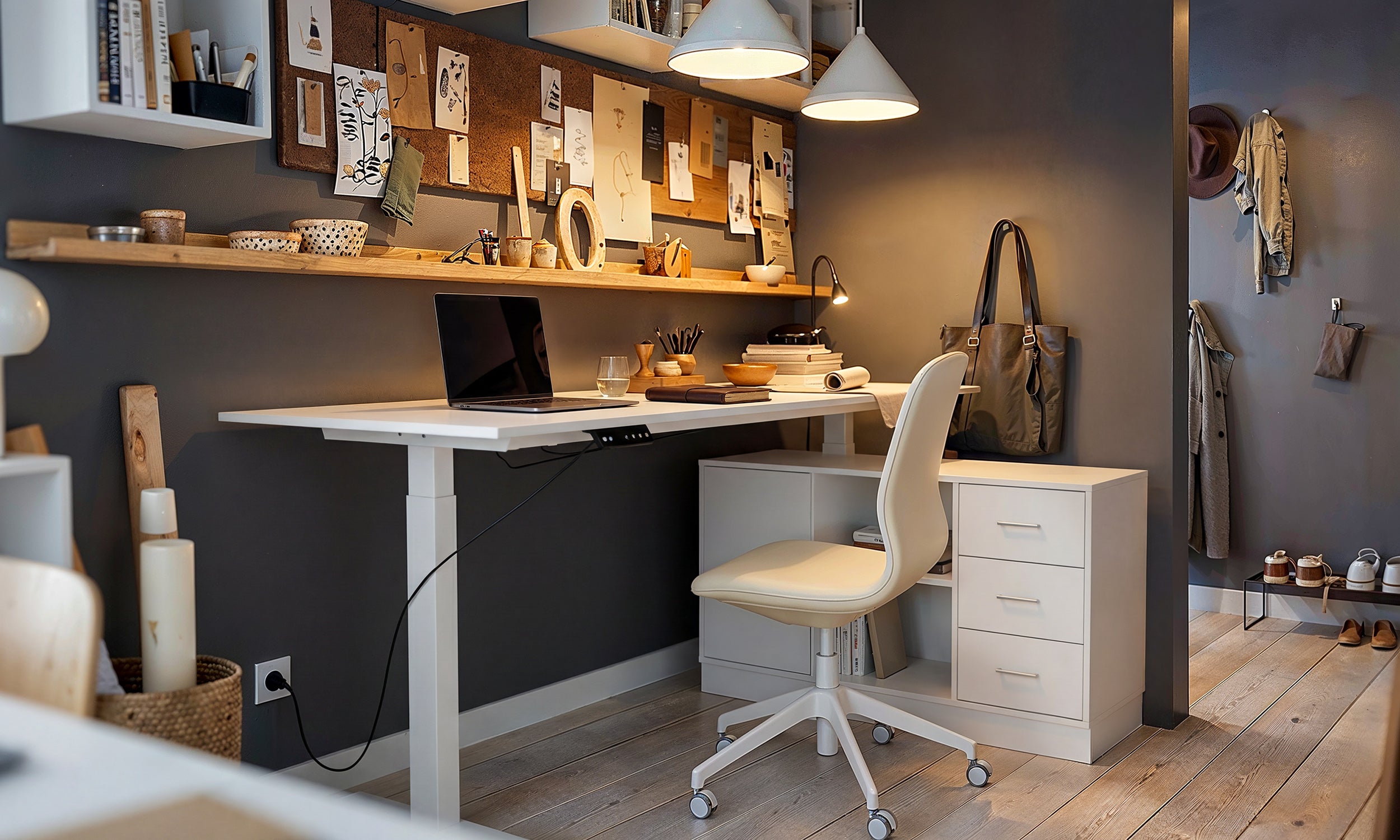
- Corner and L-Shaped Configurations: Engineered to maximize corner dead zones, creating distinct zones for computing and document review. For example, an integrated office desk product delivers dual-wing utility with built-in lower shelving to consolidate hardware within an efficient corner envelope.
Selecting the right category ensures that your decision on where to buy office desks for home aligns directly with the architectural constraints of your room.
Material Selection: Surface Finishes and Structural Base Joinery
Material composition directly dictates both the aesthetic tone and long-term durability of your workstation. When you shop for office desks, you will encounter three predominant surface materials:
- Melamine and High-Pressure Laminate (HPL): Highly resistant to surface scratches, liquid stains, and daily wear, making them ideal for high-traffic home workspaces and busy family environments.
- Wood Veneer and Solid Timber: Deliver authentic grain texture and visual warmth that develop an organic patina over time, though they require routine surface care and coaster protection.
- Tempered Glass: Provides a sleek, light-reflective footprint that expands small spaces visually, though it requires frequent cleaning to eliminate fingerprints and dust.
Equally critical is the structural underframe. Welded tubular steel bases and heavy-gauge aprons resist horizontal racking and wobbling during typing, whereas thick engineered wood side panels create a grounded, architectural aesthetic during intensive desks shopping evaluations.
Storage Architecture: Integrated Cabinetry vs. Modular Pedestals
A cluttered desktop undermines focus and disrupts ergonomic workflow. When preparing to purchase office desk furnishings, consider how your daily paperwork, tech accessories, and reference materials will be managed. Modern office desks address storage through two distinct methodologies:
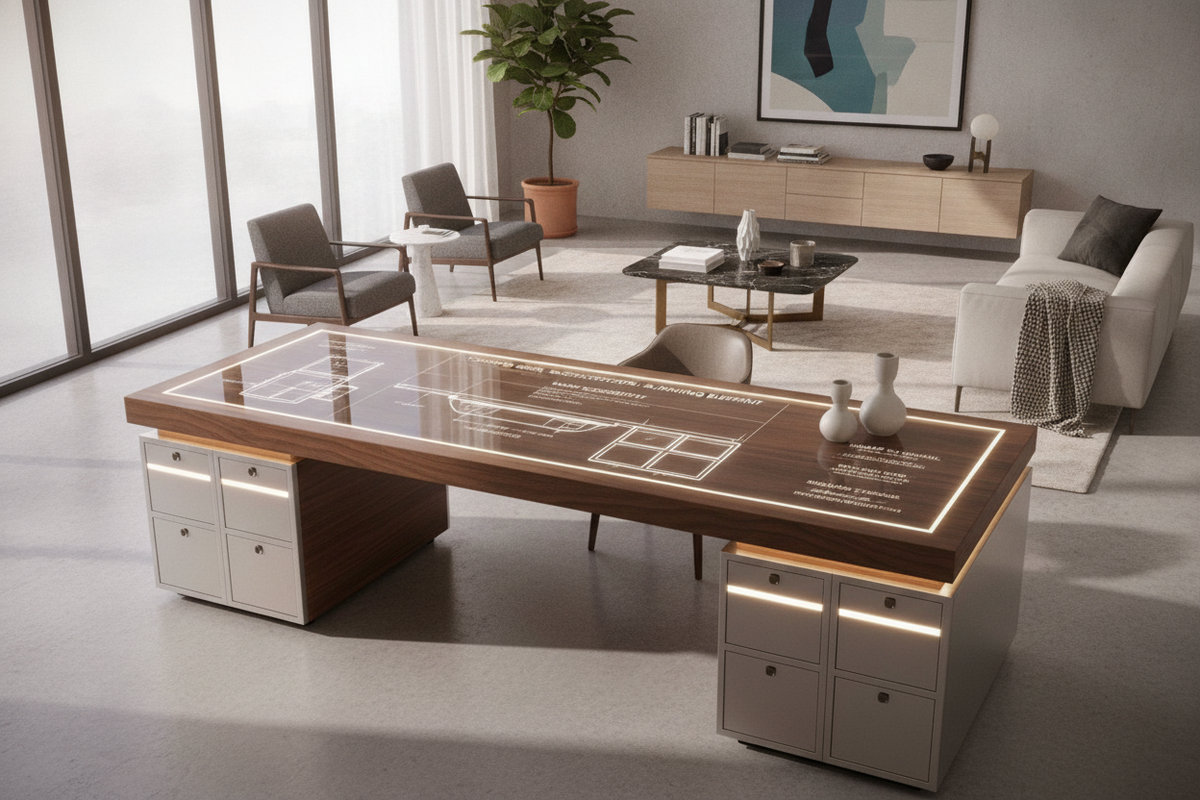
Integrated credenzas and return cabinets build filing capacity directly into the frame. An all-in-one storage workstation, such as an integrated office desk product, combines file drawers, utility compartments, and enclosed shelving within a unified silhouette, eliminating the need for standalone filing cabinets. Alternatively, minimal writing tables paired with independent rolling pedestals allow you to reconfigure storage alongside or underneath the desk as your equipment needs change. Determining where to buy a office desk often comes down to which storage configuration best supports your daily workflow.
Delivery, Assembly, and Ergonomic Placement Checklist
Once you decide where can i buy office desks and select a model, careful pre-delivery and installation planning will ensure a seamless setup:
- Measure Ingress Points: Confirm that entry doorways, hallways, and stairwells offer sufficient clearance for carton packaging and bulky desktop panels.
- Stage the Assembly Zone: Clear a wide workspace, lay down protective cardboard or blankets to protect floor finishes, and organize fasteners before tightening frame joints.
- Orient for Natural Lighting: Position the workstation perpendicular to exterior windows to minimize direct glare on monitor screens while enjoying natural daylight.
- Organize Cable Routing: Utilize underside grommets, wire trays, and adhesive channels to route power cords cleanly, preventing cable tension and preserving legroom.
By evaluating retail channels, measuring room proportions, selecting resilient materials, and planning storage needs, you can confidently buy desks that elevate both your daily productivity and interior design.


Laisser un commentaire
Ce site est protégé par hCaptcha, et la Politique de confidentialité et les Conditions de service de hCaptcha s’appliquent.