


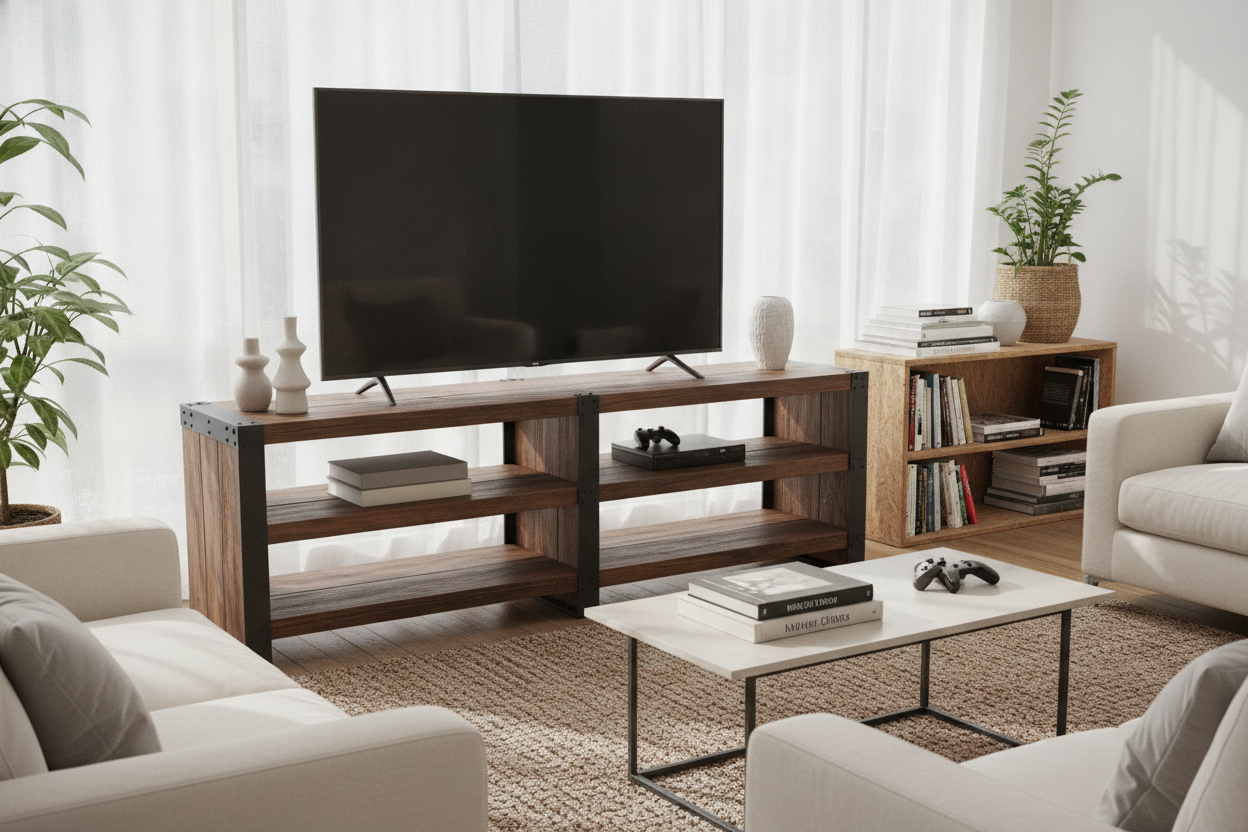
I remember the night I heard a faint, rhythmic creak coming from my living room. At first, I thought it was just the house settling, but then I looked at my 75-inch OLED. My pride and joy, which cost more than my first car, was sitting on a 'modern' console I'd bought during a 2 AM scrolling session. The top panel wasn't just bowing; it was actively surrendering to gravity. That is the exact moment I realized a heavy duty tv stand isn't a luxury—it is an insurance policy for your tech.
- Material Matters: Avoid hollow-core MDF; look for solid wood or reinforced steel frames.
- Center Support: A fifth or sixth leg in the middle is non-negotiable for screens over 65 inches.
- Weight Ratings: Always choose a stand rated for at least 20% more than your TV actually weighs.
- Depth Check: Ensure the feet of your TV stand don't hang off the edge of the console.
The Day I Realized My TV Was Slowly Crushing My Console
We have all been there. You spend weeks researching the perfect panel, obsessing over nits and refresh rates, only to plop that 80-pound beast onto a piece of furniture held together by wishful thinking and cam locks. I watched in slow-motion horror over three months as the center of my media cabinet dipped lower and lower. The doors started sticking. The drawers wouldn't slide. It was a structural failure in progress.
The problem is that most big-box furniture is designed for the 'average' user, which usually means a lightweight 50-inch screen. When you move into the territory of 75-inch or 85-inch displays, you are dealing with concentrated weight that cheap particle board simply cannot handle. A sturdy tv stand needs to do more than just look good; it has to resist the constant downward force without developing a permanent smile in the middle. I eventually had to prop mine up with a stack of hardcover books while I waited for a replacement, which is not exactly the 'aesthetic' I was going for.
The Difference Between 'Chunky' and Actually Sturdy TV Stands
Don't let thick side panels fool you. A lot of manufacturers use 'hollow-core' construction—basically two thin sheets of veneer over a honeycomb of cardboard. It looks massive, but it has zero structural integrity. If you can lift the entire box by yourself, it is probably not a stand for heavy tv setups. You want density. Kiln-dried hardwoods like oak or acacia, or high-grade birch plywood, are your best friends here. They have the fiber density to hold screws tight and resist warping over time.
When you browse through collection of TV stands, pay close attention to the joinery. If the whole thing relies on those little silver cam locks, you’re looking at a temporary solution. Real heavy-duty pieces often use mortise-and-tenon joints or at least reinforced steel brackets at the load-bearing corners. I’ve learned the hard way that 'some assembly required' usually means 'some sagging expected' unless the materials are top-tier.
3 Non-Negotiables for a Heavy Duty Entertainment Center
First, look for center support legs. If a console is wider than 60 inches and only has four legs at the corners, it is going to sag. Period. Gravity is undefeated. A proper heavy duty entertainment center will have at least one, if not two, adjustable legs right under the heaviest part of the TV. This transfers the weight directly to the floor rather than forcing the top shelf to bridge the entire gap.
Second, check the weight capacity for the specific top shelf, not just the 'total unit.' Some manufacturers brag about a 200-pound limit but fail to mention that includes all the stuff you put inside the cabinets. You need a dedicated rating for that top surface. I once found a heavy-duty TV stand for 70 inch TV that was rated for 150 pounds on the top deck alone, and the difference in stability was night and day. No more wobbling when someone walks past.
Third, look for reinforced back panels. Most cheap stands use a piece of cardboard tacked on with tiny nails. A truly sturdy unit uses a structural back panel that prevents 'racking'—that side-to-side swaying that can eventually cause the whole thing to collapse like a house of cards.
Does Furniture for Giant Screens Always Have to Look Industrial?
There is a common misconception that tv stands for heavy tv models have to look like something out of a machine shop. While powder-coated steel is incredibly strong, you don't have to sacrifice your living room's soul to get it. Many modern designs hide their strength behind clever engineering. You can find an adjustable wide TV entertainment stand that features a minimalist profile but utilizes an internal steel skeleton to keep everything rigid.
I personally prefer the 'low and wide' look. By keeping the center of gravity low, you reduce the leverage that a heavy screen has over the furniture. It feels more grounded and less like a safety hazard. Look for pieces that mix materials—solid wood tops with steel legs usually offer the best balance of 'homey' vibes and 'won't-break-on-you' reliability. You want your guests to notice your curated decor, not the fact that your TV is listing five degrees to the left.
Peace of Mind is Worth the Extra Pounds
At the end of the day, a weighted tv stand is about more than just preventing a saggy shelf. It is about safety. If you have kids or pets, a top-heavy, flimsy stand is a disaster waiting to happen. A heavy, solid piece of furniture is much harder to tip and provides a stable base for anti-tip straps. Investing in quality furniture means you won't be replacing it in two years when the MDF finally gives up the ghost. Buy it once, buy it heavy, and stop worrying about the creaks in the night.
FAQ
How do I know if my current stand is sagging?
Take a long level or even a straight piece of wood and lay it across the top. If you can see light under the middle of the level, your stand is already losing the battle. You can also try the 'marble test'—if a marble rolls toward the center of the stand, you have a problem.
Can I just add a leg to my cheap stand?
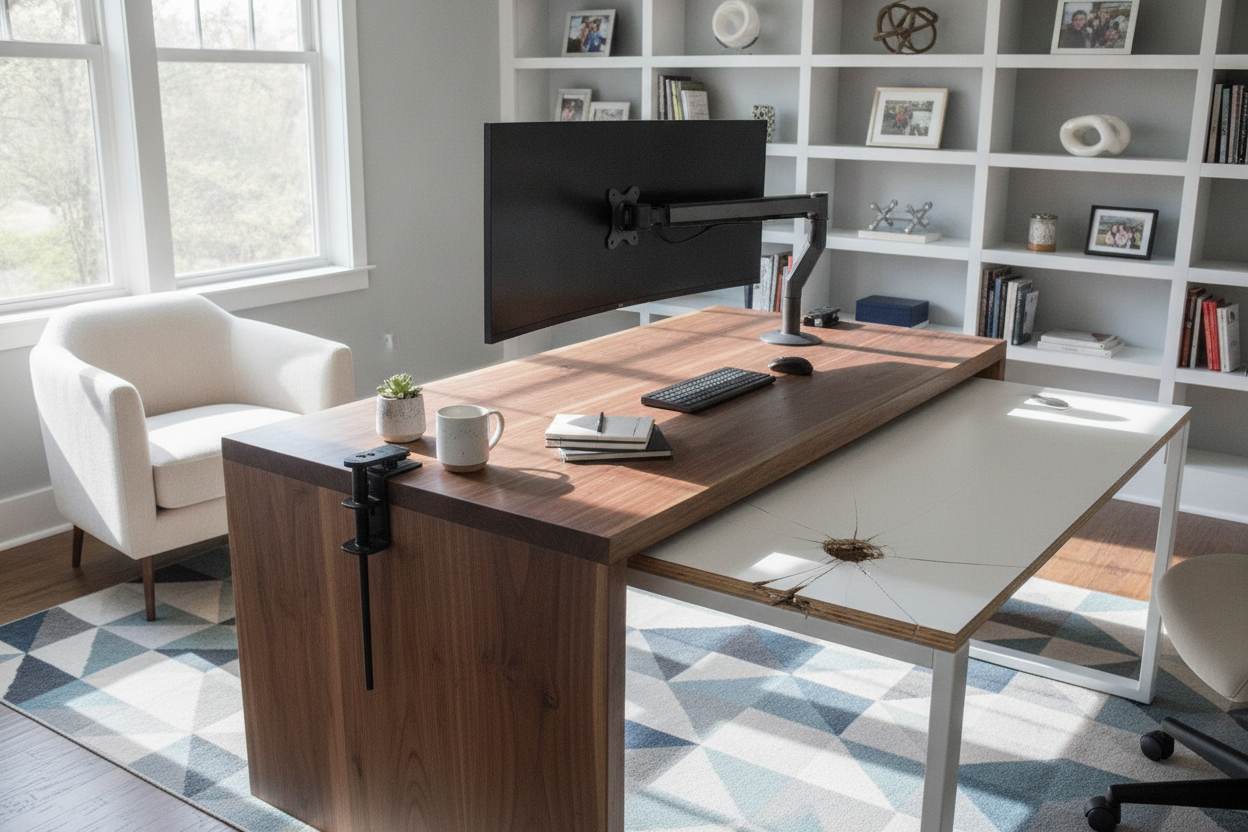
You can try, but if the material is low-quality particle board, the screw might just pull out or the board might crack around the new support. It is usually better to start with a piece designed for the weight.
Is solid wood always better than metal?
Not necessarily. High-quality steel frames are often stronger and thinner than wood, which is great for a modern look. The 'best' is usually a combination: a steel frame for the heavy lifting and a solid wood top for the aesthetics.

Laisser un commentaire
Ce site est protégé par hCaptcha, et la Politique de confidentialité et les Conditions de service de hCaptcha s’appliquent.