


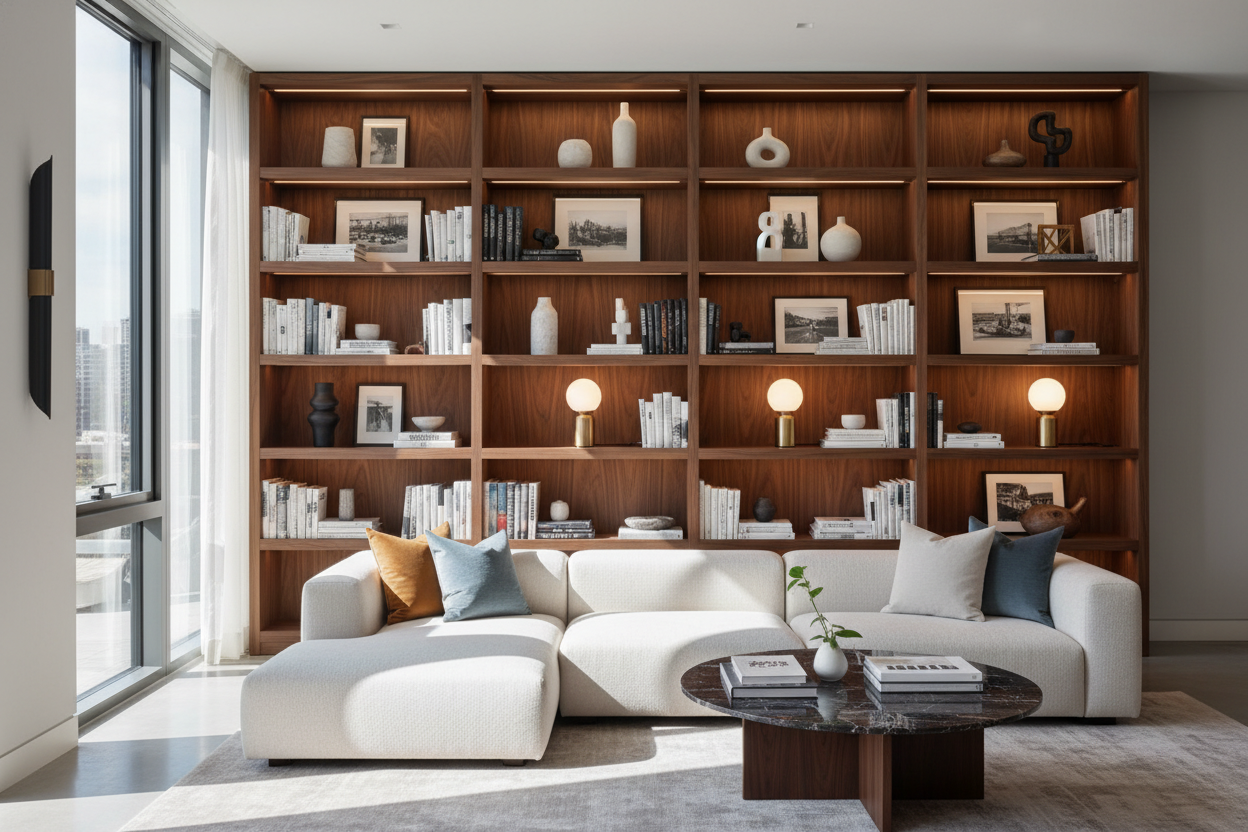
I spent three years staring at my dark, moody library shelves, and for three years, they just looked like a black hole in the corner of my living room. I tried the cheap battery-operated pucks from the hardware store, but they fell off within a week and cast a sickly blue glow that made my vintage paperbacks look like radioactive waste. Finding the right bookcase lamps shouldn't feel like a part-time job, but here we are. I’ve realized that lighting isn't just about seeing your books—it’s about making the room feel finished.
- Avoid battery pucks unless you enjoy changing AA batteries every Tuesday.
- Library lights create that 'built-in' look for a fraction of the cost.
- Cord management is the difference between a chic library and a messy dorm room.
- Integrated lighting is worth the investment if you're starting from scratch.
The Ugly Truth About Most Bookshelf Lighting Ideas
Most 'easy' solutions for bookcase lights are a total trap. Those plastic stick-on lights look fine for five minutes, but once the adhesive fails or the light starts to dim, you'll realize you've just wasted forty bucks and a lot of patience. My first floating shelf lighting looked cheap because I chose convenience over actual quality. If you want lights for bookshelves that actually stay put and look intentional, you have to think about the hardware, not just the bulb. Cheap plastic fixtures have no place next to a leather-bound collection or even a well-curated IKEA hack. You need something with weight and a decent finish to avoid that temporary, 'I just moved in' aesthetic.
Why 'Library Style' Bookcase Lamps Are the Ultimate Fix
There’s a reason high-end designers always go for library lights for bookcases. These fixtures mount to the top or the frame of the shelf, casting a warm, downward glow that highlights the book spines without blinding you while you're sitting on the sofa. Unlike a standard table lamp that takes up valuable real estate where your books should be, above bookcase lighting utilizes the dead space at the top of your unit. Choosing a bookcase with light provides a layer of mood lighting that a standard floor lamp simply can't touch. It turns a piece of furniture into an architectural feature. I personally prefer an aged brass finish—it has a way of making even a standard flat-pack shelf look like it was custom-built by a master carpenter. It’s about creating depth and shadows in all the right places.
Cordless vs. Plug-In: The Reality of Lamps on Bookshelves
Let's talk about the cordless lie. We all see those social media ads for 'magic' rechargeable bookshelf accent lighting. They look great in a fifteen-second clip because there are no wires in sight. In reality, you'll be climbing a ladder every three days to recharge them, and the light output usually drops by half after the first hour. If you’re lighting a shelf you actually use every evening, go for plug-in or hardwired fixtures. If it’s a high, decorative shelf you rarely touch, a small light for bookshelf use with a remote might work for occasional ambiance, but for daily use, the maintenance is a nightmare. I once bought a set of six rechargeable 'library' lights and spent more time plugging them into USB hubs than I did actually reading by them. It was a classic case of form over function that I won't repeat.
When to Give Up and Buy Pre-Lit Shelves
Sometimes, the DIY route is a massive headache, especially if you have a massive wall of built-ins and zero electrical skills. If you're currently shopping for new furniture, save yourself the wiring stress and look for a modern tall bookcase with dual cabinets that has integrated shelf lighting built right in. These units hide the drivers, sensors, and wires inside the frame, giving you that seamless, high-end look without you having to drill messy holes in your expensive wood. It’s the ultimate lazy-but-smart move. You get the 3-color LED options and the sleek glass shelves that allow light to filter all the way down to the bottom deck—something that's nearly impossible to achieve with add-on puck lights.
My Secret Trick for Hiding Wires Behind Books
If you're dead set on adding plug-in modern bookshelf lighting to your existing setup, you need to master the art of the 'book shim.' Most people try to run cords down the side of the unit, which looks incredibly messy and distracting. Instead, use adjustable shelf storage to your advantage. I move my shelf pegs just a fraction of an inch to create a tiny gap at the back of the shelf. I then run the thin power cords vertically behind a row of oversized art books or thick binders. Use a little bit of gaffer tape (not duct tape!) to secure the wire to the back of the shelf frame. It’s invisible, and you don't need to break out a power drill to get a clean finish.
What is the best color temperature for bookshelf lighting?
Aim for 2700K to 3000K. Anything higher looks like a cold hospital hallway; anything lower looks like a dim campfire. You want that warm, inviting 'old library' glow.
Can I use LED strips instead of lamps?
Yes, but only if you hide them behind a lip or decorative trim. Exposed LED 'dots' are the fastest way to make a room look unfinished and cheap.
How many lights do I actually need?
One library light for every 30 to 36 inches of shelf width usually does the trick. If you have a standard 3-foot wide bookcase, one centered light is plenty for a dramatic look.

Laisser un commentaire
Ce site est protégé par hCaptcha, et la Politique de confidentialité et les Conditions de service de hCaptcha s’appliquent.