
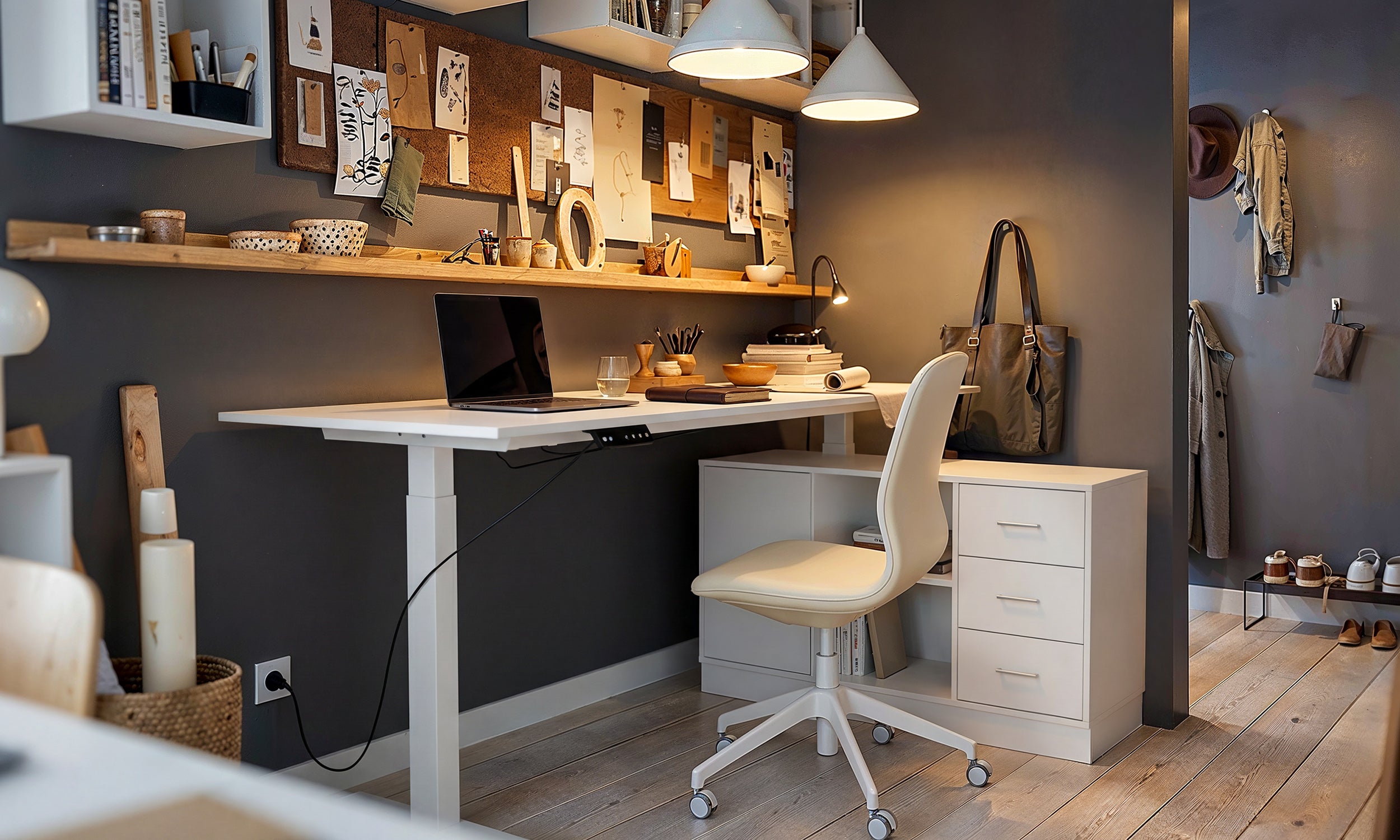
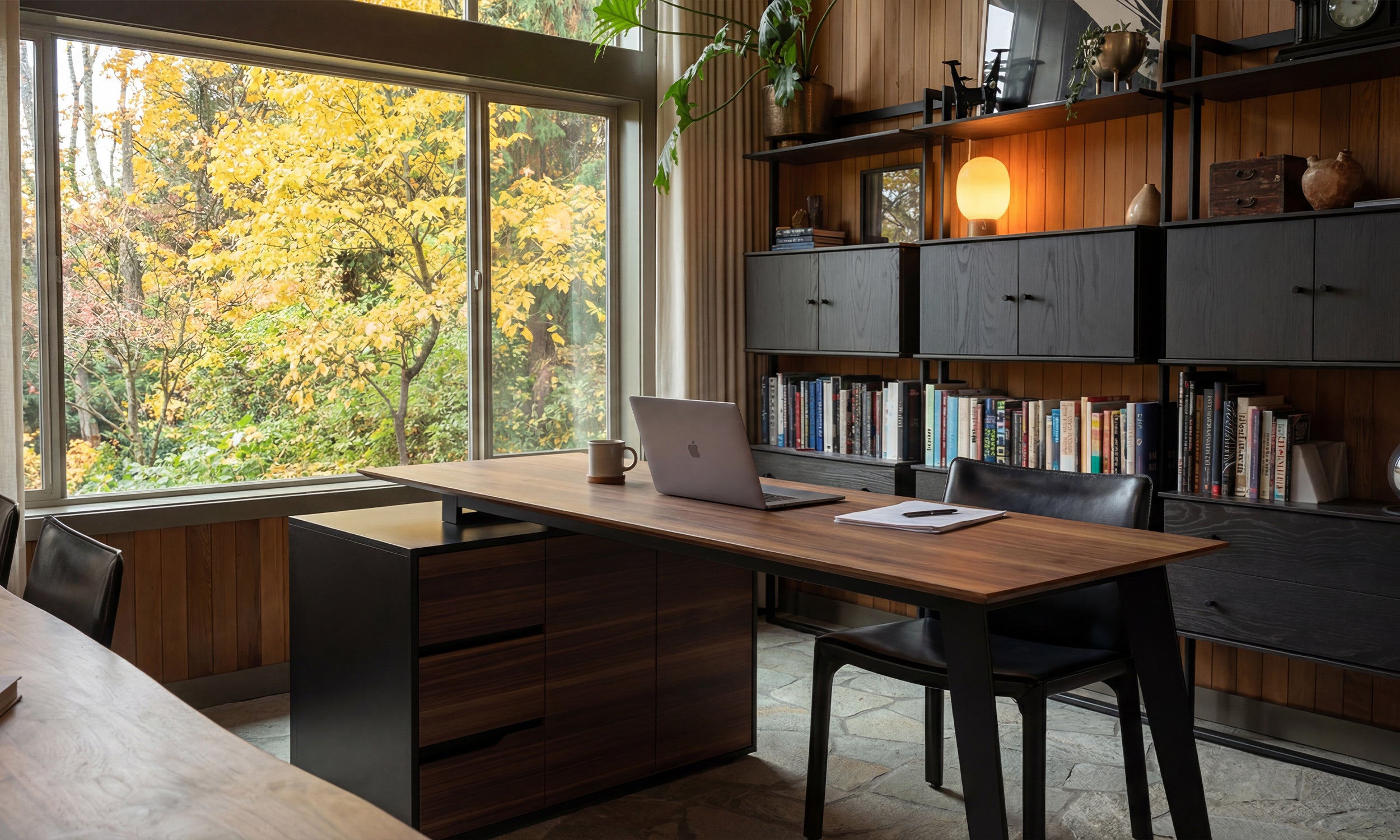
Searching for the cheapest office desk often leads to an overwhelming array of low-cost options that look virtually identical online. However, an affordable workstation does not have to mean a fragile setup or frustrating wobbles during typing. By understanding structural design, hardware joinery, tabletop resilience, and ergonomic clearance, anyone can identify high-value pieces that provide reliable daily utility without straining a budget.
Defining Value in Budget Office Furniture: Structural Integrity Beyond Price
True value in entry-level office furniture is defined by how well a desk balances cost efficiency with long-term mechanical stability. When reviewing budget selections or browsing an office deals collection, focusing strictly on the lowest initial price tag can mask critical differences in hardware quality, joint reinforcement, and core material density.
A well-engineered budget desk distributes weight evenly across its base, incorporates dependable fasteners, and utilizes protective laminates that resist everyday friction. Evaluating these physical elements before purchasing ensures that your workstation remains sturdy and functional through years of remote work, study sessions, or creative tasks.
Dimensional Footprint Categories for Low-Cost Workstations
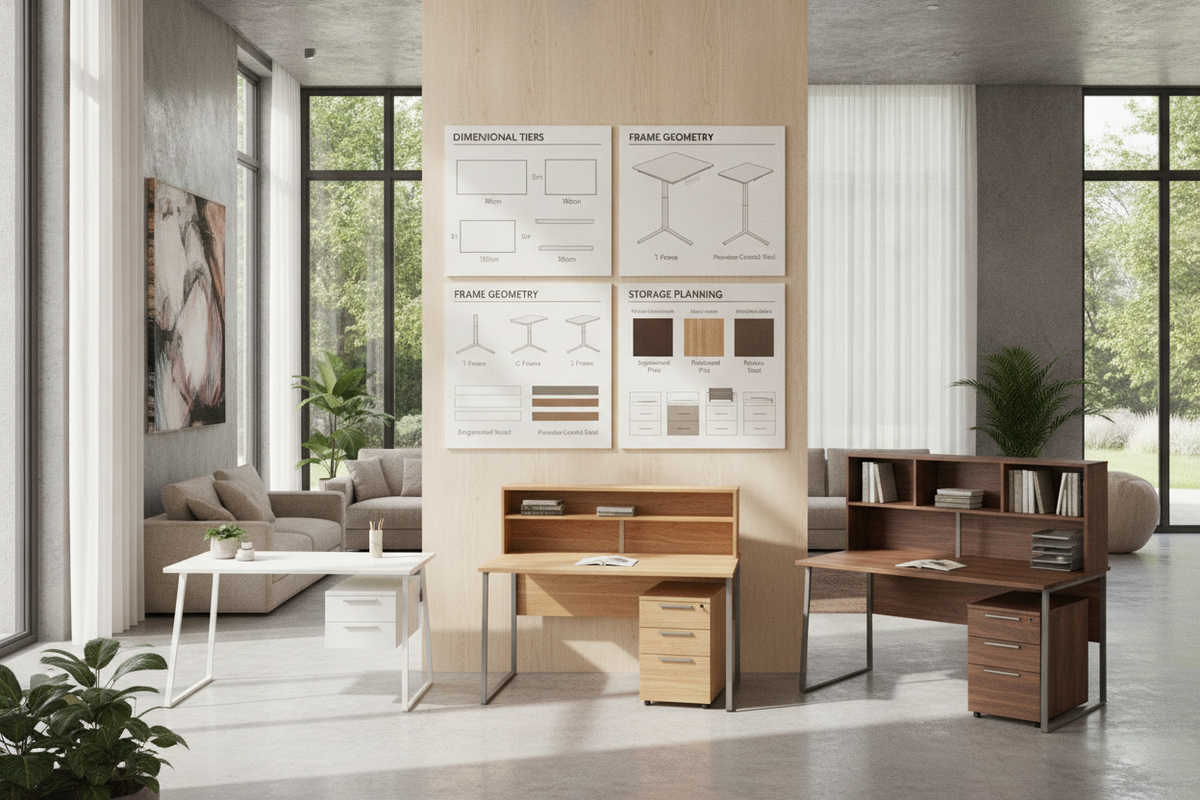
Choosing the right desk begins with matching your available floor area to a practical tabletop footprint. Affordable workstations generally fall into distinct dimensional tiers, each serving specific task requirements and spatial constraints.
Ultra-Compact Nook and Writing Tables
Ultra-compact writing tables are tailored for tight alcoves, bedroom corners, or hallway workstations. These streamlined surfaces prioritize a slim profile, offering just enough depth for a laptop, a notebook, and basic lighting. Because they minimize material volume, compact writing desks are frequently among the most budget-friendly options available while keeping pathways clear in smaller living quarters.
Mid-Size Standard Computer Workstations
Mid-size rectangular desks represent the standard benchmark for daily home office work. They provide sufficient surface area to accommodate a dedicated computer monitor alongside a keyboard, mouse, and desktop organizer. In this category, careful attention to frame reinforcement becomes essential, as wider spans require sturdy support beams beneath the main surface to prevent sagging over time.
Corner and L-Shaped Configurations for High-Efficiency Footprints
Corner workstations maximize spatial efficiency by utilizing room perimeters that might otherwise remain empty. An L-shaped footprint creates dedicated zones for computer tasks and physical writing without demanding excessive center-room clearance. When shopping for value-oriented corner layouts, selecting a thoughtfully engineered office desk product with integrated shelving helps bridge the gap between spacious utility and budget constraints.
Structural Framing, Geometry, and Base Materials
The foundation of any low-cost desk determines its stability and resistance to lateral sway. Evaluating the frame geometry and base materials helps you avoid flimsy construction.
Tubular Steel and Powder-Coated Metal Frames
Metal frame desks typically feature tubular steel legs finished with durable powder coating. These frames offer exceptional rigidity relative to their weight. When assessing metal designs, look for diagonal cross-bracing, rear tension rods, or welded corner gussets. These geometric reinforcements prevent side-to-side shifting under keyboard vibration or monitor movement.
Engineered Wood, Melamine Surfaces, and Edge Banding Resilience
Most budget desk tops are constructed from engineered wood panels finished with decorative laminates or melamine coatings. Melamine creates a non-porous protective barrier against light moisture and minor scuffs. Equally important is the perimeter edge banding, which seals the raw panel core against humidity and everyday friction. Desks with smooth, sealed edge transitions maintain their appearance and structural integrity significantly longer.
Storage Synergy: Integrated Drawers vs. Open Tier Shelving
Storage configuration plays a pivotal role in overall desk functionality and cost. Home office users must balance the convenience of concealed organization with the open legroom required for comfortable seating.
Integrated pedestal drawers and cabinets offer concealed organization for paperwork and office supplies, keeping the primary work surface clear of clutter. Opting for a multi-functional office desk product with built-in cabinetry provides an all-in-one workstation that eliminates the need to purchase separate storage units.
Conversely, open-tier shelving desks provide easy access to reference books, storage bins, or computer towers at a lighter overall weight. If you choose an open, minimalist desk, pairing it with guidance from a desk office guide can help you utilize wall space to maintain an organized, uncluttered desktop.
Spatial Layout and Clearance Planning for Home Offices
A functional home office requires adequate clearance around the desk to maintain comfortable movement and workflow within the room. Consider these fundamental planning guidelines:
- Perimeter Walkway Clearance: Ensure an open passage between the edge of the desk and nearby walls or adjacent furniture pieces.
- Seating and Pushback Space: Account for the full motion envelope of your office chair, allowing seamless entry, exit, and rotation without colliding with baseboards.
- Under-Desk Knee and Leg Clearance: Verify that horizontal support bars, low-hanging drawers, or side shelves leave sufficient vertical and lateral room for natural leg posture.
- Vertical Wall Integration: For compact rooms, review recommendations from an office store desk guide to coordinate desk placement with vertical shelving solutions.
Assembly Techniques and Long-Term Structural Maintenance
Proper assembly is just as important as the materials themselves when it comes to the stability of a low-cost desk. Taking a deliberate approach during initial setup yields a much sturdier workstation.
During assembly, loosely thread all hardware components into their corresponding structural joints before fully tightening any individual fastener. This method ensures that the entire frame aligns squarely. Once all pieces are positioned, systematically tighten fasteners in an alternating pattern to distribute tension evenly across the frame.
Adjustable leveling feet on the bottom of desk legs are crucial for compensating for uneven floors and eliminating annoying wobbles. Periodically checking and tightening structural screws every few months will keep the desk rigid and quiet through extensive daily use.
Strategic Decision Matrix: Selecting Your Ideal Budget Desk
Selecting the right budget desk involves clarifying your specific space limits, daily computing needs, and storage requirements. In my view, identifying whether you prioritize floor space, storage volume, or expansive monitor room makes the decision straightforward.
- Compact Nooks: Choose minimalist metal-frame writing tables that maximize open knee room while occupying minimal floor area.
- Heavy Computing: Prioritize wide rectangular or L-shaped surfaces with diagonal frame bracing to support multiple peripherals.
- All-in-One Utility: Select desks with integrated drawers or integrated shelving bays to consolidate office supplies into a single piece of furniture.
By evaluating structural geometry, durable surfacing materials, and practical room clearance, finding an affordable office desk becomes an achievable and rewarding project.

Laisser un commentaire
Ce site est protégé par hCaptcha, et la Politique de confidentialité et les Conditions de service de hCaptcha s’appliquent.