

Architectural Fundamentals of Modular Desk Planning
Creating a customized workstation tailored to your daily productivity begins with understanding modular component pairing. When you decide to build your own ikea desk, you move away from fixed, one-size-fits-all furniture in favor of a customized system where the surface, primary supports, and storage elements function as interchangeable building blocks. When designing a tailored workspace, consulting a build own design guide helps align desk footprints with room circulation paths.
The Core Components of a Modular Tabletop System
A modular workstation typically consists of three distinct layers: the desktop surface, the vertical supports (such as post legs, trestles, or modular drawer units), and utility hardware that keeps the components joined and level. This tripartite design allows for personal ergonomics and room-specific configurations that standard factory-assembled desks rarely offer.
Balancing Surface Span and Substructure Support
An effective ikea desk build requires careful balance between horizontal reach and vertical stability. As surface length increases, the structural demand on the base elements shifts. Placing heavy peripheral hardware across an unsupported span can lead to visible surface deflection over time. Addressing this dynamic early in the planning phase ensures your workstation remains sturdy and visually balanced.
Dimensional Tiers: Selecting the Right Tabletop Footprint
Selecting the correct tabletop dimensions requires evaluating both the room's available perimeter and your daily equipment footprint. An ikea custom desk layout can be adapted across several standard spatial profiles depending on your workflow demands.
Compact Workstations for Secondary Rooms and Nooks
Compact surfaces suit guest bedrooms, secondary study areas, or awkward architectural alcoves. In these tighter settings, maintaining perimeter clearance is vital to prevent the room from feeling cramped. For smaller floor plans where a standalone unit is preferred over modular builds, exploring a dedicated desk design product provides built-in organization without modular assembly.
Standard Single-User Workbenches for Everyday Productivity
Mid-range surface lengths provide ample room for a primary monitor, compact task lighting, and writing materials without consuming excessive floor area. In these configurations, pairing the surface with one storage pedestal and two independent legs provides a comfortable balance of knee clearance and accessible filing.
Expansive Dual-Monitor and Studio Surface Formats
When multiple large displays, audio interfaces, or expansive drafting pads are required, an extended desktop offers the necessary real estate. However, expansive surfaces demand reinforced foundations to maintain rigidity across their full width.
Base Geometry and Substructure Configurations
The base elements beneath your desktop dictate not only structural stability but also day-to-day usability. Exploring an ikea desk builder approach allows you to combine symmetrical or asymmetrical under-desk supports.
Dual Storage Drawer Units: Maximum Vertical Filing and Utility
Positioning a multi-drawer storage pedestal at each end of the tabletop creates a visually grounded, symmetrical aesthetic. This configuration maximizes vertical file storage and keeps cords, office supplies, and small peripherals out of sight. Learn advanced styling techniques in our ikea desk make guide to seamlessly integrate filing drawer bases into room trim.
Hybrid Configurations: One Storage Unit Paired with Adjustable Legs
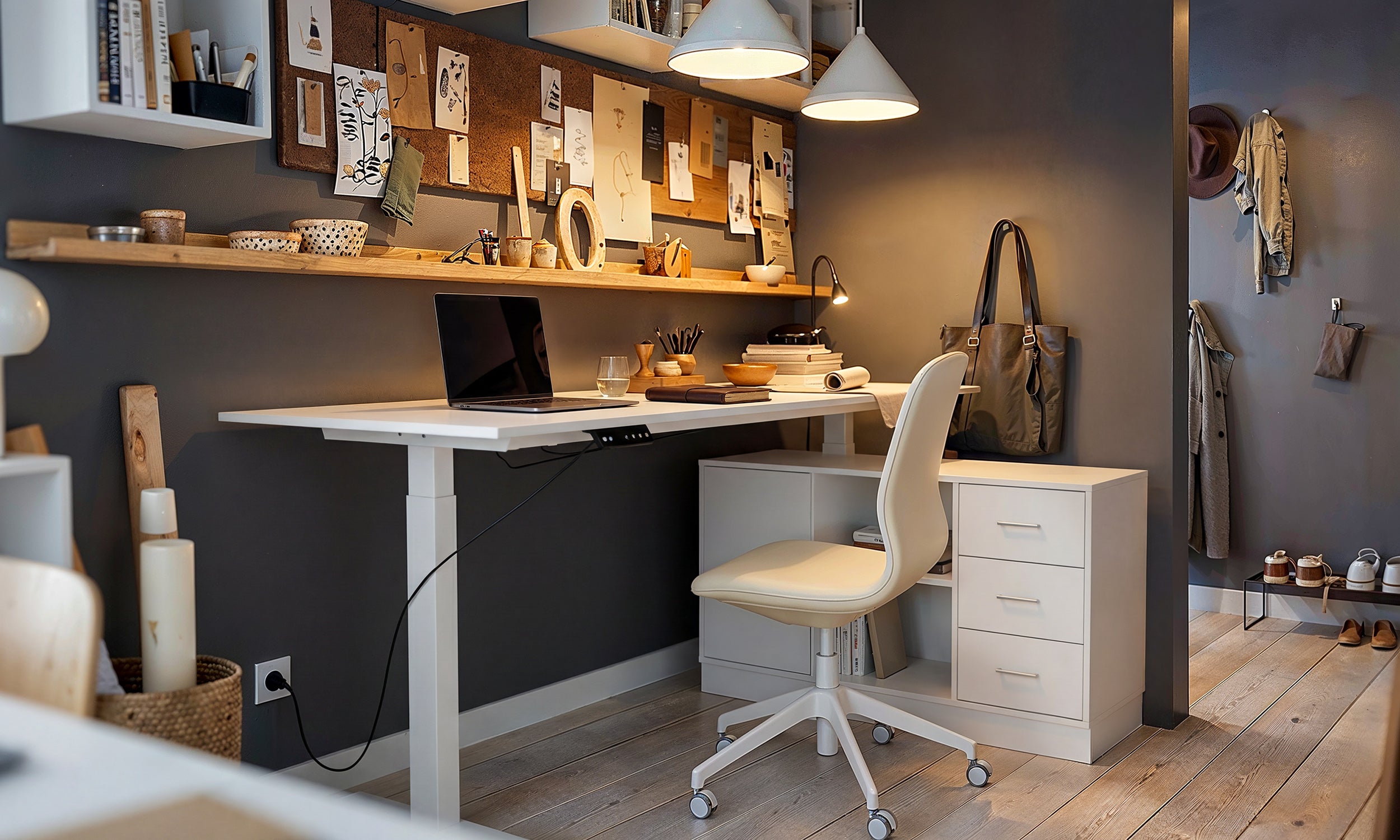
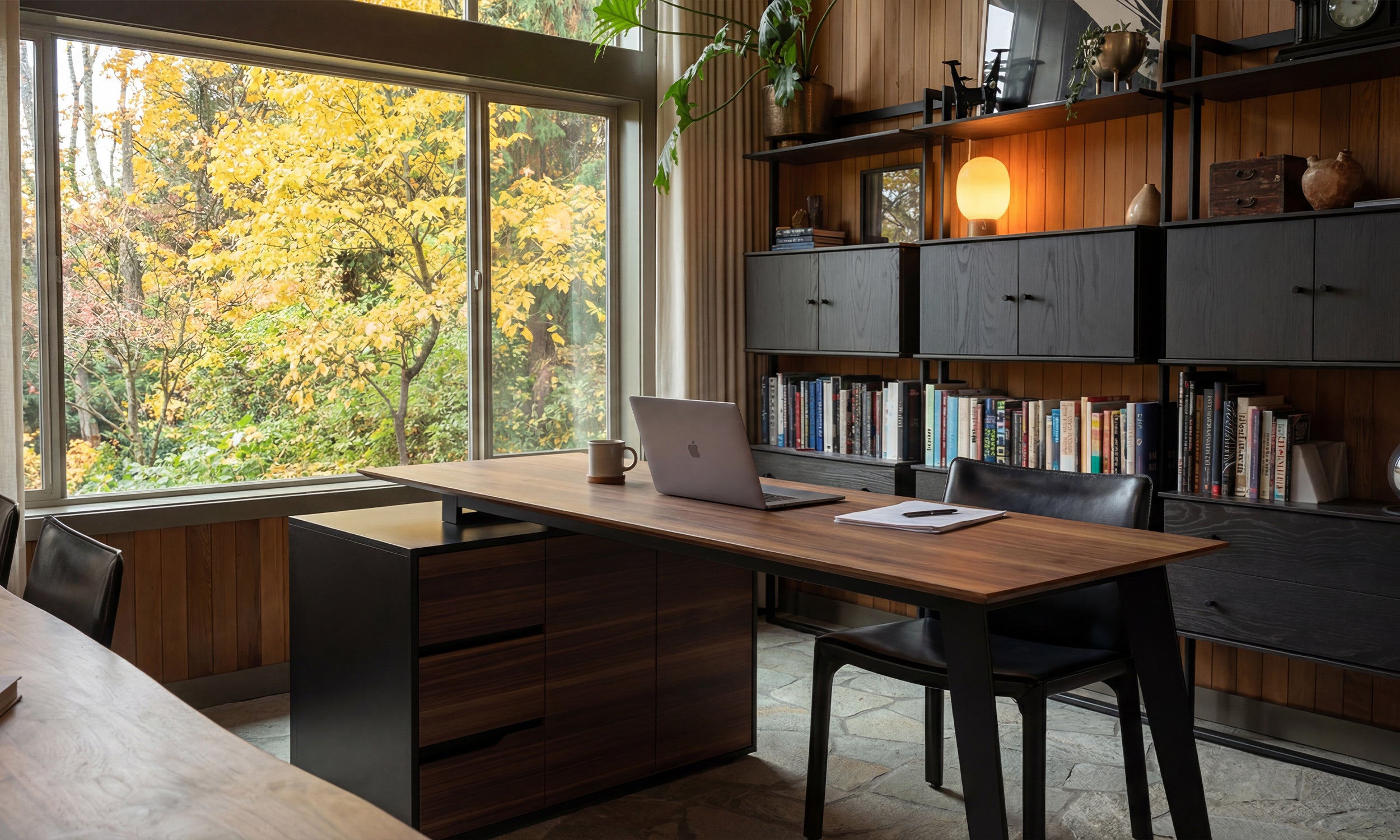
A hybrid layout pairs a single drawer cabinet on one side with slim metal or wooden post legs on the other. This setup introduces an asymmetrical visual rhythm while preserving open airflow and horizontal leg stretch on the open side. It is especially suitable for users who prefer keeping their computer tower or waste bin under the desk without sacrificing drawer utility.
Open Trestle and Post Leg Assemblies: Minimal Visual Weight
For minimalist or smaller spaces, pairing independent post legs or open A-frame trestles creates an airy silhouette. Trestles often offer slight tilt adjustments or lower shelving ledges for minor storage, making them a versatile choice for creative workspaces.
Material Profiles and Surface Construction Dynamics
When you customize table ikea surfaces, material composition plays a critical role in weight distribution, surface feel, and accessory mounting.
Engineered Wood and Honeycomb Core Surfaces
Lightweight honeycomb-core paper fill enclosed by particleboard or fiberboard offers an economical and easy-to-move surface. While suitable for basic desktop peripherals, these tops require cautious distribution of concentrated clamping loads, such as heavy dual-arm monitor mounts.
Solid Wood and Veneer Countertop Conversions
Many workspace creators utilize thick wood veneer or solid wood butcher-block countertops as alternative tabletops. These heavy surfaces provide high structural density, rich grain textures, and solid anchorage for under-desk brackets, task lights, and cable trays.
Protective Finishes and Tactile Comfort
Smooth melamine, laminate coatings, and treated wood oils each provide different tactile experiences. Laminate and melamine surfaces offer reliable moisture resistance against drink rings, while oiled wood brings organic warmth that can be refreshed over time.
Structural Reinforcement, Fastening, and Stability Planning
Executing a reliable ikea desk maker project involves securing the components so the assembly feels unified and steady under everyday typing and equipment weight.
Preventing Center Tabletop Deflection on Extended Spans
Longer surface spans can experience subtle downward deflection under the weight of displays and hardware. Adding a centrally positioned support leg toward the rear edge provides an unobtrusive pillar that reinforces the entire length without obstructing normal legroom.
Securing Tabletops to Freestanding Storage Bases
When resting a tabletop over drawer units, preventing lateral slippage is essential. High-grip rubber bumper pads placed between the top surface of the drawer unit and the underside of the desktop offer reliable friction without permanent drilling. For an even firmer connection, small metal angle brackets or non-damaging adhesive strips can be applied underneath. For setups requiring seamless wall integration and anchored shelving, check our custom desk ikea guide for built-in framing advice.
Cable Routing and Under-Desk Architectural Integration
A well-planned desk integrates cable routing before hardware is connected. Wire baskets, adhesive raceways, and underside surge protector brackets keep power supplies off the floor, enhancing visual tidiness and making cleaning underneath effortless.
Integrated Storage Planning and Room Flow Harmonization
Once your desk structure is stable, fine-tuning your surrounding environment completes the process to ikea design your own desk space that flows naturally with your room.
Drawer Compartmentalization and Ergonomic Zone Reach
Divide your drawer storage into primary and secondary reach zones. The top drawer should house daily essentials such as pens, notebooks, and charging cords, while deeper lower drawers should manage larger items, backup drives, or hanging file folders.
Surrounding Cabinetry and Wall-Mounted Bookcase Coordination
Aligning the finish and height profile of your modular desk with nearby shelving or media consoles creates a coherent, built-in appearance. Pairing matching tall units with lower desk bases is detailed in our secondary custom desk ikea guide for full-wall workspace transformations.
Long-Term Modular Reconfigurability
The greatest advantage when you make your own ikea desk is adaptability. As your storage requirements grow or when you relocate to a new floor plan, legs can be swapped for filing cabinets, surfaces can be extended, and layouts can be reoriented with minimal effort.


Laisser un commentaire
Ce site est protégé par hCaptcha, et la Politique de confidentialité et les Conditions de service de hCaptcha s’appliquent.