


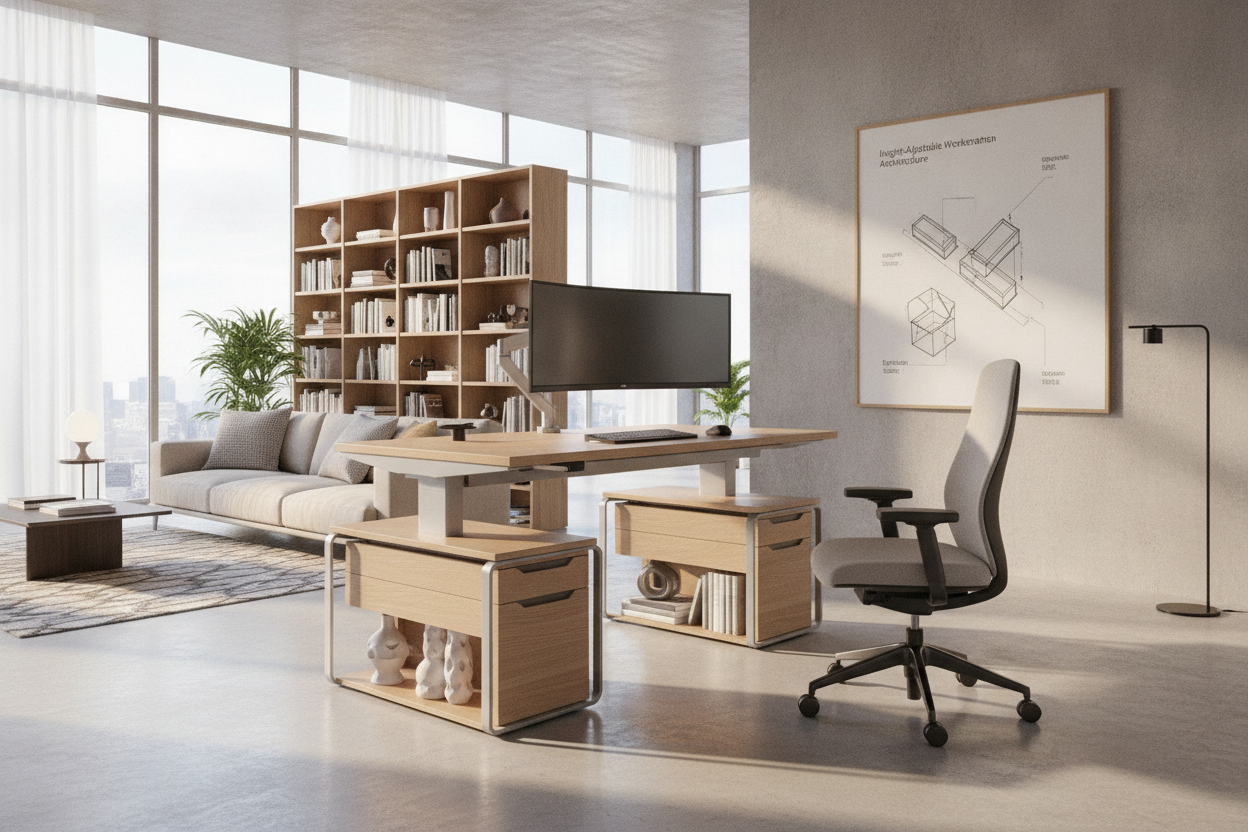
Creating an effective modern workspace requires a thoughtful balance between movement, structure, and aesthetic clarity. The bratchell desk format embodies this focus, offering a clean approach to elevation-capable workspaces. Designed around adaptable work postures, a bratchell height adjustable standing desk allows users to alternate between sitting and standing throughout the day without sacrificing desktop organization or room harmony. Evaluating this style of desk involves understanding mechanical framework dynamics, selecting proper desktop proportions, and establishing perimeter storage that works in tandem with vertical motion.
Understanding the Bratchell Desk Concept: Core Architecture and Elevation Dynamics
At its foundation, a Bratchell workstation is characterized by a dual-stage or three-stage telescoping column system driven by synchronized lifting columns. The structural value of a bratchell desk lies in its ability to support smooth vertical travel while maintaining horizontal rigidity. When a desk transitions between seated and standing heights, the distribution of weight changes, making foundational stability a primary consideration.
Key structural elements in elevation design include:
- Telescoping Leg Columns: Segmented steel or reinforced alloy legs that extend smoothly, minimizing wobble even at maximum extension.
- Crossbeam Support: Under-desktop framing that spans the distance between motorized legs, absorbing lateral stress and preventing surface sag.
- Adjustable Leveling Glides: Base feet designed to fine-tune stability on uneven flooring, ensuring smooth mechanical motion without tilt.
Integrating a bratchell height adjustable standing desk into a daily workflow supports active posture variation, allowing workers to maintain natural sightlines and relaxed shoulder positioning whether working from an ergonomic chair or standing.
Surface Sizing Tiers and Spatial Planning for Height-Adjustable Desks
Selecting the appropriate footprint for a height-adjustable workstation requires evaluating both the equipment resting on top and the clearance envelope around the moving perimeter. Because an adjustable desk travels vertically, the desktop must remain clear of window ledges, wall-mounted shelving, and adjacent cabinetry throughout its entire travel path.
Workstation dimensions generally fall into three functional sizing tiers:
- Compact Footprints: Ideal for small study nooks or corner home offices, accommodating a single laptop, external keyboard, and minimal accessories.
- Mid-Sized Formats: Balanced platforms, such as an adjustable height standing product, which comfortably host dual monitors, desk pads, and primary desktop audio peripherals without feeling crowded.
- Expansive Executive Spans: Broad work surfaces, exemplified by a wider height adjustable standing product, providing ample territory for multi-screen arrays, drafting tablets, physical paperwork, and desktop task lighting.
When mapping out your room layout, ensure at least a few inches of clearance between the perimeter of the desktop and adjacent walls. This prevents edge friction and protects wall finishes as the desk moves up and down.
Visual Balance and Workspace Aesthetics with Adjustable Desks
Height-adjustable furniture is sometimes viewed as utilitarian, but modern designs emphasize visual refinement. Integrating a bratchell height adjustable standing desk into a curated room setting involves balancing technical components with warm textures and cohesive colors.
To achieve a sophisticated visual layout, consider the following styling principles:
- Coordinated Finishes: Match the metallic finish of the desk legs—whether matte black, clean white, or brushed metallic—with other hardware elements in the room, such as door pulls or light fixtures.
- Tactile Desktop Surfaces: Natural woodgrain, warm walnut veneers, or matte laminates soften the engineered look of lifting columns and blend seamlessly with living areas.
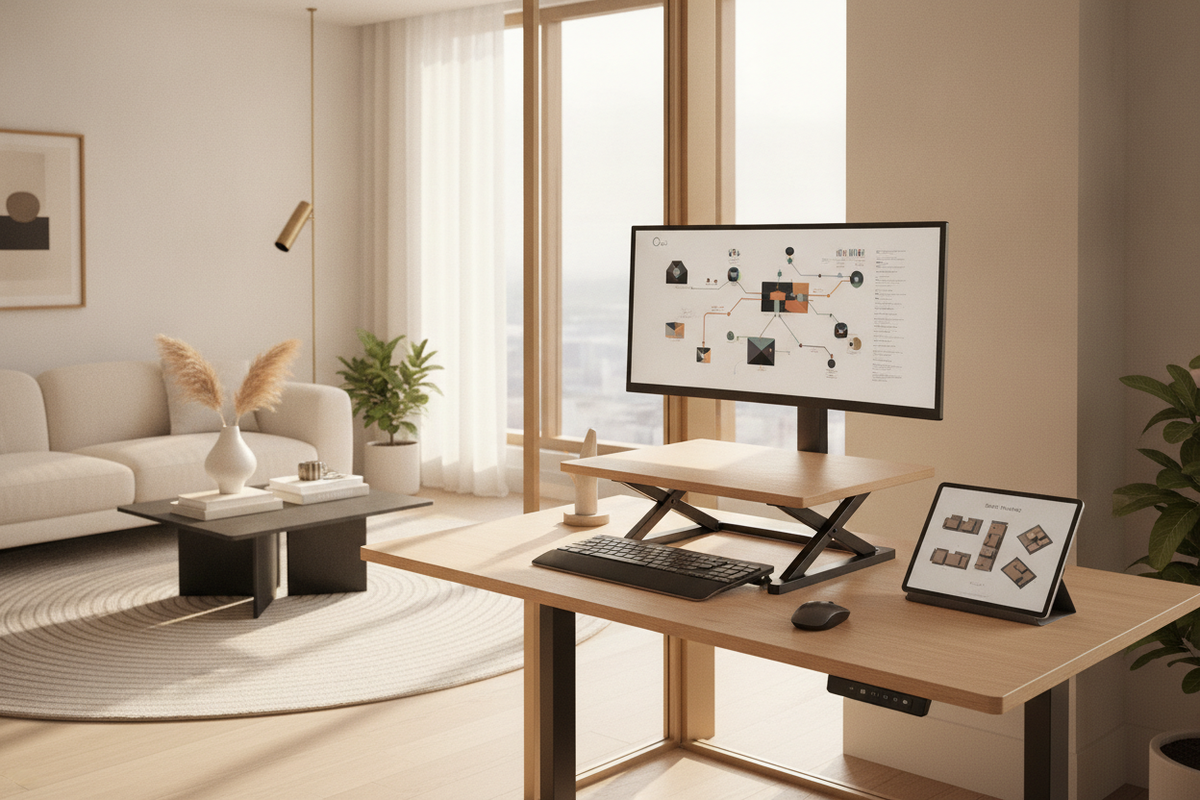
- Intentional Accent Placement: Use low-profile desk mats, ceramic organizing trays, and structured monitor risers to ground the workspace visually.
For additional layout inspiration, consult this detailed standing desk guide to explore practical styling techniques, or review an alternative standing desk guide focused on architectural zoning and room flow.
Storage Solutions and Peripheral Harmony for Elevation Workstations
A primary design challenge with any moving desk is managing stationary storage alongside dynamic elevation. Unlike traditional pedestal desks with fixed drawers, a bratchell desk typically features an open leg profile beneath the main surface. Maintaining an organized workspace requires strategic storage zoning.
Effective companion storage configurations include:
- Mobile Filing Pedestals: Compact rolling drawer units that tuck underneath the desk during seated sessions or slide out alongside the frame when standing.
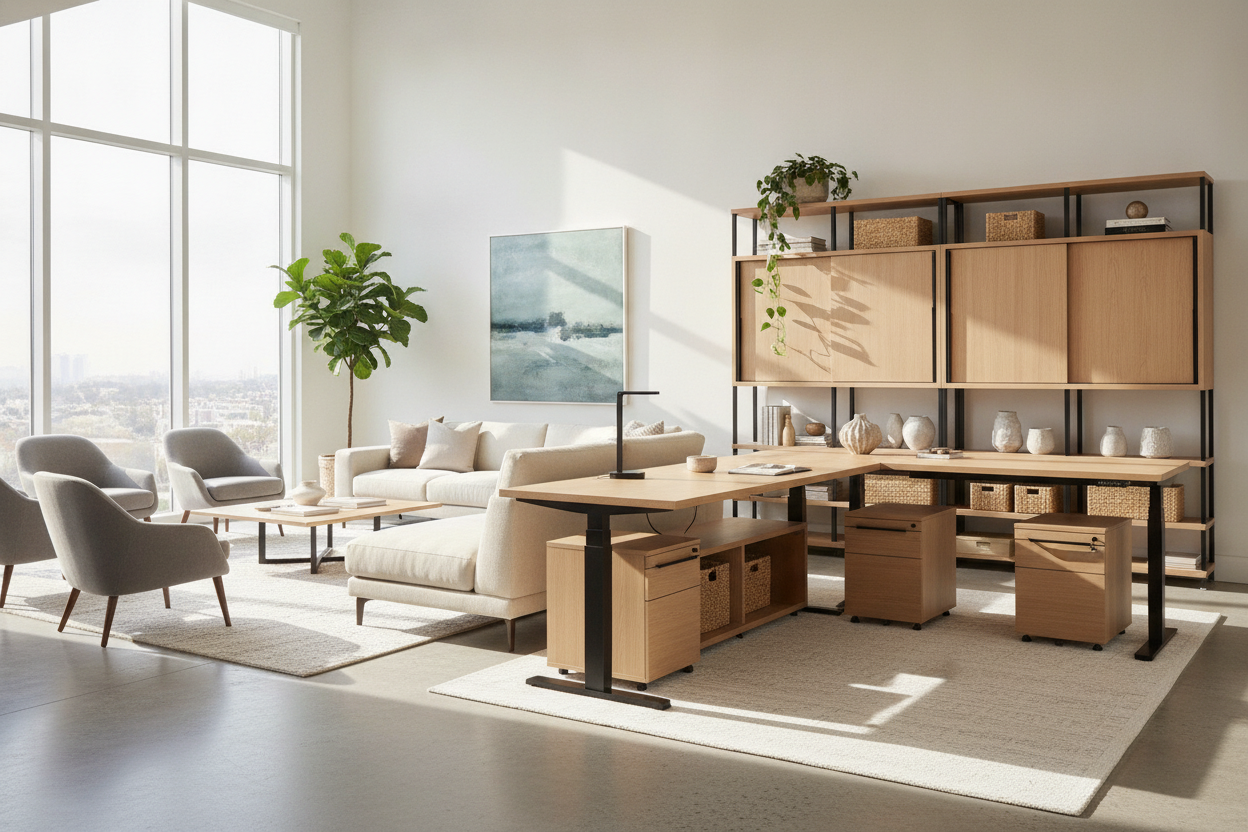
- Freestanding Perimeter Shelving: Incorporating tall shelving units from an adjustable collection provides dedicated zones for reference books, printers, and storage bins without encumbering the moving desk.
- Under-Desk Hanging Organizers: Shallow slide-out utility trays attached directly to the underside of the desktop, keeping writing instruments and daily essentials close at hand across all height levels.
Keeping peripheral storage slightly separated from the moving desktop ensures that elevation mechanisms operate unimpeded while keeping high-traffic equipment within easy reach.
Dynamic Cable Management and Structural Stability Checkpoints
An organized cable management strategy is essential for any height-adjustable setup. Because the desktop changes elevation, cords connecting monitors, power bricks, and computers must accommodate variable heights without snagging or pulling loose.
Implement these cable and structural checkpoints during setup:
- Under-Desk Cable Trays: Mount horizontal wire baskets beneath the desk surface to house power strips and excess cord lengths, ensuring only a single main power cable drops to the wall outlet.
- Flexible Cable Spines: Use articulated umbilical cable managers or braided sleeves to protect cords traveling from the moving desktop down to floor level.
- Slack Calibration: Always test the full elevation range of the desk before final wire fastening, ensuring sufficient slack at maximum height and preventing pinching at lowest seated height.
- Base Leveling: After placing all equipment on the desktop, recheck the base glides to eliminate any subtle rocking or uneven surface contact.
By pairing a well-engineered bratchell desk frame with thoughtful spatial planning, cohesive storage, and dynamic cable routing, you can establish an adaptable, ergonomic workspace tailored for sustained focus and effortless daily movement.

Laisser un commentaire
Ce site est protégé par hCaptcha, et la Politique de confidentialité et les Conditions de service de hCaptcha s’appliquent.