


Introduction: Why the L-Shaped Desk Is the Cornerstone of Modern Productivity
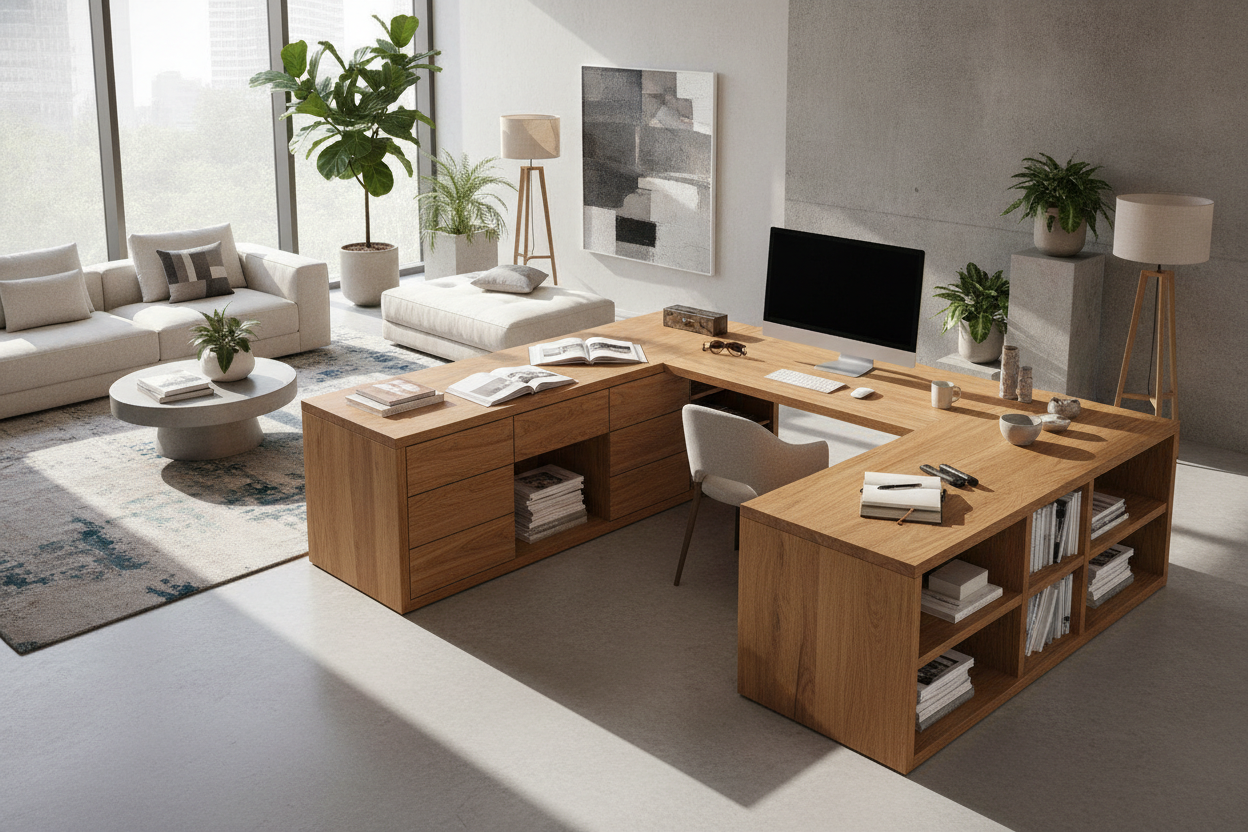
Finding the best l shaped desk transforms how you interact with your workspace. Unlike traditional single-plane rectangular desks that force screens, paperwork, and peripherals into a crowded row, an L-shaped workstation creates two distinct functional wings within arm’s reach. By bridging a primary surface with an auxiliary return, this format naturally segregates deep-focus digital tasks from administrative paperwork, physical referencing, or secondary creative projects.
Whether you are outfitting a compact bedroom nook or establishing a dedicated executive suite, selecting a good l-shaped desk requires balancing room circulation, ergonomic reach zones, and structural integrity. Understanding how these corner workstations operate within varied floor plans ensures you invest in a layout that enhances daily productivity while preserving an open, uncluttered room flow.
Sizing Spans and Return Dimensions: Defining Your Workspace Footprint
Choosing the best l desk begins with understanding total footprint dimensions and proportion ratios between the main desk and the return. Standard L-shaped units generally fall into three dimensional categories, each answering distinct spatial constraints and hardware setups:
- Compact Corner Desks: Featuring main desk widths around 50 to 55 inches and return depths of 40 to 48 inches, these desks maximize tight corners in studio apartments or secondary bedrooms. When working within tighter room footprints, a dedicated modern corner office computer desk product provides dual-wing efficiency without crowding spatial walkways.
- Mid-Sized Workstations: Ranging between 58 and 64 inches across the main span, these desks offer deeper surface areas capable of housing dual monitors, desktop audio monitors, and laptop docking hubs without pushing hardware against back panels.
- Executive and Dual-User Spans: Extending 65 inches or more on both sides, these expansive units support complex multi-device workflows, large drawing surfaces, or collaborative shared arrangements.
Beyond total length, pay careful attention to desktop depth. A main work surface depth of at least 20 to 24 inches is ideal for maintaining proper screen focal distance, while the return wing can remain slightly narrower to save valuable floor real estate.
Room Fit Archetypes: Corner Placement vs. Floating Executive Layouts
Where and how you position your desk dictates both room acoustics and daily ergonomics. L-shaped desks generally accommodate two main layout styles: corner-anchored and floating perimeter arrangements.
Corner placement is the most space-efficient choice. Tucking the junction into a 90-degree corner keeps floor pathways open and keeps power outlets easily accessible along perimeter baseboards. While enclosed solutions explored in our compact computer desk office guide suit concealed alcoves, an open L-shaped desk establishes an expansive commanding presence in dedicated offices.
Alternatively, floating your best l shaped office desk into the center of a room creates an executive presence. In this configuration, the main desk faces outward toward the entryway while the return acts as a subtle partition separating your active workspace from adjacent sitting or living areas. If you anticipate rearranging your room in the future, prioritize desks with reversible return wings that can be assembled on either the left or right side.
Storage Architecture: Integrated Pedestals, Shelving, and Surface Organization
A major advantage of choosing a best l shaped computer desk is the extensive under-desk storage potential beneath the return. Depending on your storage needs, several structural configurations offer varying degrees of accessibility:
- Under-Desk Pedestal Drawers: Built-in box and file drawers keep sensitive documents, writing instruments, and charging accessories enclosed and dust-free.
- Open Bookshelf Returns: Open lower shelving beneath the secondary return provides swift access to reference books, binders, and desktop tower cases without sacrificing legroom.
- Tiered Riser Shelves: Elevated hutch shelves raise monitors to eye level while freeing up continuous surface area below for keyboards, audio interfaces, and notepads.
For active workdays requiring dynamic postures and built-in filing, selecting a versatile shaped computer desk product with integrated drawers balances ergonomic movement with ample storage. Pairing closed lower drawers with an open top surface prevents visual clutter from accumulating across your active line of sight.
Desktop Surface Zoning and Multi-Task Organization
Achieving an efficient workflow on a good quality l-shaped desk relies on deliberate surface zoning. By treating each wing as a dedicated task center, you minimize physical readjustments throughout the workday:
- Zone 1 (Primary Digital Wing): Reserve the wider desk span for primary input devices, central displays, mousepads, and direct task lighting. Keep this area free of physical clutter to support ergonomic typing and direct line-of-sight screen viewing.
- Zone 2 (Secondary Task Wing): Utilize the return for auxiliary equipment such as flatbed scanners, desktop printers, secondary laptops, or dedicated analog writing pads.
Organizing physical documents on the auxiliary return using tips from our executive desk high office guide prevents clutter from migrating into your digital workstation zone. By maintaining this strict separation, your active screen environment stays clean and focused.
Structural Rigidity, Frame Materials, and Cable Routing
Because L-shaped desks feature an extended footprint with multiple joint connections, selecting a high quality l shaped desk means inspecting the underlying frame construction. Key structural elements to look for include:
- Reinforced Corner Bracing: The inner angle where the main surface meets the return must feature rigid steel plates or triangulated corner brackets to prevent sagging under monitor mounts.
- Leg Clearance and Center Posts: Desks designed with recessed inner corner legs allow your task chair to pivot smoothly between wings without bumping your knees or restricting swivel movements.
- Integrated Wire Channels and Grommets: Running cables from two distinct wings requires organized management. Desks with built-in grommet holes, under-mounted trays, or modesty panels hide power bricks and peripheral wiring cleanly out of sight.
- Adjustable Leveling Feet: Uneven flooring can cause subtle wobbles across wide corner frames. Threaded leveling glides beneath each leg post ensure the desk sits completely level on hardwood or carpeted surfaces.
Selecting the Right Desk Format for Your Workflow Archetype
To pinpoint the ideal model among the best l-shaped desks for home office use, match your daily routine to specific design features:
The Multi-Monitor Remote Professional: Requires a wide main desk span with strong desktop thickness to support clamp-on monitor arms, along with a deep return for laptop docking and conference speakerphones.
The Creative Illustrator or Drafter: Benefits from a clean, expansive secondary wing that stays clear of monitors, providing ample surface space for drawing tablets, sketchbooks, and physical swatches.
The Hybrid Home Office Gamer: Requires dedicated PC tower placement shelves on the return, integrated cable grommets, and open knee space to transition easily between daytime work setups and evening gaming peripherals.
Explore different workspace silhouettes and storage footprints across our complete computer desk collection to match your specific room layout and aesthetic preferences.
Conclusion: Designing an Ergonomic and Productive Corner Workstation
Investing in the best L-shaped desk allows you to maximize room corners, elevate ergonomic comfort, and maintain distinct zones for digital and analog tasks. By accurately measuring your room footprint, ensuring adequate knee clearance across the inner junction, and choosing a configuration tailored to your storage needs, you create an organized workspace built for long-term productivity.

Laisser un commentaire
Ce site est protégé par hCaptcha, et la Politique de confidentialité et les Conditions de service de hCaptcha s’appliquent.