


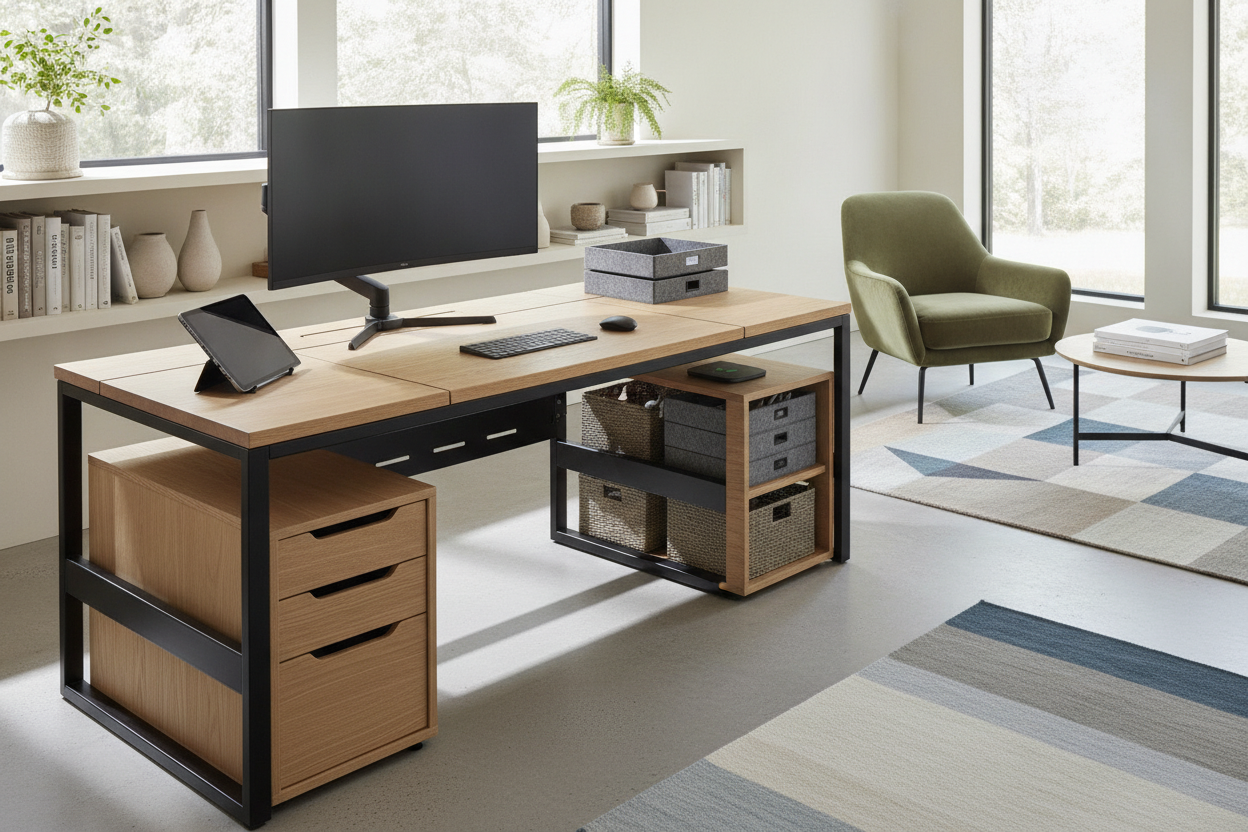
Understanding the 55-Inch Desktop Footprint in Modern Workspaces
Choosing the right desktop size is a foundational decision when designing a home office, creative studio, or gaming station. Among modular furniture systems, a 55-inch tabletop span represents a versatile middle ground. It expands significantly beyond compact 36-inch desk configurations without dominating a room the way oversized executive desks often do.
A 55-inch width provides sufficient horizontal clearance to organize everyday productivity essentials comfortably. Whether positioned along a bedroom wall, tucked inside a multipurpose guest room, or set as the focal point of a dedicated study, this mid-sized footprint accommodates modern technological needs while respecting ambient floor flow.
Depth plays a complementary role in determining comfort. When paired with standard depths between two and two and a half feet, a 55-inch surface provides ample focal distance for screens, leaving space for keyboard trays, writing mats, and task lighting without forcing an uncomfortable posture.
Surface Real Estate: Dual Displays, Peripherals, and Clear Work Zones
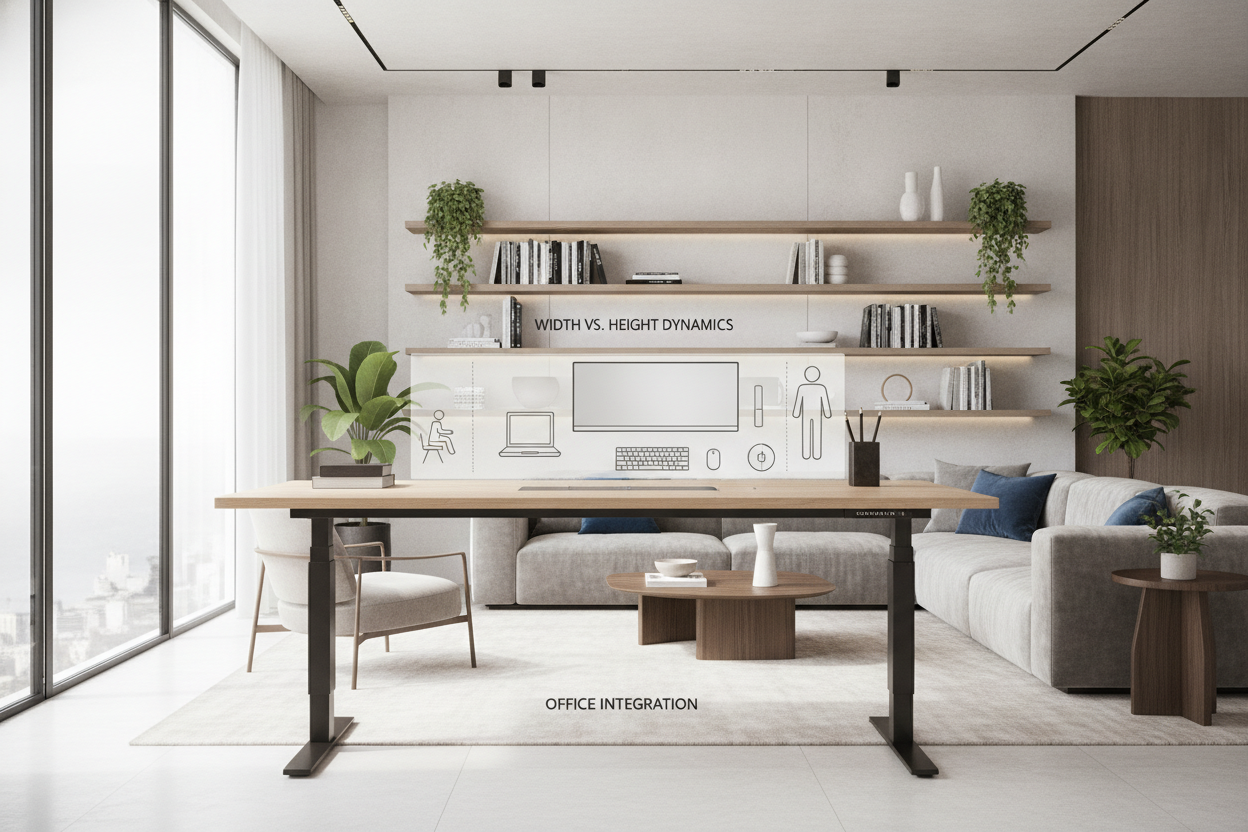
The primary advantage of a 55-inch work surface is the ability to establish clear functional zones. Dividing the tabletop into dedicated task areas prevents visual clutter and streamlines daily transitions between digital and analog tasks.
- Screen Arrangements: A 55-inch width comfortably holds side-by-side computer monitors or a single ultrawide panel alongside a compact laptop stand.
- Primary Input Zone: The central span accommodates a full-sized keyboard and wide mousepad while preserving wrist support along the front edge.
- Secondary Peripheral Zones: Flanking areas provide natural positions for desktop audio monitors, reference books, charging docks, or task lamps.
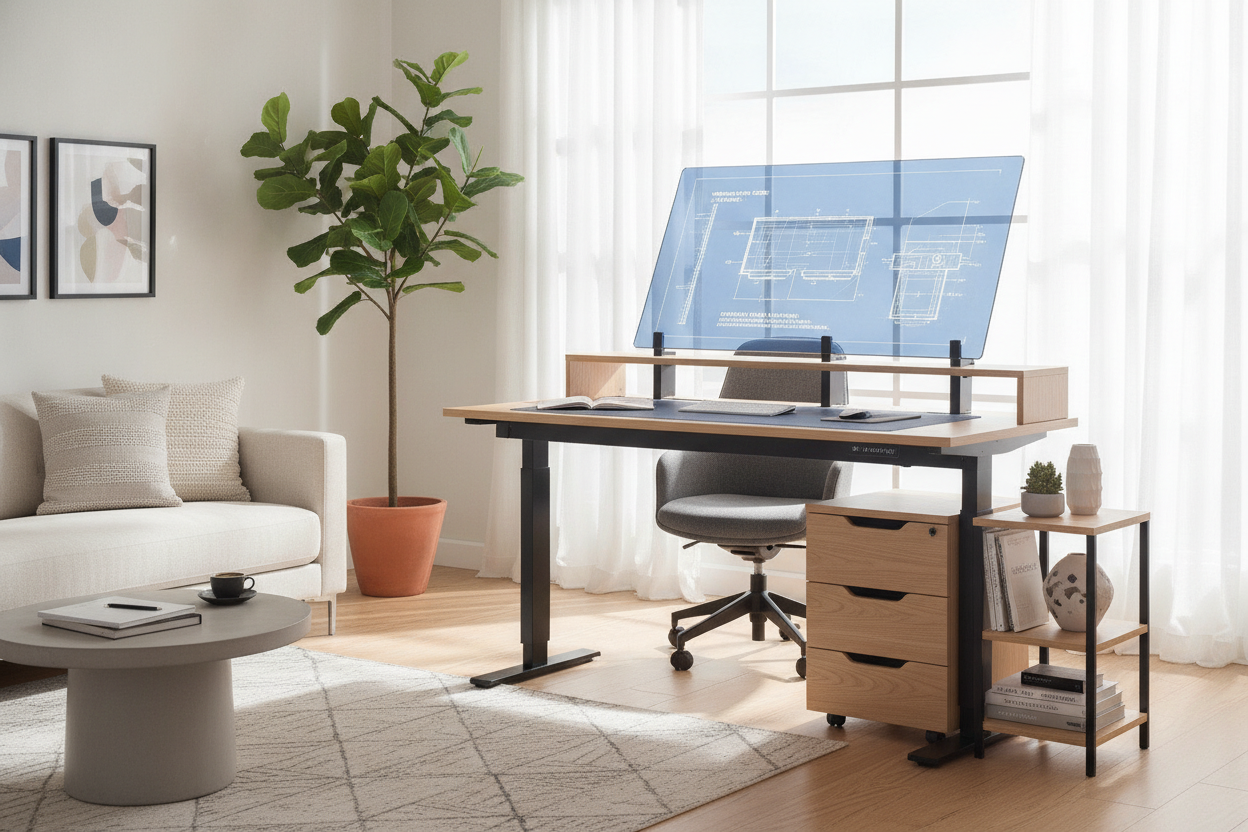
- Vertical Expansion: For users who need additional display space without sacrificing flat surface area, styling modular desk surfaces with top shelving offers an elevated plane for accessories, lighting, and decor.
Maintaining clear cable paths across this span is essential. Utilizing surface grommets or rear drop channels keeps power and data lines directed toward under-desk routing baskets, preserving an open and intentional visual aesthetic.
Underframe Geometry: Legs, Drawer Units, and Span Support
Modular desk components allow for diverse underframe layouts, but matching structural support to the span width is critical for long-term stability. Across a 55-inch span, the distribution of weight from monitor mounts and hardware requires thoughtful base selection.
When comparing open modular tables to enclosed roll-top desks, open modular tables provide superior legroom and flexible reconfiguration options. Common base layouts include:
- Four-Leg Configurations: Tubular steel or solid wood corner legs maximize open floor space beneath the surface, ideal for minimalist setups or dynamic seating.
- Trestle and A-Frame Bases: Trestles add architectural stability and often feature integrated lower shelves for computer towers or power hubs.
- Hybrid Drawer-Unit Bases: Replacing one or both leg pairs with modular drawer pedestals combines heavy foundation support with high-density utility storage.
For modular tables supporting concentrated central weight, such as heavy dual-arm monitor clamps, incorporating a central under-desk stiffener rail or an offset middle support leg helps prevent structural deflection over years of continuous use.
Tabletop Material Choices: Lightweight Cores vs. Solid Composites
Modular tabletops in the 55-inch class are commonly engineered using different internal structures, each presenting specific considerations for everyday use and accessory mounting.
Hollow Honeycomb Paper Cores: Many budget-friendly, lightweight flat-pack surfaces utilize an internal honeycomb structure framed by engineered board and wrapped in a printed laminate skin. These tops are easy to transport, assemble, and reposition. However, they are sensitive to high-pressure point loads. Users mounting heavy clamped monitor arms should use structural reinforcement plates to distribute clamping pressure over a wider surface area.
Particleboard and Medium-Density Fiberboard (MDF): Composite fiberboard cores provide consistent internal density throughout the entire slab. While heavier to lift and reposition, solid composite surfaces offer robust screw retention and withstand edge-mounted accessory clamps without requiring external reinforcement plates.
Regardless of core type, durable melamine or thermofoil edge-banding protects against moisture intrusion and daily wear along high-contact front edges.
Room Fit and Spatial Blueprints for Mid-Sized Desks
Integrating a 55-inch workstation into an existing room requires balancing personal workflow with household traffic paths. Consider these three common placement layouts:
- Perimeter Wall Placement: Aligning the desk flush against an interior wall anchors the workspace and provides easy access to wall outlets. Ensure adequate clearance for baseboard trim so the tabletop sits cleanly against the wall surface.
- Window-Perpendicular Positioning: Placing the short edge of the desk against a window wall introduces natural side illumination while preventing direct screen glare and optical fatigue during long work sessions.
- Floating Workspace Layout: In larger rooms, positioning the desk away from walls creates an open executive feel. For floating setups, prioritize under-desk cable trays and modesty panels to keep wire bundles concealed from all viewing angles.
Complementary Storage Strategies to Maximize Worksurface Clarity
While a 55-inch desk offers generous space, keeping the surface clear of auxiliary supplies ensures sustained mental clarity and productivity. Pairing the workstation with strategic peripheral furniture prevents the tabletop from becoming a catchment zone for paperwork and daily miscellany.
Vertical wall organization, such as modular pegboard panels or floating shelves placed directly above the desk, keeps daily tools within arm's reach while preserving the flat work plane. For dual-purpose environments where study, work, and personal grooming intersect, exploring multipurpose storage desk alternatives provides inspiration for concealing accessories beneath integrated access panels.
By combining a balanced 55-inch work surface, reliable underframe geometry, and coordinated surrounding storage, you create a personalized workstation engineered for productivity, ergonomics, and long-term durability.

Laisser un commentaire
Ce site est protégé par hCaptcha, et la Politique de confidentialité et les Conditions de service de hCaptcha s’appliquent.