


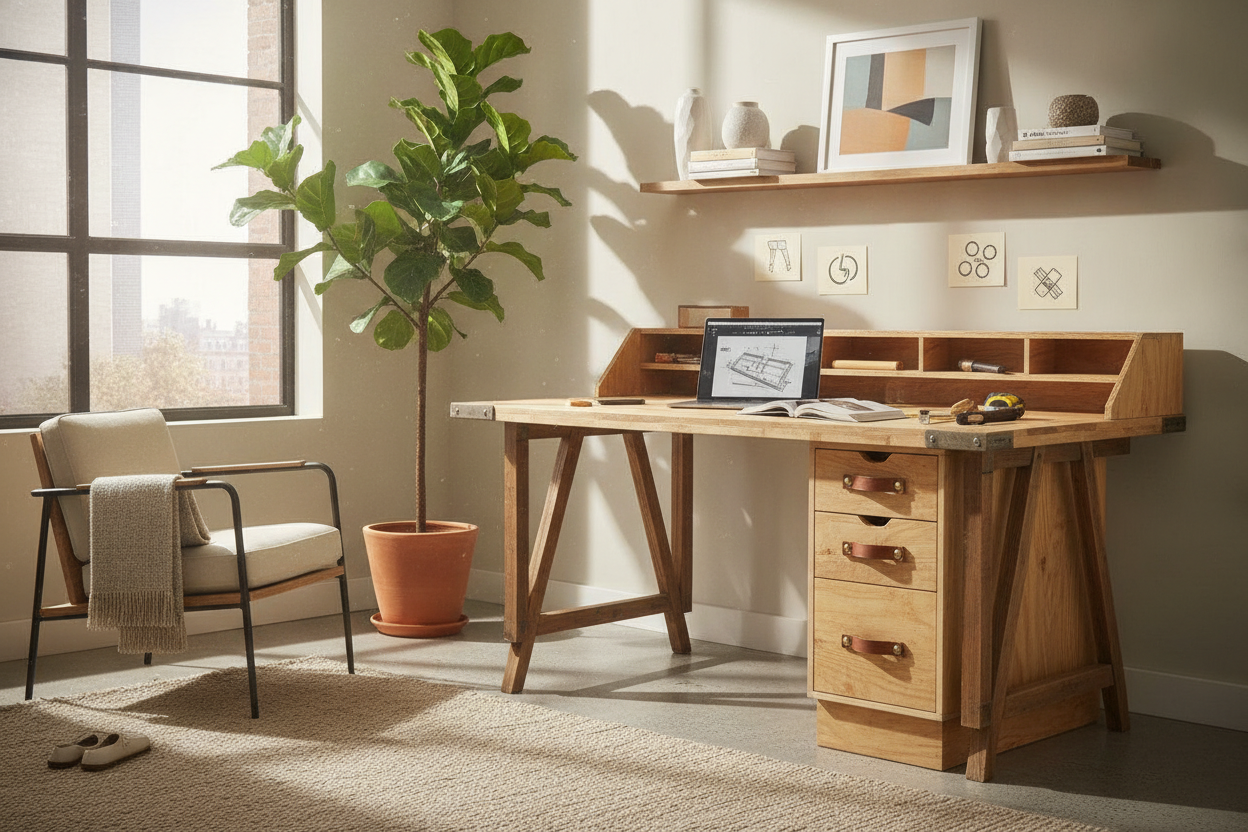
I spent three weeks staring at a laptop perched on a stack of shoe boxes because I couldn't find a workspace that didn't cost a month's rent or look like it was made of hardened cardboard. After 47 browser tabs and a mild breakdown over shipping costs, I decided to take matters into my own hands and try a diy desk. I figured it would be a simple weekend project, a custom desk build that would save me money and look like a high-end designer piece.
- Don't skip the support: Long spans of wood will sag without a center strut.
- Stability over style: Hairpin legs look great but often lead to a shaky typing experience.
- Seal it properly: Raw wood and coffee condensation are a recipe for disaster.
- Check the math: Sometimes buying a pre-made solid wood piece is actually cheaper than a diy desk build.
Why I Finally Decided to Build My Own Desk
The frustration started when I realized that most 'affordable' options were just particle board with a wood-grain sticker. I wanted something real—a solid wood desk that wouldn't peel or wobble when I bumped it. I spent hours scrolling for a writing computer desk that fit my weirdly narrow alcove, but everything was either too big or too flimsy. That's when I fell down the rabbit hole of how to make a desk using a butcher block and some metal legs.
I convinced myself that making a desk would be a rite of passage. I watched every youtube diy desk tutorial I could find and convinced myself that a home built desk was the only way to get exactly what I needed. I headed to the hardware store with a trunk full of hope and a credit card ready for a cheap diy desk project that, in hindsight, wasn't actually that cheap.
Mistake 1: Underestimating the Sag Factor
When you are learning how to build a desk from wood, no one really talks enough about the 'sag factor.' I bought a 74-inch birch butcher block for my diy home office desk. It looked glorious and heavy, so I assumed it was indestructible. I attached two legs at the very ends and called it a day. Within a month, my homemade wood desk had a noticeable 1/4-inch dip in the middle where my heavy monitor sat.
If you're building a desk from scratch with a long span, you need an apron or a center support. Wood is a natural material that moves and bends under pressure. Skipping a simple support rail turned my wood desk build into a literal curve. If you're doing a diy work desk that’s longer than 60 inches, please, for the love of your monitor, add a support beam underneath.
Mistake 2: Picking Legs Based Only on Pinterest Vibes
I fell for the aesthetic. I wanted that mid-century modern look, so I chose thin, three-rod hairpin legs for my simple desk diy. They looked incredible in photos. In reality? My homemade office desk felt like it was on a cruise ship during a storm. Every time I typed a slightly aggressive email, my coffee would ripple and my monitors would oscillate.
A desk simple design shouldn't sacrifice stability. While those legs are fine for a small desk diy or a side table, they aren't meant for the weight and movement of a daily workstation. When making an office desk, square frame legs or H-frame legs are almost always the better choice. They provide the lateral stability you need so your build an office desk project doesn't end up feeling like a card table.
Mistake 3: Thinking Raw Wood Would Survive My Coffee Habit
I loved the pale, natural look of the raw birch. I thought a quick coat of furniture wax would be enough to protect my wood diy desk. I was wrong. The first time I set down a cold glass of water, the wood soaked up the condensation instantly. Within 48 hours, my how to build wood desk experiment had a permanent grey ring that no amount of scrubbing could fix.
When you make your own desk, polyurethane is your best friend. It might take longer to dry, and it might smell a bit, but it’s the only thing that creates a real barrier. If you're making a wood desk for daily use, you need a finish that can handle heat, spills, and the occasional pen mark. Don't let your diy wood office desk be ruined by a single iced latte.
The Verdict: Is a Custom Build Actually Worth It?
So, was the diy desk design worth the sweat and the sawdust? Honestly, it depends on what you value. I loved the process of building my own desk, but by the time I bought the wood, the legs, the sander, the stains, and the sealant, I had spent nearly $400 and two full weekends. For some, the satisfaction of a home made desk is worth every penny and every mistake.
However, if you just want a workspace that works, sometimes it's smarter to skip the woodshop desk drama. You can find a solid wood writing desk that is already sanded, leveled, and sealed for a similar price. Before you pick up a drill, take a moment to select a home office desk strategy that fits your actual lifestyle. If you enjoy the grit of a diy workstations project, go for it. But if you just want to sit down and work without a wobbling monitor, there's no shame in buying pre-made.
How long does it take to build a desk?
If you're using a pre-cut top like butcher block, you can assemble it in an afternoon. However, properly sanding and applying three coats of sealant takes about 3 to 4 days including drying time. Don't rush the finish or you'll regret it.
What is the cheapest way to make a desk?
The classic 'hacked' desk is a solid core door or a thick piece of plywood over two filing cabinets or sawhorse trestles. It’s a great makeshift desk that offers tons of surface area for very little cash.
Is a DIY desk cheaper than buying one?
Not always. If you already own tools like a drill and a sander, you can save money. But if you have to buy everything from scratch, a mid-range solid wood desk from a retailer is often more cost-effective than a custom diy desk.



Laisser un commentaire
Ce site est protégé par hCaptcha, et la Politique de confidentialité et les Conditions de service de hCaptcha s’appliquent.