


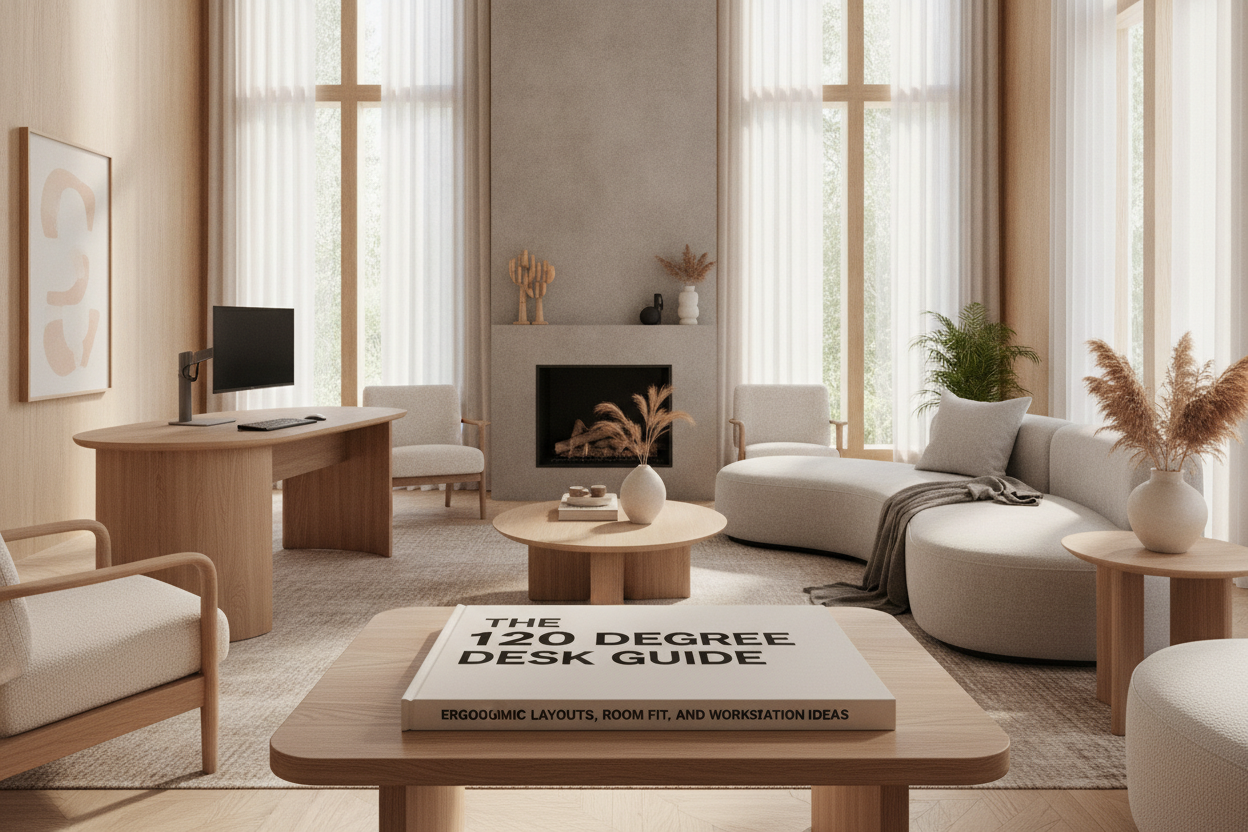
When planning a productive workspace, traditional rectangular tables and standard ninety-degree corner setups often dominate the conversation. However, the 120 degree desk has emerged as a compelling ergonomic alternative that rethinks how furniture interacts with natural human movement. By replacing sharp right angles with an open, shallow bend, a 120-degree workstation creates a balanced cockpit effect that keeps screens and tools within easy visual and physical reach.
What Is a 120 Degree Desk and How Does It Work?
The Geometry of a 120-Degree Angle Workstation
A 120 degree workstation features two desktop wings joined at an obtuse 120-degree angle rather than a traditional perpendicular corner. This geometry creates a gentle, wide arc. When seated in the center cockpit, the user is surrounded by a continuous working surface where both left and right wings remain directly in the field of view without requiring aggressive upper-body twisting.
120-Degree Desks vs. 90-Degree L-Shaped Desks
Traditional L-shaped desks fit neatly into square architectural corners, but their deep ninety-degree corner can sometimes create dead space where reach is limited. A standard corner option like a 55 inch l shaped corner desk with storage is ideal for hugging perpendicular walls and maximizing tight footprints. In contrast, a 120 desk provides a wider central opening, preventing that boxed-in feeling while offering continuous desktop depth across both sides of the work surface.
Key Ergonomic and Spatial Advantages
Natural Arm Sweep and Monitor Focal Distance
The core benefit of an angled workstation lies in its alignment with human biomechanics. When you pivot your forearm or swivel your chair, your arms naturally describe an arc. A 120-degree desk mirrors this curve, allowing dual or triple monitor arrangements to maintain an equal focal distance from your eyes. This setup reduces neck craning and keeps essential items like sketchpads, keyboards, and secondary screens within primary reaching zones.
Open-Concept Pods vs. Solo Home Office Placement
In commercial and modern studio spaces, 120-degree units can be clustered into three-desk pods or expansive honeycomb layouts. These clusters facilitate smooth team interaction while maintaining defined personal zones. For solo home offices, placing an angled workstation against a wide accent wall or floating it in the center of the room creates an open executive aesthetic without closing off ambient light or visual space.
Room Fit and Clearance Planning for 120-Degree Workstations
Measuring Footprint and Diagonal Depth
Because the wings of a 120 degree desk flare outwards, calculating the required floor area involves measuring both total width and diagonal depth. Unlike linear setups—such as a 90 6 inch wide computer desk with glass cabinets that runs flush along one straight wall—an angled table extends into the room's diagonal plane. Ensuring adequate clearance on either side prevents the outer wings from crowding nearby doors or architectural trim.
Traffic Flow and Chair Clearance Angles
Maintaining comfortable walkways is essential when integrating non-linear furniture. Swivel chairs need sufficient clearance behind the angled cockpit to push back and rotate without catching on baseboards or nearby cabinets. Leaving open buffer zones behind the primary seating point ensures that traffic lanes through the office stay natural and unhindered.
Sit-to-Stand Options: 120-Degree Standing Desks
Three-Leg Lift Stability and Weight Distribution
A motorized 120-degree standing desk typically relies on a synchronized three-leg lifting frame. Distributing structural support across three points ensures stable elevation, even when balancing heavy dual-monitor arms and multiple desktop accessories across an angled surface.
Cable Routing and Under-Desk Motor Clearance
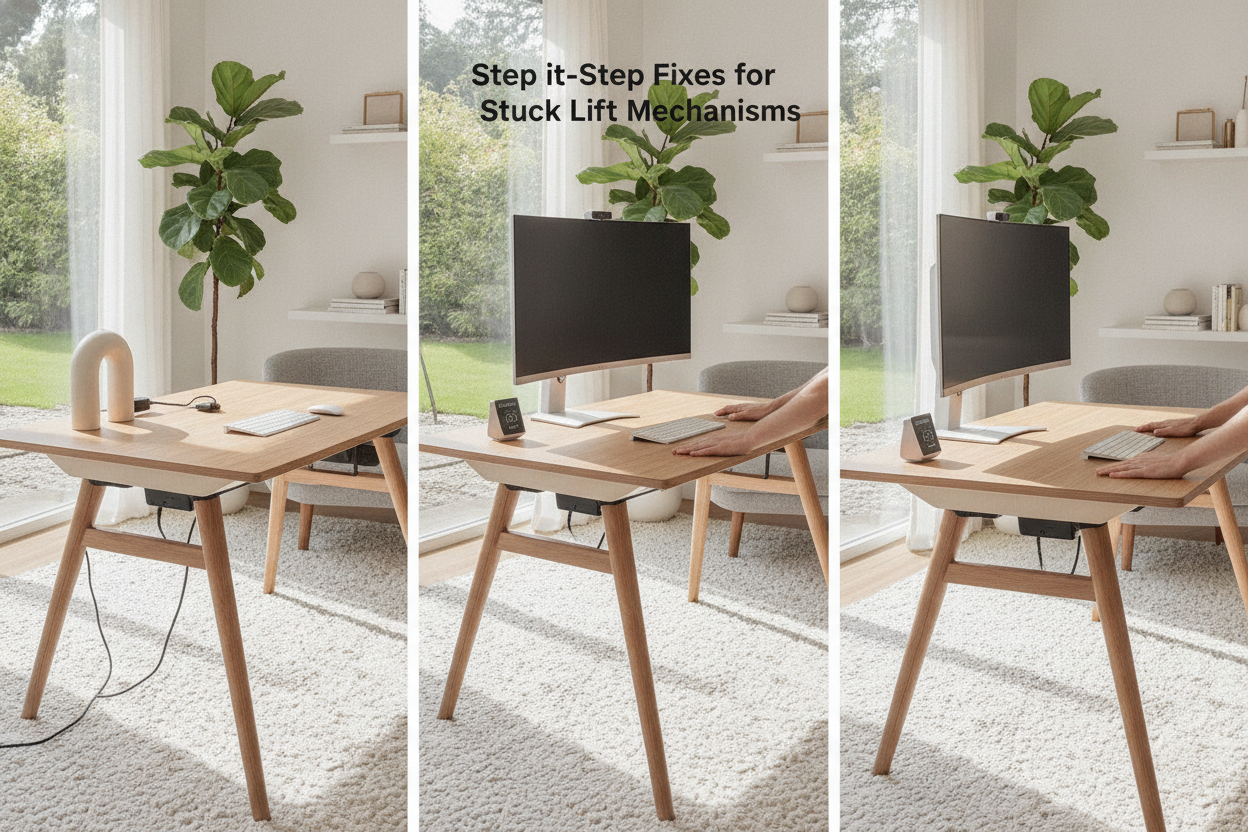
Managing cords along an angled motorized frame requires thoughtful planning. Using articulated cable spines or flexible under-desk trays allows wires to travel neatly from moving worktops down to wall outlets. When designing a standing desk setup that actually looks good, routing cords along the inner frame rails keeps the silhouette clean from every viewpoint. For spaces where an angled motorized frame is impractical, a linear alternative like a 71 w height adjustable standing desk provides expansive width and smooth height adjustment on a conventional rectangular footprint.
Storage and Organization Strategies for Angled Workspaces
Under-Desk Mobile Pedestals and Returns
Because angled frames lack standard right-angle support drawers, mobile storage pedestals provide the most versatile solution. Rolling file cabinets tucked beneath the outer wing keep papers organized without restricting legroom in the center seating pocket. Placing matching low cabinets adjacent to the desk preserves clear desktop space for computers and creative tools.
Wall-Mounted Shelving and Side Credenzas
Pairing an angled desk with vertical shelving or a freestanding credenza creates a balanced room layout. Exploring fresh decor concepts can help you elevate your space designer ideas for standing desk layouts by balancing practical file storage with display areas for greenery and accent lighting.
Decision Checklist: Is a 120 Degree Desk Right for Your Space?
When to Choose a 120-Degree Station
- You regularly work across multiple monitors and desire uniform focal distance.
- Your room accommodates diagonal desk placement or center-room floating.
- You prefer a continuous, curved cockpit over a sharp ninety-degree corner.
- You are planning a collaborative open office or multi-person layout.
When a Linear or Standard Corner Desk Works Better
- Your room features tight, square corners that require flush placement against two meeting walls.
- You need built-in modular overhead hutches designed specifically for rectangular tops.
- Floor area is narrow and requires strict linear alignment along a single wall.

Laisser un commentaire
Ce site est protégé par hCaptcha, et la Politique de confidentialité et les Conditions de service de hCaptcha s’appliquent.