


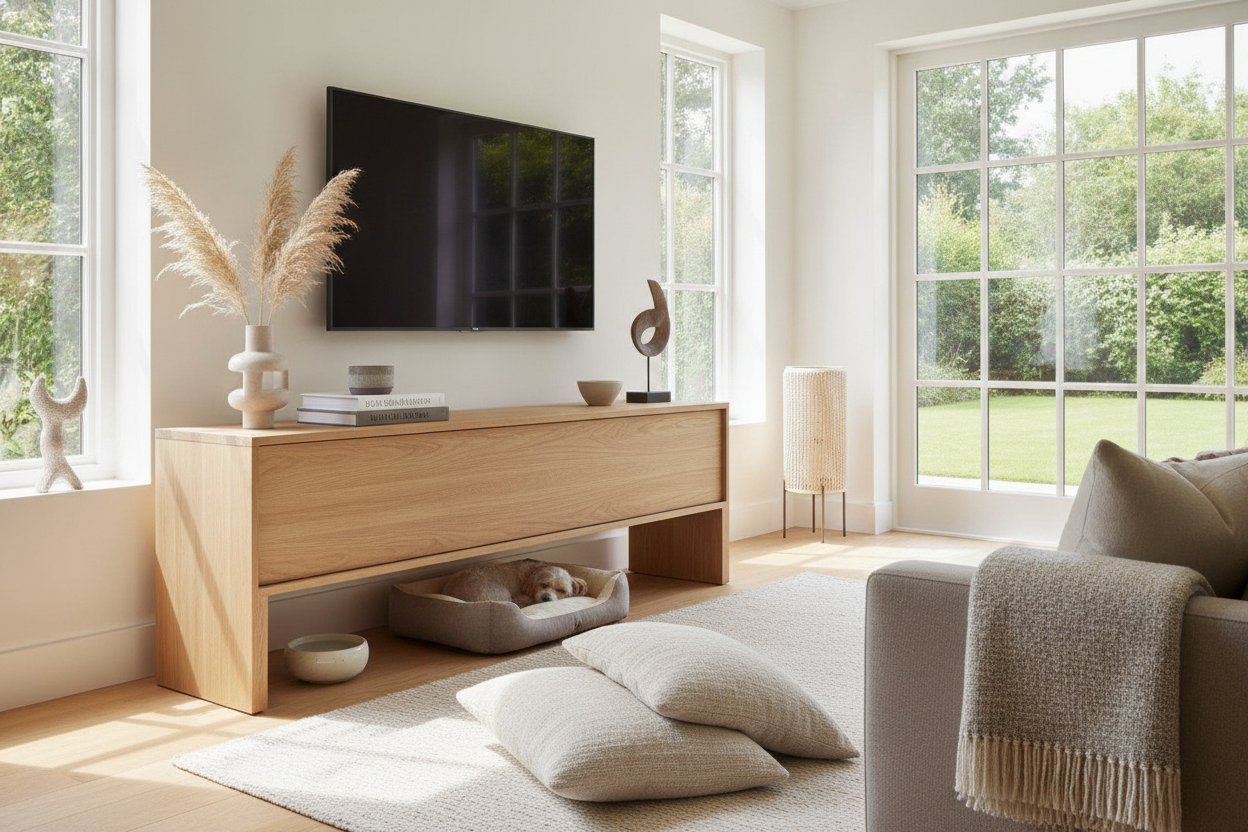
I spent three years staring at a TV that sat roughly four inches above my baseboards because I thought it looked 'cool' and 'mid-century.' My chiropractor loved it; my neck hated it. If you have a sofa with deep cushions or a bed with a thick mattress, that low-slung aesthetic is a recipe for a permanent crick in your neck.
Finding a tall console table for tv was less about following a trend and more about reclaiming my comfort. It turns out, your TV should actually be at eye level when you are seated, not at the level of your shins. If you are tired of stacking books under your screen just to see the subtitles, it is time to reconsider the height of your media setup.
Quick Takeaways
- Standard low units are often 18-22 inches; tall consoles hit the 30-36 inch sweet spot.
- Higher placement protects expensive screens from pets and toddlers.
- Vertical height naturally creates more room for actual storage.
- A taller piece can act as a room divider in open-concept spaces.
The Problem With Trendy, Ankle-High Media Units
We have all seen the Pinterest boards filled with ultra-minimalist, flat-packed units that barely clear the floor. While traditional low-profile TV stands look sleek in a vacant apartment, they fail the 'real life' test. Unless you are sitting on a beanbag chair, you are likely looking down at your screen, which is the ergonomic equivalent of staring at your phone for six hours straight.
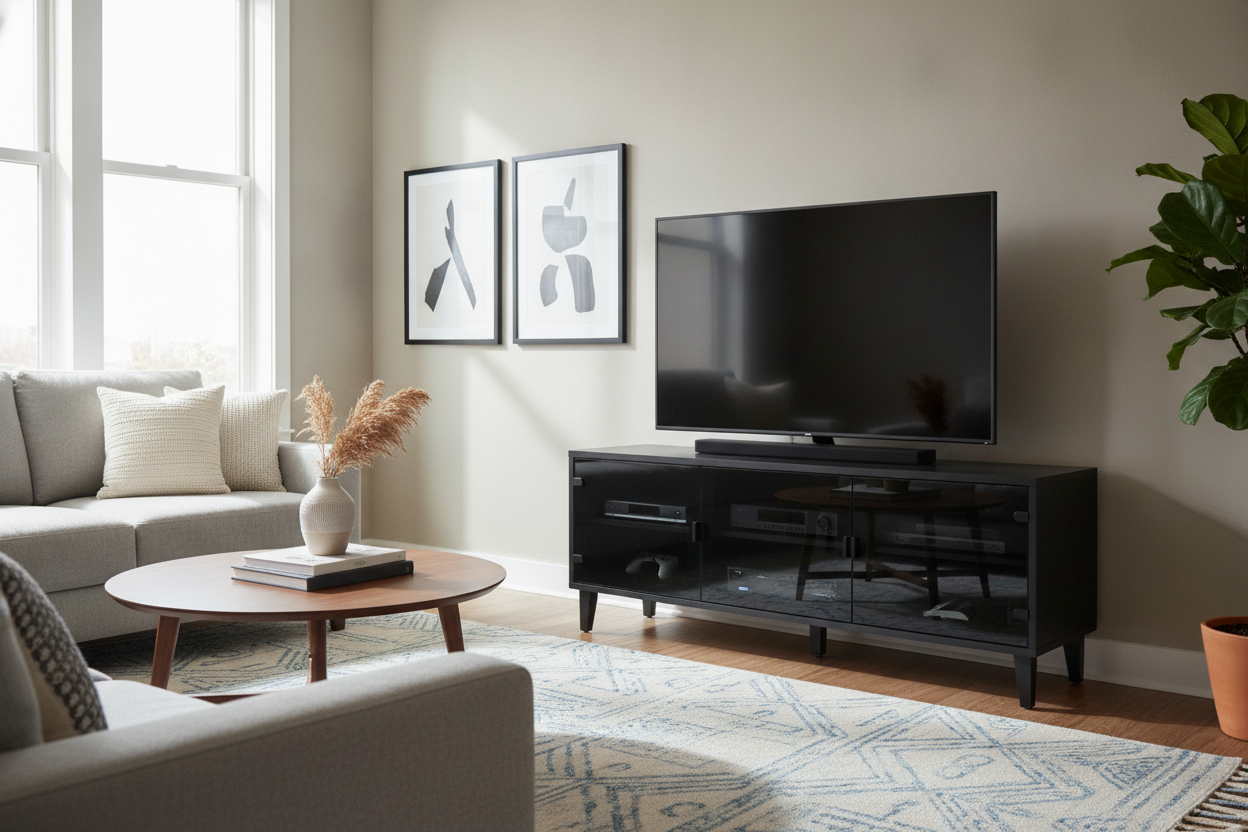
These units also leave a massive, awkward gap on your wall. You end up needing to buy more art just to fill the void above the TV. A taller unit anchors the room better and feels proportional to the scale of modern 65-inch-plus screens. Most low-profile pieces are made of thin particle board that sags under the weight of a decent soundbar; a taller console usually offers more structural integrity.
The 'Craning Neck' Dilemma (And How Height Fixes It)
Ergonomics is a boring word for a very painful problem. When you use a tv console table tall enough to meet your line of sight, your shoulders drop and your spine aligns. This is especially true if you like to watch TV in bed. A standard dresser is usually 30 inches high for a reason—it is the height we naturally look at when propped up on pillows.
In a living room, a taller stand means you aren't constantly dodging the coffee table decor to see the bottom of the frame. You can finally buy that oversized candle or vase without it blocking the score during the game. It is a small shift in inches that makes a massive difference in how long you can binge-watch without needing a heating pad.
Toddlers, Tails, and Screen Safety
If you have a dog with a 'happy tail' or a toddler who thinks every screen is a touchscreen, height is your best friend. My 80-pound Lab once cleared a $400 soundbar off a low shelf with one enthusiastic wag. That was the day why I ditched my low console and moved everything up to a safer altitude.
Elevating the TV puts the most fragile (and expensive) tech in your house out of the 'impact zone.' It also keeps sticky fingerprints away from the glass. You don't need a wall mount to get safety; you just need a sturdy, high-clearance base that keeps the chaos at floor level.
Saying Goodbye to Clutter with Extra Drawers
Vertical space is wasted space if you aren't using it for storage. A tall tv console with storage gives you double the real estate of a standard unit. Instead of one measly shelf for a dusty DVD player, you get deep drawers for board games, extra blankets, and that tangled mess of HDMI cables we all pretend doesn't exist.
I personally prefer using a solid wood sideboard with adjustable shelves. Sideboards are secret weapons for media storage because they are built to hold heavy china, meaning they won't wobble when you set a heavy OLED on top. Plus, the adjustable shelves mean you can actually fit a modern gaming console without it overheating in a tiny cubby.
How to Style High TV Stands in the Living Room
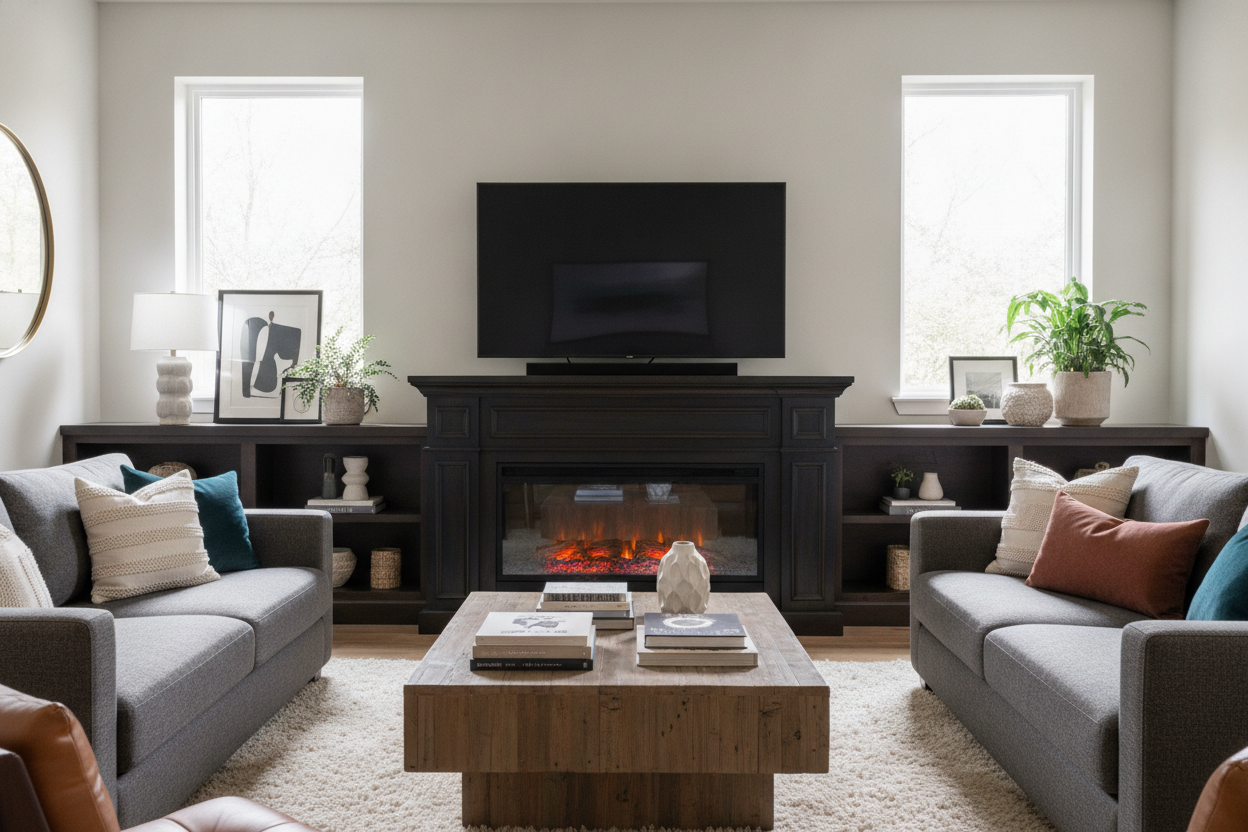
The biggest fear people have with high tv stands living room setups is that the furniture will look like a giant 'blob' against the wall. The trick is balance. Since the console is taller, you want to keep the decor on top of it simple. One medium-sized plant on one side and a stack of two books on the other is usually enough.
Use the height to your advantage by tucking baskets underneath if the unit has legs. This softens the look and provides a spot for dog toys or throw pillows. For cord management, don't just let them dangle. Use adhesive clips along the back of the legs to keep the silhouette clean. If the piece is solid to the floor, it acts as a great visual anchor for a large area rug.
My Honest Experience
I’ll be honest: my first attempt at a tall console was a disaster because I didn't measure the depth. I bought a beautiful vintage hall tree thinking it would work, but the base was only 12 inches deep. My TV stand was 11 inches. One bump and the whole thing would have toppled. I learned the hard way that for a tall unit, you want a depth of at least 15-18 inches to keep the center of gravity stable. Don't sacrifice stability for height.
FAQ
Is a 36-inch stand too high for a 65-inch TV?
It depends on your seating. If your sofa is standard height, 36 inches is the upper limit. It works perfectly if you are viewing from a distance of 8 feet or more, but might feel a bit high if you are in a tiny room.
Can I use a entryway console for a TV?
Only if the weight capacity allows it. Entryway tables are often 'leggy' and thin. Check the specs—most TVs weigh between 40 and 80 pounds, and you don't want a top-heavy setup.
How do I hide cables on a tall stand?
If the stand has open legs, use cable sleeves that match your wall color. If it is a solid cabinet, you can drill a 2-inch hole in the back panel (if it doesn't have one) to route everything internally.

Laisser un commentaire
Ce site est protégé par hCaptcha, et la Politique de confidentialité et les Conditions de service de hCaptcha s’appliquent.