


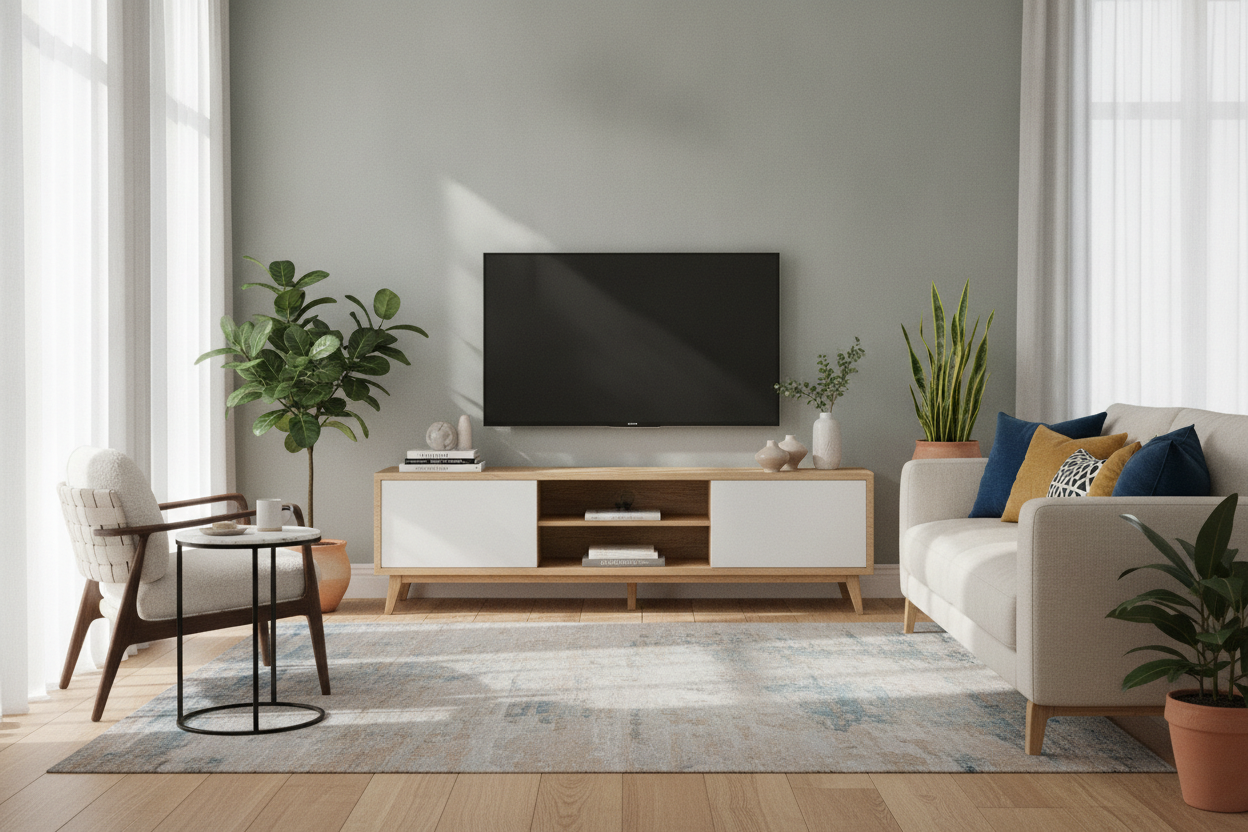
I spent three weeks staring at my orange-tinted oak floors, holding up wood samples like a madman. Everything looked slightly off—either too grey, too red, or just 'off-brand' brown. That is when I realized buying a tv stand wood and white was not just a style choice; it was a survival tactic for my sanity.
Quick Takeaways
- White bases act as a visual buffer between clashing wood tones.
- Two-tone units feel significantly lighter in small apartments.
- Solid wood tops provide warmth without the 'stain-matching' headache.
- Avoid all-white units if your walls are already surgical-grade bright.
The 'Wood Floor Curse' Nobody Warns You About
Most people think buying a wood TV stand is easy until the delivery truck leaves. You unbox it, set it down, and realize your floor has yellow undertones while your new stand has pink ones. It looks cheap, even if you spent a fortune on it. This is the 'Wood Floor Curse.'
Trying to find solid wood white tv stands or matching all-wood units to builder-grade flooring is a recipe for a room that feels busy for all the wrong reasons. When you have two different wood species competing for attention within three inches of each other, nobody wins. It creates a visual vibration that makes the room feel cluttered before you even put a single remote on the shelf.
Why the Two-Tone Approach Works (When Nothing Else Does)
A wood and white media console solves this by breaking the line of sight. When you browse traditional TV stands, you are usually looking at a massive block of brown sitting on a sea of brown. It is heavy, dated, and highlights every mismatch in your decor.
The white base of a two-tone unit acts as a visual palate cleanser. It separates the floor from the furniture. By introducing a neutral, non-wood element at the base, you give the eye a place to rest. This allows the wood accents on the piece to exist independently of the floor, rather than clashing with it. It is the ultimate design cheat code for renters stuck with 'bossy' flooring.
The Magic of the Floating Top
The white with wood top tv stand is my personal favorite version of this trend. By keeping the wood tone on the top surface—usually 18 to 24 inches off the ground—you remove it from the immediate vicinity of the floor. This 'floating' wood element can be a completely different species or stain than your floor, and it will not matter because there is a white buffer in between.
I have used this setup in three different apartments with three different floor types. Whether it is grey LVP or 1970s parquet, the wood top provides that organic, high-end feel of white wood tv stands without the stress of carrying a floor plank to the furniture store for a color match.
Storage Without the Bulk
Big furniture can swallow a room. White wood entertainment centers have a magical way of disappearing against a light wall, even if they are six feet wide. If you have a massive collection of tech, gaming consoles, or books, you can even scale up to an entertainment center with overhead cabinets.
Because of the white-and-wood contrast, these larger pieces do not feel like a giant mahogany coffin in your living room. The white sections reflect light, while the wood accents—maybe a shelf or the cabinet doors—add enough texture to keep the unit from looking like a piece of office equipment. You get the storage of a solid wood white entertainment center without the visual weight that makes a small room feel like a closet.
When You Actually Should Not Buy One
Look, if your house is already a 'white box' with white walls, white rugs, and light floors, adding more white might make it feel like a hospital. In those cases, you might want more grounding. I have actually written about why I once swapped my light unit for a solid wood TV stand black when the room felt too floaty and ethereal.
Also, if you are strictly into the 'Modern Farmhouse' look, be careful. Some white with wood tv stand designs can lean very heavy into the distressed, shiplap-adjacent aesthetic. If you want something more modern, look for clean lines, push-to-open doors, and tapered legs rather than chunky moldings and 'antique' finishes.
My Honest Experience
I once bought a 'honey oak' stand for a room with 'natural oak' floors. Total disaster. The stand looked like it was dipped in turmeric once it hit the light of my living room. I ended up painting the base white myself and keeping the top wood. It transformed the room instantly. I learned that you do not need to match; you need to complement. If I were doing it again, I would just buy a pre-finished two-tone unit and save myself the weekend of sanding and fumes.
FAQ
Is white furniture hard to keep clean?
Surprisingly, white shows dust way less than black or dark wood. However, it does show scuffs and 'toe kicks' more easily. A quick wipe with a damp microfiber cloth usually handles it. Just avoid cheap paper-foil finishes that peel when they get wet.
Does a wood and white stand look too trendy?
Not if the proportions are right. This color combo has been around since the Mid-Century Modern era. Stick to simple silhouettes and avoid overly distressed 'shabby chic' finishes if you want it to last a decade.
What kind of wood top should I look for?
Aim for real wood veneers or solid wood tops like oak or walnut. Avoid the 'photo paper' wood grain you find on the cheapest units; it looks fake the second the sun hits it and you cannot repair it if it scratches.

Laisser un commentaire
Ce site est protégé par hCaptcha, et la Politique de confidentialité et les Conditions de service de hCaptcha s’appliquent.