


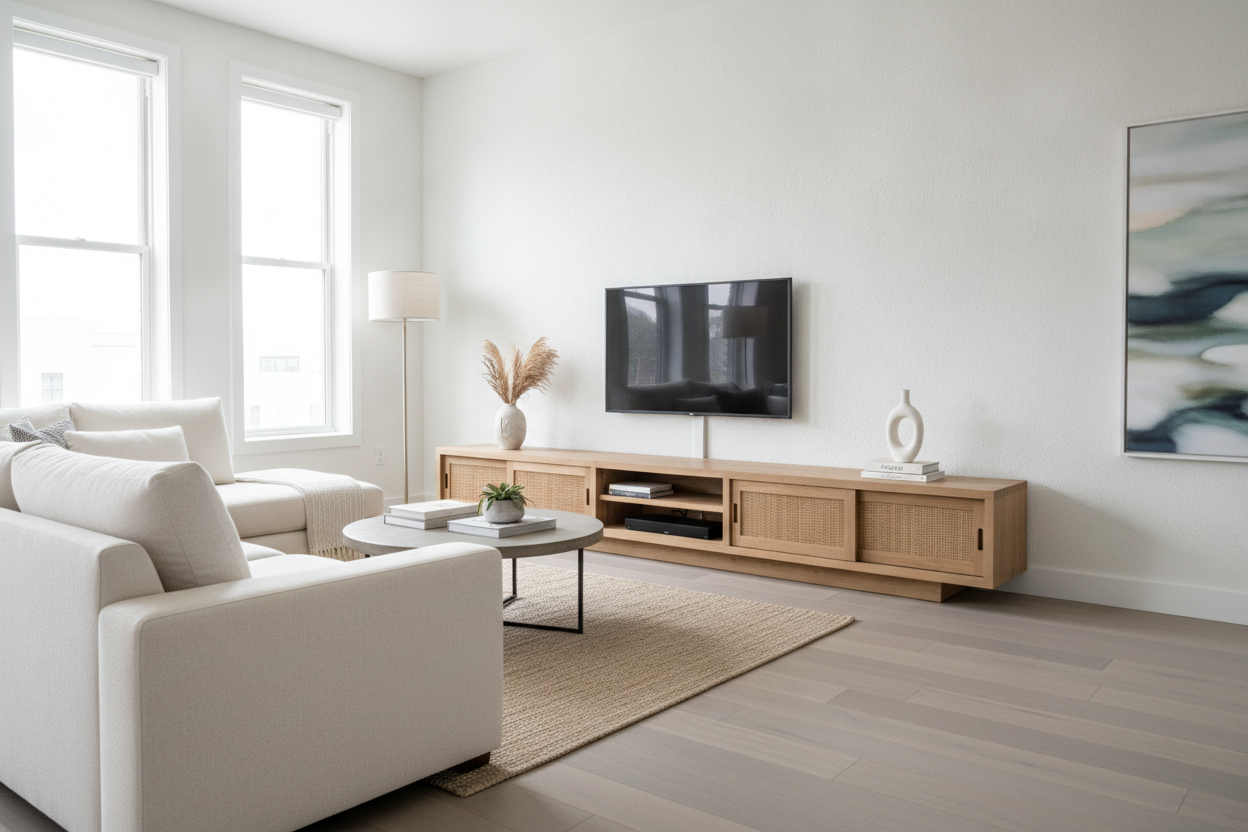
I remember moving into my first real apartment—a third-floor walk-up with a living room so narrow I had to measure my coffee table twice. I hauled in a hand-me-down media cabinet that was 24 inches deep and made of solid, dark oak. In that 12-by-14 space, it felt like I was living with a very large, very boring roommate who refused to move. It wasn't just the floor space; it was the visual weight. The room felt suffocated.
That was the day I ditched the 'unit' and started looking at tv benches. I realized that most of us are over-buying furniture for our tech. We buy these massive, towering consoles to hold a screen that is getting thinner every year. It makes no sense. Switching to a low-slung, airy bench changed the entire vibe of my home, and I've never looked back.
Quick Takeaways
- Low-profile benches create the illusion of higher ceilings and more floor space.
- A bench for tv use should always be at least 6 to 10 inches wider than the screen.
- Negative space underneath the piece prevents the room from feeling 'heavy.'
- Repurposed benches offer future flexibility—they can move to the entryway if you eventually mount the TV.
The Day I Realized My Media Center Was Suffocating My Room
I spent weeks wondering why my living room felt like a waiting room. I had the right rug, a decent sofa, and plenty of light. Then I sat on the floor to plug in a lamp and realized the culprit: my media console. It was a massive block of wood that reached halfway up the wall. It cut the room in half visually and left no breathing room for the actual decor.
Traditional furniture design hasn't quite caught up to how slim our tech has become. We don't need 20-inch deep cabinets to hold a 2-inch thick OLED screen. When I swapped that monster for a sleek television bench, the room suddenly felt five feet wider. I could see more of the baseboards, more of the floor, and the wall didn't feel like it was leaning in on me. It was a total perspective shift.
Why Using a Bench as TV Stand Is Actually Genius
The primary reason this works is height. Most traditional TV stands sit around 24 to 30 inches high. If you have a 55-inch or 65-inch screen, that puts the center of the display way above eye level. Unless you like neck strain, that's a problem. A bench as tv stand usually sits between 16 and 18 inches off the ground. This puts the screen at the perfect ergonomic height for someone sitting on a standard 17-inch-high sofa seat.
Beyond the ergonomics, there is the 'multi-purpose' factor. If you decide to wall-mount your TV next year, a bulky console looks empty and awkward underneath it. A bench, however, just looks like a bench. You can throw some leather-bound books on it, a few plants, or even use it as extra seating during a party. It’s furniture that evolves with you, rather than a specialized box that only does one thing.
The Visual Magic of a Low-Profile Television Bench
Designers talk about 'negative space' for a reason. When you use a t v bench with legs—something that sits 6 or 8 inches off the floor—your eye can see all the way to the wall underneath it. This trick fools your brain into thinking the room is larger than it is. It’s the opposite of a 'to-the-floor' cabinet that acts like a visual dead end. Pair a slim bench tv stand with a wall-mounted screen or a very thin pedestal base, and the whole setup practically disappears into the architecture of the room.
How to Turn a Bench Into a TV Stand (Without It Looking Accidental)
You can't just grab any random park bench and call it a day. Proportion is everything. The golden rule: the bench must be wider than the TV. If your screen hangs over the edges, it looks top-heavy and accidental. I aim for at least 5 inches of clearance on either side. For a 55-inch TV (which is roughly 48 inches wide), you want a bench that is at least 60 inches long.
Weight is the other factor. Cheap particle board benches meant for holding a few pairs of shoes will sag under the weight of a modern TV and a soundbar. Look for kiln-dried hardwoods or reinforced steel frames. If you are worried about the look, check out tips for styling carved wood TV stands; the same rules apply to benches. Use one end for the tech and the other for a stack of coffee table books or a sculptural object to balance the 'black box' of the screen.
Cord management is the final boss. Since a bench doesn't have a back panel, you’ll see the wires. My hack? Use adhesive cable clips along the back of the bench legs and a matching cord concealment sleeve. If the cables are the same color as your wall, they vanish.
My Favorite Wood TV Benches That Actually Hide Clutter
I know what you’re thinking: 'Where do I put the PlayStation?' You don't have to sacrifice storage just because you want a lower profile. A tv storage bench with a slatted front or sliding doors is the holy grail. It hides the plastic tech while allowing remote signals to pass through. I’m a huge fan of the large TV bench entertainment center style that uses a long, low silhouette but includes deep drawers for controllers and cables.
If you prefer an open wood tv benches look, go for deep woven baskets. You can slide two or three oversized seagrass baskets underneath the bench to hold blankets, board games, or routers. It looks intentional and organic. Also, consider styling a black wood TV stand or bench if you have a lot of black peripheral gear; the dark finish helps the tech blend in so the wood grain becomes the star of the show.
When You Definitely Shouldn't Use a Bench for TV
I love this look, but I’m honest about when it fails. If you have a toddler who is in the 'climbing everything' phase, a low bench for tv is basically a ladder to a very expensive disaster. Benches are also tricky if you have a massive 85-inch screen; the weight and scale usually require a specialized, heavy-duty console with center support legs.
Finally, if you’re a vintage audio nerd with a heavy tube amp and a turntable, a standard bench might not have the depth or the vibration dampening you need. But for the rest of us living in apartments or modern homes, the bench is the superior choice every single time.
FAQ
Is a bench strong enough to hold a TV?
Most solid wood or metal benches are rated for 200-300 lbs, which is plenty for a 50 lb flat screen. Just avoid thin MDF 'shoe cubbies' which can bow over time.
How wide should the bench be?
Aim for at least 6-10 inches wider than the TV. This prevents the 'mushroom' look where the TV looks too big for its base.
How do I hide cables on an open bench?
Run cables down the back of a leg using zip ties or adhesive clips. Use a cable box or a decorative basket on the bottom shelf to house the power strip and excess cord length.

Laisser un commentaire
Ce site est protégé par hCaptcha, et la Politique de confidentialité et les Conditions de service de hCaptcha s’appliquent.