

Entering an office desk store or browsing a digital catalog often presents an overwhelming array of finishes, silhouettes, and hardware configurations. While visual style is an immediate draw, selecting a workstation that supports daily productivity requires looking past surface veneer. A desk functions as the architectural core of your workspace, dictating how you move, where equipment sits, and how effectively you manage clutter throughout the workday.
Approaching an office desk shop with a structured spatial plan transforms the buying process from guesswork into deliberate design. By evaluating desk silhouettes, storage volume, material construction, and perimeter clearances before you finalize an order, you ensure that your new office desk balances personal comfort with long-term utility. Consulting a nice office desks guide can also clarify how visual balance interacts with practical everyday ergonomics.
Navigating the Modern Office Desk Store: Beyond Surface Appearance
Retail furniture environments group desks by broad marketing categories, yet functional requirements vary widely across home offices, shared corporate suites, and dedicated commercial environments. The primary mistake shoppers make is prioritizing aesthetic finishes over work volume and hardware requirements.
Before deciding to buy table desk units or elaborate executive stations, assess your daily equipment load. A workstation supporting multiple monitors, an external desktop tower, and desktop peripherals demands a very different foundation than a surface intended for a lightweight laptop and a notepad. Modern stores feature modular workstations, standalone writing tables, and storage-heavy credenzas, each built for distinct work styles. Clarifying your physical toolset establishes non-negotiable baselines for surface depth, structural rigidity, and wire routing pathways.
Workstation Profiles: Matching Desk Silhouettes to Room Architecture
The footprint of your workstation determines how accessible and open the room feels. Choosing among different office room desks requires mapping the footprint against natural walkways, window placements, and electrical outlets.
Compact Writing Desks and Perimeter Tables
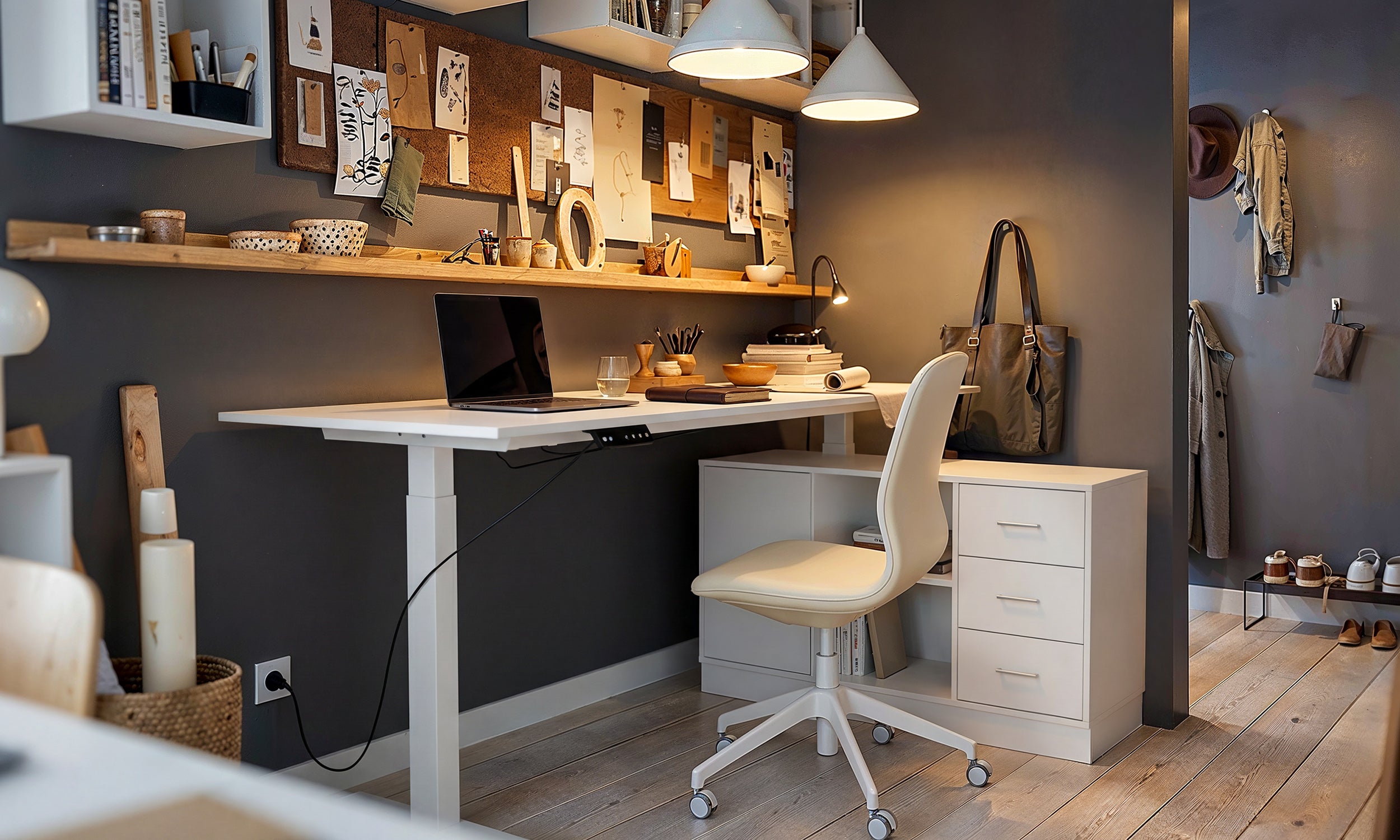
For hybrid spaces, guest bedrooms, or secondary study nooks, minimalist writing tables provide a practical surface without visually overwhelming the room. These desks generally feature slender leg assemblies, minimal aprons, and shallow profiles. While they offer exceptional spatial efficiency, they provide limited integrated storage, requiring users to rely on wall-mounted shelves or standalone mobile pedestals for auxiliary supplies.
Corner and L-Shaped Configurations
When you need expansive surface area without claiming the center of the room, corner designs maximize peripheral wall space. L-shaped layouts create distinct operational zones: one wing can host screens and input devices, while the secondary return provides a clear zone for reading, sketching, or paper sorting. Utilizing a dedicated corner office desk product helps establish clear task boundaries while taking full advantage of otherwise underutilized room angles.
Executive Stations and Counter Workstations
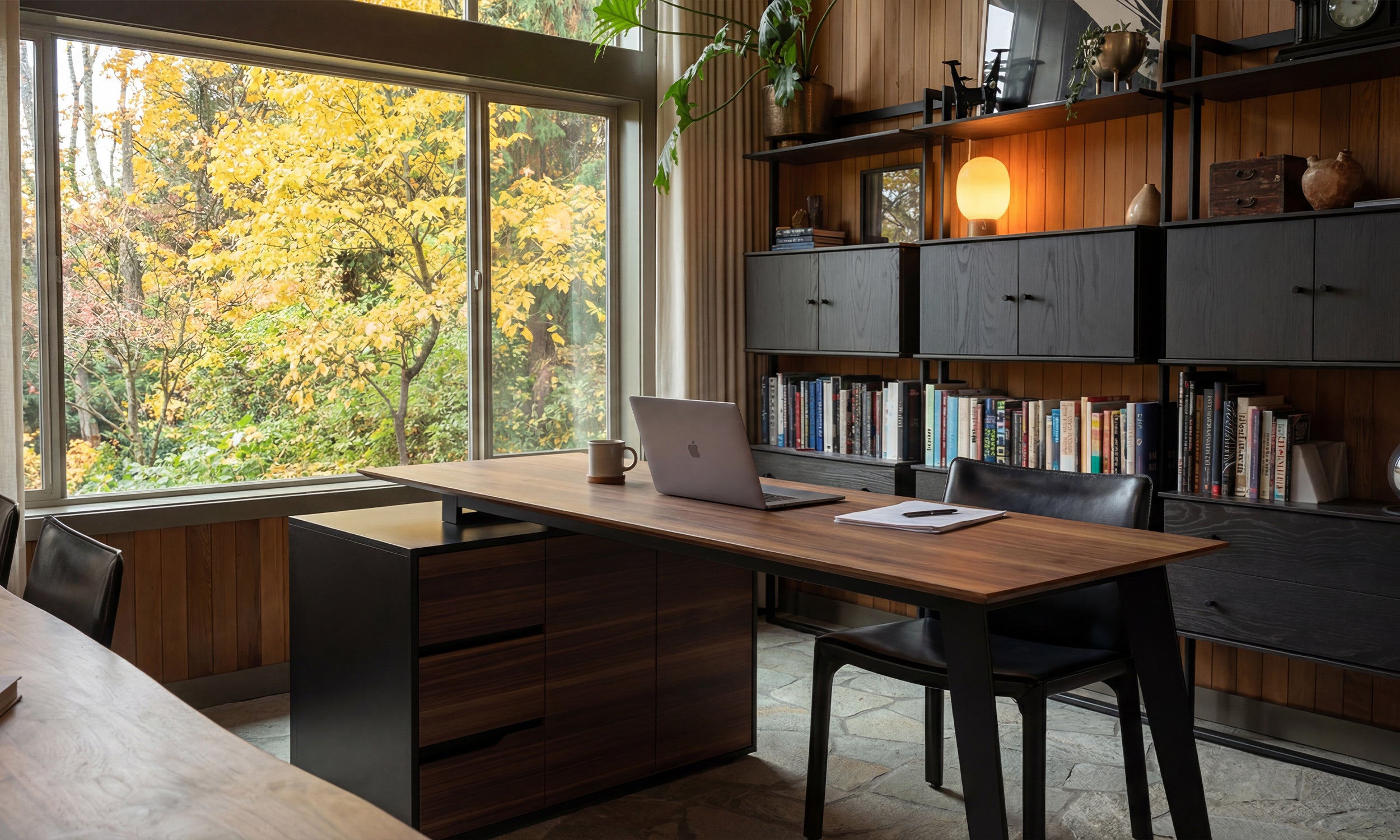
Dedicated home studies and client-facing professional suites often benefit from substantial architectural desks. These executive profiles anchor a room as a focal piece, offering expansive surface depth, integrated modesty panels, and robust returns. For reception or commercial consultation settings, a substantial counter desk office product establishes a clean professional boundary, keeping transaction areas elevated while concealing workstation paperwork from visitor view.
Storage Architecture: Evaluating Pedestals, Hutches, and Integrated Drawers
Storage integration is one of the most critical decisions you will make at an office desk store. A clean work surface depends on having structured homes for reference materials, office supplies, and sensitive documents.
- Integrated Drawer Pedestals: Fixed pedestals offer immediate proximity to essential files and tools. When reviewing drawers, examine whether the lower compartment accommodates standard hanging files and whether upper drawers include utility dividers for loose accessories.
- Door Cabinets and Multi-Tier Credenzas: For bulky equipment such as printers, network drives, and archival binders, opting for an integrated multi-tier office desk product keeps visual clutter concealed behind matching cabinet doors.
- Vertical Hutches and Shelving: Vertical architecture maximizes the utility of small rooms by utilizing wall space above the desk surface. Reviewing an office store desk guide provides practical ideas for configuring overhead shelving to maintain clear elbow room beneath display tiers.
Always balance storage capacity against user comfort. Adding dual wide drawer pedestals beneath a compact desktop can severely restrict knee-well space, forcing you into rigid seated positions that compromise daily posture.
Material Composition and Surface Longevity
The materials specified in an office desk determine its resistance to daily wear, liquid exposure, and mechanical stress. A nice office desk must withstand repetitive contact, equipment heat, and shifting hardware loads.
High-pressure laminates and durable melamine veneers bonded over high-density engineered wood offer strong defense against coffee spills, pen marks, and surface scuffs. When inspecting prospective desks, examine the edge banding. Seamless, impact-resistant edge seals prevent chipping and moisture ingress along the perimeter where wrists and chair armrests make frequent contact. Powder-coated steel subframes and reinforced cross-bracing provide dependable structural rigidity, ensuring that multi-monitor arms and heavy desktop equipment do not cause surface sagging over extended periods.
Spatial Clearance and Ergonomic Flow Checklist
Even the most beautifully crafted desk will frustrate daily use if it disrupts room circulation or impedes healthy seating ergonomics. Before ordering from any desk store, verify the following spatial dimensions within your room:
- Knee-Well Clearance: Ensure the opening beneath the main surface offers ample width and vertical clearance to fit your office chair with armrests adjusted to your preferred height, allowing effortless entry and exit.
- Chair Travel Zone: Reserve sufficient open floor space behind the primary work surface to allow an ergonomic task chair to roll back fully without colliding with walls, credenzas, or open doors.
- Perimeter Circulation: Maintain unobstructed transit corridors around the desk perimeter so that entering and exiting the workspace feels intuitive and open.
- Cable Management Infrastructure: Check whether the desk includes grommet holes, under-desk raceways, or recessed channels to route power cords directly to wall outlets, preventing tangled cords around footwells.
Buyer's Practical Decision Matrix: Choosing the Right Workstation
To finalize your decision among competing models, apply a straightforward evaluation framework before completing your purchase:
- Define Primary Work Tasks: Determine whether the surface is primarily digital, paper-intensive, or a hybrid of both, selecting surface depth accordingly.
- Map Architectural Constraints: Measure available wall runs, account for heating registers and baseboards, and map window glare angles relative to display surfaces.
- Verify Storage Volume: Audit your current office supplies to choose between minimalist open frames and high-capacity pedestals with lockable compartments.
- Assess Assembly and Logistics: Consider package dimensions and modular components to ensure seamless delivery through tight hallways, staircases, and door frames.
By treating the workstation as an integrated physical system rather than an isolated furniture piece, you can navigate any furniture shop with clarity. The right desk anchors your room layout, keeps everyday essentials organized, and delivers a dependable foundation for sustained professional focus.


Laisser un commentaire
Ce site est protégé par hCaptcha, et la Politique de confidentialité et les Conditions de service de hCaptcha s’appliquent.