


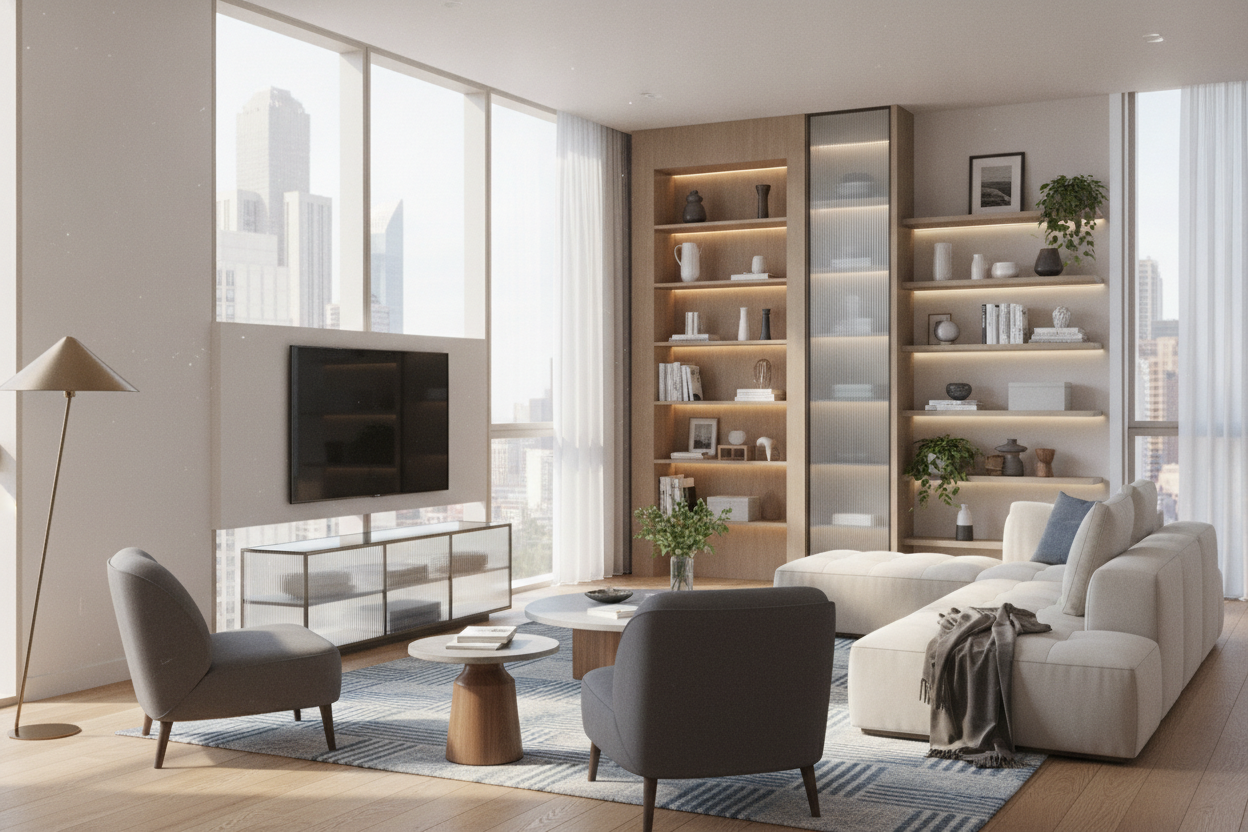
I spent three years staring at a tangle of black HDMI cables and a dusty Wi-Fi router that looked like a plastic spider. It was the first thing I saw every time I sat down to watch a movie. I wanted that airy, minimalist aesthetic you see in architectural digests, but my reality was a mess of electronics that I actually needed to use. I couldn't just throw them in a wooden box because, frankly, I didn't want my Xbox to overheat and melt into a puddle of expensive plastic.
My search for the best buy tv stand glass unit wasn't just about finding a place for the screen; it was about finding a way to hide the chaos without blocking my remote signals. I've tried the open shelving route, and I've tried the solid wood cabinets. Neither worked. One looked like a dorm room, and the other made my living room feel heavy and cramped. Then I discovered the magic of textured glass.
- Fluted and frosted glass obscures ugly tech while letting IR signals through.
- Clear glass is a high-maintenance trap that highlights dust and cords.
- Sliding doors save massive amounts of floor space in tight apartments.
- Internal lighting turns a functional cabinet into a high-end design feature.
The Problem With Fully Transparent Media Consoles
Let's be honest: clear glass is a liar. It looks stunning in a showroom where there are zero cables and the only thing inside is a perfectly placed coffee table book. In a real home, clear glass is a spotlight for failure. Every time you plug in a new streaming stick or a charging cable, it’s right there, mocking you. It makes your curated living room looks like a Best Buy floor rather than a home.
Beyond the visual clutter, there is the dust. If you have a black console or a dark media player, clear glass will show every speck of grey lint within 24 hours. I used to spend my Saturday mornings with a microfiber cloth and Windex, and I still felt like the unit looked dirty. It’s a high-maintenance relationship I’m no longer willing to be in. If you aren't prepared to cable-manage with the precision of a NASA engineer, stay away from transparent doors.
Then there’s the glare. Clear glass often reflects the light from your windows or lamps directly back at you while you're trying to watch a dark scene in a movie. It’s distracting and cheapens the experience. You want your furniture to support your lifestyle, not demand you change your lighting scheme just to accommodate its vanity.
Enter Fluted Glass (My Favorite Decor Cheat Code)
Fluted glass—also known as ribbed or reed glass—is the ultimate compromise for people like me who hate visual noise but love an open feel. It has these vertical grooves that catch the light beautifully, giving the piece a rhythmic, architectural look. Because the glass is textured, it distorts whatever is behind it. You see a soft blur of color and shape instead of the sharp, ugly lines of a power strip or a tangled mess of wires.
I recently helped a friend pick out a credenza with sliding glass doors for her 500-square-foot studio. The fluted texture made the piece feel much lighter than a solid oak cabinet would have. It didn't 'eat' the wall. Instead, it reflected the morning sun and made the whole room feel wider. It’s a design cheat code: you get the storage of a heavy sideboard with the visual footprint of a much smaller piece.
The best part? It hides the 'ugly' stuff perfectly. I have my router, a Nintendo Switch dock, and three different controllers behind my fluted doors. From the sofa, all I see is a soft, hazy silhouette. It looks intentional and clean. Plus, the texture hides fingerprints remarkably well. I haven't touched my glass cleaner in three weeks, and it still looks pristine. If you're looking for that 'best buy tv stand glass' upgrade, fluted is the only way to go for the modern home.
What Actually Looks Good Behind the Blur?
Even though fluted glass hides a lot, you shouldn't just treat the inside like a junk drawer. If you have a bright red box or a neon green controller, that color is going to bleed through the glass. To make it look truly high-end, I suggest grouping items by color. If most of your tech is black, keep it together. If you have some books or decorative objects, place them near the front of the glass.
I like to use small, matte black baskets for the really small stuff—extra cables, remotes, or batteries. The basket creates a clean, solid shape behind the glass rather than a bunch of tiny, jagged shapes. Think of it like impressionist painting; you’re aiming for pleasant blobs of color rather than sharp detail. A few white ceramic vases or even a stack of neutral-toned magazines can add a nice 'glow' through the glass that feels more like a display and less like a storage unit.
Why Sliding Doors Are a Tiny Living Room's Best Friend
If you are living in a city apartment or a house where the coffee table is only two feet away from the media unit, do yourself a favor and skip the hinged doors. Hinged doors require a 'swing zone' that eats up precious floor space. Every time you want to swap a disc or sync a controller, you’re hitting your shins or moving furniture out of the way. It’s a friction point that makes your home feel smaller than it is.
When you are browsing for TV stands, look specifically for sliding mechanisms. Sliding glass doors stay within the footprint of the unit. They are sleek, they feel more modern, and they allow you to leave one side 'open' for ventilation during heavy gaming sessions without a door hanging out into the middle of the room. It’s a functional detail that people often overlook until they’re actually living with the piece, but it makes a massive difference in daily flow.
The Final Touch: Adding a Little Internal Glow
The real secret to making a glass-door unit look like it cost five times what you actually paid is lighting. At night, a dark media console can look like a big black hole in the corner of the room. By adding a simple LED strip or choosing a media console with glass doors and light already built-in, you turn the unit into a lantern. The light hits the fluted or frosted glass and diffuses, creating a warm, ambient glow that is much softer than a standard lamp.
I personally prefer a warm white light (around 2700K to 3000K). It makes the glass look expensive and adds a layer of depth to the room. If you’re using an aftermarket LED strip, hide it along the top inside edge of the cabinet so you don't see the individual 'beads' of light—just the soft wash. It’s the difference between a piece of furniture and a piece of architecture. It makes the whole room feel cozy and finished, and it completely distracts from the fact that there's a bunch of plastic electronics hiding just behind the surface.
Is glass safe for a TV stand if I have kids?
Yes, but look for tempered glass. Tempered glass is much stronger than standard glass and, if it does break, it crumbles into small, blunt pieces rather than sharp shards. Most reputable furniture brands use tempered glass by default, but always check the specs.
Will my remote work through fluted glass?
In 95% of cases, yes. Most modern remotes use Bluetooth or strong IR signals that pass through textured glass without any issues. If you have a very old device, you might have to point the remote more precisely, but for Apple TV, Roku, or game consoles, it's a non-issue.
Does glass make the electronics inside get too hot?
Glass itself doesn't cause heat, but a closed cabinet can. If you have a high-powered gaming console, make sure the unit has a ventilated back panel (usually a large circular cutout) to let the hot air escape. Sliding the door open slightly during long sessions is also a pro move.

Laisser un commentaire
Ce site est protégé par hCaptcha, et la Politique de confidentialité et les Conditions de service de hCaptcha s’appliquent.