


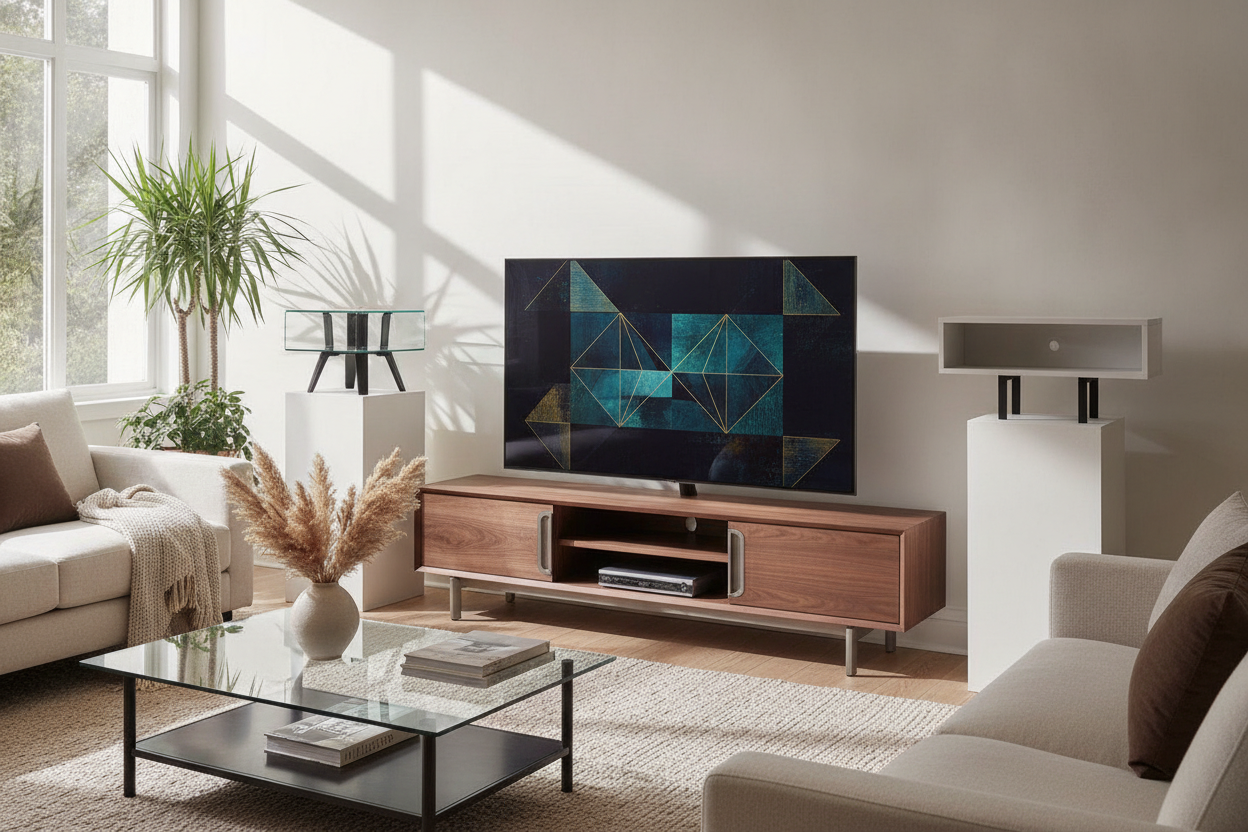
I have spent more hours than I care to admit staring at 40+ open browser tabs, trying to figure out if a media console is actually solid wood or just glorified contact paper over sawdust. We have all been there—ordering a piece that looks massive on a 5-inch smartphone screen, only for it to arrive and sit lower than your shins. Finding tv stands to buy shouldn't feel like a high-stakes gamble with your security deposit and your sanity.
- Measure your eye level from the sofa, not the floor, to avoid 'TV-too-high' syndrome.
- Avoid 'hollow core' particle board; if the shipping weight is under 50 lbs for a large unit, it’s flimsy.
- Closed storage is non-negotiable for hiding the 'cable nest' of routers and gaming hubs.
- Set a realistic budget—quality starts around $300, while anything under $100 is likely disposable.
The Infinite Scroll Problem (And How to Fix It)
The fatigue of tv stand online shopping is real. You start with a simple search and ten minutes later you are looking at 800 identical Scandinavian-style units that all seem to be made by companies with names consisting of random Scrabble tiles. The problem is that most algorithms prioritize what is cheap and easy to ship, not what is actually going to hold a 65-inch OLED without sagging in the middle.
When you start to browse quality tv stands, you have to look past the staged lifestyle photos. I have learned to ignore the plants and the perfectly placed ceramic bowls in the product shots. Instead, I head straight for the 'Specifications' tab. I am looking for keywords like 'kiln-dried hardwood' or 'high-density MDF with walnut veneer.' If the description is vague about materials, I keep scrolling. You want a piece that has enough structural integrity to survive a move, not something that will crumble the moment you try to slide it three inches to the left.
Rule 1: Measure Your Eyeline, Not Just the TV
The biggest mistake I see? People buy a stand based on the width of their TV and completely ignore the height. If you are sitting on a standard 18-inch high sofa, your eyes should hit the middle of the screen without you tilting your chin up. For most setups, a 20 high tv stand is the absolute sweet spot. It keeps the screen at a natural viewing angle so you aren't visiting the chiropractor after a weekend of binge-watching.
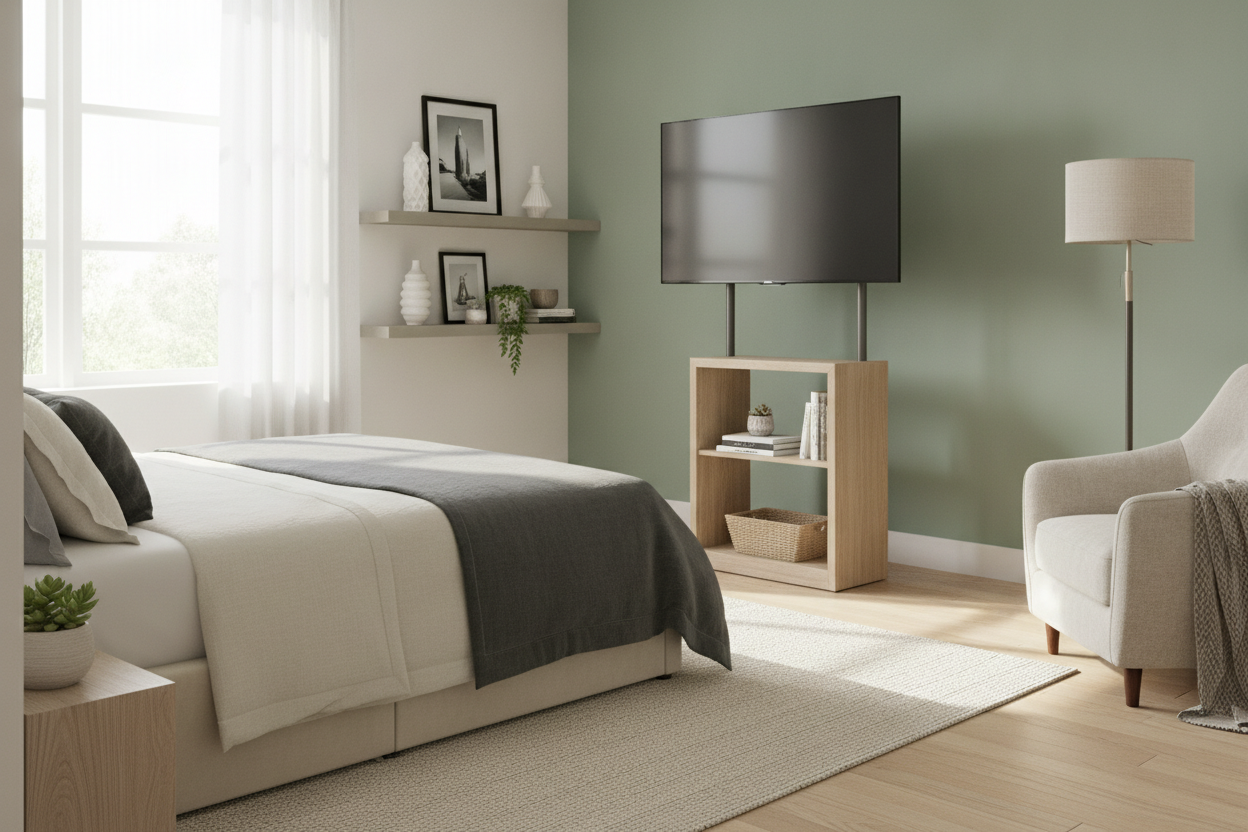
I once bought a 14-inch 'low profile' unit because it looked cool and minimal. Within a week, my neck felt like it had been in a minor fender-bender. If you have a weird room layout or a particularly high sofa, you might need a 20 tall tv stand or even something loftier. Sometimes, a standard height just won't cut it, and my own narrow tall tv stand was the only thing that saved my neck when I moved into a studio with a high-top breakfast bar as my primary seating. Measure twice, buy once.
Rule 2: Know What Things Actually Cost (And When to Walk Away)
Let's talk numbers. How much do tv stands cost? If you want something that isn't going to bow under the weight of a soundbar, you are looking at $250 to $600 for decent mid-range quality. If you find a tv stand under 20 dollars, you aren't buying furniture; you are buying a cardboard box with a dream. Even at a thrift store, tv stands under 20 bucks are usually water-damaged relics from 1994.
I am all for a bargain, but there is a 'cheapness floor' you shouldn't cross. If you are on a razor-thin budget, your best bet is to safely buy and use tv stand finds from local marketplaces rather than buying the bottom-barrel new stuff online. A used solid oak cabinet for $50 is a thousand times better than a brand-new $50 unit made of paper-thin laminate that will peel the first time you set a cold drink on it.
Rule 3: Hide the Ugly Stuff (Function First)
Your TV stand is not just a pedestal; it is a camouflage unit. I treat my media setup like tv closet furniture. If I can see your router, your tangled nest of HDMI cables, or your dusty PlayStation, the whole room feels cluttered. I look for units with soft-close doors or deep drawers that can swallow up controllers and remotes.
A modern tv stand with cabinets and drawers is the only way to maintain a clean aesthetic. I prefer cabinets with adjustable shelving inside so I can fit my oversized receiver. Also, check for 'cable management' holes in the back. If they aren't there, you'll end up having to DIY them with a hole saw, which is a giant pain and usually voids your warranty.
Where I Actually Look for TV Stands
When you are ready to find tv stands that actually last, skip the big-box sites that don't vet their third-party sellers. Knowing how to buy a tv stand means knowing how to spot a dropshipper. If the same photo appears on five different sites with five different brand names, run. I look for retailers that specialize in furniture and offer real customer support.
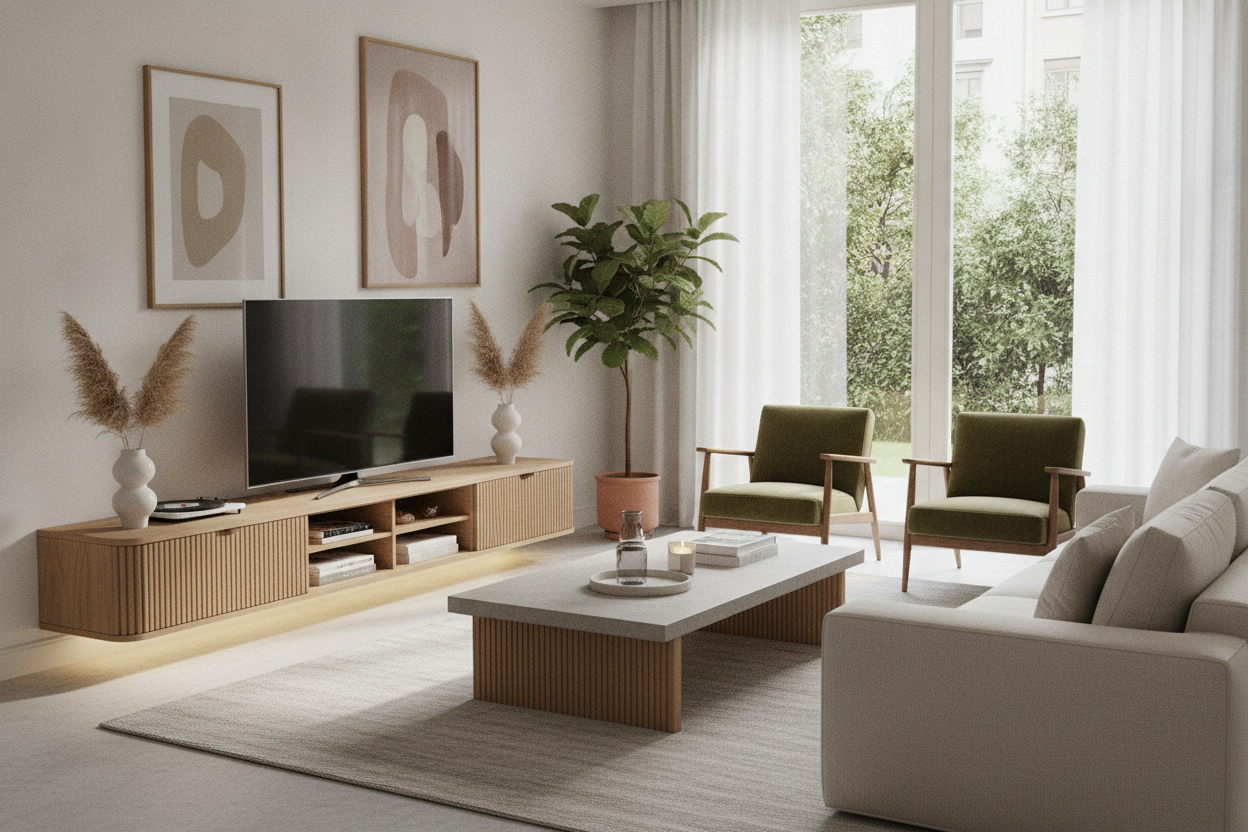
For those who want a more tech-forward look, you can find a great led tv stand online that adds some nice ambient bias lighting behind your screen. I’ve seen a high gloss tv stand with led light work wonders in a dark basement media room, making the screen pop without causing eye strain. Just make sure the LED strips are high-quality and not the kind that flicker after two hours of use. Stick to these rules, and you'll actually enjoy your living room instead of regretting your purchase every time the light hits a cheap laminate seam.
FAQ
How wide should my tv stand be?
Your stand should be at least 3 to 6 inches wider than your TV on both sides. This prevents the 'top-heavy' look and keeps the TV from being a literal hazard if someone bumps into it.
Is MDF always bad?
No. High-density MDF is actually more stable than solid wood in humid climates because it won't warp. Just avoid 'particle board' or 'low-density fiberboard,' which is basically compressed sawdust and glue.
What is the best height for a TV stand?
For most people, 20 to 24 inches is perfect. It keeps the center of the screen at eye level when you are seated on a standard sofa. If you have a very large TV (75 inches+), go even lower.

Laisser un commentaire
Ce site est protégé par hCaptcha, et la Politique de confidentialité et les Conditions de service de hCaptcha s’appliquent.