


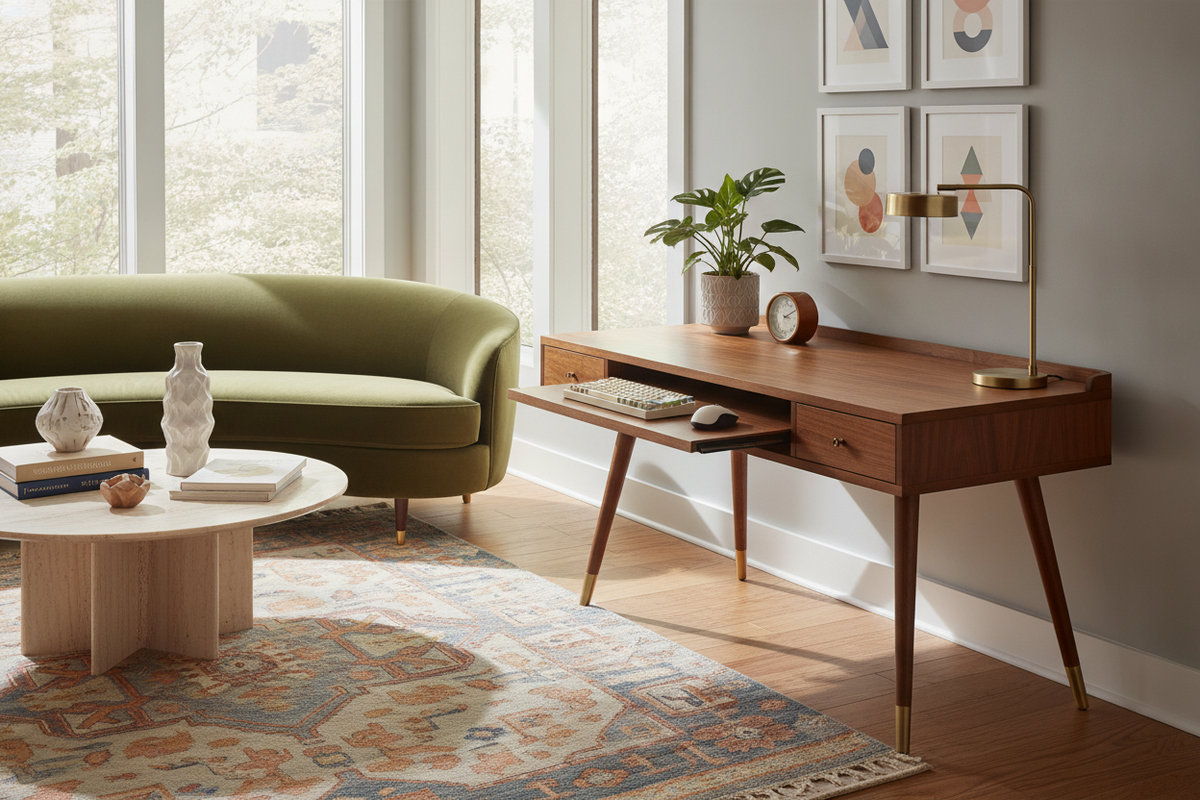
The Intersection of Retro Form and Ergonomic Computing
Working from home often forces a compromise between clean interior styling and daily work comfort. A traditional typing setup can quickly overtake a streamlined surface with peripherals, wrist rests, and cables. Selecting a mid century modern computer desk with keyboard tray bridges this gap by hiding input devices beneath the work plane while maintaining the slender, airy silhouette characteristic of twentieth-century design.
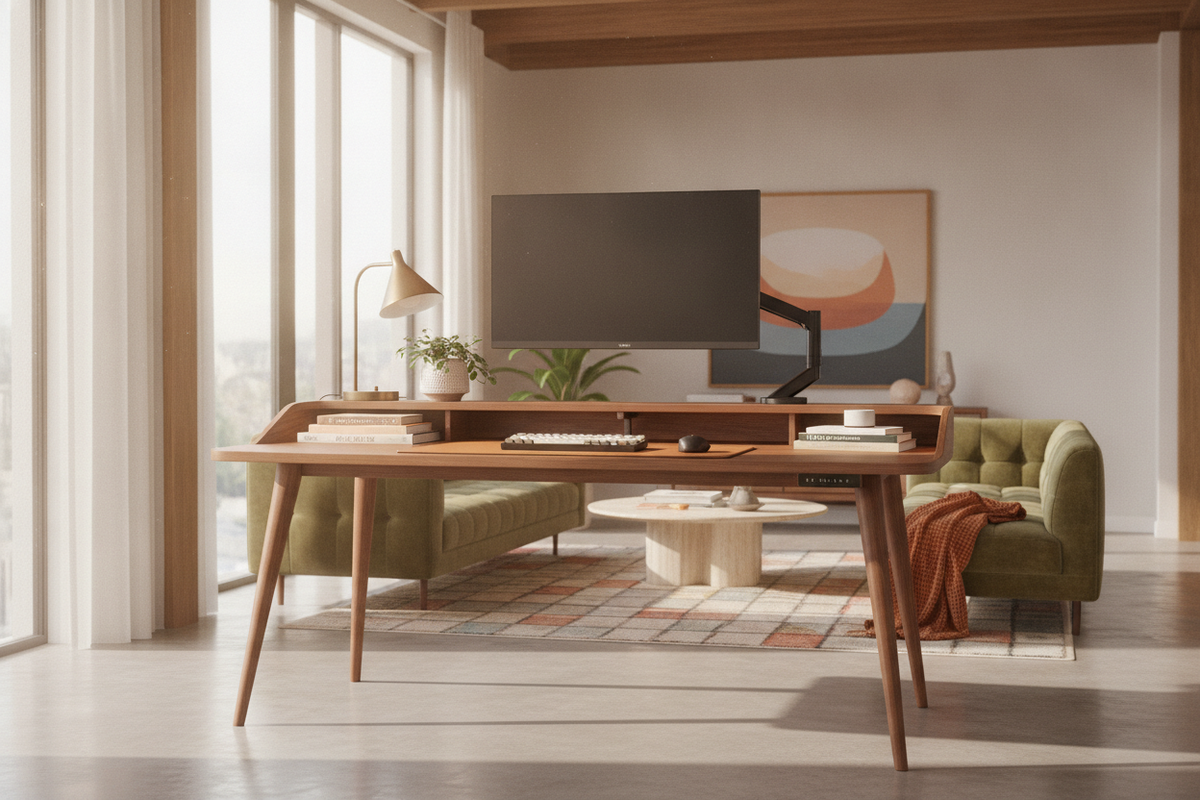
Historic mid-century desks were originally tailored for fountain pens, stationery, and typewriters. Bringing modern computer monitors, mechanical keyboards, and optical mice into that framework requires thoughtful structural planning. By integrating a dedicated sliding platform, a mid century computer desk with keyboard tray frees up valuable surface territory for creative projects, reference books, and focused display space without visually overwhelming the room.
Footprint and Dimension Profiles: Matching Room Flow to Work Surface
Before committing to a particular style, evaluating how the desk fits into your floor plan is essential. Mid-century furniture relies heavily on negative space around its base, meaning that cramming an oversized piece into a cramped corner defeats its architectural intent.
- Compact Writing Formats: Suited for dual-purpose guest rooms or quiet living room corners, these designs keep visual weight low and emphasize slender profiles.
- Standard Work Desks: Built to accommodate wide displays and desktop sound setups, standard footprints offer ample width for daily administrative or technical work. For broader layouts, considering a modern computer desk product can provide generous surface span while keeping wood-toned styling intact.
- Double-Pedestal or Credenza Units: These substantial arrangements incorporate asymmetrical drawers or closed cubbies, serving dedicated studies where deep files and daily office gear need a fixed home.
Beyond width, depth deserves careful attention. A mid century desk with keyboard tray allows you to choose a shallower desktop depth because your monitors sit on the primary surface while your hands rest several inches forward on the slide-out shelf. This setup preserves walkable perimeter around your workspace.
Keyboard Tray Engineering: Preserving Knee Clearance and Silhouette
The primary engineering challenge of a mid century modern desk with keyboard tray is under-desk knee room. Mid-century frames often feature a decorative or structural front apron beneath the desktop. When a sliding hardware track is mounted directly underneath that apron, the distance between the tray and the floor can become uncomfortably narrow.
When reviewing potential furniture profiles, consider the mechanical relationship between your sitting posture and the slide-out tray:
- Tray Drop and Slider Height: Look for low-profile metal glider channels that mount directly to the tabletop underside or integrated side aprons to prevent excess vertical drop.
- Thigh and Armrest Clearance: Ensure the underside of the extended shelf leaves enough breathing room for your thighs when your chair is set at your preferred typing height. Exploring a functional desk keyboard tray product can illustrate how modern multi-tier layouts balance tray placement against accessible leg corridors.
- Platform Width: Ensure the tray surface accommodates both your preferred keyboard and an external mouse at the same level so your arms remain parallel during long sessions.
Mid-Century Materials and Design Cues: Walnut, Tapered Legs, and Clean Lines
True mid-century character stems from thoughtful geometry and rich, organic textures. The most recognizable hallmark is the leg treatment: round tapered dowels or splayed rectangular legs anchored at gentle angles. These legs elevate the main cabinet off the carpet, keeping sightlines clear and making even modest rooms feel open.
Finish selection is equally decisive. Rich walnut, honey teak, and warm caramel stains define this design movement. When styling a shared open-concept layout, reviewing a mid century modern guide helps identify how wood tones in your desk can echo adjacent media consoles and shelving without creating a rigid, uniform match. Subtle brass ferrules, chamfered edge bevels, and recessed finger pulls on drawer faces complete the retro mood without adding bulky decorative hardware.
Storage Architecture: Pairing Slide-Out Trays with Discreet Drawers
Integrating a keyboard mechanism alongside practical storage requires smart spatial organization. In classic furniture designs, the central section of the desk often housed a pencil drawer. A mid century modern computer desk with keyboard tray repurposes that central bay into an ergonomic slide, shifting utility storage outward.
Common configurations balance this trade-off effectively:
- Asymmetrical Single Pedestals: Placing a small bank of two or three drawers on one side while leaving the central and opposite side open preserves a sense of visual lightness.
- Shallow Flanking Drawers: Thin utility trays on either side of the sliding keyboard tray allow room for pens, notebooks, and charging cords without lowering the lower apron profile.
- Floating Open Cubbies: An open shelf beneath the desktop provides immediate access to tablets, paper pads, or slim laptops while avoiding the heavy footprint of full-depth cabinetry.
Electronics and Cable Organization in a Vintage Silhouette
The very feature that makes mid-century desks aesthetically pleasing—open air beneath the frame—makes cable management a delicate task. Modern work setups require power lines, monitor feeds, and charging cables that can easily disrupt clean vintage lines if left dangling freely.
To maintain a clean look, route peripheral wires through discrete adhesive channels secured to the rear face of the desk legs or back apron. Placing a modest power strip inside an under-desk wire basket or mounting it behind a rear modesty panel keeps adapter bricks completely off the floor. Utilizing wireless peripherals on your keyboard tray further reduces visible clutter, letting the natural grain of the wood remain the focal point.
Room Integration and Styling: Creating a Cohesive Modern Workspace
Achieving a cohesive home office setup involves balancing your desk with surrounding accessories and seating. A high-back modern mesh chair can sometimes clash with a vintage wood desk. Pairing your workspace with a chair upholstered in textured tweed, top-grain leather, or bentwood helps blend ergonomic utility with retro style.
For task lighting, choose articulated brass lamps, cone-shaded matte black fixtures, or globe pendants that reflect classic architectural shapes. Complement the warmth of the desk with textured wool rugs and simple ceramic planters. By paying close attention to proportions, knee room, and wire control, a mid century modern desk with keyboard tray transforms any room into a comfortable, timeless workstation that stands up to demanding daily use.

Laisser un commentaire
Ce site est protégé par hCaptcha, et la Politique de confidentialité et les Conditions de service de hCaptcha s’appliquent.