


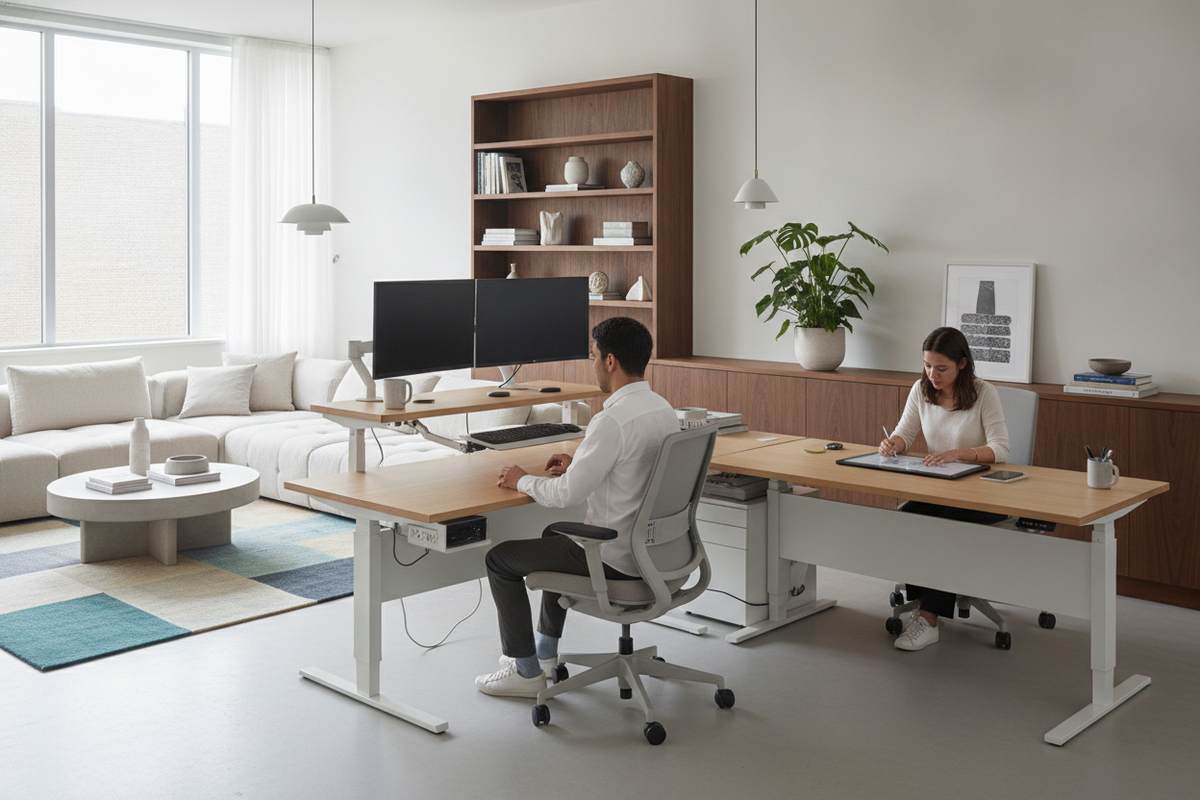
Designing an efficient workstation often involves balancing available square footage with the need for broad screen setups, accessible peripherals, and clear writing surfaces. An l shaped riser desk addresses this balance by pairing the panoramic surface area of a corner layout with the vertical utility of an elevated shelf tier. By lifting displays above the primary desktop plane, these tiered configurations reclaim critical surface depth while encouraging an organized, ergonomic workflow across both desk wings.
Understanding the L-Shaped Riser Desk Architecture
The foundational concept of an L-shaped desk revolves around two intersecting surfaces—a primary wing and a return wing—forming a right angle. Integrating a riser tier adds vertical dimension to this footprint. Unlike flat corner workstations that require separate monitor stands or clamped display arms, a desk with a built-in riser features a permanent or semi-integrated elevated platform running across one or both wings.
This architectural split creates two distinct operating planes: an eye-level viewing plane for screens and speakers, and a lower working plane dedicated to input devices, analog paperwork, and active task items. The visual separation helps keep primary work surfaces clear of clutter, creating a focused working environment for creators, multi-monitor professionals, and students.
Integrated Top Tier vs. Modular Desktop Risers
Workstation planners typically choose between factory-integrated tiered shelving and aftermarket modular risers placed atop a standard flat desk:
- Integrated Top Tiers: Built directly into the desk frame, integrated risers provide continuous, edge-to-edge stability. They align seamlessly with the contours of the corner joint and avoid taking up desktop footprint with bulky aftermarket support legs.
- Modular Desktop Risers: Add-on risers offer flexibility in placement, allowing you to reposition the elevation along either wing. However, they introduce separate leg posts that can fragment the lower desktop surface and create awkward gaps at the corner seam.
For individuals building a unified setup with dual displays or ultrawide screens, an integrated elevated tier generally offers a cleaner aesthetic and more predictable weight distribution across the entire frame.
Dimensional Planning and Workstation Footprints
L-shaped desks occupy substantial floor space, making dimensional planning crucial before installation. When evaluating an l shaped riser desk, consider both the external footprint and the usable surface clearance beneath the elevated shelf.
Workstation footprints generally fall into distinct size categories:
- Compact Corner Desks: Suitable for secondary bedrooms, nooks, or study areas, these units focus the elevated tier along one short wing to maximize corner utility without overwhelming walking paths. When spatial constraints demand a more minimal footprint, contrasting these layouts with a compact desk shaped product can help clarify whether a corner angle or a linear table best suits the room.
- Mid-Size Workstations: Offering balanced wings, these models accommodate multiple monitors along the riser while leaving the perpendicular return open for laptops, tablets, or paperwork. Exploring a versatile shaped desk product provides insight into how integrated multi-tier surfaces and storage pedestals combine in mid-to-large workspaces.
- Executive and Creator Stations: Designed for complex multi-device workflows, these expansive configurations feature extended returns and deep main surfaces capable of supporting audio gear, studio reference monitors, and desktop towers.
Under-Tier Clearance and Usable Desktop Depth
A primary ergonomic and organizational advantage of a raised shelf is the channel created directly beneath it. This under-tier clearance provides protected storage space for items that would otherwise crowd the primary desk pad. Audio interfaces, compact mechanical keyboard docks, external hard drive arrays, and notebooks can slide neatly beneath the shelf, remaining accessible while leaving the main desk surface open for unrestricted mouse movement and writing.
Dual-Wing Workflow: Zoning Your L-Shaped Setup
The geometric layout of an L-shaped desk naturally supports task zoning. Rather than crowding all activities into one central area, users can assign distinct functional roles to each wing.
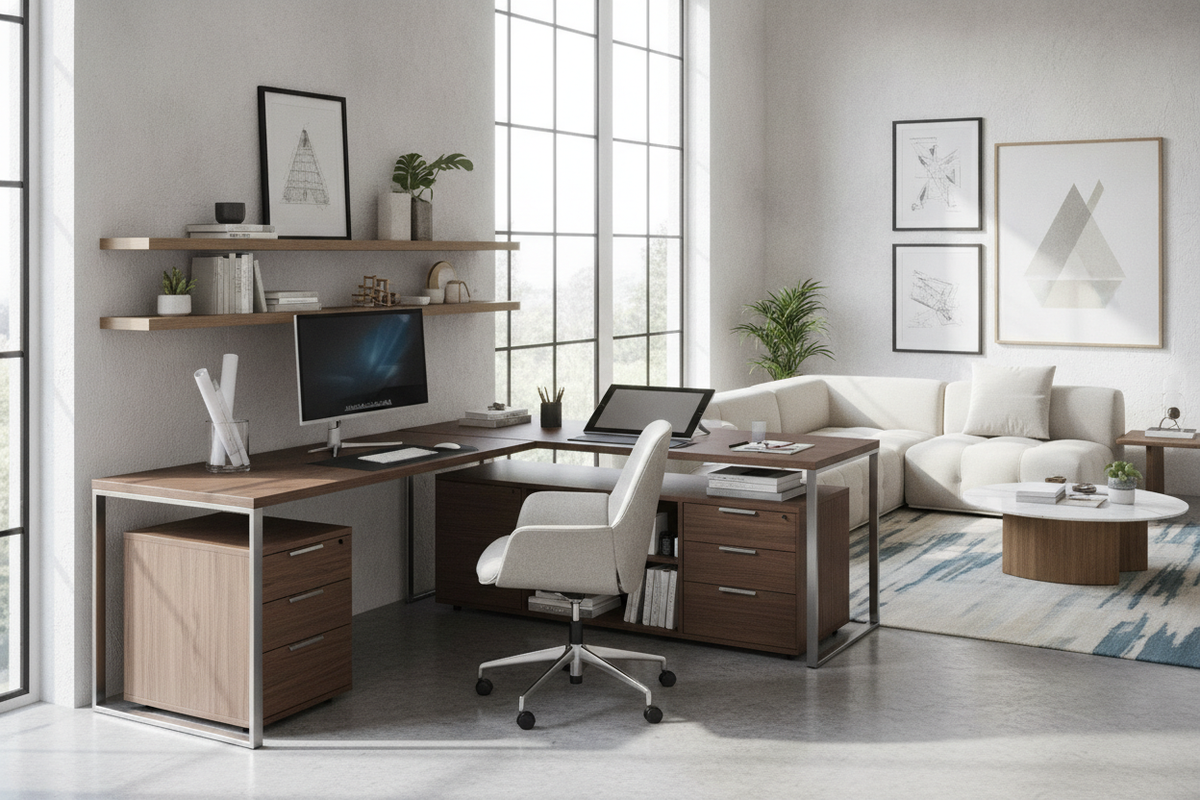
- The Primary Digital Wing: This is the wing equipped with the elevated riser shelf, housing main displays, webcams, and reference screens. The lower surface directly beneath serves as the active digital cockpit for keyboards, trackpads, and primary controls.
- The Analog / Auxiliary Wing: The perpendicular return surface remains flat and uncluttered. This area serves as a dedicated zone for reading physical documents, sketching, drafting, or managing secondary devices like tablets and secondary work laptops.
Corner vs. Wing Monitor Alignment
When configuring screens on an L-shaped desk, display alignment strongly influences posture and comfort. Users generally choose between two core configurations:
- Apex / Corner-Centered Alignment: Placing the primary monitor directly in the corner diagonal maximizes peripheral reach along both wings. However, this orientation requires comfortable leg clearance deep into the corner cavity and works best when the riser shelf extends smoothly across the joint.
- Wing-Centered Alignment: Centering the primary monitor on the longer wing provides a straight-on seated posture aligned with the main wall. The secondary wing then functions purely as a side console for peripheral monitors or secondary task zones.
Room Placement, Clearance, and Layout Flow
Where you place your corner desk determines natural light distribution, accessibility to wall power, and foot traffic flow throughout the room. To better plan traffic pathways and avoid blocking doors or windows, reviewing a comprehensive shaped desk guide helps establish efficient spatial clearance.
Consider these standard placement configurations:
- Corner Wall Hug: Tucking both wings flush against intersecting walls minimizes the desk's visual footprint and keeps the center of the room open. This setup makes running cables along baseboards simple, though users should ensure adequate clearance from window frames and heating vents.
- Peninsula Layout: Placing one wing against a wall while extending the return wing into the open room creates an executive-style divider. This configuration creates a dedicated office zone within a larger bedroom or living room while maintaining an open line of sight toward the doorway.
Storage Solutions and Cable Architecture for Tiered Desks
Managing equipment across two large surfaces requires intentional cable and storage management. Raised shelves introduce additional vertical pathways that can expose power cords and display cables if not routed deliberately.
Under-tier cable management trays, adhesive routing channels, and desktop grommets allow wires to drop smoothly behind the riser without tangling along the primary work surface. In addition, pairing the desk with under-desk pedestals or open shelving creates dedicated housing for computer towers, stationery, and document organizers. Selecting a functional shaped desk product with integrated storage demonstrates how low-profile shelving balances the upper visual weight of a raised monitor tier.
Material Selection, Frame Stability, and Assembly Factors
Because an L-shaped desk supports substantial gear across a broad horizontal plane, structural integrity is critical. Heavy gauge steel frames with triangular corner gussets or diagonal crossbars prevent lateral wobbling during vigorous typing or writing. Surface tops crafted from dense engineered wood with durable laminate finishes resist scratches, moisture, and daily wear across high-touch task areas.
When assembling an L-shaped tiered desk, building the frame in its intended room location helps avoid moving awkward, heavy angled structures through narrow doorways. Ensuring all structural bolts are evenly tightened along the corner joint keeps both desktop wings level and preserves clean alignment across the elevated monitor shelf.

Laisser un commentaire
Ce site est protégé par hCaptcha, et la Politique de confidentialité et les Conditions de service de hCaptcha s’appliquent.