


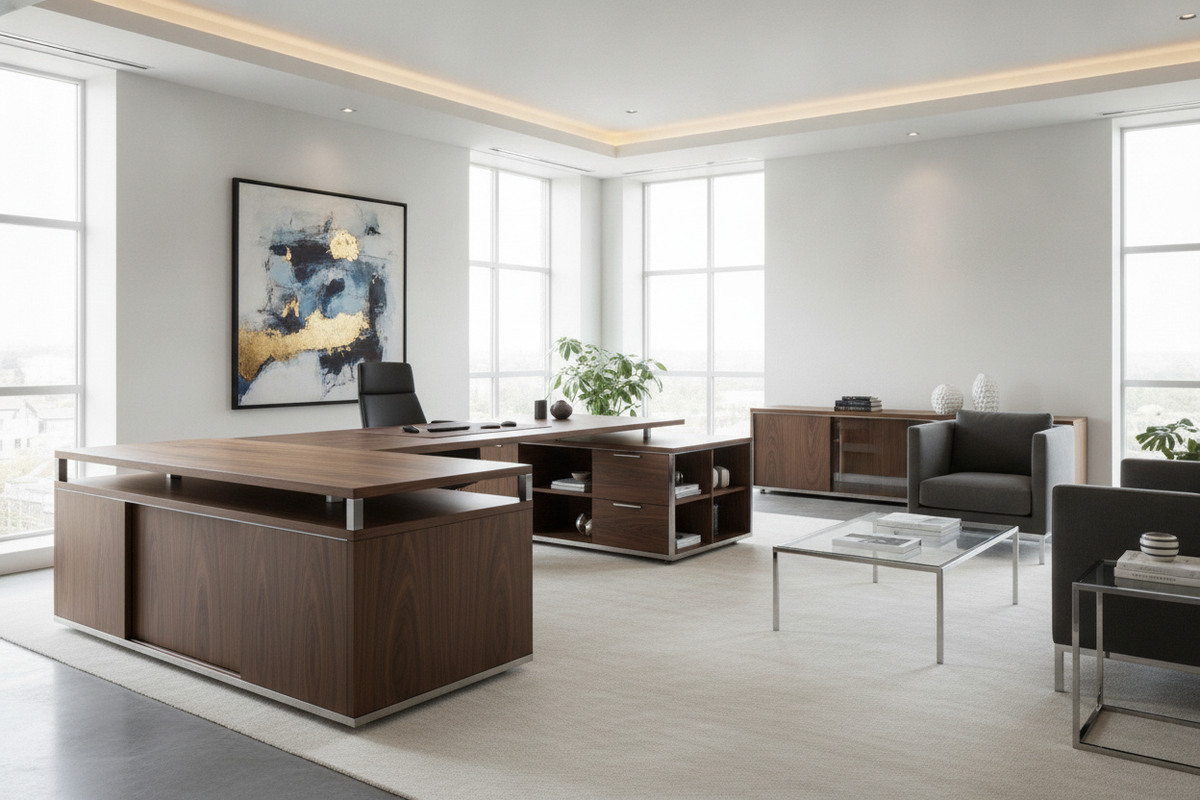
Designing a high-performance home workspace requires balancing commanding visual appeal with practical efficiency. An l-shaped executive desk modern layout transforms how you interact with your office by dividing primary computing tasks from administrative responsibilities. Whether establishing a dedicated corporate suite or outfitting a private study, modern executive furniture pairs clean architectural lines with expansive surface areas and integrated storage systems.
Defining the Modern L-Shaped Executive Desk
Executive Presence vs. Standard Workstation Design
Traditional executive desks often relied on heavy, ornate wood carvings and closed pedestals that dominated a room. In contrast, modern executive desks emphasize crisp silhouettes, mixed-material construction, and balanced proportions. They retain an authoritative visual weight while introducing open leg channels, recessed modesty panels, and sleek profiles that prevent the room from feeling crowded.
Dual-Zone Workflow: Primary Task Surface and Credenza Return
The primary advantage of an l-shaped executive desk for home office setups is the creation of distinct functional zones. The main desk run accommodates active digital work, such as dual monitors, keyboard trays, and daily peripherals. The perpendicular wing, often called the return or credenza, provides dedicated room for document review, conferencing hardware, reference books, and physical writing. This deliberate separation keeps your primary focus area organized and clutter-free.
Dimensional Categories and Room Sizing Frameworks
Choosing the right proportions ensures your workspace maintains smooth traffic patterns and comfortable clearances.
- Compact Home Suites: Designed for smaller private rooms, these desks feature a streamlined return that fits snugly into alcoves or corners while providing adequate desktop depth for a single or dual-screen setup.
- Dedicated Office Footprints: Ideal for standard private rooms, offering balanced proportions between the primary writing desk and the storage credenza, with generous leg clearance for smooth chair swiveling.
- Expansive Executive Suites: Featuring deep primary desktops and full-length storage returns, these configurations provide ample space for visitor seating, multiple screens, and integrated administrative cabinetry.
When planning your room layout, consult our shaped desk office guide to evaluate pathway clearances, door swings, and window alignments before locking in your furniture footprint.
Storage Architecture and Structural Support
Pedestal Configurations and Hanging File Drawers
Integrated storage is a cornerstone of executive workstation architecture. Pedestals anchored under the return surface often house standard utility drawers alongside deep file drawers equipped to organize essential documents. Selecting a model with soft-close hardware and sturdy drawer runners protects sensitive hardware and provides quiet operation during phone and video conferences.
Open Credenza Shelving vs. Concealed Cabinetry
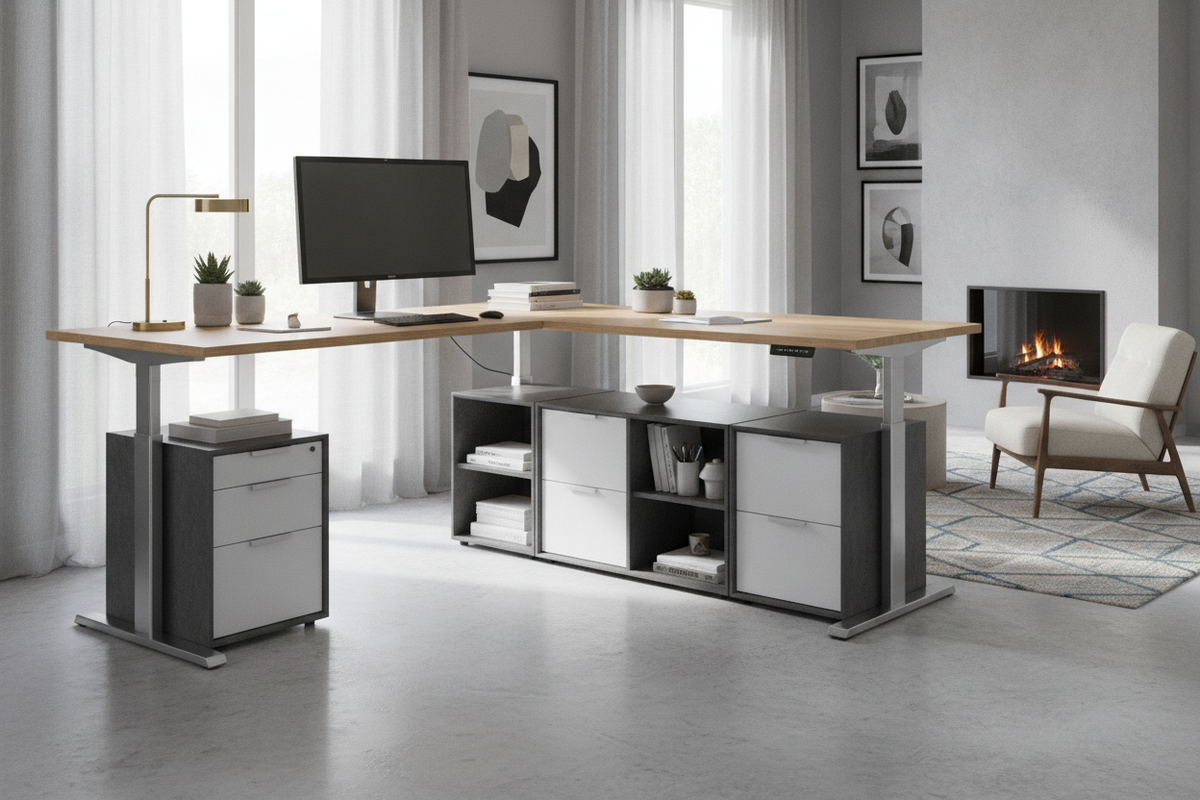
Modern desk designs frequently blend open display compartments with concealed storage cabinets. Open bays provide quick access to daily reference materials or display decorative accents, while concealed cabinet doors hide network routers, external drives, and bulk supplies. For specialized storage needs in corners and tighter nooks, exploring a modern office desk product helps visualize how modular shelving cabinets optimize vertical and horizontal space.
Integrated Cable Troughs and Power Access Points
Clean wire management is essential for preserving modern aesthetics. Contemporary executive desks incorporate recessed desktop grommets, under-desk cable trays, and internal wire chases within the modesty panels. These channels guide power cords directly to wall receptacles, eliminating unsightly tangles along the perimeter of the furniture.
Material Profiles and Contemporary Aesthetics
The materials you select establish the mood and longevity of your executive suite:
- Engineered Wood and Modern Laminates: High-density composite boards finished with realistic woodgrain or matte solid laminates resist everyday surface wear, resist moisture rings, and maintain a consistent appearance over time.
- Steel Frames and Metal Accents: Powder-coated steel leg frames and brushed metal hardware add industrial strength and structural rigidity, creating a stable platform for heavy monitor mounts.
- Fluted Details and Textured Panels: Architectural fluting along front modesty panels adds subtle texture and shadow play, giving the desk a bespoke, high-end look.
For additional ideas on pairing textured finishes with minimalist desktop decor, read our modern office desk guide to create a cohesive interior aesthetic.
Layout Strategies for Home Offices and Executive Suites
The Command Position: Floating Desk Facing the Room Entry
Positioning your l shaped executive desk for home office use in the command position—where your chair backs up to a solid wall and the main desk faces the room's entrance—establishes authority and offers a pleasant visual perspective. This orientation keeps monitor backs hidden from the door and creates an organized backdrop for video conferences.
Corner Docking: Maximizing Floor Area in Multipurpose Rooms
In shared rooms or multipurpose studios, docking the L-configuration against two intersecting walls maximizes open floor area. This setup simplifies cord routing by placing power points directly adjacent to baseboards, leaving the center of the room open for lounge seating or secondary storage cabinets.
Accommodating Visitor Seating and Multi-Screen Mounts
If you host in-person meetings or consultations, ensure the main desk has an extended overhang or floating modesty panel that accommodates guest chairs. For high-capacity commercial reception or executive reception spaces, an option like a modern desk shaped product demonstrates how integrated counter returns delineate private staff areas from welcoming front-facing consultation surfaces.
Assembly, Stability, and Longevity Considerations
Proper assembly and ongoing care are critical for maintaining structural stability in multi-piece executive furniture:
- Corner Joint Alignment: Ensure the mounting brackets connecting the main desk to the return are tightly fastened on a level plane to prevent uneven seams that catch mouse pads or writing instruments.
- Leveling Feet Adjustments: Utilize adjustable floor glides beneath each leg and pedestal to compensate for minor floor imperfections, preventing wobble and easing drawer alignment.
- Weight Distribution: Distribute heavy desktop equipment, such as multi-monitor array stands and PC towers, directly over structural support legs or pedestal bases rather than unsupported span bridges.
Summary: Selecting Your Modern L-Shaped Executive Desk
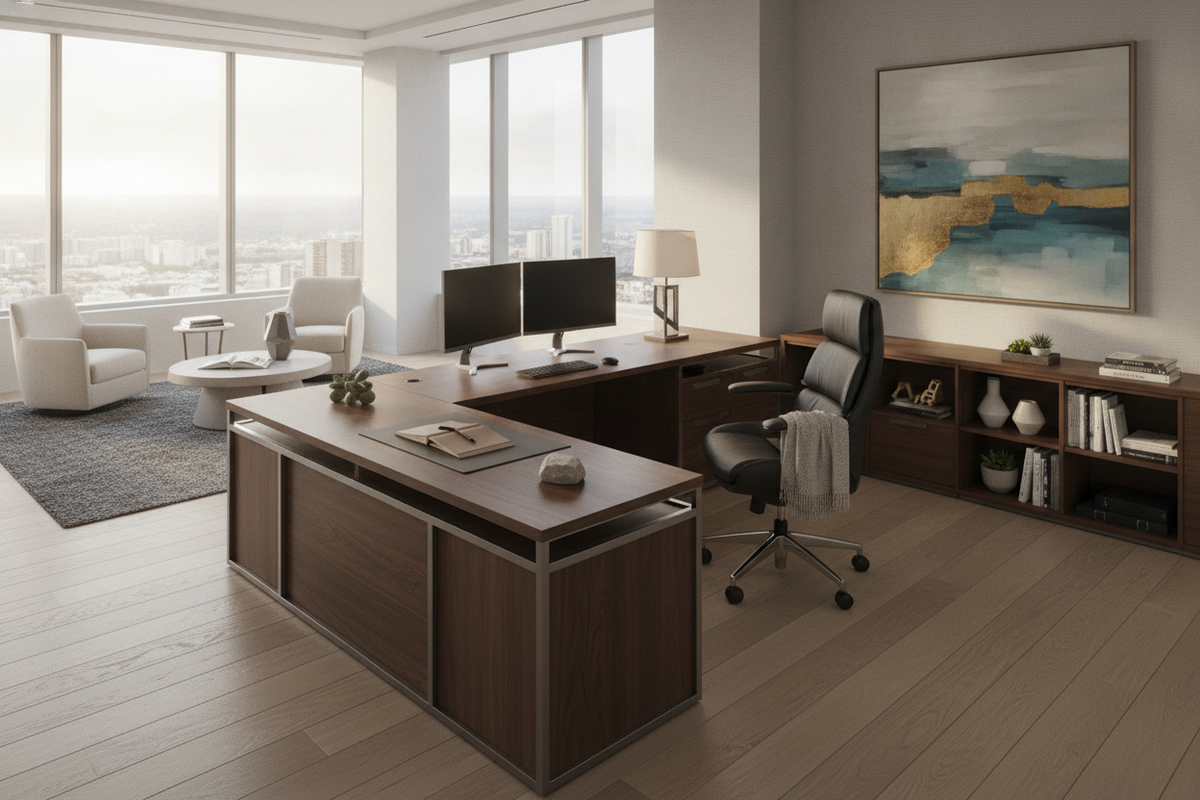
Investing in l shaped executive desks for home office setups elevates both productivity and interior design. By matching the desk's dimensions to your room's natural traffic flow, selecting functional storage architecture, and utilizing durable modern finishes, you create an organized work environment tailored for focus and professional success.

Laisser un commentaire
Ce site est protégé par hCaptcha, et la Politique de confidentialité et les Conditions de service de hCaptcha s’appliquent.